
低空经济

Search documents
第八届进博会 汽车展区尽显科技味儿与未来范儿
Zhong Guo Qi Che Bao Wang· 2025-11-11 09:36
Group 1: Automotive Industry Trends - The auto industry is transitioning towards low-carbon and zero-carbon solutions, showcasing electric, hydrogen, and solar energy vehicles at the expo [3][4] - Major brands like Volkswagen, Toyota, and Tesla presented new electric and hydrogen fuel cell vehicles, emphasizing innovation in sustainable transportation [3][4] - Michelin aims to achieve 100% sustainable materials in tire production by 2050, with 71% of showcased tires already using sustainable materials [4] Group 2: Technological Advancements - Artificial intelligence is rapidly integrating into various industries, with companies like Toyota and Volkswagen showcasing advanced autonomous driving technologies [5][6] - Nissan introduced AI-enhanced seating and smart cabin features in its new models, highlighting the trend towards intelligent vehicle interiors [6] - Companies are presenting cutting-edge technologies such as immersive interaction experiences and advanced driving assistance systems [5][6] Group 3: Emerging Markets - The low-altitude economy is gaining traction, with multiple companies unveiling electric vertical takeoff and landing (eVTOL) aircraft, indicating a competitive market [7][8] - Notable models include Shanghai's E20 and Volant's VE25-100, showcasing advancements in urban air mobility [7][8] Group 4: Robotics and Automation - Humanoid robots are becoming increasingly sophisticated, with demonstrations of their capabilities in various tasks, reflecting advancements in robotics technology [9] - Companies like Nachi and Wolong Electric are expanding into the robotics sector, offering comprehensive solutions that integrate AI and automation [9] Group 5: Classic and Custom Vehicles - The expo featured classic cars, including iconic models like Ferrari F40 and Rolls-Royce Phantom, highlighting the blend of history and automotive culture [10][11] - The presence of unique custom vehicles emphasizes the artistic aspect of automotive design and manufacturing [10][11]


国家发改委:民间投资有所放缓,13项举措激发民间投资活力
Nan Fang Du Shi Bao· 2025-11-11 08:33
Core Viewpoint - The National Development and Reform Commission (NDRC) has introduced measures to stimulate private investment amid a slowdown influenced by international conditions and real estate market adjustments [3][4]. Group 1: Current Investment Trends - Private investment has slowed this year, but excluding real estate development, private project investment grew by 2.1% year-on-year in the first three quarters, indicating stable growth [3]. - Infrastructure private investment increased by 7% year-on-year, while manufacturing private investment rose by 3.2%, showing a positive development trend [3]. Group 2: New Measures for Private Investment - The newly released "Several Measures to Further Promote Private Investment" includes 13 policy initiatives categorized into three areas: expanding access, addressing bottlenecks, and strengthening support [4][5]. - To expand access, the measures encourage private capital participation in key sectors like railways and nuclear power, and promote involvement in urban infrastructure projects with profit potential [4]. - The measures also aim to facilitate private capital's participation in low-altitude economy and commercial space sectors, and support private enterprises in undertaking major national technological tasks [4]. Group 3: Addressing Bottlenecks - The measures address issues faced by private enterprises, such as rights protection and insufficient innovation support, by enhancing regulatory oversight of network infrastructure and ensuring legal rights in resource allocation [5]. - Support for private enterprises includes the establishment of major pilot platforms and the provision of market-oriented trial services from state-owned enterprises and research institutions [5]. Group 4: Strengthening Financial Support - The measures propose increasing central budget investments for qualifying private investment projects and utilizing new policy financial tools to support key industries and sectors [5]. - Initiatives also focus on meeting the reasonable credit needs of private enterprises and facilitating financing for technology-driven companies through streamlined processes [5].
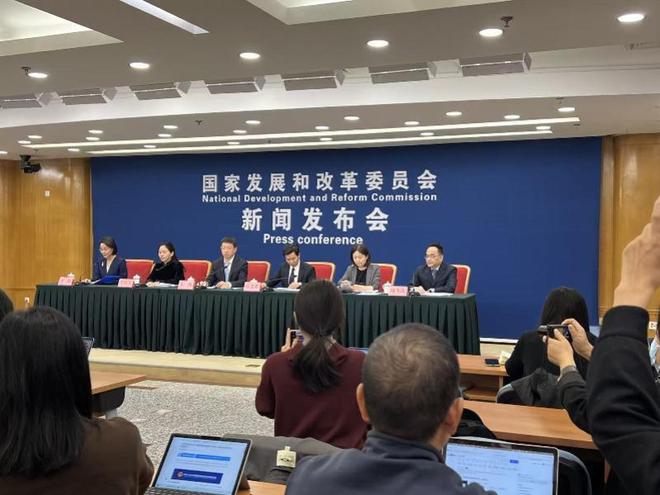
促民间投资发展“13条”发布,多位权威专家解读
Zheng Quan Shi Bao· 2025-11-11 07:33
Core Points - The State Council has issued measures to stimulate private investment, addressing key issues such as market access, fair competition, and service optimization, with 13 specific initiatives aimed at stabilizing employment, enterprises, markets, and expectations [1][2] - The measures aim to eliminate barriers to private investment, encouraging participation in key sectors traditionally dominated by state capital, particularly in urban infrastructure projects [2][3] - The initiatives extend to low-altitude economy infrastructure and service market access, as well as major scientific research infrastructure, reflecting a comprehensive approach to opening investment opportunities [3] Investment and Financing Focus - The measures focus on addressing the "investment" and "financing" concerns of private investors, ensuring legal rights in various sectors and supporting the establishment of significant pilot platforms [4] - On the investment side, the measures propose increased central budget support for qualifying private investment projects and the use of new policy financial tools to enhance project capital [4][5] - On the financing side, the measures emphasize the implementation of inclusive credit policies and support for technology-driven enterprises, including the issuance of real estate investment trusts (REITs) [4][6] Economic Impact - Private capital contributes to half of fixed asset investment and provides over 80% of urban employment, indicating that stimulating private investment is crucial for economic growth and industrial transformation [7] - The active participation of private capital is expected to expand overall investment scale and effectively boost short-term economic growth, playing a vital role in supply-side structural reform [7] - The measures signify the government's commitment to deepening reforms and supporting the development of the private economy, facilitating its involvement in infrastructure and new industries [7]
促民间投资发展“13条”发布!多位权威专家解读
Zheng Quan Shi Bao· 2025-11-11 05:09
Core Viewpoint - The State Council has issued measures to stimulate private investment, addressing key issues such as market access, fair competition, and service optimization, which will significantly impact the development of the private economy [1] Group 1: Market Access and Investment Opportunities - The measures aim to eliminate hidden barriers to private investment, encouraging participation in key sectors like railways and nuclear power, with a minimum private capital stake of over 10% for eligible projects [2] - The initiative opens up opportunities for private capital in urban infrastructure projects, reflecting a strong commitment from the state to support private enterprises in this area [2][3] Group 2: Focus on Investment and Financing - The measures emphasize addressing the core concerns of private investment, particularly in the areas of investment and financing, by enhancing support for eligible projects through central budget investments and new policy financial tools [4] - It includes provisions for improving access to financing for private enterprises, such as implementing inclusive credit policies and supporting the issuance of real estate investment trusts (REITs) [4][5][6] Group 3: Economic Impact and Development - Private capital contributes to half of fixed asset investments and over 80% of urban employment, indicating that stimulating private investment is crucial for economic growth and industrial transformation [7] - The measures are expected to enhance the role of private investment in driving economic growth and supporting structural reforms, thereby promoting sustainable economic development [7]
13条新举措进一步促进民间投资发展
Chang Jiang Shang Bao· 2025-11-11 04:41
Core Viewpoint - The Chinese government has introduced significant policy measures to stimulate private investment, focusing on market access, fair competition, resource support, and optimized financing services for private enterprises [1][2][3] Group 1: Market Access and Fair Competition - The new measures encourage private capital participation in key sectors such as railways and nuclear power, specifying shareholding requirements for projects requiring national approval [1] - Local governments are urged to allow private capital in new urban infrastructure projects with profit potential [1] - The government aims to eliminate unreasonable restrictions on service industry access for private enterprises and revise the list of projects for public-private partnerships to support private participation [1] Group 2: Support for Digital Transformation and Innovation - The measures promote the establishment of major pilot platforms by private enterprises and encourage collaboration with state-owned enterprises and research institutions for market-oriented pilot services [2] - There is a focus on supporting leading private enterprises in building comprehensive digital empowerment platforms to facilitate the digital transformation of small and medium-sized enterprises [2] Group 3: Financial Support and Investment - The central government plans to allocate 500 billion yuan in new policy financial tools by 2025, targeting technology innovation, consumption upgrades, and foreign trade stability, while also supporting traditional infrastructure [3] - For engineering procurement projects exceeding 4 million yuan, at least 40% of the budget must be reserved for procurement from small and medium-sized enterprises [3] - Financial institutions are encouraged to set annual service goals for private enterprises and meet their reasonable credit needs [2][3]
深圳陆空一体智能网联综合交通测试基地正式投入运营 | 投研报告
Zhong Guo Neng Yuan Wang· 2025-11-11 03:28
Core Insights - The low-altitude economy index decreased by 0.04% this week, with a relative increase of -0.86%, and the average daily transaction amount was 242.05 billion yuan, maintaining a high price-to-earnings ratio (TTM) of 117.49 times, while the average daily net inflow of main funds was -4.45 billion yuan [1][2]. Market Performance - The top five performing stocks this week were Putian Technology, Aerospace Huanyu, Shangluo Electronics, Yiwei Lithium Energy, and Funeng Technology; the bottom five were Aerospace Hongtu, Hangxin Technology, Wolong Electric Drive, Yingboer, and Shenzhen Urban Transport [3]. Industry Dynamics - The State Council's office issued opinions on accelerating the cultivation of scenarios and promoting large-scale applications in the low-altitude economy sector [4]. - The Shenzhen integrated land and air intelligent networked comprehensive transportation testing base has officially commenced operations, marking a significant step for Shenzhen in becoming the "global low-altitude economy capital" [4]. - Jinan has established a 10 billion yuan aerospace (low-altitude) industry fund [4]. Policy Developments - The Guangzhou Development and Reform Commission is soliciting opinions on the "Guangzhou Measures for Promoting High-Quality Development of the Low-Altitude Economy Fund Management (Draft for Comments)" [5]. Company Developments - Times Technology signed a strategic cooperation agreement with ICBC Financial Leasing, which plans to purchase 100 E20eVTOL aircraft from Times Technology [6]. - Yufeng Future received 200 intention orders for the M1 model series aircraft from domestic and international clients, totaling over 2 billion yuan [7]. - Volant Aviation signed multiple cooperation agreements, including orders for 95 eVTOL aircraft with a contract value of 2.375 billion yuan [8]. - AVIC Aircraft signed a cooperation agreement with Times Technology to collaborate on eVTOL core system research and development, airworthiness standards, and supply chain strengthening [8].
行业整体平稳,低空稳步推进 | 投研报告
Zhong Guo Neng Yuan Wang· 2025-11-11 02:16
Group 1: Market Overview - The Shanghai Composite Index increased by 1.08%, the Shenzhen Component Index rose by 0.19%, and the ChiNext Index grew by 0.65% from November 3 to November 7, 2025 [2][3] - The Shenwan Machinery Equipment Index decreased by 0.15%, underperforming the CSI 300 Index by 0.97 percentage points, ranking 22nd among 31 Shenwan first-level industries [2][3] - Sub-sectors such as Shenwan General Equipment, Specialized Equipment, Rail Transit Equipment II, Engineering Machinery, and Automation Equipment experienced varied performance, with increases of 0.71%, 0.21%, 2.12%, and 0.36% respectively, while Automation Equipment saw a decline of 2.65% [2][3] Group 2: Key Sector Tracking - The low-altitude economy sector is supported by national policies promoting the application of unmanned systems and the establishment of infrastructure, with Shenzhen planning over 1,500 take-off and landing points by 2035 [3] - The engineering machinery sector shows strong competitive advantages for domestic leading enterprises, with excavator sales reaching 18,096 units in October 2025, a year-on-year increase of 7.77%, including domestic sales of 8,468 units (up 2.44%) and exports of 9,628 units (up 12.9%) [3] Group 3: Investment Recommendations - For the low-altitude economy, recommended companies include Deep City Transportation, Sujiao Science and Technology, Huase Group, and Nairui Radar for infrastructure; for complete machines, focus on Wan Feng Ao Wei, Yihang Intelligent, Zongheng Co., and Green Energy Hui Charge; for core components, consider Zongshen Power, Wolong Electric Drive, Yingliu Co., and Yingboer; for air traffic management and operations, look at CITIC Heli, Zhongke Star Map, and Sichuan Jiuzhou [4] - In the machinery equipment sector, recommended companies include Juxing Technology, Quanfeng Holdings, and Nine Company for the export chain; for engineering machinery, focus on Sany Heavy Industry, XCMG Machinery, and Anhui Heli; for industrial mother machines, consider Huazhong CNC, Kede CNC, and Hengli Hydraulic [5]
海南自贸港加快构建现代化产业体系
Hai Nan Ri Bao· 2025-11-11 01:56
Core Viewpoint - Hainan is accelerating the construction of a modern industrial system with unique characteristics and advantages, focusing on high-quality development and the integration of technology and industry [4][8][24]. Group 1: Modern Industrial System Development - Hainan is leveraging its unique advantages to build a modern industrial system, emphasizing the optimization and upgrading of leading industries [4][10]. - The "4532" strategy is being implemented to enhance the modern industrial system, with the semiconductor industry beginning to take root in Hainan [9]. - The agricultural sector, particularly the South Seed Industry, has over 2,800 related enterprises with an annual output value exceeding 18 billion yuan [10]. Group 2: Key Industries and Economic Growth - The four leading industries in Hainan—tourism, modern services, high-tech industries, and tropical agriculture—accounted for 67% of the province's GDP in 2024, with a notable increase from 2020 [14]. - The marine economy has shown an average nominal growth rate of 13.9% over four years, contributing to 34.1% of the GDP in 2024 [11]. - The clean energy sector has achieved over 70% in power generation and 86% in installed capacity [12]. Group 3: Innovation and Technology Integration - Hainan is focusing on the deep integration of technological innovation and industrial innovation to drive significant breakthroughs and enhance productivity [17][21]. - The province has seen a rapid increase in R&D investment, reaching 10.961 billion yuan in 2024, a 22.1% increase from the previous year [21]. - Companies like Keda Xunfei are leveraging AI to enhance industrial capabilities, with over 800,000 developers engaged in the region [15]. Group 4: Strategic Initiatives and Future Prospects - Hainan is actively promoting the development of key parks such as Sanya Yazhou Bay Science and Technology City and Boao Lecheng International Medical Tourism Pilot Zone, which are crucial for industrial clustering [12][24]. - The province is exploring new economic models in deep-sea technology and low-altitude industries, aiming to establish a comprehensive low-altitude economy [23]. - The focus on biomedicine is evident with advancements in cell and gene therapy, supported by favorable policies in the Boao Lecheng area [24].
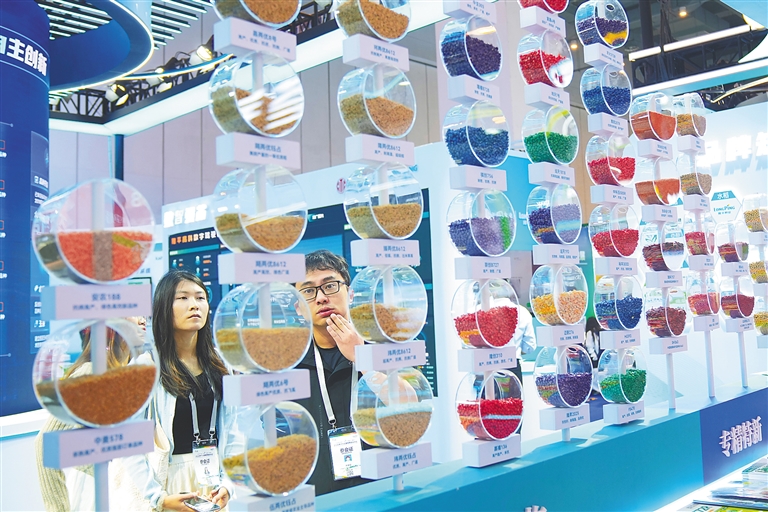
扩大准入打通堵点 促进民间投资发展“13条”发布
Xin Hua She· 2025-11-11 01:34
Core Points - The State Council has issued measures to stimulate private investment and promote its development, outlining 13 targeted policy initiatives [1][2] Group 1: Expansion of Access - Encouragement for private capital participation in key sectors like railways and nuclear power, with specified shareholding requirements [1] - Support for private investment in new urban infrastructure projects with profit potential [1] - Guidance for orderly participation of private capital in low-altitude economy and commercial space sectors [1] - Removal of unreasonable entry restrictions for service industry operators [1] - Revision of the list of concession projects to support private enterprise participation [1] - Elimination of unreasonable requirements for private enterprises in bidding processes [1] - Increased government procurement support for small and medium-sized enterprises [1] Group 2: Addressing Bottlenecks - Protection of private enterprises' legal rights in electricity grid operations, oil and gas pipeline usage, and transportation resource allocation [2] - Encouragement for private enterprises to establish major pilot platforms with strong industry influence [2] - Support for state-owned enterprises, universities, and research institutions to provide market-oriented pilot services to private enterprises [2] - Development of comprehensive digital empowerment platforms by leading private enterprises and third-party service providers [2] - Implementation of a digital empowerment initiative for more private small and medium-sized enterprises [2] Group 3: Strengthening Support - Increased central budget investment and new policy financial tools for qualifying private investment projects [2] - Financial institutions to set annual service goals for private enterprises to meet their reasonable credit needs [2] - Continuation of "green channel" policies for technology-driven enterprises in listing financing and mergers [2] - Support for qualifying private investment projects to issue Real Estate Investment Trusts (REITs) in infrastructure [2] - Emphasis on the need for local governments and relevant departments to enhance services, guidance, and management for private investment [2]
盘前机会前瞻|国办发文!促进民间资本参与低空基础设施建设,这几家公司深耕低空经济领域值得关注(附概念股)
Sou Hu Cai Jing· 2025-11-11 01:08
Core Viewpoint - The State Council of China has issued measures to promote private investment, particularly emphasizing the orderly participation of private capital in the low-altitude economy infrastructure construction [1][2]. Group 1: Policy Measures - The document encourages private capital to participate in key sectors such as railways and nuclear power, specifying requirements for shareholding ratios [2]. - It aims to eliminate unreasonable restrictions on service industry access and revise the list of projects that support private enterprise participation in public-private partnerships [2]. - The government will enhance procurement support for small and medium-sized enterprises [2]. Group 2: Low-altitude Economy Focus - The measures specifically highlight the importance of private investment in the low-altitude economy and commercial aerospace sectors, aiming to remove institutional barriers for private capital involvement [1][2]. - The document states that private investment projects will be treated equally in the approval processes for commercial space frequency licenses and launch approvals [1].