智能汽车

Search documents
中信证券:“史上最难”L2国标征求意见,智驾功能安全性有望提升
Xin Lang Cai Jing· 2025-09-19 00:24
Core Viewpoint - The release of the draft "Safety Requirements for Combination Driving Assistance Systems of Intelligent Connected Vehicles" by the Ministry of Industry and Information Technology on September 17 indicates a significant advancement in the enforcement of mandatory standards for Level 2 (L2) autonomous driving systems, which will likely increase the entry barriers for L2 autonomous driving technology [1] Group 1 - The new standards impose stricter safety requirements on autonomous driving systems and regulate the Driver Monitoring System (DMS) [1] - The regulatory changes are expected to guide the intelligent vehicle industry towards high-quality and safe development [1] - Companies involved in hardware related to driving safety, automotive testing institutions, and leading players in autonomous driving are likely to benefit from these changes [1]

20多万元买辆车,“方向盘加热”还得另花钱——智能汽车有关功能付费解锁调查
Xin Hua Wang· 2025-09-18 23:36
Core Viewpoint - The article highlights the growing trend among automotive companies to adopt a "hardware embedded + software subscription" business model, leading to consumer dissatisfaction as they often have to pay extra to unlock features that are already physically present in their vehicles [1][2][3]. Group 1: Consumer Complaints - Consumers are frustrated that despite purchasing vehicles with embedded hardware, they must pay additional fees to access features such as heated steering wheels and four-wheel drive systems [1][2]. - Many consumers report that sales representatives do not disclose the need for additional payments for certain functionalities at the time of purchase, leading to feelings of being misled [1][2]. - The issue extends to software services, where promised "basic data" for vehicle connectivity is reduced, forcing consumers to pay for what they believed was included in their purchase [3][5]. Group 2: Industry Practices - Some automotive companies are embedding features like seat heating and driving assistance sensors during production but require consumers to pay to unlock these functionalities post-purchase [2]. - The subscription model allows manufacturers to generate additional revenue while consumers bear the cost of features that should have been included in the initial purchase price [2][6]. - The lack of transparency in pricing and service terms has been criticized, with consumers feeling that they are not adequately informed about the costs associated with unlocking features [6][7]. Group 3: Regulatory and Industry Response - Experts suggest that there is a need for standardized regulations to protect consumer rights and clarify the distinction between basic and additional functionalities [7][8]. - Recommendations include establishing clear definitions of basic functions, prohibiting additional charges for safety-related features, and ensuring that consumers are informed about any extra costs at the point of sale [7][8]. - Regulatory bodies are urged to enhance oversight of automotive companies' charging practices to prevent misleading claims and ensure fair treatment of consumers [6][7].
“智能三大件”产业加速融合 剪刀差效应有望重现
Zheng Quan Shi Bao· 2025-09-18 17:52
Core Viewpoint - The integration of smart vehicles, smart robots, and low-altitude flying vehicles is accelerating, with the potential to significantly reduce costs and enhance technological development through shared supply chains and resources [1][2][3]. Group 1: Industry Integration - The three industries—smart vehicles, smart robots, and low-altitude flying vehicles—exhibit deep coupling in technology, resources, and application scenarios, primarily supported by artificial intelligence [2][3]. - The supply chain overlap between smart vehicles and smart robots exceeds 60%, with some companies reaching 70%, indicating a strong potential for cross-industry technology reuse [3][4]. - The integration of these industries is expected to replicate the "cost-volume" scissors effect seen in electric vehicles, where component costs have decreased significantly, leading to increased sales [4][5]. Group 2: Cost Reduction Potential - If the cost of flying cars can be controlled to around 200,000 yuan, it would align with ground transportation pricing, as indicated by industry experts [1][5]. - The price of laser radar has dropped from 100,000 yuan in 2019 to 800 yuan today, showcasing the potential for cost reductions in related technologies [4]. - The mass production capabilities of electric vehicle components are expected to facilitate significant cost reductions in smart robots, potentially halving the time from prototype to mass production [5][6]. Group 3: Collaborative Development - Companies are encouraged to establish global manufacturing advantages and promote cross-industry collaboration to enhance technological integration and supply chain efficiency [6][7]. - The establishment of the EAI 100 Innovation Center in Wuhan aims to foster collaboration among over 300 companies in the smart industry, focusing on technology development and standardization [7][8]. - Local governments are recognizing the trend of integration among these industries and are initiating policies to support collaborative development [7].
【法治之道】 特斯拉车主车顶维权案胜诉的意义
Zheng Quan Shi Bao· 2025-09-18 17:49
Core Viewpoint - The court ruling in favor of Zhang Yazhou, the Tesla owner, highlights the need for transparency in the smart automotive industry and challenges the prevailing "technical arrogance" that has led to data monopolization by companies like Tesla [1][2][3] Group 1: Legal and Ethical Implications - The court's decision mandates Tesla to provide complete driving data from the half-hour before the accident, emphasizing consumer rights and accountability in the face of corporate data withholding [1][2] - This case serves as a judicial precedent that counters the notion that technological advancement justifies information monopolization, reinforcing that consumer rights should not be undermined by technical barriers [2][3] Group 2: Industry-Wide Concerns - The issue of "brake failure" controversies in the smart automotive sector reflects a broader problem where companies deny responsibility while consumers struggle to prove their claims, perpetuating a cycle of distrust [2][3] - The ruling urges the smart automotive industry to recalibrate its ethical standards, advocating for data transparency and the establishment of standardized data interfaces for consumer access [3] Group 3: Regulatory Recommendations - There is a call for regulatory bodies to enhance existing regulations, such as the "Automotive Data Security Management Regulations," to clarify data ownership and usage rights [3] - Establishing independent third-party data oversight platforms is recommended to ensure fair interpretation and storage of accident data, alongside stricter penalties for data monopolization practices [3]

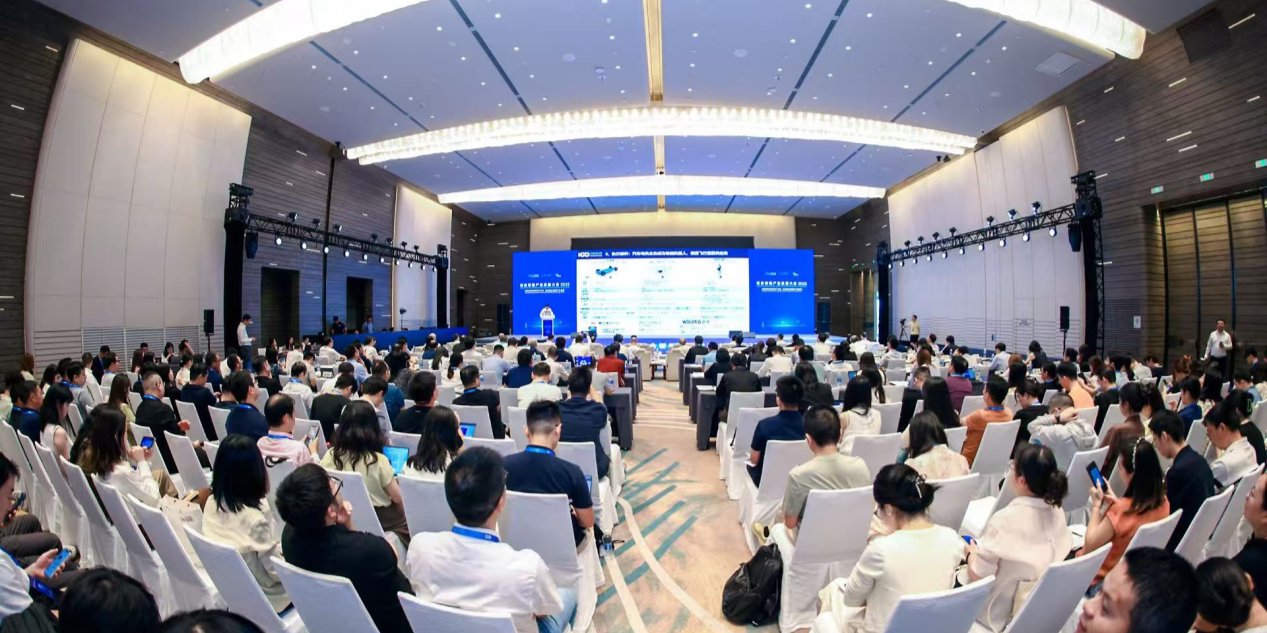
首届聚合智能产业发展大会(2025)在光谷举办
Jing Ji Guan Cha Wang· 2025-09-18 13:19
Group 1 - The first Aggregated Intelligent Industry Development Conference (2025) was held in Wuhan, focusing on the theme of "Collaborative Integration of Innovation Chains and Industry Chains to Promote the Development of Aggregated Intelligent Industries" [2] - Wuhan's East Lake High-tech Zone is positioned as a core area for national technological innovation, with a strong foundation and complete ecosystem for developing aggregated intelligent industries [2] - The market for aggregated intelligent sectors, including smart vehicles, smart robots, and low-altitude flying vehicles, is projected to reach nearly $240 billion globally by 2030, with China's market expected to exceed $120 billion [2] Group 2 - A seminar on key issues in the development of the aggregated intelligent industry was held, focusing on five core topics, including the deep integration of smart robots, low-altitude flying, and automotive industry chains [3] - Participants emphasized the need to break away from single-industry thinking and adopt a "aggregation" approach to promote collaboration and high-quality development of the industry [3] - The establishment of a ground-air integrated regulatory platform is necessary for the collaborative application of smart robots, low-altitude flying, and autonomous vehicles [3]

张永伟:聚合智能“三大件”将成拉动出海和经济增长的重要引擎
Bei Ke Cai Jing· 2025-09-18 12:37
Core Viewpoint - The integration of smart electric vehicles, humanoid robots, and low-altitude travel is accelerating, with the potential to form a "converged intelligent industry" that will drive economic growth and international expansion [1][2]. Group 1: Market Size and Growth - The market size for China's converged intelligent "three major components" is expected to exceed $50 billion this year, with projections of nearly $240 billion globally and over $120 billion in China by 2030 [1]. - The "new three items" for overseas expansion, including new energy vehicles, power batteries, and photovoltaic technology, have significantly contributed to China's outward-oriented economic development [1]. Group 2: Strategic Recommendations - To promote the integrated development of smart vehicles, humanoid robots, and low-altitude economy, it is recommended to reduce costs and increase efficiency in manufacturing to achieve scale advantages [2]. - Companies should expand from single-component production to the converged field, collaborating across supply chains and developing common technology platforms [2]. - There is a need to accelerate the expansion into international markets, treating them as a "second starting line" to seize global opportunities [2]. - The industry should shift from a single-industry development mindset to a coordinated development approach, enhancing planning for application scenarios, infrastructure, and computing power systems [2].
中国光谷成立国内首个聚合智能产业创新中心
Zhong Guo Xin Wen Wang· 2025-09-18 11:49
Core Insights - The 聚合智能产业发展大会 (2025) was held in Wuhan, focusing on smart vehicles, smart robots, and low-altitude flying vehicles as key areas of interest [1][3] - The establishment of the EAI100光谷聚合智能产业创新中心 marks the first domestic platform for the integration of technological and industrial innovation in this field [1][3] Group 1: Event Overview - The conference theme was "Collaborative Integration of Innovation Chains and Industry Chains to Promote the Development of the Aggregated Intelligent Industry" [3] - The event attracted experts and representatives from the smart vehicle, smart robot, and low-altitude flying sectors [3] Group 2: Industry Development Insights - Zhang Yongwei, Chairman of the China Electric Vehicle 100 People’s Association, highlighted the interconnected nature of smart vehicles, robots, and low-altitude flying vehicles, suggesting they could become a new engine for China's industrial exports [3] - A report titled "Strengthening the Core Chain of the Aggregated Intelligent Industry" was released, advocating for collaborative development among the three sectors [3] Group 3: Strategic Recommendations - Recommendations include focusing on manufacturing to create a technological hub and cost advantage for the aggregated intelligent industry [3] - Encouragement for cross-collaboration among component manufacturers to accelerate technology integration and market access [3] - Emphasis on international expansion and the need to reshape emerging enterprise development models to capture new market opportunities [3] Group 4: Future Directions - The conference discussed various core topics, including the deep integration of smart robots, low-altitude flying, and automotive industry chains [4] - Plans for building an integrated regulatory platform for the collaborative application of smart robots, low-altitude flying, and autonomous vehicles were also discussed [4] - The Wuhan East Lake High-tech Zone aims to leverage this conference to enhance its position as a hub for the aggregated intelligent industry [4]

问界M8 ADS4升级9月19日开始推送 纯电交付可视化近期推送
Feng Huang Wang· 2025-09-18 06:19
Core Viewpoint - The latest updates on the ADS4 upgrade and pure electric delivery visualization for the Wanjie M8 have been shared, indicating significant advancements in the company's autonomous driving technology and delivery capabilities [1] Group 1: ADS4 Upgrade - The ADS4 upgrade for the Wanjie M8 has received approval and is expected to begin rolling out on September 19 [1] - The pure electric delivery app will also be pushed out in batches in the coming days [1] Group 2: ADS4 System Overview - Huawei officially launched the QianKun ADS 4 auxiliary driving system in April, which consists of four versions: ADS SE, ADS Pro, ADS Max, and ADS Ultra [1] - The flagship version of the ADS 4 system supports Level 3 autonomous driving on highways [1] Group 3: Performance Metrics - By July 2025, over 1 million vehicles equipped with Huawei's QianKun intelligent auxiliary driving system are projected to be on the road [1] - The laser radar shipment is also expected to exceed 1 million units [1] - Since its launch, the system has accumulated 4 billion kilometers of assisted driving mileage and has successfully avoided 2.54 million potential collision events [1]
均胜电子三连板,网联汽车赛道持续火热,人工智能AIETF(515070)盘中涨超1.5%
Mei Ri Jing Ji Xin Wen· 2025-09-18 02:55
Group 1 - The core viewpoint of the articles highlights the positive impact of the Federal Reserve's interest rate cuts on global capital risk appetite, leading to significant gains in the A-share technology sector, particularly in electronics, robotics, and smart vehicles [1] - The AI ETF (515070) saw a substantial increase of over 1.5% during trading, with a trading volume exceeding 150 million yuan, and has experienced two consecutive days of capital inflow totaling over 60 million yuan [1] - The global market for smart automotive components is projected to exceed 100 billion USD this year, with China expected to account for at least 50 billion USD, and by the end of the 14th Five-Year Plan, the market could reach over 200 billion USD globally, with China nearing or achieving 100 billion USD [1] Group 2 - The AI ETF (515070) tracks the CS Artificial Intelligence Theme Index (930713), focusing on companies that provide technology, foundational resources, and applications in the AI sector, often referred to as the "brain" of robots and the "ground" of the Internet of Things [2] - The top ten weighted stocks in the AI ETF include leading domestic technology firms such as Zhongji Xuchuang, Xinyi Sheng, Hanwha U, Zhongke Shuguang, Keda Xunfei, Haowei Group, Hikvision, Lanke Technology, Kingsoft, and Unisplendour [2]


前理想CTO王凯创业具身智能,已获约5000万美元融资|早起看早期
36氪· 2025-09-18 00:19
Core Viewpoint - The article discusses the rising interest and investment in embodied intelligence within the automotive industry, highlighting key figures and funding rounds that indicate a trend towards this technology [5][6][7]. Group 1: Investment and Funding - The startup focused on embodied intelligence has attracted significant attention, securing approximately $50 million in total funding from prominent investors such as Yuanjing Capital, Sequoia Capital, and BlueRun Ventures [5][6]. - Another startup in the same field, Itstone Zhihang, raised $120 million in its angel round, setting a record for the largest angel round financing in China's embodied intelligence sector [7]. Group 2: Key Personnel and Expertise - Wang Kai, a former CTO of Li Auto and now a partner at Yuanjing Capital, is a key figure in the startup, bringing extensive experience in AI technology and engineering from his previous roles [6]. - The project also includes a core technology executive from a leading automotive company, who has a strong background in autonomous driving and has been involved in end-to-end production delivery processes [6][9]. Group 3: Industry Trends - The embodied intelligence sector is gaining traction as a new growth point for automotive companies, with many executives from the autonomous driving field transitioning to this area for entrepreneurial opportunities [8][9]. - Companies like Tesla and XPeng are viewing embodied intelligence as a significant avenue for future development, indicating a competitive landscape for talent and resources in both autonomous driving and embodied intelligence [9].