网约车

Search documents
苏州加码守护出租车网约车司机幸福出行
Su Zhou Ri Bao· 2025-08-21 00:20
Core Points - The article discusses a visit by Huang Aijun, the Deputy Secretary of the Suzhou Municipal Committee, to a driver service station, where he engaged with taxi and ride-hailing drivers to understand their challenges and gather suggestions for industry and urban development [1] - Six driver representatives shared their perspectives on current industry issues and personal difficulties, expressing appreciation for various initiatives aimed at improving convenience for drivers [1] Group 1 - The meeting highlighted the importance of collecting and addressing the drivers' concerns and suggestions for the development of the industry [1] - Huang Aijun emphasized the need for the municipal government to develop specific solutions to the issues raised by drivers, ensuring their rights are protected [1] - The article mentions the ongoing efforts to enhance the driver service network and explore additional supportive measures for drivers [1] Group 2 - Relevant officials from the Municipal Social Work Department, Municipal Political and Legal Committee, and Municipal Transportation Bureau participated in the visit [2]
一刀切叫停网约车“一口价”,无法切中要害
Nan Fang Du Shi Bao· 2025-08-20 22:59
Core Viewpoint - The recent notification from Xi'an's Transportation Bureau aims to suspend low-price marketing activities like "one-price" offers to combat price fraud and malicious competition among ride-hailing platforms [1][2]. Group 1: Industry Context - The competition among ride-hailing platforms has shifted from acquiring new customers to competing for existing ones, with 389 companies now holding operating licenses as of June 30, 2025, an increase of approximately 175 since the end of 2020 [1]. - The number of ride-hailing orders decreased from 8.1 billion in December 2020 to 7.57 billion in June 2023, indicating a decline in demand despite the increase in competition [1]. Group 2: Driver Impact - Drivers are often forced to accept unfair conditions, with the average daily order volume in Taiyuan being less than 12 and an empty driving rate of 53%, leading to daily earnings of less than 160 yuan [2]. - The saturation of the ride-hailing market has resulted in declining incomes for drivers, particularly in smaller cities, where the bargaining power of drivers has diminished as more choose to work full-time [2]. Group 3: Regulatory Measures - The outright ban on "one-price" offers may not effectively address the underlying issues, as platforms can still impose high commission rates and engage in opaque billing practices [2][3]. - Other regions, such as Guangdong and Sichuan, have adopted more flexible approaches to regulate ride-hailing platforms, focusing on transparency in commission rates and addressing driver concerns through comprehensive governance [3].
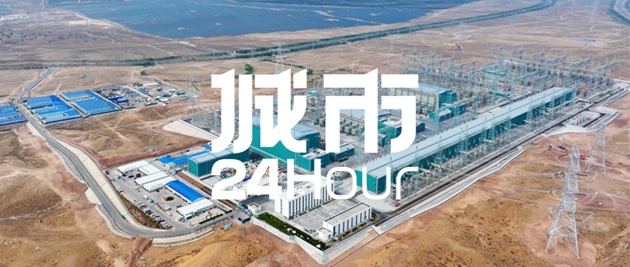
城市24小时 | 克服“先天不足” 湖南的“外援”到了
Mei Ri Jing Ji Xin Wen· 2025-08-20 16:10
Group 1 - The "Ning Electric into Hunan" project is China's first approved ultra-high voltage transmission channel primarily for renewable energy, spanning 1616 kilometers from Ningxia to Hunan [1] - The project has a total installed capacity of 17.64 million kilowatts, with over 70% coming from renewable sources, setting a new record for similar projects [1] - The project is expected to replace approximately 6 million tons of standard coal annually in Hunan, reducing carbon dioxide emissions by about 18 million tons, equivalent to the annual absorption of 1 billion trees [1] Group 2 - The project began trial operation in June 2023, maintaining a high power output of over 3 million kilowatts during the summer, which is nearly 10% of Hunan's peak load [2] - Once fully operational, the project will have a maximum transmission capacity of 8 million kilowatts, delivering between 36 billion to 40 billion kilowatt-hours of electricity annually to Hunan [2] - Hunan's total electricity consumption is projected to reach 237.4 billion kilowatt-hours in 2024, with external electricity accounting for 22.7% of the total, which is expected to rise to nearly 30% with the new project [2] Group 3 - The Hunan delegation has submitted proposals to support major energy projects, including the "Ning Electric into Hunan" and "Xinjiang Electric into Hunan" projects, as part of the national energy development plan [3] - The proposals emphasize the need for additional external electricity channels to address Hunan's energy supply challenges, aiming for external electricity to exceed 40% in the future [3]
城市24小时 | 克服“先天不足”,湖南的“外援”到了
Mei Ri Jing Ji Xin Wen· 2025-08-20 15:59
Core Points - The "Ning Electric into Hunan" project has officially commenced operations, marking China's first high-voltage transmission corridor primarily for renewable energy from the "Shagehuang" wind and solar base [1] - The project spans 1616 kilometers across six provinces, with a total installed capacity of 17.64 million kilowatts, of which 13 million kilowatts are renewable energy [1] - The project is expected to replace approximately 6 million tons of standard coal annually in Hunan, reducing carbon dioxide emissions by about 18 million tons, equivalent to the annual absorption of 1 billion trees [1] Summary by Sections Project Overview - The "Ning Electric into Hunan" project started construction in June 2023 and has a renewable energy share exceeding 70%, setting a new record for similar projects [1] - The project will enable the transmission of rich green electricity from Ningxia to Hunan in just 0.0054 seconds [1] Energy Demand and Supply - During the summer of 2023, the project maintained a high power output of over 3 million kilowatts, accounting for nearly 10% of Hunan's peak load [2] - Once fully operational, the project will have a maximum transmission capacity of 8 million kilowatts, delivering between 36 billion to 40 billion kilowatt-hours of electricity annually to Hunan [2] - Hunan's total electricity consumption is projected to reach 237.4 billion kilowatt-hours in 2024, with a year-on-year growth of 4.3% [2] Future Energy Needs - Hunan's reliance on external electricity is expected to rise to nearly 30% with the project's completion, although the province will still face a "tight balance" in electricity supply [2] - Experts suggest that Hunan will need to construct 3-4 additional external electricity channels to increase the external electricity share to over 40%, which is crucial for addressing local electricity supply issues [2]

西安发文全面暂停网约车“一口价”
21世纪经济报道· 2025-08-20 10:37
Core Viewpoint - The recent notification from Xi'an's Transportation Bureau aims to regulate ride-hailing platforms by prohibiting low-price marketing strategies such as "one-price" and "special offers," which disrupt the market order and harm drivers' rights [5][6][7]. Group 1: Notification Details - The notification mandates an immediate halt to low-price marketing activities, including "one-price" and "special offers," effective from August 19, 2023 [5][6]. - It requires ride-hailing platforms to adjust pricing only after consulting drivers and obtaining approval from industry management departments [5]. - Platforms must adhere to pricing regulations, ensure transparent pricing, and avoid unfair competition [5][6]. Group 2: Enforcement and Background - The Xi'an Transportation Bureau confirmed the authenticity of the notification and stated that enforcement will be monitored [4][5]. - Other regions, including Guangdong, Henan, and Jiangxi, have previously addressed similar issues regarding "one-price" orders, emphasizing the need to protect drivers' rights and prevent below-cost pricing [7][8].

曹操出行(02643.HK):网约车运营扭亏在即 ROBOTAXI贡献高成长性及期权属性
Ge Long Hui· 2025-08-20 09:48
Group 1 - The shared mobility industry is experiencing rapid growth, with the market expected to have a compound annual growth rate (CAGR) of 17% from 2025 to 2029, and the company holds a 5.4% market share in 2024, primarily in strong consumer cities [1] - The company operates the largest customized ride-hailing fleet in the country, with a focus on cost-effective and high-quality service, achieving a total cost of ownership (TCO) that is 33% and 40% lower than typical electric vehicles for its customized models [1] - The company plans to launch the "Cao Cao Zhixing" platform in 2025, with initial vehicles based on the Lynk & Co Z10 model, aiming for a gross profit margin of over 40% by 2030 for its Robotaxi service, which is expected to significantly reduce driver costs [3] Group 2 - The company is implementing a strategy of "initial subsidy penetration followed by gradual reduction," with plans to expand into 85 new cities in 2024, leading to improved performance as penetration rates increase [2] - The company forecasts a turnaround in net profit from -1.05 billion yuan in 2025 to 730 million yuan in 2027, with an expected EBIT margin comparable to Didi's Q1 2025 levels [3] - The company's current target market value is estimated at 42.8 billion yuan, indicating a potential upside of 21% [3]
滴滴:联合惠州多家医院共建滴滴车站
Mei Ri Jing Ji Xin Wen· 2025-08-20 08:04
Group 1 - Didi has launched a new project called "Hui Min Medical Travel Experience" in Huizhou, collaborating with 10 local hospitals to facilitate transportation for citizens seeking medical services [1] - The project includes online coupon distribution and offline guidance at Didi stations to enhance the convenience of medical travel for users [1] - Didi has established over 4,000 stations across more than 200 cities, including major cities like Beijing, Shanghai, Guangzhou, Chengdu, Hangzhou, Wuhan, and Huizhou [1]

豪赌Robotaxi+不是如祺出行的解药
3 6 Ke· 2025-08-20 07:54
Core Viewpoint - The future of mobility services is centered around Robotaxi, with companies needing to demonstrate scalable commercial viability to remain competitive in the market [1][2]. Group 1: Company Strategy and Development - The CEO of 如祺出行 emphasized that the Robotaxi sector has entered a phase where the ability to implement scalable commercial operations will determine the players' longevity in the market [1]. - 如祺出行 has launched the "Robotaxi+" strategy, which aims to provide comprehensive solutions for Robotaxi operations, expanding its fleet and operational scale [1][6]. - The company has transitioned from a light asset model to a heavy asset model, indicating a significant shift in its operational strategy [7]. Group 2: Market Position and Competition - The competitive landscape includes major players like Baidu and Didi, who are also developing their own Robotaxi ecosystems, posing a risk to 如祺出行's "Robotaxi+" strategy [2][13]. - Didi holds a 70% market share in the ride-hailing sector, while 如祺出行 is focusing heavily on the Robotaxi segment to find new growth avenues [3]. Group 3: Financial Performance and Challenges - 如祺出行 has reported net losses of -627 million, -693 million, and -564 million CNY for the years 2022 to 2024, with negative gross margins of -10.7%, -7.0%, and -1.4% respectively [8]. - The company's reliance on third-party platforms for orders has increased, with the proportion of orders from these platforms rising from 28% to 59% between 2022 and 2023 [10][11]. - The costs associated with third-party service fees, driver services, and vehicle maintenance have significantly impacted profitability, leading to increased operational costs [9][12]. Group 4: Future Outlook and Strategic Plans - 如祺出行 plans to expand its Robotaxi operations to cover 100 core cities and aims to build a fleet of over 10,000 vehicles within five years through its "Starfire Plan" and "Galaxy Plan" [6]. - The company faces challenges in achieving its ambitious goal of commercializing Robotaxi services by 2026, as it lacks sufficient funding and data to support its operational efficiency [16].

西安叫停网约车“一口价”“特惠单”,出租车网约车司机迎来双赢?
Hu Xiu· 2025-08-20 07:11
Core Viewpoint - The Xi'an Transportation Bureau has mandated a suspension of low-price marketing activities by ride-hailing platforms, including "fixed price" and "special offer" orders, to address complaints from taxi drivers and ensure fair competition in the market [1][2][4]. Summary by Sections Regulatory Actions - The new regulations require ride-hailing services to implement clear pricing and prohibit the use of algorithms or technical rules to disrupt market order [2][3]. - Similar actions have been taken in other cities, such as Qingyuan and Yingtan, where authorities have restricted platforms from forcing drivers to accept low-priced orders [2]. Market Dynamics - The prevalence of "fixed price" and "special offer" orders has led to significant complaints from taxi drivers, indicating a disruption in the normal operating order of the taxi market [1][2]. - The pricing strategies employed by platforms often result in lower earnings for drivers, as they are compelled to accept low-priced orders to maintain a steady flow of work [3][4]. Consumer Behavior - Users have become accustomed to low-priced options, which may lead to a reluctance to accept higher fares if the pricing structure changes [5][9]. - If ride-hailing services are restricted to dynamic pricing, it could either lead to increased earnings for drivers or push consumers towards alternative, potentially riskier transportation options [8][9]. Employment Implications - The regulatory changes may impact the employment landscape for drivers, potentially reducing their income and job opportunities in the ride-hailing sector [13]. - A decrease in the attractiveness of the ride-hailing market could lead to a shift towards other forms of transportation, such as public transit or electric vehicles [12].
西安暂停网约车“一口价”活动,当地称正落实!已有多地禁止
Nan Fang Du Shi Bao· 2025-08-20 05:21
Core Viewpoint - The recent notification from Xi'an's Transportation Bureau aims to regulate ride-hailing platforms by prohibiting low-price marketing strategies such as "fixed price" and "special offers," which disrupt the market order and harm drivers' rights [1][4]. Group 1: Regulatory Actions - The notification mandates an immediate halt to low-price marketing activities, effective from August 19, 2023, and prohibits any form of price fraud or malicious underpricing [4]. - Ride-hailing platforms must adjust pricing only after consulting drivers and obtaining approval from industry management departments [4]. - Platforms are required to adhere to pricing regulations, ensuring transparent pricing and prohibiting unfair competition [4]. Group 2: Industry Response - The notification follows a trend where multiple regions, including Guangdong, Henan, and Jiangxi, have previously addressed the "fixed price" issue, indicating a broader regulatory movement across the country [5][6]. - Complaints from taxi drivers regarding low pricing and high platform commissions have prompted these regulatory actions [5][6]. - The industry is under increased scrutiny as the ride-hailing sector continues to evolve, with public interest in regulatory measures growing [6].