
文化旅游

Search documents
铭记历史、缅怀先烈 这个纪念馆暑期游客超50万人次
Yang Shi Xin Wen· 2025-09-02 09:12
这个暑期,不少人前往各地的抗战纪念馆,铭记历史、缅怀先烈,感受抗战精神。在湖南芷江中国人民 抗战胜利受降纪念馆,来自各地的参观者,认真聆听讲解,回顾那段烽火连天、全民奋起的岁月。 今年,纪念馆以纪念中国人民抗日战争暨世界反法西斯战争胜利80周年为契机,持续开展史料征集与专 题展览工作,这个暑期,纪念馆接待游客超过50万人次。 ...
广西启动“技能照亮前程”三年行动计划
Guang Xi Ri Bao· 2025-09-02 03:14
Group 1 - The core viewpoint of the news is the launch of the "Skills Illuminate the Future" three-year action plan (2025-2027) by the Guangxi Human Resources and Social Security Department and the Finance Department, aimed at addressing structural employment issues and supporting the development of the modern industrial system in Guangxi [1] - The action plan will implement a four-in-one model of "job demand + skills training + skills evaluation + employment services" over the next three years, starting with a skills demand survey in 2025 and pilot training for 180,000 people in key areas such as artificial intelligence and advanced manufacturing [1][2] - By 2026, the plan will expand to new occupations and modern service industries, aiming to cultivate over 20 local training brands, and by 2027, it will cover key livelihood areas such as elderly care and rural employment [1][2] Group 2 - Key employment groups such as college graduates, rural laborers, and registered unemployed individuals will receive over 70% of the training quotas, benefiting from targeted employment skills training and entrepreneurship training [2] - The plan includes an annual investment of 40 million yuan for two years to support "order-based" talent cultivation in border and port industrial parks, with a 20% subsidy increase for emerging professions like artificial intelligence trainers [2][3] - A collaborative guarantee mechanism has been established, including employment subsidy funds and vocational training funds, with a segmented subsidy model of 600 yuan per person for qualification and an additional 200 yuan for stable employment after three months [3]
高品会搭乡村舞台,“产品+文旅”打通消费新链路
2 1 Shi Ji Jing Ji Bao Dao· 2025-09-02 02:39
Group 1 - The fourth China (Macau) International High-Quality Consumption Expo and Hengqin World Bay Area Forum will be held from September 3 to 7, focusing on modern consumption aspects such as food, accommodation, travel, shopping, and entertainment [1] - The expo aims to support rural revitalization by showcasing cultural characteristics and the latest achievements from nearly ten assisted counties and districts [1] - Featured products include high-quality local goods such as beef and milk powder from Gansu, tea drinks and spring water from Yunnan, and various agricultural products from other regions, highlighting a new consumption context for these items [1][3] Group 2 - The "product + cultural tourism" model is transforming rural consumption logic by enhancing brand value and expanding distribution channels for agricultural products through tourism [3] - This integration allows cultural and tourism industries to benefit from the added value of products, promoting a unified development of eating, traveling, and shopping [3] - The expo includes a special cultural tourism theme forum to discuss innovative integration models and enhance China's global competitiveness in the cultural tourism sector [4]
天府文旅: 关于持股5%以上股东持股变动1%暨解除质押的公告
Zheng Quan Zhi Xing· 2025-09-01 16:27
Core Viewpoint - The announcement details a significant shareholding change by a major shareholder, Rhine Holdings Group, which has reduced its stake in Chengdu New Tianfu Cultural Tourism Development Co., Ltd. by more than 1% through a series of transactions, including the release of pledged shares [2][6]. Shareholder Reduction Details - Rhine Holdings Group's shareholding decreased from 109,504,700 shares (8.49%) to 97,174,206 shares (7.54%) due to adjustments in the pledged share status [2][4]. - On August 29, 2025, Rhine Holdings Group further reduced its holdings by selling 11,784,900 shares, bringing its total to 85,389,306 shares (6.62%) [2][5]. - The reduction in shareholding was executed through centralized bidding, and the process was compliant with relevant regulations [3][6]. Pledged Shares Information - The announcement indicates that the shares sold were previously pledged, and the release of these shares occurred as a result of the sale [2][6]. - As of August 29, 2025, Rhine Holdings Group had 85,389,306 shares, with 99.99% of these shares being pledged [6][7]. - The company confirmed that there is no risk of forced liquidation regarding the pledged shares [6]. Compliance and Impact - Rhine Holdings Group stated that the share reduction complies with the relevant laws and regulations, and it will not affect the company's control or operational stability [6][7]. - The company will continue to monitor Rhine Holdings Group's shareholding and pledge status, ensuring timely disclosures as required [6].

福建宁化:客家祖地引客来,文化传承活力足
Zhong Guo Xin Wen Wang· 2025-09-01 12:53
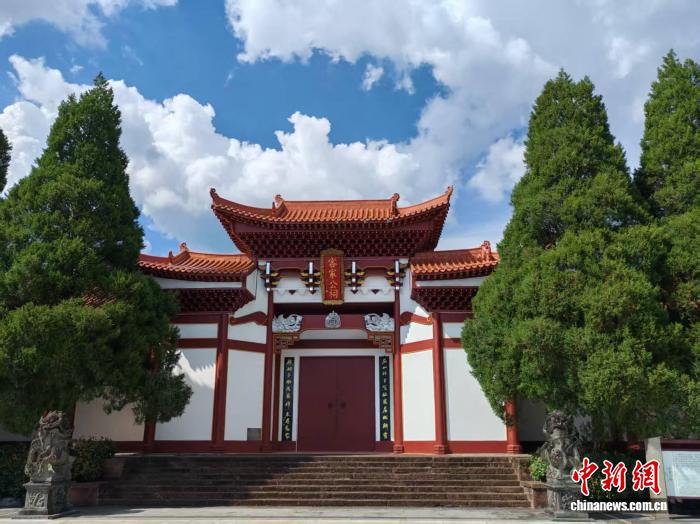
石壁客家祭祖习俗于2011年列入第三批国家级非物质文化遗产代表性项目名录。每年10月,这里鼓乐齐 鸣、热闹非凡,成千上万的海内外客属乡亲寻根谒祖、敬献花篮、鞠躬上香,场面蔚为壮观。 "客家文化的传承与创新,离不开理论支撑。"宁化县客家研究会会长赖洪林介绍,该县积极打造国际性 客家文化研讨平台,自1992年以来,宁化共举办3届"宁化石壁与客家世界学术研讨会"、12届"石壁客家 论坛",汇聚国内外专家学者1120人参与。 宁化县通过组织客家山歌大赛、客家方言展示大赛等方式,让客家文化更好地融入现代生活。当地不断 发展传统客家美食文化,壮大宁化客家小吃产业,截至目前,累计举办客家小吃培训班224期,发展客 家小吃店7000余家,辐射省内外50多个城市,带动从业人员5万余人。(完) 来源:中国新闻网 福建宁化:客家祖地引客来,文化传承活力足 中新网福建宁化9月1日电 (雷朝良 黄馨怡)"客家先民原先是中原汉民,为避战乱天灾南迁到宁化石壁, 在闽粤赣地区形成早期的客家先民……"暑假期间,5000余名游客走进福建省三明市宁化县客家祖地, 参观客家公祠,了解客家文化的历史渊源、发展脉络。 图为客家公祠。雷朝良摄 宁化是公认 ...

让“农民”成为更有吸引力的职业(新媒视点)
Ren Min Ri Bao Hai Wai Ban· 2025-08-31 22:47
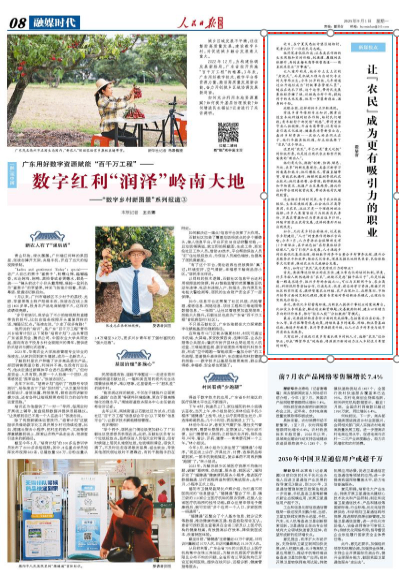
Core Viewpoint - The article highlights the emergence of a new generation of farmers in China, characterized by their educational background, innovative approaches, and the ability to leverage modern technology for agricultural development [1][2][3]. Group 1: New Generation of Farmers - The new farmers are not traditional figures relying solely on natural conditions; they are educated individuals who embrace modern agricultural practices and technologies [3]. - These farmers possess skills in areas such as live-streaming sales, smart machinery operation, and IoT monitoring, enabling them to respond to market demands effectively [3]. - The shift in perception of farming as a profession is evident, with more young people choosing to return to agriculture, driven by the potential for economic growth and community development [2][3]. Group 2: Importance of Talent in Rural Development - The role of talent in rural revitalization and digital village construction is increasingly recognized, with new job titles like "Rural Collective Economic Manager" being introduced [3]. - The influx of skilled individuals into rural areas not only drives industrial development but also enhances grassroots governance and cultural heritage [3][4]. Group 3: Strategies for Attracting Talent - Establishing regular training mechanisms is essential to ensure the growth of the farming profession, providing customized courses based on regional needs [4]. - Optimizing the rural business environment is crucial, including setting up special funds to address financing challenges and creating performance-based incentive systems [4]. - Providing material support, such as housing subsidies and improved infrastructure, is necessary to make rural living conditions comparable to urban areas [4].
“尔滨”+马拉松,“顶流”相遇会带来什么?
Xin Hua Wang· 2025-08-31 11:31
Core Viewpoint - The Harbin Marathon serves as a platform for self-challenge and a vivid practice of cultural and sports integration in Harbin's post-Winter Olympics era, attracting 35,000 runners from around the world [1] Group 1: Event Highlights - The marathon features a scenic route with historical buildings, riverside views, and live performances, enhancing the running experience [2] - The event includes 52 performance and support points, showcasing the city's musical charm and local cuisine, contributing to a unique "music track" experience [2][4] - The marathon has been upgraded to a World Athletics Gold Label event, achieving a record number of participants and attracting top-ranked runners [4] Group 2: Economic and Cultural Impact - The event promotes high-quality urban development through the "Sports+" initiative, integrating sports with culture, tourism, and commerce [4][5] - The first Harbin Cultural, Sports, and Tourism Industry Expo was held alongside the marathon, enhancing brand visibility for local products and businesses [4] - Hotel and restaurant searches in Harbin saw significant increases, with searches for hotels near key locations rising by up to 332% year-on-year [4] Group 3: Innovations and Services - The introduction of the "Sun Island Glow Night Run" attracted 9,000 participants, boosting the night economy and aligning with national health initiatives [7] - Participants received personalized training guidance and recovery services, enhancing their overall experience and connection to the city [7] - The marathon aims to create a new city image and brand, linking winter sports with summer events, thereby increasing Harbin's recognition as a "treasure city" [7]
长沙南部融城片区16个重点项目签约 总投资192.8亿元
Chang Sha Wan Bao· 2025-08-30 03:27
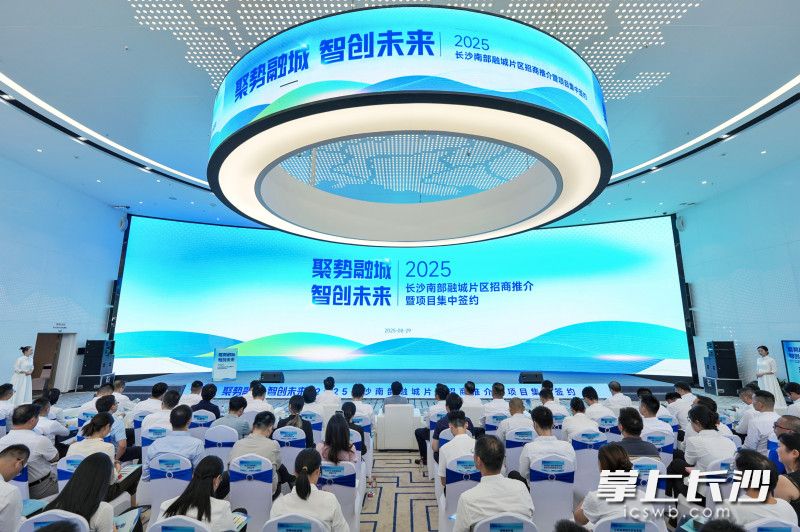
Core Insights - The signing event for 16 key projects in the Changsha Southern Integration Zone took place on August 29, with a total investment of 19.28 billion yuan [1][5]. Group 1: Event Overview - The event was attended by key officials including the Provincial Party Committee member and Mayor Wu Guiying, as well as other provincial and municipal leaders [2][6]. - The Southern Integration Zone is positioned as a strategic area for the Changsha-Zhuzhou-Xiangtan metropolitan area, focusing on becoming a national model for two-type development and innovation [5]. Group 2: Project Details - The signed projects span various sectors including digital economy, low-altitude economy, new energy, biomedicine, and cultural technology [9]. - Notable projects include: - The Zhichain Xinghe Intelligent Cloud Computing Center with a total investment of 5.2 billion yuan, featuring a computing power scale of 1500P [9]. - The Chuangyi Chip Inductor Industry Base, focusing on core technology for chip inductors [9]. - The Yunshusiv Recycling Project for retired batteries, aimed at promoting low-carbon lifecycle utilization [9]. - The Dongchao Technology Central South Regional Headquarters, which will implement medium-free imaging technology in smart healthcare and smart city applications [9]. Group 3: Future Outlook - The signing event is expected to inject new momentum into the development of the Southern Integration Zone, with plans to accelerate project implementation and enhance investment [9].
ST岭南:8月28日召开董事会会议
Mei Ri Jing Ji Xin Wen· 2025-08-29 18:35
Group 1 - ST Lingnan (SZ 002717) announced the convening of its 35th meeting of the 5th Board of Directors on August 28, 2025, to review the semi-annual report and its summary for 2025 [1] - For the first half of 2025, ST Lingnan's revenue composition was as follows: Ecological landscaping accounted for 43.99%, water and environmental governance business accounted for 41.94%, and cultural tourism accounted for 14.07% [1]

盈新发展: 半年报监事会决议公告
Zheng Quan Zhi Xing· 2025-08-29 18:22
Group 1 - The company held its 11th Supervisory Board's 8th meeting on August 28, 2025, with all three supervisors present, confirming compliance with relevant regulations and the company's articles of association [1] - The Supervisory Board approved the 2025 semi-annual report, stating that the report accurately reflects the company's actual situation without any false records or significant omissions [1][2] - The voting result for the semi-annual report was 3 votes in favor, 0 against, and 0 abstentions [2] Group 2 - The Supervisory Board approved adjustments to the 2025 stock option incentive plan, reducing the number of initial incentive recipients from 90 to 87 and the number of stock options from 40.8 million to 40 million, while increasing the reserved stock options from 9.2 million to 10 million [2][3] - The voting result for the adjustment of the stock option incentive plan was 3 votes in favor, 0 against, and 0 abstentions [3] Group 3 - The Supervisory Board approved the initial grant of stock options to 87 eligible incentive recipients, confirming that all recipients meet the necessary qualifications and conditions as per relevant laws and regulations [3][4] - The initial grant date for the stock options is set for August 28, 2025, with an exercise price of 1.66 yuan per share for a total of 40 million stock options [4][5] - The voting result for the initial grant of stock options was 3 votes in favor, 0 against, and 0 abstentions [5]
