
石化

Search documents
华锦股份:张宏伟先生、黄武生先生因工作调动申请辞去公司副总经理职务
Mei Ri Jing Ji Xin Wen· 2025-09-16 09:39
Group 1 - The company announced the resignation of two vice presidents and the chief accountant due to job transfers, with no other positions held post-resignation [1] - For the first half of 2025, the company's revenue composition is as follows: petrochemicals 86.47%, fine chemicals 8.22%, chemical fertilizers 4.47%, and other industries 0.84% [1] - The current market capitalization of the company is 8.5 billion yuan [1]

华锦股份:9月16日召开董事会会议
Mei Ri Jing Ji Xin Wen· 2025-09-16 09:33
Group 1 - The core point of the article is that Huajin Co., Ltd. announced the convening of its 10th meeting of the 8th Board of Directors on September 16, 2025, to discuss the appointment of a chief accountant and the authorization to act as the secretary of the board [1] - For the first half of 2025, Huajin Co., Ltd.'s revenue composition is as follows: petrochemicals accounted for 86.47%, fine chemicals 8.22%, chemical fertilizer manufacturing 4.47%, and other industries 0.84% [1] - As of the time of reporting, Huajin Co., Ltd. has a market capitalization of 8.5 billion yuan [1]
阳光下的守护|“极简查”“无感管”“就近办”……解码“石化警务”
Yang Shi Wang· 2025-09-16 09:17
央视网消息(记者 谢博韬):位于江苏省连云港市徐圩新区的连云港石化产业基地是全国七大石化产业基地之一,园区内石化企业体量 大,每日进出园区三类危化品车辆约1500辆,年均监管三类危化品600余万吨。在不影响园区内企业正常经营的同时,如何确保公共安全监管 工作到位?便成了连云港市公安局徐圩新区分局深入思考的问题。 "消防设施前不能堆放杂物""危化品未存放在指定区域"……近日,徐圩新区公安分局联合消防、应急、综治等部门在辖区某危化品企业检 查时发现企业存在的安全隐患,当场列出问题清单和整改意见。 今年以来,徐圩新区公安分局坚持从企业角度出发,深化"行政执法一件事"改革,推动综合查一次"极简查"场景建设,牵头或参与检查场 景16个,覆盖56项涉企检查事项,并按照"一场景一规范",建立无事不扰"白名单",实现入企检查次数减少七成以上。同时,徐圩新区公安分 局出台《石化警务工作指引》,联合相关职能部门以危化品管理为重点制定"一企一策"合规经营指导手册,并同步制定《企业安全防范建设标 准化清单》。 入企检查次数减少了,但公共安全监管的力度并未放松。徐圩新区公安分局创新危化品远程监管特色警务机制,引进"徐小警"数字警察, ...

第二个5万亿城市,要来了
Hu Xiu· 2025-09-16 03:57
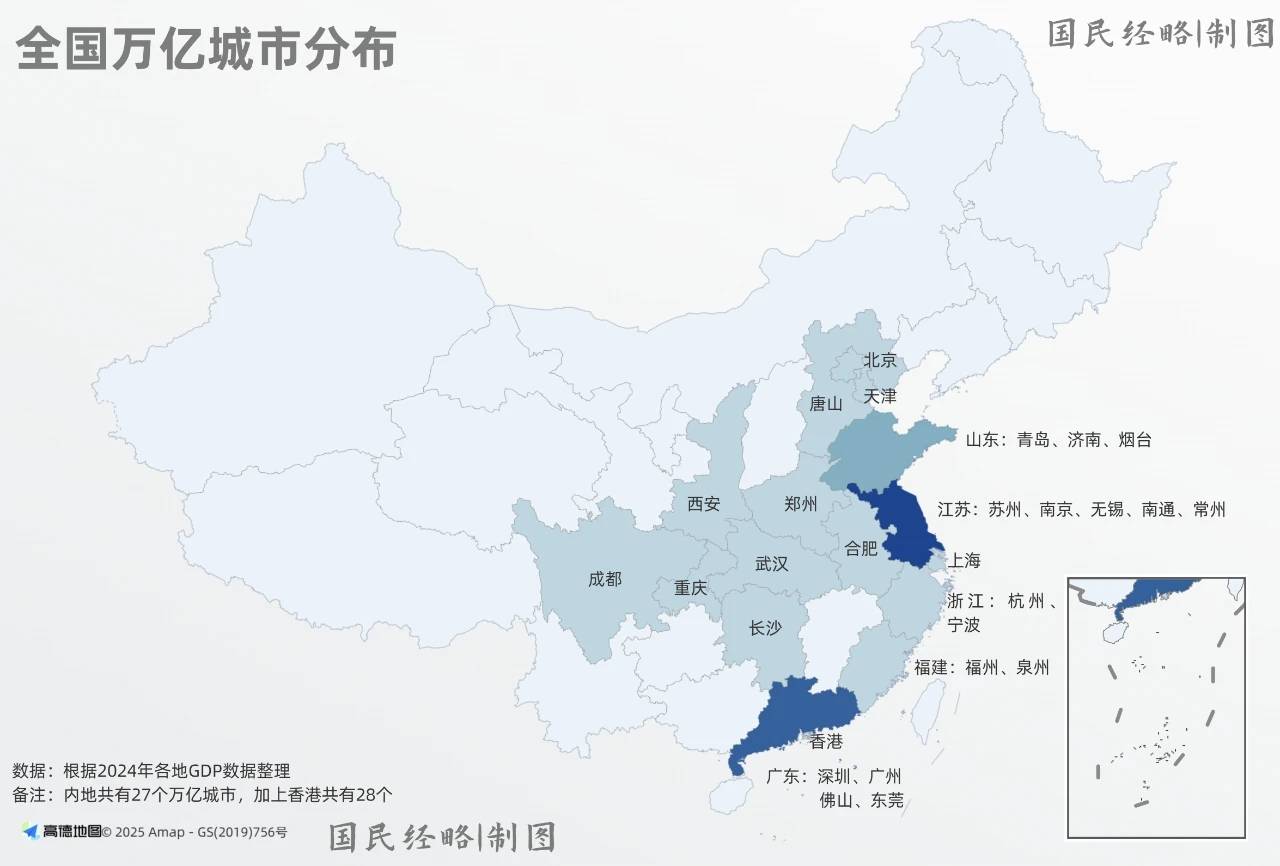
Group 1 - The core point of the article is that Beijing's GDP is projected to exceed 5 trillion yuan by the end of 2025, making it the second city in China to reach this milestone after Shanghai [2][3] - This development signifies a widening economic gap between Beijing and other major cities like Shenzhen and Guangzhou [3][4] - Currently, there are 27 cities in China with a GDP exceeding 1 trillion yuan, and this number is expected to grow to 30 in the coming years [8][10] Group 2 - The economic growth of Beijing and Shanghai to 5 trillion yuan indicates a new competitive starting point for the top 10 cities in terms of GDP, all of which are expected to surpass 2 trillion yuan [12] - The significant GDP gap between Beijing, Shanghai, and cities like Guangzhou and Shenzhen has been exacerbated by adjustments made during two national economic censuses, which led to substantial GDP revisions for Beijing and Shanghai [15][20] - The first census in 2018 resulted in GDP increases of 3.332 billion yuan for Shanghai and 2.786 billion yuan for Beijing, while the second census in 2023 saw increases of 4.185 billion yuan for Shanghai and 3.593 billion yuan for Beijing [16][18] Group 3 - The article discusses the challenges faced by Guangzhou and Shenzhen in catching up with Beijing and Shanghai, highlighting that the GDP ratio of Shenzhen to Shanghai has increased from 45% to 68% since 2000 [23] - The article attributes the widening gap to differences in administrative levels, national positioning, and industrial structures between these cities [25][31] - Beijing and Shanghai hold significant advantages due to their status as direct-controlled municipalities and their roles as national political and economic centers, respectively [33][34] Group 4 - The article emphasizes that while Beijing is not a financial center, its financial sector contributes over 800 billion yuan to its GDP, comparable to Shanghai [37] - Shenzhen is recognized for its strengths in digital economy and technological innovation, while Guangzhou is noted for its balanced industrial structure but needs to strengthen its emerging industries [44][46] - The future growth of these cities will depend on their ability to capitalize on emerging industries such as artificial intelligence, new energy, and biomedicine [47][48]
墨西哥化学工业协会:新碳氢化合物法规阻碍石化投资
Zhong Guo Hua Gong Bao· 2025-09-16 02:56
Group 1 - The Mexican Chemical Industry Association (ANIQ) warns that new hydrocarbon regulations to be approved by the Mexican Congress may hinder billions of dollars in investments in the country's petrochemical sector [1] - The new legislation will grant the Mexican government a leading role in all hydrocarbon-related matters, while the struggling state-owned oil giant Pemex will continue to enjoy privileged status in exploration and production [1] - ANIQ expresses concerns about "regulatory overload" from the proposed regulations, which could impede critical investments needed for industry development and affect over 40 industrial sectors reliant on chemical raw materials [1] Group 2 - ANIQ President José Carlos Pons emphasizes the need for the regulations to include definitions of petrochemical products derived from the oil and gas industry, such as methane, ethane, propane, butane, and naphtha [2] - Pons warns that failure to amend the bill could lead to regulatory overload risks, obstructing future investments crucial for the development of the industry and over 40 strategic supply chains [2] - The current regulatory proposal could jeopardize the investment capacity of $45 to $55 billion over the next 15 years, which could have supported projects to replace $14 billion in petrochemical product and fertilizer imports [2]
陶氏“Path2Zero”裂解项目推迟复工
Zhong Guo Hua Gong Bao· 2025-09-16 02:50
中化新网讯 9月11日,陶氏公司宣布,正考虑将加拿大"净零排放一体化聚乙烯(PE)项目"(Path2Zero)的 复工时间推迟1至2年。 事实上,自2023年底陶氏化学就"Path2Zero"项目作出最终投资决策(FID)后,石化市场便已进入下行周 期;而美国宣布对全球几乎所有国家加征进口关税后,市场低迷期进一步延长,众多经济学家随之调低 了经济增长预期。 当日,陶氏公司首席执行官吉姆·菲特林在摩根士丹利拉古纳会议的投资者报告环节中表示:"我们目前 考虑的推迟周期为1至2年。"陶氏公司计划在2025年底公布该项目复工的具体时间细节,该项目选址位 于加拿大艾伯塔省萨斯喀彻温堡市。据悉,陶氏公司最初计划该项目一期工程于2027年底投产,二期工 程于2029年投产。菲特林指出,对于"Path2Zero"这类大型项目,把握投产时机与市场峰值的契合度是 实现回报率最大化的关键,就当前市场环境而言,显然不是启动项目的合适时机。 不过,菲特林强调:"推迟启动并不改变'Path2Zero'项目的建设合理性,我们依然认为这是一个优质项 目。"与美国类似,加拿大拥有丰富的低成本乙烷资源,这使得该国乙烯生产企业相较全球多数地区的 ...

万华化学子公司获科威特石化战投
Zhong Guo Hua Gong Bao· 2025-09-16 02:15
Group 1 - Wanhua Chemical Group announced that Kuwait Petrochemical Industries Company has invested $638 million in its subsidiary, Wanhua Chemical (Yantai) Petrochemical Co., acquiring a 25% stake [1] - Following the investment, Wanhua Petrochemical's registered capital increased from 2.979 billion yuan to 3.972 billion yuan, with Wanhua Chemical holding 75% and Kuwait Petrochemical holding 25% [1] - The partnership aims to enhance the security of raw material supply for Wanhua's petrochemical business, mitigate operational risks, accelerate internationalization, and support China's Belt and Road Initiative [1] Group 2 - Kuwait Petrochemical Industries Company is a subsidiary of Kuwait Petroleum Company, which is among the top ten oil producers globally, responsible for exploring, producing, and selling all hydrocarbon resources in Kuwait [2] - Kuwait Petroleum Company exports approximately 4.5 million tons of liquefied petroleum gas (LPG) annually and has an annual naphtha production of about 10 million tons, with operations across six continents [2] - Kuwait Petrochemical focuses on managing and expanding the petrochemical business of Kuwait Petroleum Company [2]

2025中国企业500强发布,淄博2家企业入围
Qi Lu Wan Bao Wang· 2025-09-16 01:14
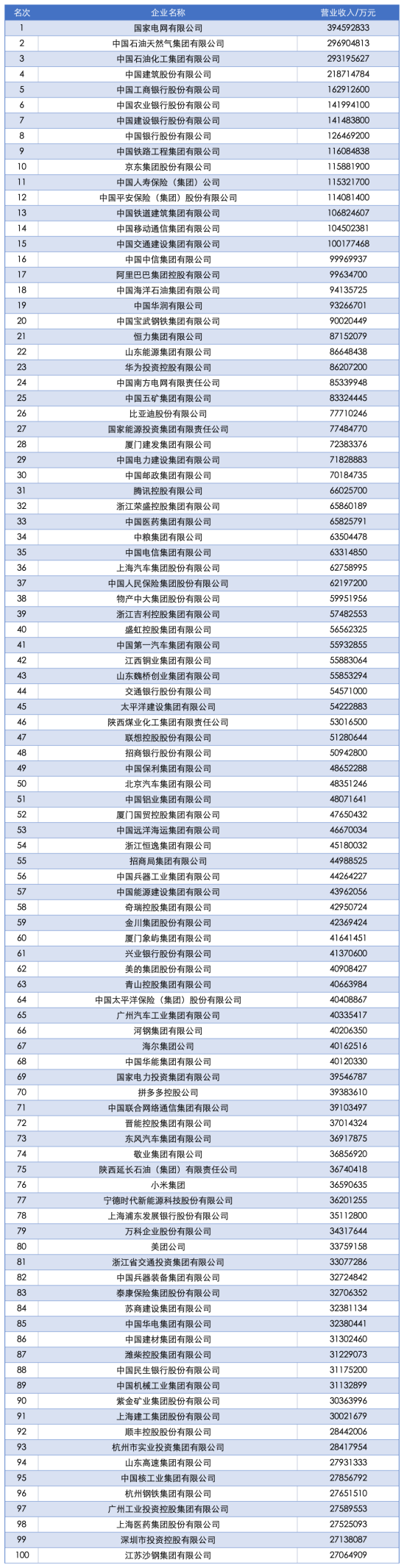
Core Insights - The 2025 China Top 500 Enterprises list was released, with the entry threshold rising to 47.96 billion yuan, an increase of 579 million yuan from the previous year [1] - Shandong province has 52 companies on the list, with two from Zibo, a decrease of one compared to last year [1][2] - The two companies from Zibo are Shandong Jincheng Petrochemical Group Co., Ltd. and Zibo Xintai Petrochemical Co., Ltd., with a combined revenue of 113.48 billion yuan [1][2] Company Summaries - Shandong Jincheng Petrochemical Group Co., Ltd. ranked 392nd with a revenue of 62.66 billion yuan. It has been on the list for 19 consecutive years and focuses on high-end chemical products, expanding into specialized chemicals and high-end food additives [1][2] - Zibo Xintai Petrochemical Co., Ltd. ranked 481st with a revenue of 50.82 billion yuan. It is recognized for its resilience and operates in multiple sectors including chemicals, new materials, and modern logistics [2] Industry Trends - The decrease in the number of companies from Zibo reflects the challenges faced by local industries, particularly the bankruptcy crisis of Shandong Huifeng Petrochemical Group Co., Ltd., which was previously ranked 456th with a revenue of 53.06 billion yuan [2][3] - The overall revenue of the top 500 enterprises reached 11.015 trillion yuan, with total assets of 46.085 trillion yuan, showing a year-on-year growth of 7.46% [4] - The net profit of these enterprises totaled 471 billion yuan, a 4.39% increase from the previous year, indicating a steady improvement in profitability [4]
德黑兰时报编译版:哈萨克斯坦对伊朗石化产品仍有需求
Shang Wu Bu Wang Zhan· 2025-09-15 16:03
Core Viewpoint - Kazakhstan continues to have a demand for Iranian petrochemical products despite launching multiple petrochemical projects in recent years, as domestic production has not yet met local needs [1] Group 1: Trade Relations - The trade situation between Iran and Kazakhstan has been positive this year, with Iranian exports to Kazakhstan amounting to 9 million USD and imports from Kazakhstan reaching 53 million USD from March 21 to June 21, 2025, both showing year-on-year growth [1] - Major trade goods between the two countries include sunflower seeds, corn, barley, and livestock products [1]
道达尔能源:美关税或致石化贸易下降15%
Zhong Guo Hua Gong Bao· 2025-09-15 06:07
Core Viewpoint - The ongoing U.S. tariffs are expected to further decrease the petrochemical trade by an additional 15% on top of the 34% decline experienced over the past five years [1] Industry Impact - The petrochemical industry is already under significant pressure, and the continuation of U.S. tariffs will exacerbate these challenges [1] - Companies without their own assets in the petrochemical trade will face increased difficulties in survival due to the tariffs [1] Market Dynamics - The U.S. tariffs are fostering protectionism, complicating short-term investment planning amid overcapacity and market volatility [1] - Tariffs are leading to an influx of products from certain countries into traditional markets, affecting competitive dynamics [1]
