化工

Search documents
化工ETF(159870)涨超3.6%,油价上涨有望带动化工品涨价预期
Sou Hu Cai Jing· 2026-02-24 05:50
Group 1 - The chemical sector is experiencing a positive start, with the U.S. announcing on February 18, 2026, that phosphorus and glyphosate will be classified as strategic resources [1] - The price of urea in India has reached a new high, with East Coast CFR at $512 per ton and West Coast CFR at $508 per ton, reflecting an increase of approximately $85 per ton compared to January [1] - Guojin Securities indicates that rising oil prices may lead to expectations of chemical price increases, while a potential decrease in geopolitical risk premiums could lower industry cost pressures, suggesting a favorable long-term outlook for leading midstream and downstream chemical companies [1] Group 2 - As of January 30, 2026, the top ten weighted stocks in the CSI Chemical Industry Theme Index (000813) include Wanhua Chemical, Salt Lake Co., and others, accounting for a total of 44.82% of the index [2] - The Chemical ETF (159870) closely tracks the CSI Chemical Industry Theme Index, which consists of seven sub-indices reflecting the overall performance of listed companies in related sub-industries [1][2]


开工大吉!A股飘红!
Sou Hu Cai Jing· 2026-02-24 05:30
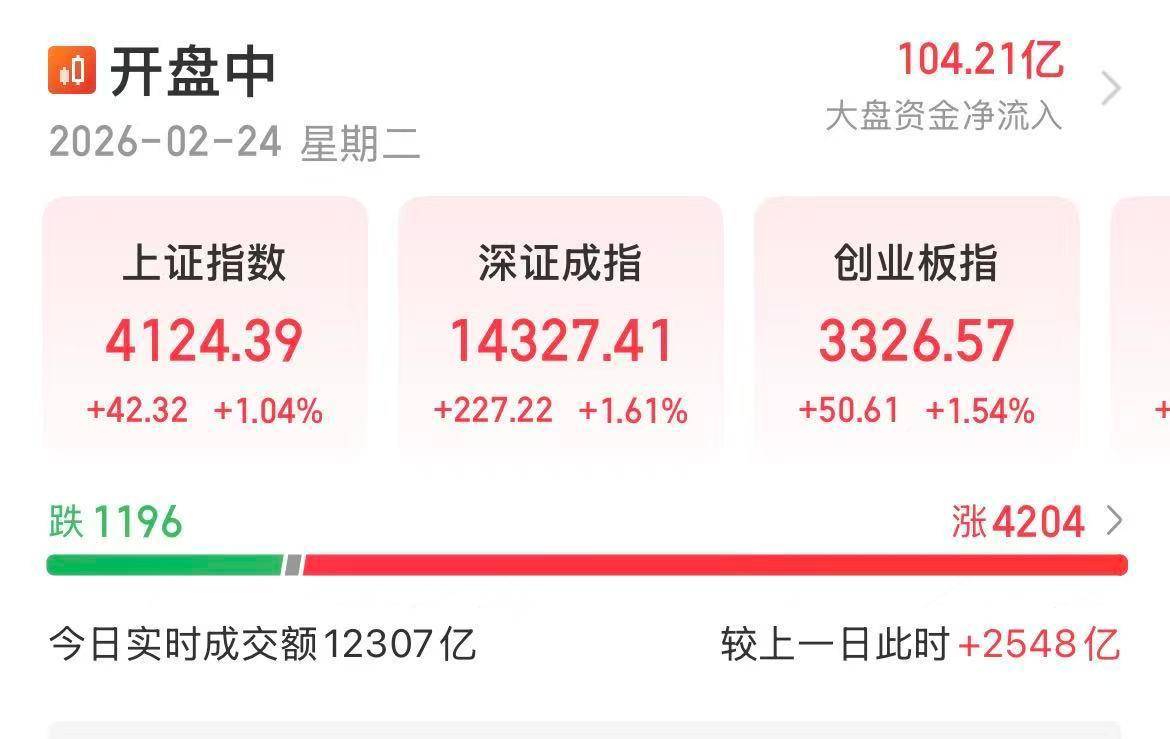
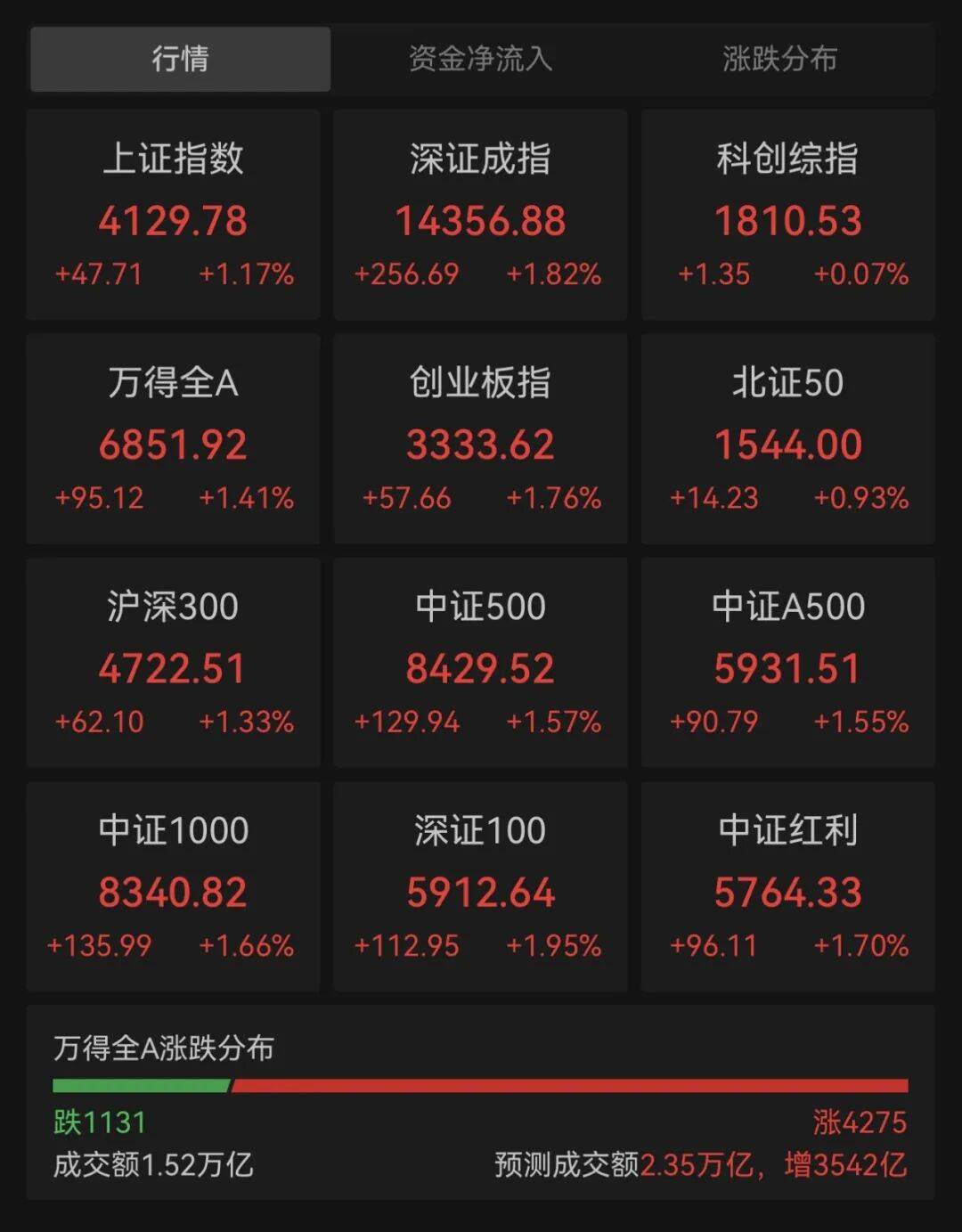
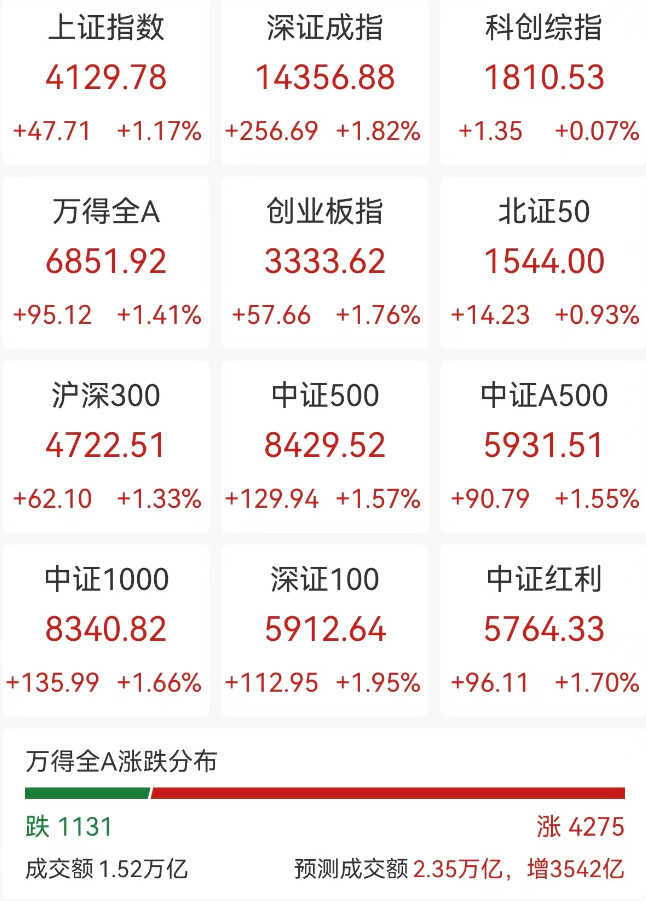
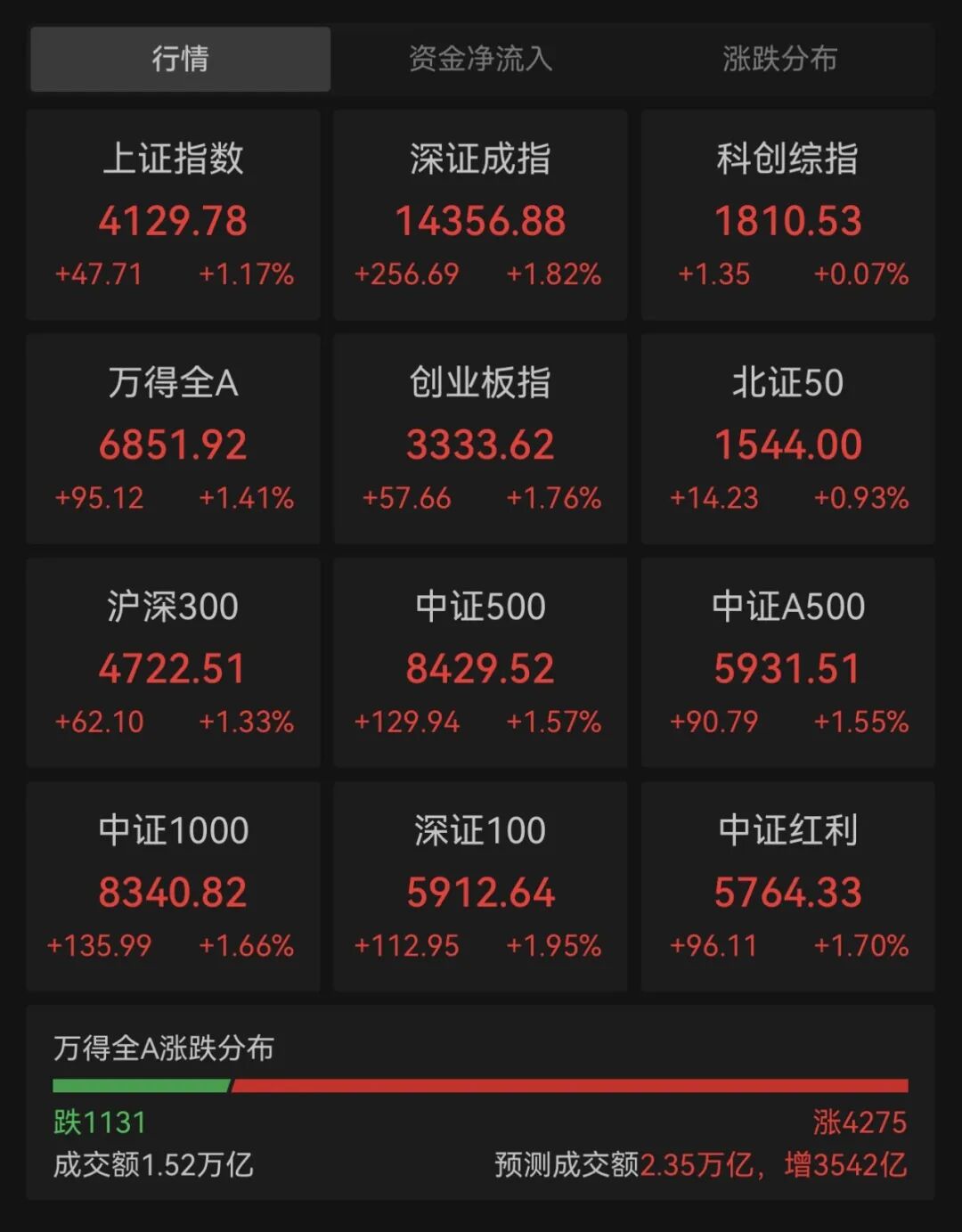
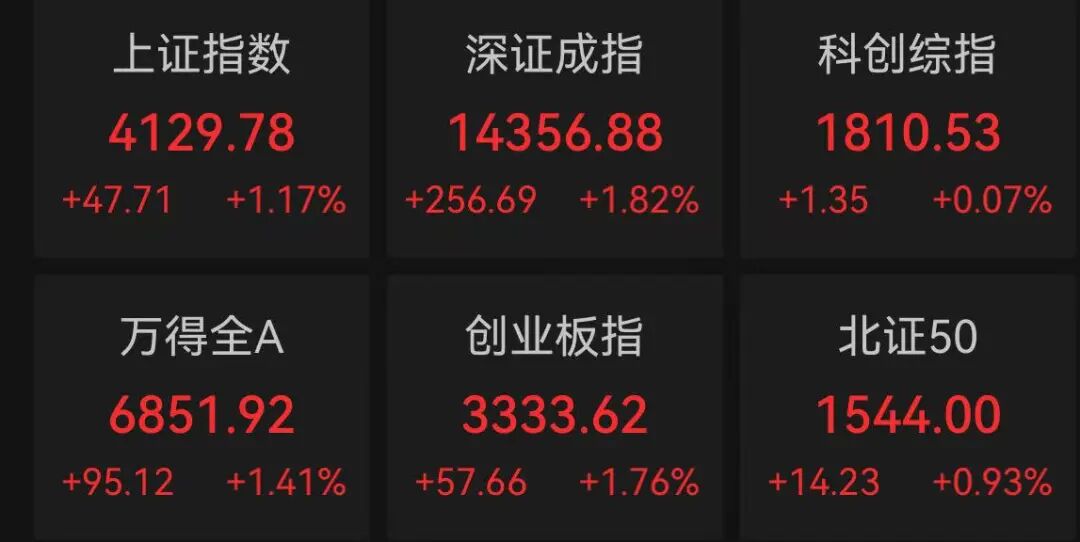
Market Performance - On February 24, A-shares saw all three major indices rise by over 1%, with more than 4,200 stocks gaining [1] - The Shanghai Composite Index increased by 1.17% to 4,129.78 points, the Shenzhen Component Index rose by 1.82%, and the ChiNext Index climbed by 1.76% [2] - The total trading volume for A-shares reached 1.52 trillion yuan, with a predicted increase to 2.35 trillion yuan, up by 354.2 billion yuan [2] Sector Performance - Resource stocks, particularly oil and gas, led the market rally, with significant gains in companies like Tongyuan Petroleum and CNOOC Services, among others [2] - AI-related stocks experienced a substantial pullback, with companies like Seedance and DeepSeek seeing declines [4] - The film and cinema sector faced a sharp decline, with major players like Light Media and China Film hitting their daily limit down [4] Hardware and Technology - Demand driven by AI has led to strong performance in computing hardware stocks, with companies like Longfly Fiber achieving new historical highs [3] - Other notable gainers in the computing hardware sector included Tianfu Communication and Zhongji Xuchuang [3] Overall Market Sentiment - The market sentiment was influenced by concerns over Trump's tariff policies and escalating tensions in the Middle East, contributing to the rise in resource cycle stocks [2]




A股4200股上涨,油气股掀涨停潮,港股AI应用爆发,智谱大涨18%
Xin Lang Cai Jing· 2026-02-24 05:04
Market Performance - The A-share market experienced a strong opening after the Spring Festival, with the Shanghai Composite Index rising by 1.17%, the Shenzhen Component Index increasing by 1.82%, and the ChiNext Index up by 1.76% [1][4] - Over 4,200 stocks in the Shanghai and Shenzhen markets saw gains [1] Sector Highlights - The precious metals, coal, semiconductor, chemical, electric power, and basic metals sectors showed significant gains [1] - Oil and gas stocks surged, with companies like Tongyuan Petroleum and Xinjin Power hitting the daily limit [2][6] - The chemical sector saw explosive growth, with Meibang Co. achieving four consecutive daily limits and Jinniu Chemical hitting the limit as well [3][6] Chip and Technology Stocks - Chip stocks experienced a notable increase, with Beijing Junzheng rising nearly 14% and other companies like Zhaoyi Innovation and Saiwei Electronics increasing around 4% [7] - The photolithography index rose by 3%, with Juguang Technology surging by 14.23% [7] Downward Trends - The media sector faced significant declines, with major companies like Light Media and Happiness Blue Sea hitting the daily limit down [8] - The AI application sector, including companies like Seedance and DeepSeek, saw substantial pullbacks [8] International Market Insights - In the Asia-Pacific region, Hong Kong's large model stocks strengthened, with Zhizhu rising over 18% [9] - The Japanese stock market saw a sudden drop, with major companies erasing earlier gains [9]
化工板块领涨市场,指数涨超4%,化工行业ETF易方达(516570)等产品受市场关注
Sou Hu Cai Jing· 2026-02-24 05:01
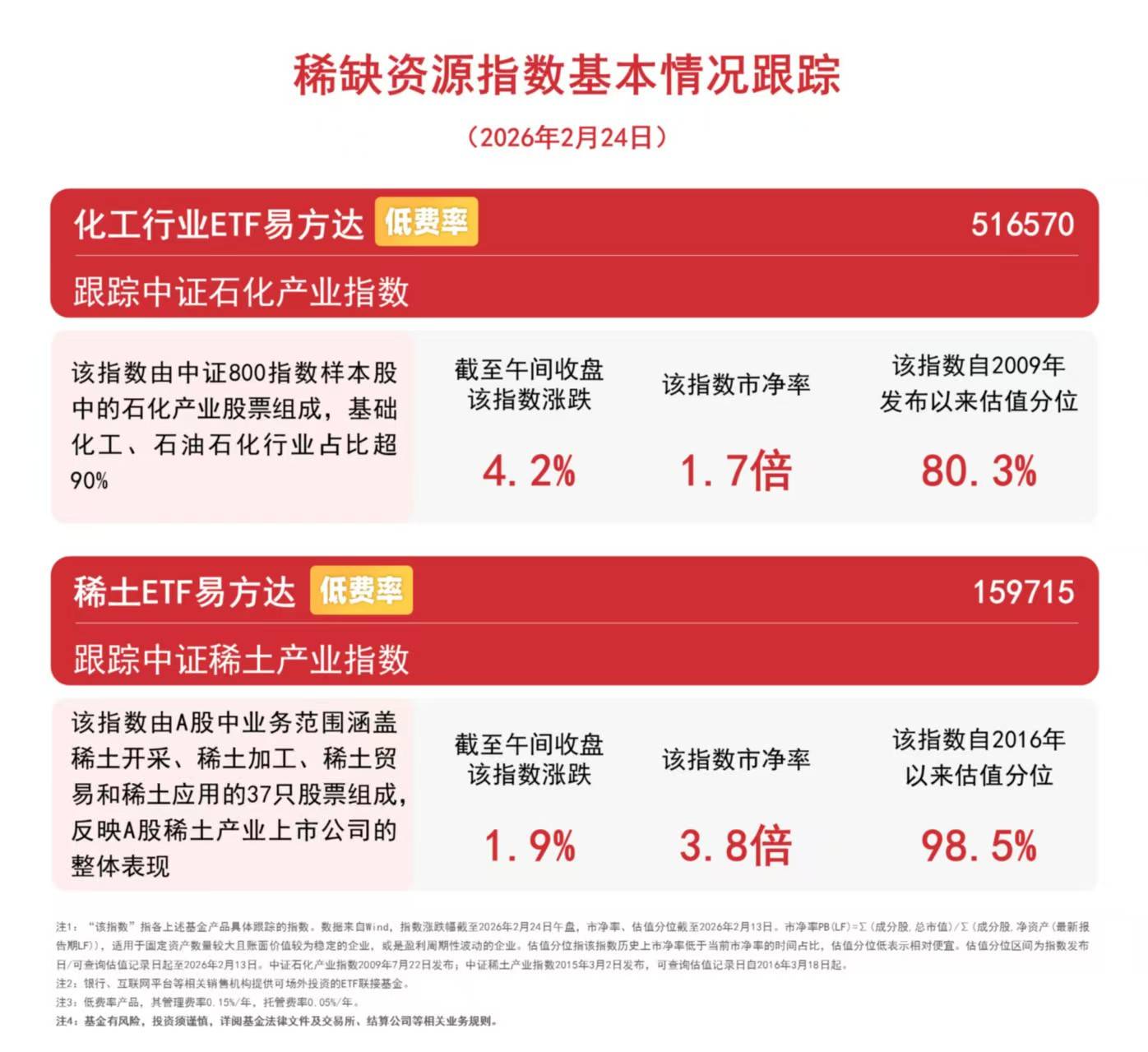
Group 1 - The core viewpoint of the article highlights a positive trend in the chemical industry, with the China Securities Petrochemical Industry Index rising by 4.2% and the China Securities Rare Earth Industry Index increasing by 1.9% [1] - The chemical sector is characterized as a typical cyclical industry, usually experiencing a five-year cycle that includes phases of "profit upturn - capacity expansion - profit bottoming - capacity clearance/demand expectation improvement" [1] - Recent data indicates that the ETF for the chemical industry, specifically the E Fund (516570), has seen a net inflow of nearly 1.5 billion yuan over the past month, reflecting increased investor interest [1] Group 2 - Guangfa Securities expresses optimism regarding the chemical industry, particularly in the context of the "14th Five-Year Plan" beginning phase, suggesting a "dawn" for the sector [1] - Factors contributing to this positive outlook include a slowdown in capital expenditure growth, a reduction in competition, overseas interest rate cuts, and a focus on domestic demand expansion [1]
A股“开门红”
Xin Lang Cai Jing· 2026-02-24 04:58
| 行情 | 资金净流入 | 涨跌分布 | | --- | --- | --- | | 上证指数 | 深证成指 | 科创综指 | | 4129.78 | 14356.88 | 1810.53 | | +47.71 +1.17% +256.69 +1.82% | | +1.35 +0.07% | | 万得全A | 创业板指 | 北证50 | | 6851.92 | 3333.62 | 1544.00 | | +95.12 +1.41% +57.66 +1.76% | | +14.23 +0.93% | | 沪深300 | 中证500 | 中证A500 | | 4722.51 | 8429.52 | 5931.51 | | +62.10 +1.33% | +129.94 +1.57% | +90.79 +1.55% | | 中证1000 | 深证100 | 中证红利 | | 8340.82 | 5912.64 | 5764.33 | | +135.99 +1.66% | +112.95 +1.95% | +96.11 +1.70% | | 万得全A涨跌分布 | | | | 跌1131 | | 涨4275 | | ...
钱诚天眼:6股争王,2月24日牛妖股风云录(一)
Sou Hu Cai Jing· 2026-02-24 04:52
Group 1 - A-shares experienced a significant surge on February 24, 2026, with all three major indices rising over 1% and trading volume increasing by 307.4 billion [2][3] - The market is witnessing a shift in risk appetite, with resource stocks like oil, gold, and chemicals leading the charge due to macroeconomic factors, while AI hardware stocks also show strong performance [3] - A dual-driven market structure is emerging, characterized by resource inflation and technology growth, indicating a healthy market dynamic [3] Group 2 - Six stocks identified as "bull stocks" share common traits: they are not market leaders but are positioned in mid-low tiers with high safety margins and speculative value [4] - Each stock has a strong thematic driver, such as significant orders or major asset restructurings, which act as catalysts for price surges [4] - Despite underwhelming 2025 Q3 reports, the market focuses on future expectations, with companies like YN Holdings and Roman Shares indicating potential reversals in fundamentals [4] Group 3 - Falsheng (000890) is experiencing a rebound due to a major asset sale, which is expected to optimize its asset structure and improve its financial situation [5] - In 2025 Q3, Falsheng reported a revenue of 205 million, a 24.06% decline year-on-year, but a significant reduction in losses by 44.95% [6] - Yaxing Anchor Chain (601890) benefits from the global shipbuilding cycle and plans to invest in deep-sea mooring equipment, with a 5.28% revenue increase in 2025 Q3 [8][9] Group 4 - Roman Shares (605289) is transitioning into the computing and renewable energy sectors, with recent contracts totaling approximately 2.92 billion, leading to a 63.10% revenue increase in 2025 Q3 [12][13] - YN Holdings (001896) successfully turned a profit in 2025 Q3 with a net profit of 288 million, driven by its investment in computing power [15][16] - Hancable (002498) is positioned to benefit from a significant increase in state grid investments, although it reported an 18.55% decline in net profit in 2025 Q3 [18][19] Group 5 - Meibang Shares (605033) is capitalizing on the chemical cycle and potential price increases, despite a 2.23% revenue decline in 2025 Q3 [21][22] - The company is actively reducing inventory, but faces increased pressure on receivables [22] - The overall market sentiment is leaning towards stocks with strong thematic drivers and positive fundamental shifts, indicating potential investment opportunities [25]



1900亿龙头,涨停!历史新高
Zhong Guo Zheng Quan Bao - Zhong Zheng Wang· 2026-02-24 04:50
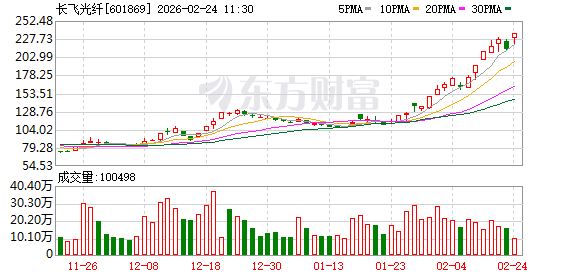
Market Performance - The three major indices showed strong performance in the morning, particularly in cyclical stocks, with significant gains in oil and gas extraction, non-ferrous metals, and chemical sectors [2] - Notable stocks included: - Keli Co., Ltd. (53.62, +23.75%, market cap 1.7 billion) - Tongyuan Petroleum (12.82, +20.04%, market cap 748 million) - Potential Hengxin (34.18, +17.50%, market cap 7.56 billion) [2] Fiber Optic Industry - The price of G.652.D single-mode fiber optic reached a nearly seven-year high of over 35 yuan per core kilometer as of January 2026, driven by increased demand from global AI data centers and supply constraints in key materials [5] - Changfei Fiber Optic's stock hit a historical high with a market cap of 194.3 billion, reflecting strong performance in the fiber optic sector [3][9] MLCC Market - The leading stock in the MLCC (Multi-layer Ceramic Capacitor) sector, Fenghua Hi-Tech, experienced a "limit up" increase, with recent prices in South Korea rising nearly 20% [6] - The surge in demand for MLCCs is attributed to the explosive growth of AI server requirements, which have increased the MLCC usage in AI servers by over three times compared to regular servers [6] Power Infrastructure - The power infrastructure sector saw significant gains, particularly in ultra-high voltage, flexible DC transmission, and grid equipment [7] - The State Council's recent policy aims to establish a unified national electricity market by 2030, with market transactions expected to account for 70% of total electricity consumption [9][10] - This policy is anticipated to drive demand for core products such as ultra-high voltage and digital equipment, accelerating upgrades in the power grid [10]
千亿市值巨头 涨停
Shang Hai Zheng Quan Bao· 2026-02-24 04:43
Market Overview - On the first trading day of the Year of the Horse, major A-share indices collectively rose, with the Shanghai Composite Index up by 1.17%, Shenzhen Component Index up by 1.82%, and ChiNext Index up by 1.76% [2] - The trading volume in the Shanghai and Shenzhen markets reached 15,210 billion yuan, an increase of 3,074 billion yuan compared to the previous trading day [2] - Over 4,200 stocks in the market experienced gains [2] Resource and Technology Stocks - Resource cyclical stocks, including oil, natural gas, gold, and chemicals, saw significant increases, with companies like Zhongman Petroleum and Hunan Silver hitting the daily limit [2] - AI-driven demand led to a surge in stocks related to optical fibers, CPO, PCB, and MLCC, with Longfei Optical Fiber hitting the daily limit and reaching a historical high [2] - The glass fiber sector was notably active, with Shandong Glass Fiber hitting the daily limit within two minutes of opening [5][6] Glass Fiber Sector - On February 24, multiple glass fiber stocks surged, with International Composite hitting the daily limit with a 20% increase, setting a new historical high [6] - Shandong Glass Fiber opened with a rapid increase, and other companies like Changhai Co., China Jushi, Honghe Technology, and China National Materials also saw significant gains [6] - Due to a shortage of specialty glass fiber cloth, manufacturers are adjusting their product structures, leading to a supply gap in traditional electronic cloth [9] MLCC Sector - The MLCC sector experienced a collective rise, with Fenghua High-Tech hitting the daily limit and Dali Kaipu reaching a "20cm" limit [10] - The demand for high-end MLCCs surged due to increased orders from AI server needs, with Murata Manufacturing facing capacity shortages [10] - TrendForce reported that major manufacturers like Murata, Samsung Electro-Mechanics, and Taiyo Yuden are operating at over 80% capacity due to high demand [10][11] Film Industry - The film sector saw a collective decline, with major companies like Light Media and Bona Film Group hitting the daily limit down [12][13] - The 2026 Spring Festival box office revenue dropped significantly, with a total of 5.752 billion yuan, and the average ticket price decreased by 6% year-on-year [17] - Despite a record number of screenings, the overall attendance rate was only 22.5%, indicating a mismatch between supply and demand in the film market [17]


未知机构:长江金属大化工交运联合深度资源大时代下一个战略品种在哪里-20260224
未知机构· 2026-02-24 04:10
Summary of Key Points from the Conference Call Industry Overview - The conference call discusses the non-ferrous metal resources market and the implications of geopolitical factors and carbon neutrality policies on resource scarcity [1] - The focus is on strategic resources in China and the U.S., highlighting the competitive advantages in manufacturing and supply chain [2] Core Insights and Arguments 1. **Strategic Resources**: - China possesses a complete industrial chain and cost advantages, successfully capturing profits from both overseas raw materials and downstream exports, particularly in sectors like electrolytic aluminum, chemicals, and oil transportation [2] - Certain high-tech industries in the U.S., such as civil aviation, gas turbines, and semiconductors, have become strategic resources due to tariffs and geopolitical tensions [2] 2. **Global Trends**: - The trend of de-globalization is leading to a return of manufacturing to various countries and strategic inventory replenishment, which is expected to enhance the resilience of manufacturing demand [2] - The current low-interest-rate environment is facilitating financial liquidity that is being transmitted to the real economy, indicating a rotation cycle in commodities from "non-ferrous - chemicals - crude oil," with promising future potential [2] 3. **Price Dynamics**: - Compared to the record highs in non-ferrous resources, prices for electrolytic aluminum, chemicals, refining, and aviation are at historically low levels, creating a strong safety margin [2] - The constrained supply in smelting and manufacturing sectors results in profit margins significantly lower than those in mining; thus, a price rebound could lead to substantial profit elasticity [2] Additional Important Content - The discussion emphasizes the importance of understanding the interplay between geopolitical factors and market dynamics in identifying investment opportunities within the resource sector [1][2] - The potential for price recovery in the mentioned sectors is highlighted as a key area for investors to watch, given the current market conditions [2]
“开门红”如期而至,百股涨停,你收到“红包”了吗
Sou Hu Cai Jing· 2026-02-24 03:54
Market Overview - The A-share market experienced a strong opening on the first trading day, with the Shanghai Composite Index rising by 1% and over 4,200 stocks increasing in value, resulting in a net capital inflow of 10.4 billion yuan [1][4]. Sector Performance - The oil and chemical sectors led the gains, with 13 stocks in the chemical sector and 12 in the oil sector hitting the daily limit [4][5]. - Other sectors with notable performances included communication equipment and electrical equipment, each with 6 stocks hitting the limit, while construction and building materials had 5 stocks each [4]. Conceptual Trends - The "Belt and Road" initiative saw 17 stocks hitting the limit, while natural gas had 16, and sectors like energy storage, hydrogen energy, and photovoltaics each had 12 stocks hitting the limit, indicating a strong focus on new energy [4][6]. Media and Entertainment Sector - The media and entertainment sector faced a decline of 5.26%, with no stocks hitting the limit. Notable declines included Light Media at a 20% drop and Happiness Blue Sea at an 18.42% drop [6][7]. - Analysts had previously warned of potential risks in this sector, citing lower-than-expected box office revenues and high valuations, which may have contributed to the sector's poor performance [7]. Geopolitical Influences - The rise in oil and chemical stocks may be linked to escalating geopolitical tensions, particularly between the U.S. and Iran, which have led to increased oil prices surpassing $70 per barrel [8]. - Historical trends suggest that geopolitical conflicts often lead to an initial spike in oil prices driven by market sentiment, followed by a correction based on fundamental factors [8].