
私募

Search documents
既抗跌又跟涨!量化连续正超额榜揭晓!百亿私募领衔!聚宽、九坤、茂源等领衔!
私募排排网· 2025-06-27 06:38
Core Viewpoint - The article analyzes the performance of quantitative products in the A-share market from 2022 to 2024, highlighting that 39.38% of the 650 quantitative products achieved positive excess returns for three consecutive years, with a notable performance from large-scale private equity firms [2][5][6]. Group 1: Performance of Quantitative Products - In the past three years, the A-share market has experienced significant volatility, with the Shanghai Composite Index fluctuating between 2600 and 3600 points [2]. - Among the 650 quantitative products with performance data, 256 achieved positive excess returns for three consecutive years, representing approximately 39.38% [2][6]. - For large-scale private equity firms (over 10 billion), 179 quantitative products were tracked, with 114 achieving positive excess returns, resulting in a leading performance rate of 63.69% [6][7]. Group 2: Top Performing Private Equity Firms - The top private equity firms with the most quantitative products achieving positive excess returns over three years include JQData (31 products), Ningbo Huanfang (11 products), and Longqi Technology (9 products) [6][7]. - The top three products with the highest excess returns over the past three years are from Abama Investment, Jiukun Investment, and Maoyuan Quantitative [7][10]. Group 3: Performance by Scale of Private Equity - For private equity firms with assets between 50-100 billion, 51 quantitative products were tracked, with only 19 achieving positive excess returns, accounting for 37.25% [14]. - The leading firms in this category include Jun Cheng Asset Management (4 products) and He Fu Investment (2 products) [14][15]. - The top three products in this category are from Liang Kui Private Equity, Ping Fang He Investment, and Jun Cheng Asset Management [14]. Group 4: Performance in Smaller Private Equity Firms - In the 20-50 billion category, 88 quantitative products were tracked, with only 25 achieving positive excess returns, representing 28.41% [21]. - The leading firms include Junfu Investment and Youmeili Investment, each with 3 products achieving positive excess returns [21]. - The top three products in this category are from Qianhai Guoen Capital, Yuehai Yinghe Fund, and Junfu Investment [21]. Group 5: Performance in the Smallest Private Equity Firms - For private equity firms with assets between 0-5 billion, 196 quantitative products were tracked, with 46 achieving positive excess returns, accounting for 23.47% [41]. - The leading firms in this category include Mufeng Investment and Hongtong Investment, each with multiple products achieving positive excess returns [41]. - The top three products in this category are from Ruixin Tiansuan, Hainan Zhiyuan Private Equity, and Yitian Pavilion Asset Management [41].


小市值+量化的天然适配!中证2000指增:高波动、高成长、高弹性!| 资产配置启示录
私募排排网· 2025-06-27 03:21
Core Viewpoint - The article highlights the recent performance of small-cap stocks in the A-share market, emphasizing their superior returns compared to large-cap stocks, driven by factors such as liquidity, weak economic fundamentals, and institutional holding changes [4][6]. Group 1: Market Performance - The Wind Small Cap Index reached a historical high on June 25, following a previous peak on June 17, with the CSI 2000 and National CSI 2000 indices rising by 21.10% and 17.81% respectively since April 8, significantly outperforming related indices [2]. - Small-cap stocks have shown a clear trend of excess returns over large-cap stocks, making them attractive to high-risk tolerance investors [4]. Group 2: Influencing Factors - Small-cap stock performance is influenced by several macroeconomic factors, including ample liquidity, weak economic cycles, and declining inflation, which favor their performance [6]. - The loosening of liquidity allows more funds to flow into the market, benefiting small-cap stocks, especially in a weak fundamental environment [7]. - Changes in institutional holdings have shifted liquidity from previously popular stocks to small-cap stocks, which are less held by foreign and institutional investors [7]. - Regulatory policies, such as new delisting rules, can impact the performance of underperforming small-cap stocks, while policies promoting long-term investments may benefit them [7]. Group 3: Characteristics of Small-Cap Stocks - The CSI 2000 index, representing small-cap stocks, has a high volatility rate of 28.81%, indicating its sensitivity to market changes [8][12]. - Small-cap stocks typically exhibit high growth potential, with over 30% of the index's constituents being "specialized, refined, and innovative" companies, primarily in high-growth sectors like information technology and new energy [8][12]. - The index's composition leads to significant price fluctuations, making it a high-risk, high-reward investment option [12]. Group 4: Quantitative Investment Strategies - The article discusses the advantages of combining small-cap stocks with quantitative strategies, highlighting their ability to capture pricing discrepancies and improve trading efficiency [15][16]. - Quantitative investment can diversify risks by spreading investments across various small-cap stocks, mitigating the impact of individual stock volatility [17]. - Performance data shows that quantitative strategies focused on small-cap stocks have significantly outperformed benchmarks, with excess returns of 17.18%, 43.63%, and 94.84% over the last six months, one year, and three years respectively [18][19]. Group 5: Notable Products and Managers - The article lists several notable quantitative products focused on small-cap stocks, highlighting their impressive excess returns and the expertise of their fund managers [20][21]. - Specific products, such as those managed by 盛冠达 and 上海紫杰, have shown exceptional performance, with one product achieving a near 100% excess return over three years [25][26].
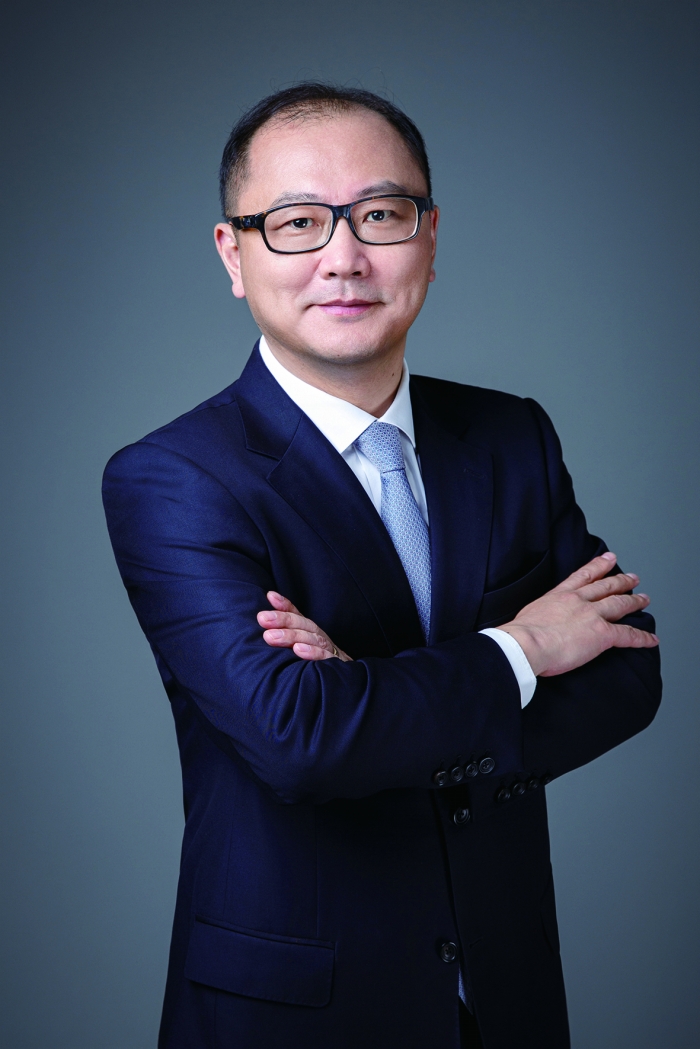
不求大赢 但求长胜——对话重阳投资董事长王庆
Shang Hai Zheng Quan Bao· 2025-06-26 18:47
Core Viewpoint - The article emphasizes the resilience and strategic foresight of Chongyang Investment, a well-established private equity firm, in navigating market fluctuations and capitalizing on opportunities in the innovative pharmaceutical sector [2][3]. Investment Strategy - Chongyang Investment's chairman, Wang Qing, highlights the importance of understanding industry trends and adapting to changes in the investment ecosystem, advocating for a flexible trading approach driven by in-depth research [3][4]. - The firm has identified significant growth potential in China's biopharmaceutical industry, which has experienced a downturn for four consecutive years, suggesting a mean reversion effect [4][5]. Market Outlook - Wang Qing expresses optimism about the Chinese economy's transition and the emergence of structural investment opportunities, particularly in sectors like innovative pharmaceuticals, semiconductors, and new consumption [3][5]. - The A-share market is expected to present ongoing structural opportunities, with a notable recovery in market liquidity and economic expectations [6][8]. Performance and Results - As of June 20, the innovative pharmaceutical index has risen over 45%, validating Chongyang Investment's strategic left-side positioning in the sector [4]. - The firm’s long-term commitment to value investing and market trends has resulted in significant returns, demonstrating the effectiveness of their investment philosophy [5][9]. Team and Management Approach - Chongyang Investment employs a multi-manager model, allowing several fund managers to operate independently within a single fund, enhancing decision-making and risk management [9][10]. - The firm has expanded its research team, focusing on sectors such as pharmaceuticals, new energy, advanced manufacturing, and electronic technology, to strengthen its investment research capabilities [10].
涉事双方独家回应!量化私募创始人遭“背刺”出局?基金清盘、股东会议笼罩疑云
Hua Xia Shi Bao· 2025-06-26 06:38
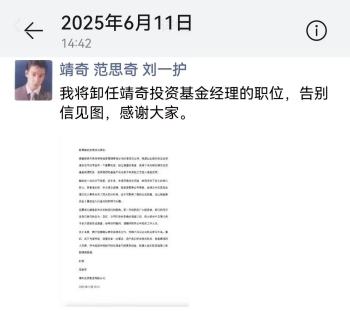
"不是夺权。如果马斯克说,明天开始特斯拉关闭,所有车子烧掉,特斯拉股东会议一样会让他停 止。"靖奇投资一位股东对《华夏时报》记者如是表示。然而,范思奇则对本报记者表示,"他们的谎话 前后不一致而且自相矛盾"。 近日,一纸《十年努力,一朝背刺》的控诉,撕开了量化私募行业光鲜外表下残酷的"权力游戏"。 6月22日,上海靖奇投资管理有限公司(下称"靖奇投资")创始人范思奇在网络上发布一封长信,控诉 自己在一场"提前9分钟通知的股东会"上被自己创立的公司扫地出门。 范思奇称,股东会单方面罢免了他所有职务,随后封锁了他的系统权限、员工联络通道,甚至切断了他 访问自己编写的核心代码的权限。 "这不是一次体面的交接,而是一场彻底的背刺。"范思奇在信中写道。股东会结束后,靖奇投资官方公 众号发文称"祝范思奇早日恢复健康",被范视为暗示自己有精神问题。 权力争夺"罗生门" 这场风波始于6月11日。当天,范思奇向投资者发出一封信,宣布将于本月卸任靖奇投资基金经理职 务,其管理的基金产品也将进入清盘流程。 在信中,他解释称,近年市场环境变化带来巨大身心压力,管理公司事务、协调合作关系等消耗了绝大 部分时间,影响生活质量并使他失去行 ...
私募创始人“一朝背刺”?当事人回应
中国基金报· 2025-06-26 01:43
Core Viewpoint - The conflict between the founders of Jingqi Investment, particularly the expulsion of Fan Siqi, highlights governance issues within private equity firms in China, emphasizing the need for improved ownership structures and incentive mechanisms to ensure sustainable development [2][8][10]. Group 1: Incident Overview - Fan Siqi, the founder and fund manager of Jingqi Investment, claims he was expelled from the company during a shareholder meeting that he was notified about only 9 minutes in advance [2][6]. - In a letter to investors, Fan announced his resignation and the initiation of the liquidation process for the funds he managed, which was later clarified by Jingqi Investment as affecting only a small portion of their total assets under management [4][9]. - The dispute escalated after Fan's article circulated online, accusing the other founder, Tang Jing, of orchestrating his removal without proper discussion [5][6]. Group 2: Company Background - Jingqi Investment was established on March 9, 2015, and registered as a private securities investment fund manager on August 6, 2015, with a management scale between 1 billion and 2 billion [9]. - The ownership structure includes Fan Siqi holding 36.36% of the shares, while Tang Jing and Mao Noping hold 27.27% each, and Shanghai Jing'erqi Enterprise Management Partnership holds 9.09% [9]. Group 3: Governance Issues - The incident has drawn attention to the governance problems prevalent in private equity firms, with experts suggesting that the lack of a reasonable ownership structure and internal checks can lead to power struggles and instability [8][10]. - Recommendations for improving governance include optimizing ownership distribution, establishing internal checks and balances, designing fair incentive mechanisms, and enhancing transparency through better information disclosure [10].

监管公开私募乱象,违规手法五花八门
Di Yi Cai Jing Zi Xun· 2025-06-25 13:55
Core Viewpoint - The private equity industry is facing increasing scrutiny from regulatory authorities due to rampant violations and misconduct, necessitating improvements in regulation and self-discipline to ensure healthy development [1][6][8] Group 1: Regulatory Issues - Regulatory bodies have frequently highlighted violations in the private equity sector, revealing various irregularities such as engaging in unrelated businesses and facilitating illegal fundraising [1][4] - The Shenzhen Securities Regulatory Bureau reported that some private equity managers have deviated from their core responsibilities, engaging in activities like acting as brokers for fake gold exchanges and bond issuances [2][4] - There has been a significant increase in penalties, with over 240 fines issued by the regulatory system and more than 200 disciplinary actions from the Asset Management Association of China in 2023 [6][7] Group 2: Misconduct Examples - Some private equity firms have been found to charge excessive fees for consulting services related to unrelated business activities, such as promoting real estate investment plans [2][3] - Instances of illegal fundraising have been reported, where firms used their fund management qualifications to facilitate unauthorized public fundraising, leading to potential criminal activities [4][5] - Certain firms have engaged in "shell selling" practices, transferring operational control without proper registration, which has been exploited for illegal fundraising [5] Group 3: Underlying Causes - The private equity industry is characterized by its inherent complexity and opacity, making comprehensive regulation challenging [7][8] - The competitive nature of the industry drives some firms to adopt unethical practices, including market manipulation and insider trading, to achieve higher returns [7] - The lack of in-depth regulatory oversight due to resource constraints has resulted in a significant information asymmetry, hindering the detection of hidden violations [7] Group 4: Recommendations for Improvement - It is essential to enhance legal frameworks to clarify compliance requirements and increase penalties for violations, thereby deterring potential misconduct [8] - Regulatory authorities should leverage modern technology, such as big data and AI, to establish a comprehensive monitoring system for real-time oversight of private equity activities [8] - Strengthening industry self-regulation through the establishment of strict guidelines and compliance training is crucial for improving the overall integrity of the sector [8]
百亿量化私募大举分红,高净值产品“除权”背后的利益博弈
Hua Xia Shi Bao· 2025-06-25 08:07
Core Viewpoint - The announcement of cash dividends by Shanghai's quantitative private equity firms, KuanDe and YanFu, has sparked industry speculation regarding their motives, with some suggesting financial difficulties or a desire to extract management fees [1][3][4]. Group 1: Dividend Announcement - KuanDe and YanFu have announced dividends for certain products, allowing investors to choose between cash dividends or reinvestment [1][3]. - The firms clarified that the dividend distribution is a routine operation based on fund contract agreements and current investment performance [1][3]. Group 2: Market Reactions and Speculations - The public announcement of dividends is rare in the private equity sector, leading to various interpretations about the intentions behind these actions [3][4]. - Some industry experts suggest that the timing of the dividends may indicate a strategy to control fund size and maintain competitive investment strategies [4][6]. Group 3: Performance Metrics - Quantitative long-only strategies have shown strong performance, with billion-dollar private equity firms reporting average returns of 8.91% in Q1, and 19 firms achieving over 20% returns in the past year [5]. - KuanDe and YanFu reported average returns of 11.75% and 7.7% respectively over the first five months of the year [5]. Group 4: Investor Perspectives - High-net-worth investors face significant entry barriers, with minimum investment thresholds set at 1 million yuan, which influences their perception of the value of dividends [2][6]. - The choice between cash dividends and reinvestment is seen as a way to enhance investor experience and provide flexibility [3][4].
重磅!中国太保旗下私募正式备案,200亿巨资将入市
Hua Er Jie Jian Wen· 2025-06-25 08:03
Group 1 - The core point of the article is the establishment of Taibao Zhiyuan (Shanghai) Private Fund Management Co., Ltd. as a registered securities private fund manager, marking a significant move by a major insurance company into long-term stock investment [1][3]. - The private fund is controlled by China Pacific Insurance, with its shareholders being Pacific Asset Management Company [2]. - The management team includes Xiang Tao, who has extensive experience in finance and investment, and He Jiacheng, who has a background in risk management [4]. Group 2 - The initial target scale for the private fund is set at 20 billion yuan, aimed at responding to national calls for expanding private securities investment fund reforms [5]. - Several major insurance companies have initiated private securities funds, including China Life and Xinhua Insurance, which have launched a fund with a scale of 50 billion yuan [6]. - Other insurance firms, such as Sunshine Life and Taikang Life, have also announced significant investments in private securities funds, with planned contributions of 20 billion yuan and 12 billion yuan respectively [7][8].

产品全渠道“封盘”?百亿量化私募宽德投资回应
news flash· 2025-06-23 01:34
产品全渠道"封盘"?百亿量化私募宽德投资回应 金十数据6月23日讯,就市场传出"封盘"和产品分红的消息,6月22日晚间,宽德投资在官微发布了《关 于宽德投资产品运作安排的说明》。近期,公司的部分渠道募集节奏调整,市场对公司基金产品运作情 况有所关注,同时也有投资人针对产品分红等安排提出询问。针对产品"封盘"的说法,宽德投资表示, 目前公司层面并无统一"封盘"计划,当前部分合作渠道针对产品募集节奏所做的阶段性调整,旨在更好 地匹配策略承载能力,力争持续为投资者带来良好体验。针对分红的情况,宽德投资表示,近期部分产 品实施的分红安排,系基于基金合同约定及投资运作情况开展的常规化操作机制,意在优化投资体验, 增强客户的自主选择空间,相关操作不涉及策略方向或市场判断的调整。 ...
一位成长投资老将的主动求变——访相聚资本总经理梁辉
Shang Hai Zheng Quan Bao· 2025-06-22 17:28
Core Viewpoint - The investment strategy of the company has evolved from a singular focus on growth stocks to a diversified approach that adapts to market changes, emphasizing the importance of both sustainable growth and risk management in investment decisions [1][5][9]. Group 1: Investment Strategy Evolution - The company has recognized the limitations of a single investment strategy, especially in the current challenging market for growth stocks, prompting a shift towards diversification [1][4]. - The investment philosophy now incorporates a combination of growth, value, and dividend stocks, with a focus on macroeconomic trends and style timing to enhance portfolio resilience [5][9]. - The company aims to balance investment opportunities with safety, particularly in sectors benefiting from AI advancements and those with reasonable valuations [1][9]. Group 2: Market Outlook and Focus Areas - The company believes that the most uncertain phase of the market has passed, with expectations for better investment opportunities in the fourth quarter, particularly in growth stocks [9]. - Key sectors of interest include the internet sector benefiting from AI development, domestic consumption-related industries, technology with a focus on self-sufficiency, and sectors supported by growth policies like engineering machinery [9][10]. - The semiconductor industry is highlighted for its significant growth potential, driven by increasing domestic production and technological advancements [10].