创业投资

Search documents
10天8板大牛股,最新公告
Zhong Guo Zheng Quan Bao· 2026-01-08 14:13
鲁信创投(600783)1月8日晚公告称,公司股票价格最近10个交易日累计上涨86.94%,存在股价短期 涨幅较大后续下跌的风险。 公告称,截至目前,公司参股的三只股权投资基金合计仅持有蓝箭航天空间科技股份有限公司0.89%股 权,股权穿透后对公司财务状况和经营成果影响较小。 经公司核实,公司董事、高级管理人员、控股股东在公司此次股票异常波动期间不存在买卖公司股票的 情况。 值得注意的是,这已是鲁信创投近期第四次发布公告提示风险。公司于2025年12月25日晚以及2025年12 月29日晚两次发布股票交易异常波动公告,于2025年12月26日晚发布股票交易风险提示公告。 创投业务为公司主要利润来源 数据显示,1月8日,鲁信创投涨停,收报29.63元/股,股价走出"10天8板"行情。 澄清对蓝箭航天持股不足1% 公告显示,鲁信创投股票于1月6日至8日连续3个交易日内收盘价格涨幅偏离值累计达到20%,根据《上 海证券交易所交易规则》的有关规定,属于股票交易异常波动情况。1月8日,公司股票以涨停价收盘。 公司股票价格最近10个交易日累计上涨86.94%,存在股价短期涨幅较大后续下跌的风险。 公司注意到近期市场对商业 ...

①数据探秘:年度政府投资基金竞争力评价研究核心发现
2 1 Shi Ji Jing Ji Bao Dao· 2026-01-07 12:05
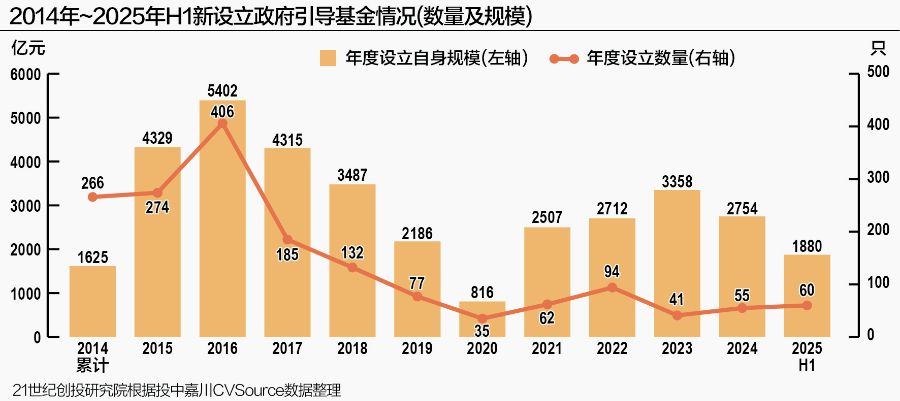
Core Insights - Government investment funds have become a major source of capital in China's private equity investment industry, playing a crucial role in promoting healthy industry development and optimizing traditional industries [1][3] Group 1: Policy and Regulatory Framework - The Chinese government has increased its focus on venture capital and private equity, with the release of the "Guiding Opinions on Promoting the High-Quality Development of Government Investment Funds" on January 7, 2025, which includes 25 measures covering the entire process of fundraising, investment, management, and exit [1][3] - The implementation of the "1号文" has guided local governments in developing investment funds, leading to the establishment of a "1+N" system across various regions [1][3] Group 2: Regional Trends - There is a noticeable decline in the willingness to establish new government investment funds in the central and western regions due to policy constraints and fiscal capacity, while economically active regions like the Yangtze River Delta and the Guangdong-Hong Kong-Macao Greater Bay Area continue to show strong momentum in fund establishment [2][6] Group 3: Fund Management and Investment Strategies - The management model of government investment funds is evolving towards market-oriented and professional approaches, with local governments increasingly seeking suitable general partners (GPs) for long-term cooperation rather than merely increasing the number of partnerships [2][6] - Many regions are lowering the reinvestment ratios and adopting more flexible recognition methods for reinvestment, while also extending fund durations to address the challenges of exit strategies [2][6] Group 4: Fund Performance and Growth - In the first half of 2025, 60 new government investment funds were established, surpassing the total of 55 for the entire year of 2024, with a total scale of 188 billion yuan, indicating a robust growth trend [4][6] - From 2014 to 2024, the number of government-guided funds increased by 1,361, with a compound annual growth rate (CAGR) of 19.85%, and the total scale increased by 31,866 billion yuan, with a CAGR of 35.33% [4][6] Group 5: Investment Focus and Trends - Government investment funds are increasingly focusing on strategic emerging industries such as new-generation information technology, biotechnology, new energy vehicles, and high-end equipment, which are crucial for accelerating the development of new productive forces [6][7] - There is a consensus in the industry to invest early and in smaller amounts, with both national and local government funds providing more guidance and support for early-stage projects [6][7] Group 6: Management Efficiency and Policy Impact - Most government investment funds have established sound systems and operational processes, with effective risk control mechanisms and information technology supporting fund selection and post-investment services [7][8] - Many funds are willing to disclose annual investment numbers and project scales, although they are cautious about revealing actual exit amounts and returns [8]

这个省会,出台了产业基金投资尽职合规免责清单
母基金研究中心· 2026-01-07 09:17
Core Viewpoint - Hangzhou is making significant strides in developing its industrial fund system, aiming to enhance its modern industrial framework through the "3+N" industrial fund cluster, which is expected to exceed 500 billion yuan during the 14th Five-Year Plan period [4][11]. Group 1: Implementation Opinions and Mechanisms - The recent implementation opinions emphasize a compliance exemption mechanism for industrial funds, allowing for a higher tolerance of normal investment risks without triggering accountability for typical investment losses [2][3]. - The detailed compliance exemption list outlines specific scenarios and a negative list for applicability, enhancing practical implementation [2]. Group 2: Government Investment Fund Reforms - Recent policies from the State Council highlight the need to optimize the management and evaluation mechanisms of government investment funds, advocating for a tolerance of normal investment risks and a comprehensive evaluation system throughout the fund's lifecycle [3]. - The 2025 guidelines further stress the establishment of a fault-tolerant mechanism to encourage innovation and reduce the fear of accountability among fund managers [3]. Group 3: Fund Structure and Investment Strategies - The "3+N" fund cluster includes three government investment funds and multiple city-owned enterprise funds, which can adopt various investment strategies such as industry mother funds and specialized sub-funds [4][5]. - The return investment ratios for the Hangzhou Science and Technology Fund can be reduced to 1.5 times, while the other two funds can lower their ratios to 1 time, promoting a more favorable investment environment [5]. Group 4: Management Fees and Performance Evaluation - Management fees for the three government investment funds are based on fund size and performance, with a tiered structure that rewards better performance with lower fees [6][7]. - The management fee rates for industry mother funds and sub-funds are set according to market principles, providing a reassuring framework for general partners (GPs) [7]. Group 5: Future Prospects and Strategic Goals - Hangzhou aims to establish itself as a leading hub for artificial intelligence, with plans for an industrial fund exceeding 100 billion yuan dedicated to this sector by 2025 [8]. - The city is also focusing on nurturing emerging industries such as general artificial intelligence and humanoid robotics, indicating a strategic push towards high-potential sectors [9]. Group 6: Historical Context and Ecosystem Development - Hangzhou has a long history of fostering venture capital, with the establishment of its first state-owned venture capital company in 1993, leading to a diverse investment ecosystem [11]. - The city has been proactive in developing mother funds since 2008, positioning itself as a pioneer in this area compared to other regions [11].

三年答卷,硬核增长,苏创投这样跑出“苏州速度”
投中网· 2026-01-07 06:32
Core Insights - The article highlights the rapid growth and strategic initiatives of Suzhou Venture Capital Group since its establishment in June 2022, emphasizing its commitment to empowering local industries and fostering innovation [3][4][5]. Group 1: Growth Metrics - The total managed fund size reached 320 billion yuan, with an additional 120 billion yuan added in the last three years [4]. - A total of 33 direct investment funds were established, with 302 new direct investment projects amounting to 6.2 billion yuan [4]. - The average annual appreciation rate of investment projects was 11.1% [4]. Group 2: Impact and Influence - Suzhou Venture Capital participated in over one-third of financing events in Suzhou, supporting 89 companies to go public across various capital markets [7][11]. - Notable companies that went public include Haocen Software and Aisen Semiconductor, contributing to one-third of Suzhou's listed companies [7][8]. Group 3: Strategic Approach - The group employs a four-dimensional ecological strategy: 1. Rooted in local sectors by maintaining a dynamic industrial map and project pool [9]. 2. Collaborating with government entities to support talent and technology projects [9]. 3. Forming strategic alliances with over 100 investment institutions [9]. 4. Conducting in-depth industry research to ensure forward-looking decision-making [9]. Group 4: Investment Focus - Over 60% of direct investments support early-stage companies, with nearly 90% of funds directed towards local projects [12]. - Key investment areas include biomedicine, integrated circuits, artificial intelligence, and new materials [13]. Group 5: Regional Strategy - The group implements a localized investment strategy focusing on "1+2" industries, which includes one core industry and two key industries per district [15]. - Future industries such as quantum technology and brain-machine interfaces are also prioritized [15]. Group 6: National and International Collaboration - Suzhou Venture Capital has established several funds in collaboration with national and provincial resources, including a 100 billion yuan industrial mother machine fund and a 500 billion yuan Yangtze River Delta fund [17][18]. - International partnerships include a 100 billion yuan fund with Temasek and a 30 billion yuan biomedicine fund [18]. Group 7: Collaborative Ecosystem - The group has launched the "Suzhou 10 Billion Talent Fund" to support key sectors, with 50 projects already funded [20]. - A total of 13 specialized industry funds have been established, amounting to 24.5 billion yuan [21]. Group 8: Community Engagement and Brand Development - Over 250 industry-financing events have been held, creating a closed-loop ecosystem for investment and collaboration [23]. - The group has developed eight distinctive brands to enhance its operational capabilities and social responsibility [27]. Group 9: Future Outlook - Looking ahead to 2026, Suzhou Venture Capital aims to strengthen its role in national strategies and enhance its global competitiveness in innovation resource integration [29].

德航社协会关注:国家创业投资引导基金与货币政策协同并进
Jin Tou Wang· 2026-01-07 02:24
Group 1 - The National Venture Capital Guiding Fund officially commenced operations on December 26, 2025, marking a significant step in the implementation of technology finance policies [1] - The fund aims to support technological innovation and the cultivation of new productive forces through a market-oriented mechanism, with a total initial investment of 100 billion yuan from the national treasury [1] - The fund's structure includes a three-tier system of guiding fund companies, regional funds, and sub-funds, targeting a total funding scale of over one trillion yuan [1] Group 2 - The fund emphasizes early-stage, small, long-term investments in hard technology, with at least 70% of investments directed towards seed and startup companies [2] - The fund has a 20-year lifespan, with 10 years allocated for investment and another 10 years for exit, aligning with the growth patterns of long-cycle sectors like integrated circuits and artificial intelligence [2] - Regional funds are managed by professional institutions, focusing on strategic emerging industries such as aerospace, biomanufacturing, and future energy [2] Group 3 - The People's Bank of China announced a moderately loose monetary policy for 2025, aiming to promote stable economic growth and reasonable price recovery while maintaining adequate liquidity [3] - This monetary policy is designed to create a favorable financial environment for technological innovation, complementing the venture capital guiding fund to form a supportive system [3] - The industry association plans to continuously monitor the operation and investment effects of the venture capital guiding fund, guiding members to adapt to the monetary policy environment and focus on supporting the real economy and technological innovation [3]

评国家创业投资引导基金落地:政策赋能创投,耐心资本启航
Lian He Zi Xin· 2026-01-06 11:22
Policy Background - Technology innovation is identified as the core engine driving high-quality economic development, with insufficient patient capital and financing difficulties for early-stage tech companies being key bottlenecks[4] - In 2024, investment cases in seed and startup stages accounted for 16.25% and 24.83% respectively, significantly lower than the 43.29% for expansion stage investments[4] National Venture Capital Guidance Fund - The National Venture Capital Guidance Fund was officially launched on December 26, 2025, marking a significant step in China's technology finance system reform[4] - The fund is designed to focus on early-stage investments, with a 20-year duration, and aims to integrate policy guidance with market mechanisms[6][7] Fund Structure and Investment Strategy - The fund operates under a three-tier structure: guiding fund company, regional funds, and sub-funds, with a registered capital of 100 billion RMB[7] - At least 70% of the sub-funds' capital must be directed towards seed and startup enterprises, with individual company valuations capped at 500 million RMB[8] Regional Fund Characteristics - The first three regional funds, each exceeding 50 billion RMB, are located in the Beijing-Tianjin-Hebei, Yangtze River Delta, and Guangdong-Hong Kong-Macau Greater Bay Area regions[9] - The Beijing-Tianjin-Hebei fund has a GP from China International Capital Corporation, with local state-owned assets contributing approximately 23%[10] Economic and Investment Landscape - The Yangtze River Delta region's GDP reached 33.17 trillion RMB in 2024, accounting for 24.7% of the national total, with significant growth in digital economy sectors[15] - The Guangdong-Hong Kong-Macau Greater Bay Area's economic output was approximately 14.79 trillion RMB in 2024, with over 70 unicorn companies contributing to its innovation ecosystem[16] Future Outlook - The fundraising environment in China's equity investment market is expected to improve, with 3,501 funds raised in the first three quarters of 2025, an 18.3% increase year-on-year[17] - The operation of the National Venture Capital Guidance Fund is anticipated to provide valuable experience for China's technology finance system reform, supporting the construction of a capital support system aligned with high-level technological self-reliance[18]
百亿央企基金启航
3 6 Ke· 2026-01-05 04:00
Core Insights - The establishment of the Chengtong Science and Technology Innovation Fund in Jiangsu, with a total scale of 10 billion yuan, marks a significant step in injecting "patient capital" into the recovering venture capital industry [2][3] - The fund aims to support technological innovation and industrial development, focusing on early-stage investments in hard technology sectors [2][3] - The venture capital industry is showing signs of recovery, with increased fundraising, investment activities, and improved exit channels [4][5] Fund Establishment - The Chengtong Science and Technology Innovation Fund in Jiangsu was officially registered, following the establishment of a similar fund in Beijing [2][3] - The fund is part of a broader initiative by the State-owned Assets Supervision and Administration Commission to promote high-quality development of central enterprise venture capital funds [2][3] - The fund will collaborate with the previously established 10 billion yuan Chengtong Science and Technology Innovation Fund in Beijing to create a "mother fund + direct investment fund" synergy [3] Market Recovery - The venture capital industry is gradually recovering after a period of adjustment, with positive changes observed in fundraising, investment, and exit activities [4] - In November 2025, the fundraising activity of institutional LPs showed a positive trend, with a 14.7% month-on-month increase and a 31.8% year-on-year increase [4] - The number of newly registered private equity and venture capital funds in November reached 404, marking a 2.5% month-on-month increase and a 29.5% year-on-year increase [4] Investment Activity - In 2025, there were 6,462 financing events in the domestic primary market, representing a 7.25% year-on-year increase, marking the first rebound in four years [5] - The number of Chinese companies listed domestically and internationally reached 247, with a 26.7% year-on-year increase, and the total financing amount was approximately 326.63 billion yuan, a 126.4% increase [5] Long-term Capital Trends - Many government-guided funds are innovating mechanisms to reshape the "long money" ecosystem, with some funds having a lifespan of 15 to 20 years [5] - The decision-making speed of state-owned LPs has improved significantly, with a trend towards cross-regional and cross-level joint investments becoming mainstream [5] Future Outlook - The next few years are expected to be a critical window for national-level fund investments, potentially addressing 20% to 30% of the market funding gap [6] - The venture capital ecosystem is anticipated to enter a healthier and more sustainable development phase, supported by ongoing policy benefits and the return of market-oriented LPs [7]
百亿央企基金启航
FOFWEEKLY· 2026-01-04 10:09
Core Viewpoint - The article highlights the recovery of the primary market, driven by significant capital inflows and supportive policies, particularly in the venture capital sector [2][3]. Group 1: New Capital Inflows - The establishment of the Chengtong Science and Technology Innovation Jiangsu Fund, with a total scale of 10 billion yuan, marks a significant addition to the market, following the Beijing fund [5]. - The fund aims to support technological innovation and industrial development, focusing on early-stage investments in hard technology sectors [6]. - The Chengtong Science and Technology Innovation Fund (Beijing) has already set a precedent, with a total scale of 30 billion yuan planned for a central enterprise venture capital fund by the end of 2024 [5][6]. Group 2: Market Recovery Indicators - The venture capital industry is showing signs of recovery, with a notable increase in fundraising, investments, and exits across various segments [8]. - In November 2025, the activity level of institutional LPs increased by 14.7% month-on-month and 31.8% year-on-year, indicating a positive trend in fundraising [8]. - The number of new private equity and venture capital funds registered in November 2025 reached 404, reflecting a 2.5% month-on-month and 29.5% year-on-year increase [8]. Group 3: Investment and Exit Trends - In 2025, there were 6,462 financing events in the domestic primary market, a year-on-year increase of 7.25%, marking the first rebound in four years [9]. - The number of Chinese companies listed domestically and internationally reached 247, with a 26.7% year-on-year increase, and the total financing amount was approximately 326.63 billion yuan, up 126.4% year-on-year [9]. Group 4: Structural Changes in Venture Capital - Local venture capital reforms are deepening, with many government-guided funds adopting longer durations of 15 to 20 years, reshaping the "long money" ecosystem [10]. - The decision-making speed of local state-owned LPs has improved significantly, with a trend towards cross-regional and cross-level joint investments becoming mainstream [10]. - The next few years are expected to be a critical window for national-level fund contributions, potentially addressing 20% to 30% of the market funding gap [10]. Group 5: Future Outlook - The primary market is anticipated to continue its recovery into 2026, supported by ongoing policy benefits and the further backing of state-owned "patient capital" [12]. - The healthy development of the IPO market and the continuous opening of exit channels are expected to foster a more sustainable venture capital ecosystem [12].

“不以单个项目成败论英雄”:创投考核逻辑重塑 投后赋能常态化
2 1 Shi Ji Jing Ji Bao Dao· 2026-01-04 09:51
近期,国家发展改革委等部门提出,国家创业投资引导基金建立符合创投市场规律的考核体系,把重点 放在整体效益和投后赋能上,"不以单个项目成败论英雄"。这一表述成为政府投资基金核心评价体系的 又一次校准。 在一级市场深度调整、退出周期拉长的背景下,创投行业的考核逻辑也在发生变化。 考核口径的变化并非单点调整。从相关制度安排和实践进展来看,围绕整体效益和投后赋能,政策层 面、机构层面以及地方探索之间,正在逐步形成更为清晰的关联。 一方面,创投市场运行环境变化、项目周期拉长,单一项目或短期结果无法客观体现机构的长期能力; 另一方面,创投机构在地方产业发展中的参与度还在加深,其价值也要在后续的产业培育和发展周期中 逐渐显现。 在这一背景下,基金绩效考核方式的优化成为观察行业转向的重要切口。 考核逻辑调整:从单点回报到整体效益 与早期投资长周期特征相比,政府投资基金过往在考核周期设置上相对偏短。 与此同时,单一项目或单一年度的盈亏易放大偶然性,难以反映管理人在完整周期内的判断能力和资源 配置水平。在实践中,这类考核方式也可能导致投资行为趋于短期化,与早期投资"容错—试错—迭 代"的内在逻辑并不完全匹配。 正是在这一现实背景 ...
2025中国母基金行业十大年度事件
母基金研究中心· 2026-01-04 08:53
Core Viewpoint - The year 2025 is seen as a pivotal year for the restructuring of China's equity investment mechanism, marking a transition from difficult transformation to a return of confidence in the industry [2] Group 1: Policy Developments - The State Council issued the "Guiding Opinions on Promoting the High-Quality Development of Government Investment Funds," marking a significant policy for the mother fund industry with 25 specific measures [3] - The document encourages venture capital funds to adopt a mother-child fund structure and allows for increased government contribution ratios and relaxed conditions for fund establishment [3][4] - It emphasizes the need for a unified national market and encourages the cancellation of registration restrictions for government investment funds, aiming to boost market investment confidence [4] Group 2: Investment Trends - The concept of "patient capital" has deepened, with many newly established mother funds and direct investment funds having a lifespan of 15 to 20 years, reflecting a shift towards longer investment horizons [5][6] - Local governments have increased their tolerance for losses, with some regions allowing for a loss tolerance rate of up to 80%, indicating a more flexible approach to investment failures [6] Group 3: New Financing Avenues - The introduction of "technology bonds" in March 2025 has opened a new fundraising channel for equity investment institutions, with over 40 institutions issuing bonds totaling over 20 billion yuan [7][8] - However, the debt nature of technology bonds adds financial pressure on investment institutions, which traditionally rely on a "light asset" model [8] Group 4: Fund Establishments - The National Venture Capital Guidance Fund was launched in December 2025, with a 20-year lifespan aimed at early-stage investments and market-oriented operations [9][10] - Multiple social security technology funds have been established across various regions, with significant initial capital aimed at supporting key industries [12][13] Group 5: Market Dynamics - The mother fund industry has shifted towards a more pragmatic approach, with no new billion-level mother funds established in 2025, focusing instead on a "fund group" model for better resource allocation [14] - The AIC funds have seen significant growth, with total signed amounts exceeding 3.8 trillion yuan, although they have not contributed as LPs to private equity funds [15][16] Group 6: Exit Strategies - The Hong Kong IPO market has rebounded, providing a favorable exit window for VC/PE firms, with IPO fundraising surpassing 200 billion HKD [17][18] - A trend towards "flexible exit" mechanisms is emerging, allowing for more adaptable strategies in managing investment returns [21][22]