
房地产中介

Search documents
快递小哥,快进屋暖和一会儿
Xin Lang Cai Jing· 2026-01-21 11:18
(来源:北京城市副中心报) 从基础歇脚补给到精准物资保障,从单点服务到全域联动,通州283个暖"新"驿站既是户外劳动者的"避 风港",也是城市服务的"延伸点"。通州区委社会工作部有关负责人表示,下一步将继续深化"政策+服 务+机制"三维保障体系,持续链接商户、医疗、司法等多元资源,推动职业伤害保障、心理疏导、技 能提升、权益维护等服务常态化、精准化。 作为通州区委社会工作部牵头构建暖"新"服务体系的核心载体,全区283个暖"新"驿站已串联起全方 位、多层次的服务网络,在一年中最冷的节气里,为坚守岗位的户外劳动者筑牢冬日温暖防线,让城市 关怀精准直达一线。这些驿站并非孤立存在,而是形成了辐射全域、联动多方的服务矩阵。在北苑街 道,驿站作为核心枢纽延伸服务触角,整合渤海银行、塔斯汀中国汉堡、链家地产等10家商户资源,打 造1平方米"爱心商户暖心角"。每个暖心角均张贴显著标识,承接应急充电、免费热水、共享药箱、临 时歇脚等基础服务,与包括运河西岸驿站在内的283个站点形成服务合力,构建起覆盖广、零距离的便 民服务网络,让户外劳动者在街头随处可享应急保障。 依托这一驿站体系,通州区各街道、乡镇精准对接新就业群体需求, ...
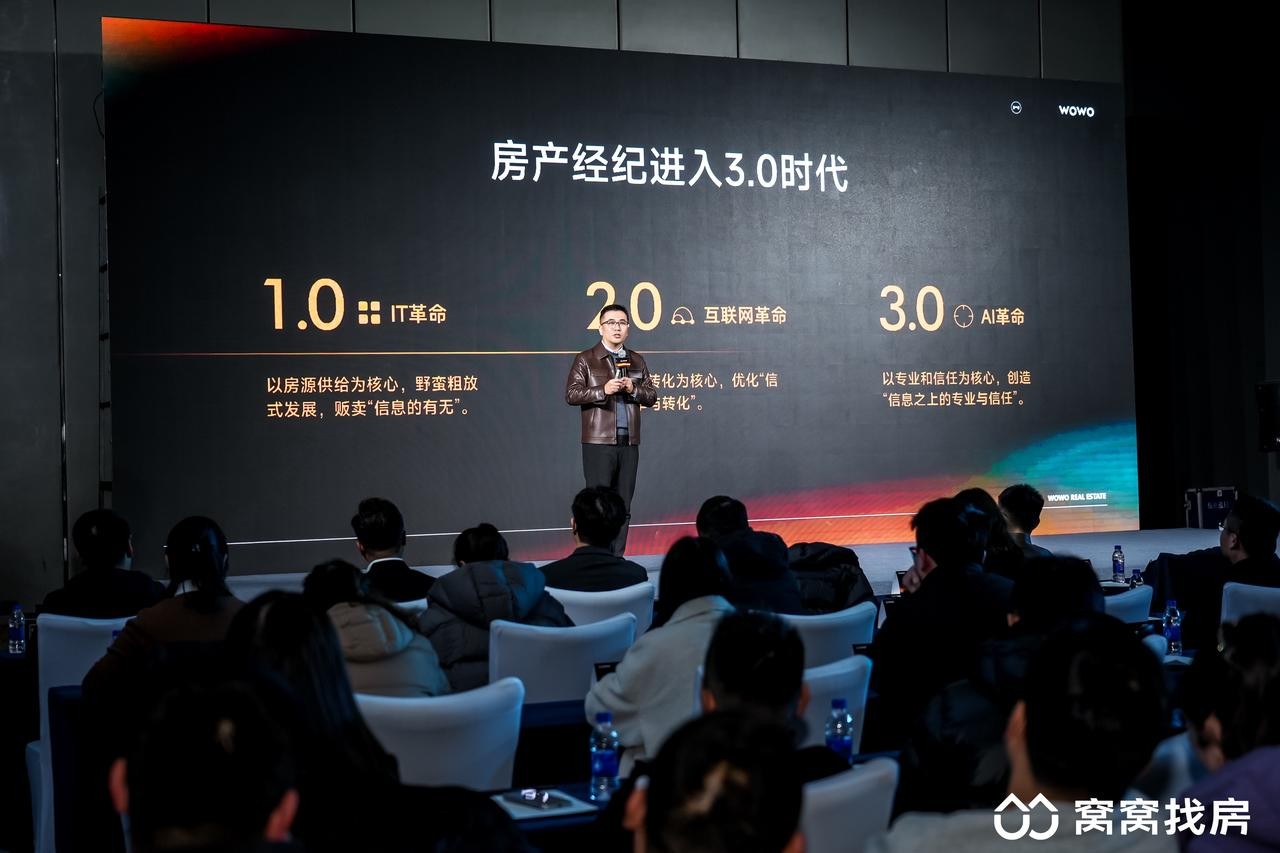
AI加持,窝窝找房定义房产服务3.0时代:告别体力奔波,专注专业价值
3 6 Ke· 2026-01-21 10:01
这种"常态"在过去还能被行情掩盖。如今,房地产市场的增量时代正在远去。国家统计局数据显示,2024年全国住宅开发投资下降10.5%,新建商品房销售 额下降了17.1%。 数据在下降,但交易不会消失,只是进入了慢周期。每个参与者都变得更加谨慎,这样一来,平台的价值开始凸显。如何解决买卖双方的痛点,如何让第三 方中介"说实话"?一家叫窝窝找房的公司正在利用AI技术解决这些问题。 用过找房软件的人都能懂这个体验:你很难说清自己到底是在找房,还是在被房源"找"。 首页永远不缺看上去"合适"的房子。但联系后,等待你的很可能是:要么房子刚卖掉,顺势给你推三套更贵的;要么照片拍得像样板间,现场却是另一种光 线与气味;要么跑断腿找到梦中情房,一问竟是二房东。 更尴尬的是,买方知道自己很谨慎,却不知道怎样才算谨慎到位。卖/租方知道自己愿意让价,却不知道价格到底该让到哪里才不会吃亏。 1.0拼房源,2.0拼流量,3.0开始拼什么? 2.0时代拼流量。房源上网后,稀缺的不是信息,而是注意力。线索变成成本项,门店为了获客要付出平台服务费和流量采购费,利润空间被挤压。行情好 的时候,大家愿意用成交去摊薄成本。一旦市场变慢,成本还在,成 ...

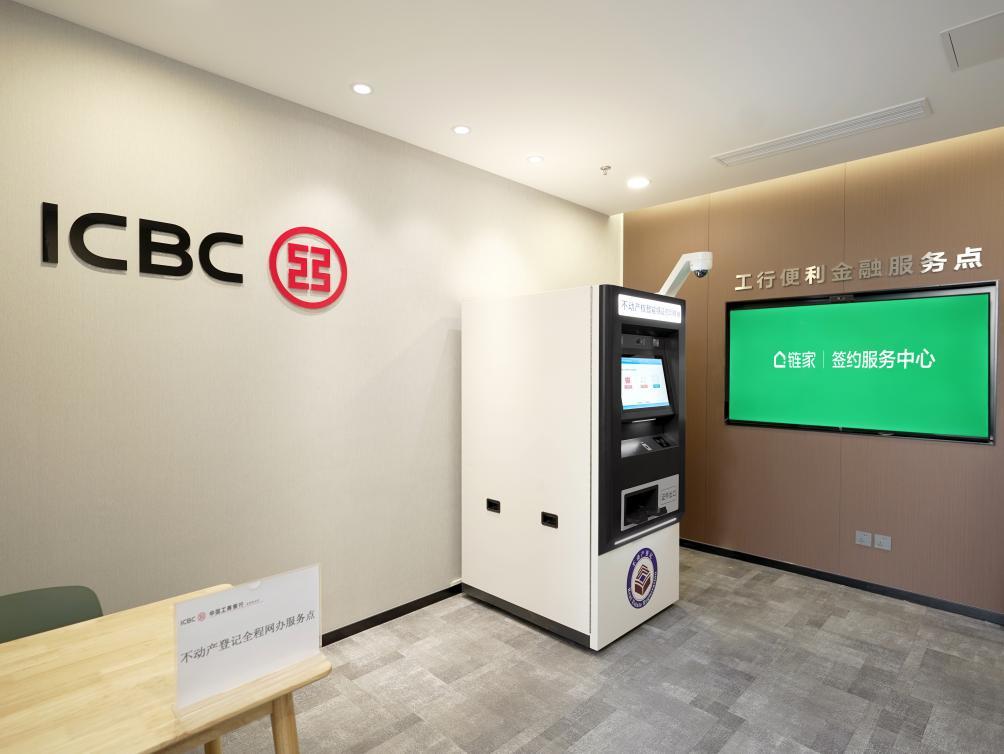
北京链家携手中国工商银行北京分行,在西城区落地房产证自助打印便民网点
Huan Qiu Wang· 2026-01-21 08:54
为深入贯彻落实北京市深化"放管服"改革、优化营商环境的工作部署,提升不动产登记便利度,在北京市规划和自然资源委员会西城分局及不 动产登记中心指导下,依托区位与业务联动优势,中国工商银行北京市分行广安门支行携手北京链家,在西城区北京链家天宁寺签约服务中心 附近设立便利金融服务点,并投放不动产查询打证一体机,打造交易、登记、金融一体化服务场景。即日起,全市居民可在北京链家天宁寺签 约服务中心的工行便利金融服务点,办理不动产信息查询与房产证打印业务。这一便民举措的落地,是北京市持续推进不动产登记"全市通 办"改革、构建"15分钟不动产登记圈"的又一重要实践。 近期刚在北京链家天宁寺签约服务中心完成房产交易的居民朱女士感慨道,"现在在家门口就能自助打印房产证,周末也能办,对我们老百姓 来说太方便了。"此次北京链家与中国工商银行北京分行携手拓展不动产查询打证自助服务,让二手房交易实现从签约到过户、领证的全流程 一站式办结。 目前,北京链家凭借线下服务场景优势,已在天宁寺签约服务中心、望京签约服务中心实现了从签约到领证的一站式服务,服务范围覆盖西 城、朝阳两大核心城区,切实提升了民生便利度。 北京链家交易服务中心负责人称 ...

美联:1月首20日香港一手超级豪宅成交同比升4倍 金额升6.57倍
智通财经网· 2026-01-20 08:36
Core Viewpoint - The luxury property market in Hong Kong is experiencing a significant surge in transactions, particularly for properties valued over HKD 100 million, indicating a robust recovery and increasing investor confidence in the real estate sector [1] Group 1: Transaction Volume - In January 2023, as of the 20th, there were 15 transactions of luxury properties exceeding HKD 100 million, a fourfold increase compared to only 3 transactions in January 2022 [1] - This figure surpasses the previous high of 13 transactions recorded in January 2019 [1] Group 2: Transaction Value - The total value of luxury property transactions over HKD 100 million for the first 20 days of January 2023 reached approximately HKD 35.6 billion, marking a substantial increase of about 657% from around HKD 4.7 billion in the same period last year [1] - This value also exceeds the previous high of approximately HKD 24.7 billion recorded in January 2024 by about 44% [1] Group 3: Market Outlook - The outlook for the Hong Kong property market remains optimistic, with expectations of continued price increases and active residential transactions through 2026 [1] - The anticipated ongoing activity in the Hong Kong IPO market and favorable trends in the Hong Kong stock market, along with potential further interest rate cuts in the U.S., are expected to accelerate capital inflow into the luxury property market [1] - It is projected that the transaction volume for luxury properties exceeding HKD 100 million will reach a new high since the introduction of the first-hand sales regulations in 2013 by 2026 [1]
反转!深圳老房子成“香饽饽”
Sou Hu Cai Jing· 2026-01-20 08:25
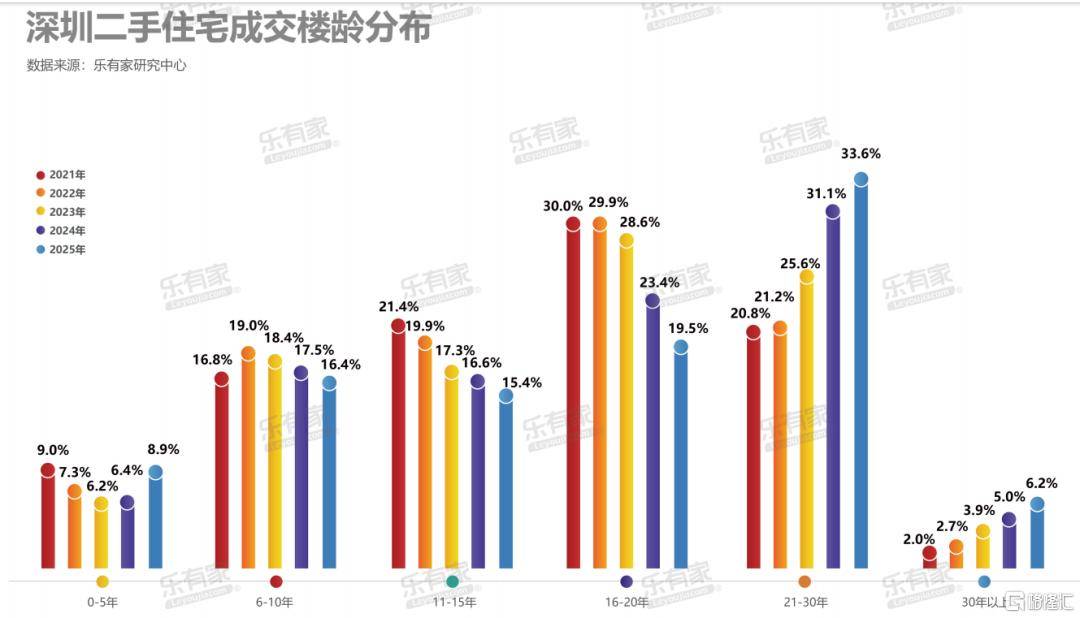
Core Insights - The reports from Shenzhen's mainstream real estate agencies reveal significant changes in the housing market, particularly regarding the age and turnover rates of properties [1][2][4]. Group 1: Property Age Trends - The highest turnover rate for second-hand homes in Shenzhen has shifted from properties aged 16-20 years to those aged 21-30 years, with the latter accounting for 31.1% of transactions in 2024 and 33.6% in 2025 [1][4]. - Over the past five years, properties aged 16-30 years have consistently made up over 50% of transactions, indicating a strong market preference for these age groups [1][4]. - The proportion of transactions for properties older than 30 years remains minimal, suggesting a lack of market interest in these older homes [2][9]. Group 2: Market Dynamics and Buyer Behavior - The bargaining space for second-hand homes in Shenzhen has increased, with the highest monthly negotiation space recorded at 11.2% in December 2025, compared to 9% at the end of 2024 [10][12][15]. - Young buyers in Shenzhen are becoming more pragmatic, with the proportion of second-hand home transactions rising from 47% in 2023 to 60% in 2025, and a significant increase in new home sales from 5,500 units in 2023 to 13,330 units in 2025 [20][30]. - The primary buyer demographic is shifting towards individuals aged 31-40, who now represent over 50% of the market, while younger buyers (aged 20 and below) are increasingly opting for properties under 90 square meters [23][28][30]. Group 3: Regional Variations - In districts like Futian, Nanshan, and Luohu, properties aged 16-30 years account for over 60% of transactions, with Futian showing an even higher concentration of 55% [5][8]. - In contrast, areas such as Guangming and Pingshan see a dominant market for properties under 10 years old, with Guangming having over 80% of transactions in this category [6][7]. Group 4: Implications for Future Market Trends - The ongoing transition in Shenzhen's housing market reflects a broader trend towards the replacement of older properties, with a focus on immediate living conditions rather than speculative future developments [31][33]. - The increasing presence of younger buyers in the luxury market, with 31.1% of high-value transactions attributed to individuals from the post-90s generation, indicates a shift in wealth accumulation and housing preferences [33].
新年深圳二手房成交延续回温趋势
Zheng Quan Shi Bao Wang· 2026-01-19 11:30
Group 1 - The core viewpoint of the articles indicates a significant increase in second-hand housing transactions in Shenzhen, with a 25% year-on-year growth in signed contracts from January 1 to January 18, 2026, compared to the same period last month [1] - The performance across different districts in Shenzhen shows a "blooming everywhere, with core areas leading" trend, with the top three districts—Futian, Nanshan, and Longgang—experiencing increases of 44%, 37%, and 32% respectively [1] - The total number of second-hand housing transactions in Shenzhen reached 1,654 units last week, marking a 3.7% increase compared to the previous week, indicating a sustained upward trend in transactions since the beginning of 2026 [1] Group 2 - Looking ahead to 2026, the Guangdong Provincial Urban Planning Institute's chief researcher, Li Yujia, emphasizes the government's dual approach to housing policy: improving the supply efficiency of new homes and promoting the exchange of old for new in the second-hand market to stabilize emotions and gradually achieve a stop to price declines [2] - According to the China Index Academy, as the housing market transitions into a stock era, the proportion of second-hand housing transactions is expected to rise, with second-hand homes accounting for approximately 65% of transactions in 30 major cities by 2025, an increase of about 4 percentage points from 2024 [2] - Major cities like Beijing, Shanghai, Guangzhou, Shenzhen, Chengdu, Hangzhou, Nanjing, and Suzhou are seeing second-hand housing transactions exceed 60% of total sales, reflecting a shift in demand towards second-hand properties for first-time buyers [2]
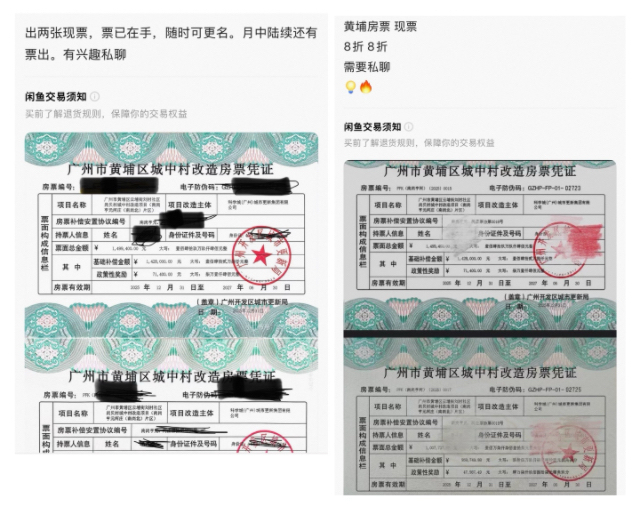
闲鱼平台成灰产聚集地!百万元拆迁房票6折甩卖,中介狂赚差价
Sou Hu Cai Jing· 2026-01-17 11:44
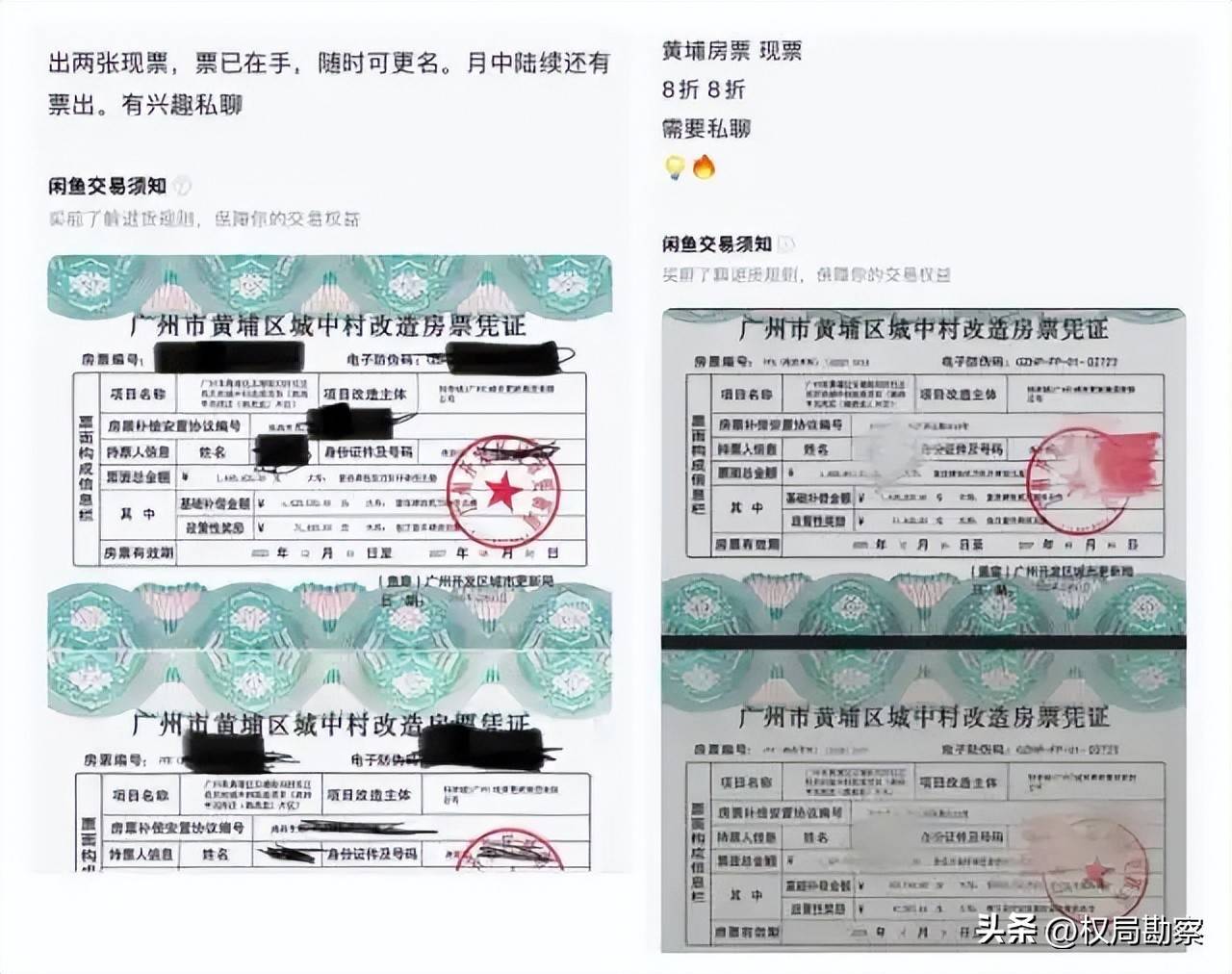
Core Viewpoint - The article discusses the dual exploitation of both demolition households and homebuyers through a system of housing vouchers, which were intended to protect the rights of demolition households while helping to reduce inventory in the real estate market. However, intermediaries have turned this system into a profit-making tool, leading to a gray market that benefits them at the expense of both parties [6][9][30]. Group 1: Housing Voucher System - Housing vouchers are essentially a form of compensation for demolition households, allowing them to purchase properties within specified timeframes and areas instead of receiving direct cash payments [4]. - The original intention of the housing voucher policy was to safeguard the rights of demolition households while assisting in the reduction of housing inventory, but it has been exploited by intermediaries [6][8]. - In Guangzhou, the housing voucher system has become a significant market, with over 6,000 vouchers being subscribed between April 2024 and December 21, 2025, indicating a highly active trading environment [15]. Group 2: Intermediary Exploitation - Intermediaries have taken advantage of the situation by purchasing vouchers from demolition households at a discount (8.2% to 8.3% off) and reselling them to homebuyers at a higher price, while also earning commissions from developers [9][11]. - The profit margins for intermediaries can be substantial, with potential earnings of 20,000 to 60,000 yuan per voucher, depending on transaction volume [11]. - The perceived discounts offered to homebuyers are often just remnants of the policy benefits that have been appropriated by intermediaries, who retain the core profits [13]. Group 3: Market Dynamics in Different Regions - The housing voucher market in Guangzhou operates under a relatively fixed set of rules, with stable discount rates and a clear policy framework, while Suzhou's market is characterized by chaos and price fluctuations due to a lack of regulation [16][20]. - In Suzhou, the flexibility of the housing voucher system allows for both new and second-hand property purchases, making them more attractive, but this has also led to a chaotic pricing environment where prices vary widely [21][23]. - The ongoing urban renewal projects in Suzhou, involving over 22,000 households and nearly 200 billion yuan in total investment, are expected to further increase the volume of housing vouchers in circulation [27]. Group 4: Regulatory Concerns - There are significant regulatory challenges in both Guangzhou and Suzhou, with warnings issued about the risks associated with low-priced vouchers, which may indicate fraudulent activities or multiple sales [30][32]. - The official stance in both cities emphasizes the need for compliance with regulations, including the prohibition of cashing out housing vouchers, which could lead to legal repercussions for developers and intermediaries [32][39]. - As the housing voucher market becomes more active with ongoing urban renewal, regulatory scrutiny is expected to tighten, potentially limiting the space for gray market operations [39].
百万元拆迁房票被摆上货架,闲鱼、小红书成交易场
Di Yi Cai Jing· 2026-01-16 06:33
Core Viewpoint - The emergence of a secondary market for housing vouchers in cities like Guangzhou and Suzhou has been noted, where intermediaries profit from the transfer of these vouchers, despite the associated risks and regulatory challenges [3][4][10]. Group 1: Market Dynamics - A significant number of housing vouchers, valued from millions to tens of millions, are being traded on social media platforms like Xianyu and Xiaohongshu, primarily in cities with concentrated demolition activities [4][8]. - Intermediaries are actively involved in the purchase and resale of housing vouchers, often offering discounts to buyers, with reported margins of 1-3% per transaction [6][10]. - In Guangzhou, the housing voucher system allows for a one-time transfer, with specific regulations governing the process, which has led to a surge in voucher transactions [11][12]. Group 2: Buyer Incentives - Buyers can save significantly when purchasing housing vouchers; for instance, a 200 million yuan voucher can be acquired for approximately 166 million yuan, allowing for substantial savings [5][6]. - Certain new housing projects offer additional discounts for buyers using housing vouchers, enhancing the attractiveness of this purchasing method [5][6]. Group 3: Regulatory Environment - The Guangzhou government has issued guidelines for the housing voucher system, emphasizing the importance of compliance with regulations to avoid risks associated with illegal transfers [11][12]. - Recent announcements from local authorities have clarified that while the transfer of housing vouchers is permitted, it must adhere to strict guidelines to protect the rights of the voucher holders [10][12]. - In Suzhou, the housing voucher market is less organized, with varying discount rates and some instances of inflated pricing, indicating a need for clearer regulatory oversight [9][10].
我省二手房交易迎“开门红”
Xin Lang Cai Jing· 2026-01-14 21:48
Core Viewpoint - The real estate market in cities like Nanjing, Suzhou, and Nantong is showing signs of recovery, with increased transaction volumes and stable prices, driven by supportive government policies and a growing sense of urgency among potential buyers [1][2][3]. Group 1: Market Trends - Nanjing's second-hand housing transactions surged, with a record of 309 units sold on January 11, the highest since January 2025, and a weekly increase of 14% in transactions [1][2]. - Suzhou and Nantong also reported significant increases in second-hand housing transactions, with Suzhou seeing a 14% rise and Nantong a 13.5% rise in weekly sales [2]. - The number of people viewing properties in Nanjing increased by approximately 13% to 14% during the same period, indicating heightened market activity [2]. Group 2: Policy Support - The central government's economic meeting in December 2025 set a tone for 2026, emphasizing the need for stable real estate policies and the implementation of more proactive macroeconomic measures [3]. - A tax policy change effective January 1, 2026, reduced the value-added tax on personal housing sales from 5.3% to 3% for properties held for less than two years, providing a strong incentive for sellers [3]. - The People's Bank of China announced reductions in policy interest rates and housing loan rates, suggesting further potential decreases in mortgage rates [3]. Group 3: Buyer Sentiment - A survey indicated that 34% of potential buyers believe 2026 is a favorable year for purchasing new or replacement homes, reflecting a growing willingness to engage in the market [4]. - The proportion of second-hand home transactions has increased from 28% in 2021 to 45% in 2026, highlighting a significant shift towards improving housing conditions [4]. Group 4: Local Initiatives - Nanjing introduced a talent policy on January 4, 2026, aimed at enhancing housing security for skilled workers, including rental and purchase subsidies [5]. - Suzhou implemented various supportive policies, including a credit repair initiative for individuals with overdue payments and expanded housing subsidies for qualified talents [6].
香港楼市量价齐升,内地客买入金额创新高
Zheng Quan Shi Bao· 2026-01-13 16:13
Group 1 - The Hong Kong real estate market experienced a significant turnaround in 2025, with a record high of HKD 138 billion in residential purchases by mainland buyers, contributing to a 14.1% year-on-year increase in transaction volume to 13,900 units [1] - Mainland buyers showed a strong preference for new properties, with nearly 60% of their investments directed towards first-hand properties, driven by Hong Kong's status as a hub for asset allocation and educational resources [1] - The demand for high-end properties, particularly those priced above HKD 50 million, is notably high among mainland clients, who accounted for nearly 70% of such purchases, indicating a trend where higher-priced properties attract a larger proportion of mainland buyers [2] Group 2 - The luxury property market in Hong Kong is expected to see a significant increase in transaction volumes, with first-hand luxury sales projected to rise by 50% and second-hand luxury sales by 60% in 2026, supported by factors such as the scarcity and high value retention of luxury properties [2] - The residential price index in Hong Kong has rebounded over 4% since March 2025, with an expected further increase of about 5% by the end of 2026, driven by multiple factors including wealth effects from stock market performance and sustained interest from mainland buyers [3] - The influx of mainland technology companies investing over HKD 10 billion in core office spaces in Hong Kong reflects the growing business opportunities and the impact of favorable talent recruitment policies [2]