
水运

Search documents
水运江苏:江河湖海共行舟
Ren Min Wang· 2025-10-13 02:00
Core Insights - Jiangsu province is enhancing its water transport infrastructure, which is crucial for its economic development and efficiency in logistics [1][3][4] - The province's government has initiated a three-year action plan to strengthen the "Water Transport Jiangsu" initiative, focusing on waterway improvements and ecological restoration [1][4][10] Group 1: Infrastructure Development - The Huangma Port has undergone significant upgrades, with an investment of nearly 3 billion yuan, resulting in the removal of 127 disordered docks and the establishment of 29 new thousand-ton berths [3][4] - The logistics cost for transporting wheat via the canal is reduced to 20 yuan per ton, which is an 80% saving compared to road transport [3] - Jiangsu has invested over 250 billion yuan in water conservancy projects in the past five years, enhancing irrigation and flood control capabilities [4] Group 2: Economic Impact - The waterway improvements have led to a 38% share of waterway freight in the overall freight volume in Jiangsu, surpassing the national average by 22 percentage points [7] - The total cargo throughput of Jiangsu's inland and sea ports reached 3.61 billion tons, ranking first in the country [7] - The removal of tolls for 101 sluices is expected to save fishermen significant operational costs, enhancing the profitability of the fishing industry [6][7] Group 3: Ecological Restoration - The transformation of the New Jizhou Island into an ecological protection area has resulted in a significant increase in biodiversity, with 1,937 species recorded [9][10] - Jiangsu's ecological initiatives are aligned with national strategies for high-quality development, emphasizing the importance of ecological health in economic planning [10]
今年全省计划完成航道建设投资140亿元 ——“水运江苏”建设正全面提速
Xin Hua Ri Bao· 2025-10-10 23:35
Core Insights - Jiangsu province is accelerating the construction of major water transport projects, with significant investments planned for channel construction and port development [1][2][3] Group 1: Waterway Infrastructure Development - The completion of the Xianbi first-line ship lock expansion project will double the annual maximum throughput capacity and increase channel capacity by 60%, making it the largest inland single-lift ship lock in the world [1] - The province plans to complete a total investment of 14 billion yuan in waterway construction this year, ensuring a total investment of 42.6 billion yuan during the 14th Five-Year Plan, which is an increase of over 25 billion yuan compared to the 13th Five-Year Plan [1] - The construction of the Huaihe River's second-phase navigation project and the Lianshen Line's channel improvement project has made significant progress, with over 30 pieces of equipment working efficiently on-site [2][3] Group 2: Port Development and Economic Impact - The opening of the Nanjing Port Longtan Port Area Phase VII project will enhance the utilization of deep-water coastline resources, with a designed annual throughput of 4 million tons [5] - The "Lianyungang Port—Bengbu Port" container shipping route has been launched, expected to reduce domestic transportation costs by over 30% [4] - The overall throughput of Lianyungang Port has seen a year-on-year increase of 5.97%, with foreign trade import volume up by 3.56% [5] Group 3: Multi-Modal Transport and Logistics Efficiency - The "Nanjing—Shanghai" sea-rail intermodal project has been recognized as a national brand route, significantly reducing comprehensive transportation costs by 1,200 yuan per container [7][8] - Jiangsu province aims to cultivate around 15 comprehensive multi-modal transport leading enterprises by 2030, with rapid growth in container multi-modal transport volume and inland container throughput [8][9] - The province is implementing a demonstration project to enhance transport capacity, focusing on developing a dual-directional sea-rail intermodal system [9]
假期全省营运性客运量达1964.8万人次
Liao Ning Ri Bao· 2025-10-10 00:59
Group 1 - The transportation industry in the province has implemented measures to ensure smooth and safe travel during the National Day and Mid-Autumn Festival holidays, including increased operational capacity and enhanced monitoring of the road network [1] - As of October 8, the province recorded a total passenger transport volume of 19.648 million, with 9.608 million passengers sent and 10.04 million passengers arriving [1] - The Shenyang Railway Bureau sent over 7.33 million passengers, averaging 916,000 passengers daily, and added 1,599 train services during the holiday period [1] Group 2 - The province's highway exits saw a traffic flow of 13.137 million vehicles, a year-on-year increase of 12.1%, with passenger vehicle flow increasing by 12.9% [1] - The total number of flights in the province reached 7,724, marking a 12.8% increase compared to the previous year [1] - The newly opened Shenyang-Baihe High-Speed Railway averaged 35,000 passengers daily, with 64 train services operating each day [1] Group 3 - To enhance public travel experience, the province has established 81 permanent or temporary rescue points on congested routes and those prone to adverse weather [2] - All 173 maintenance stations on national and provincial highways are now open to the public, providing essential services such as restrooms and resting areas [2] - The province has deployed 72 passenger ships with a total capacity of 24,128 seats to improve water transport services [2] Group 4 - The provincial transportation department has organized safety production meetings and implemented 30 hard measures to strengthen traffic safety during the holidays [2] - A total of 26,611 dispatch checks have been conducted, with 612 items under enhanced control to manage major hazards effectively [2] - The department has provided assistance to 235 key enterprises, ensuring comprehensive coverage of critical areas in the industry [2]
黑龙江江海联运开启向北开放新引擎
Zhong Guo Xin Wen Wang· 2025-10-02 07:12
Core Points - The successful departure of the "Xiangyue Suhang" cargo ship from the port of Mangjita in Heilongjiang Province marks the achievement of a two-way cargo transportation system between the inland river transport and coastal logistics networks [1][2] - The journey of the cargo ship covered a distance of 4,495 kilometers, highlighting the operational capabilities of the new route [1] Group 1 - The Heilongjiang Provincial Transportation Department has implemented comprehensive measures to ensure the smooth operation of the river-sea intermodal transport, including route planning, vessel allocation, and cargo organization [1] - The department has dispatched three pilots to navigate from the Russian section of the Heilongjiang River, marking a new practice for Chinese pilots [1] - Over ten vessels, including floating cranes and rescue boats, have been allocated to support the operations and ensure navigation safety [1] Group 2 - The Heilongjiang Provincial Transportation Department plans to deepen practical cooperation between China and Russia, accelerate the construction of river-sea channels, and optimize transportation systems [2] - The focus will be on enhancing port facilities and integrating ports with rail and road transport to boost the province's sustainable development [2]
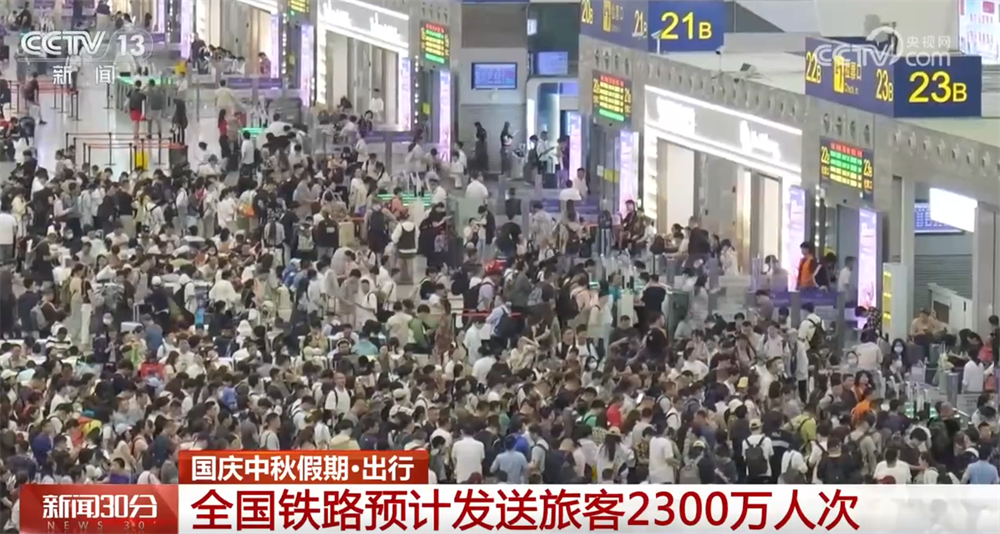
国庆中秋假期首日迎来出行高峰 交通部门“多点发力”确保旅客安全便捷出行
Yang Shi Wang· 2025-10-01 04:54
Group 1 - The National Day and Mid-Autumn Festival holiday has led to a peak in travel demand, with transportation departments taking measures to ensure safe and convenient travel for passengers [1] - The railway sector is experiencing strong growth, with an expected 23 million passengers to be sent nationwide and 2,106 additional trains planned [3] - The highway network is projected to reach peak traffic levels, with an estimated 70 million vehicles, approximately 2.1 times the normal daily flow [5] Group 2 - Water transport is expected to send over 1.17 million passengers, while civil aviation is set to operate 19,682 flights, a 3.97% increase compared to the same period last year [7][8] - The combination of the National Day and Mid-Autumn Festival has resulted in high travel demand for tourism and family visits, with civil aviation passenger transport expected to reach 19.2 million, marking a historical high for the same period [10]

勘设股份:为控股子公司提供210万元担保
Mei Ri Jing Ji Xin Wen· 2025-09-29 09:02
Group 1 - Company Guizhou Kanshe Ecological Environment Technology Co., Ltd. plans to apply for a bank loan of RMB 2.8 million to support its business development, with the company providing a guarantee of RMB 2.1 million based on its 75% ownership [1] - The company has signed a maximum guarantee contract with the creditor, and this guarantee does not require additional approval from the board or shareholders as it falls within the approved guarantee limits [1] - As of the announcement date, the total guarantee amount provided by the company for its wholly-owned and controlling subsidiaries is approximately RMB 719 million, accounting for 23.97% of the company's audited net assets for 2024 [1] Group 2 - For the year 2024, the revenue composition of the company is as follows: 67.61% from the highway industry, 21.68% from the construction industry, 7.39% from water transport and other industries, 3.01% from the municipal industry, and 0.31% from other businesses [2] Group 3 - The current market capitalization of the company is RMB 2.6 billion [3]

老闸焕新生!淮阴二号船闸正式恢复通航
Yang Zi Wan Bao Wang· 2025-09-26 09:24
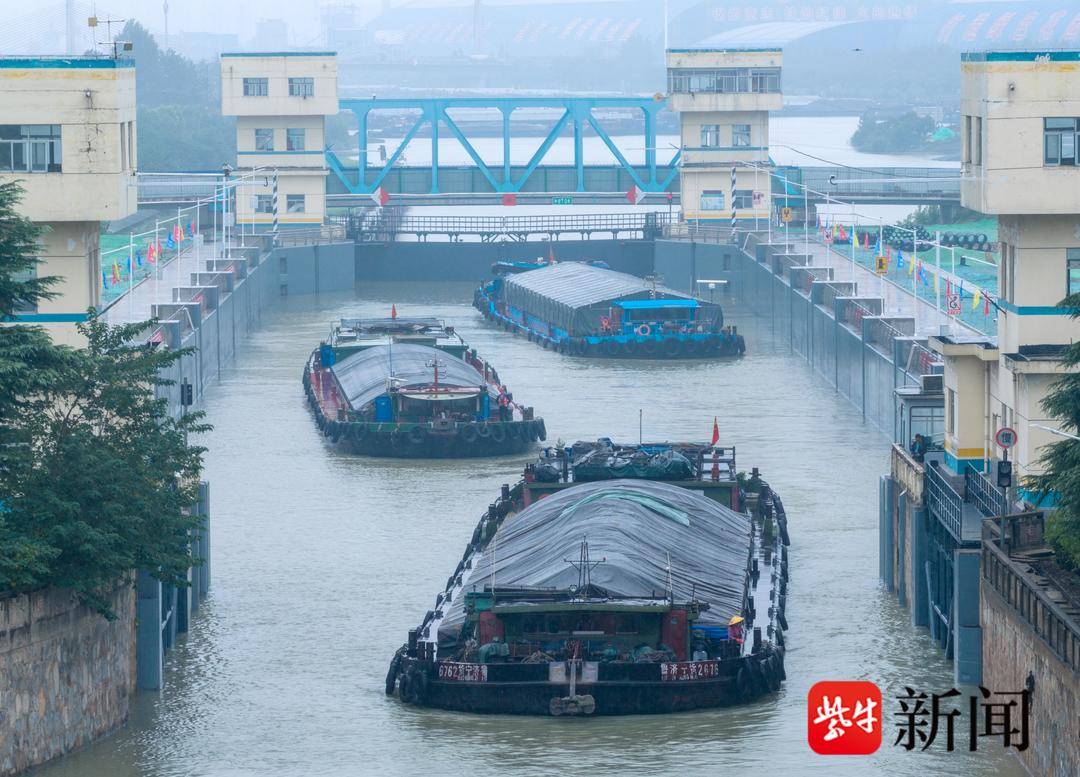
Core Points - The Huaiyin No. 2 Ship Lock has officially resumed navigation after 18 months of suspension, marking the successful completion of the hazard elimination and security project [1] - The project is a key node in the expansion and renovation of the old ship locks along the Northern Jiangsu Canal, aimed at eliminating safety hazards and providing conditions for future upgrades [5][7] Project Overview - The Huaiyin No. 2 Ship Lock hazard elimination project started construction in November 2023 and is scheduled for completion on August 29, 2025, lasting 21 months [5] - The project is designed to II-level navigation structure standards, with a maximum navigation vessel tonnage of 2000 tons [5] - The new lock chamber measures 230 meters by 34 (23) meters by 5.0 meters, including the demolition of the old lock chamber and the construction of new facilities [5] Technical Innovations - The project features two pioneering technologies for the Northern Jiangsu Canal: the use of a full steel protective wall structure above normal water levels and the application of three-layer floating mooring columns [7] - These innovations enhance the collision resistance of the lock chamber walls and improve the mooring safety for vessels with different drafts [7] Impact and Significance - The successful delivery of the Huaiyin No. 2 Ship Lock will fundamentally eliminate existing safety hazards and enhance the lock's capacity and operational safety [7] - This project serves as a demonstration for the expansion and renovation of similar old ship locks, providing a replicable and promotable "Jiangsu solution" for ensuring navigation safety and efficiency in the Northern Jiangsu Canal [7]
航道建设提质效,“水运江苏”添动能
Xin Hua Ri Bao· 2025-09-24 21:45
Core Insights - The Lianyungang Port and Shipping Development Center is committed to the "Water Transport Jiangsu" initiative, achieving significant progress in high-quality development of port and shipping services [1][2] Group 1: Mission and Development - The center has actively responded to provincial and municipal directives, accelerating key waterway projects, including the rapid construction of the Su-Lian waterway phase II, which took only 10 months from project approval to commencement [1] - The Xu-Pei Port area access channel was completed in just 8.5 months, setting a record for the fastest preliminary approval for inland waterway projects in the province [1] - The center successfully completed the construction tasks for the Su-Lian waterway phase II by December 19, 2024, and achieved project commencement for the Xu-Pei Port area access channel by December 31, 2024 [1] Group 2: Quality Management and Innovation - The center emphasizes quality engineering through meticulous planning, supervision, and construction, resulting in new replicable and promotable experiences in digital monitoring, quality enhancement, and safety standardization [2] - The Su-Lian waterway phase II project completed three research projects and received four provincial and ministerial honors, passing the provincial quality inspection as a "Safe Century" quality project [2] - The Xu-Pei Port area access channel project became the first in the province to achieve simultaneous land allocation and certification, demonstrating efficient project management [2] Group 3: Brand and Image Enhancement - The center has successfully retained the title of "National Civilized Unit" through the central propaganda and cultural work leadership group [3] - The Su-Lian waterway preliminary work team was recognized as the "Most Beautiful Transportation Person" by the provincial transportation department, with their achievements featured in national storytelling events [3] - The center's initiatives in promoting high-quality development in the port and shipping sector have been recognized with awards in various competitions, including first place in the Jiangsu Province lock maintenance skills competition [3]
交通强国建设全面提速 为高质量发展提供有力支撑
Yang Shi Wang· 2025-09-22 09:29
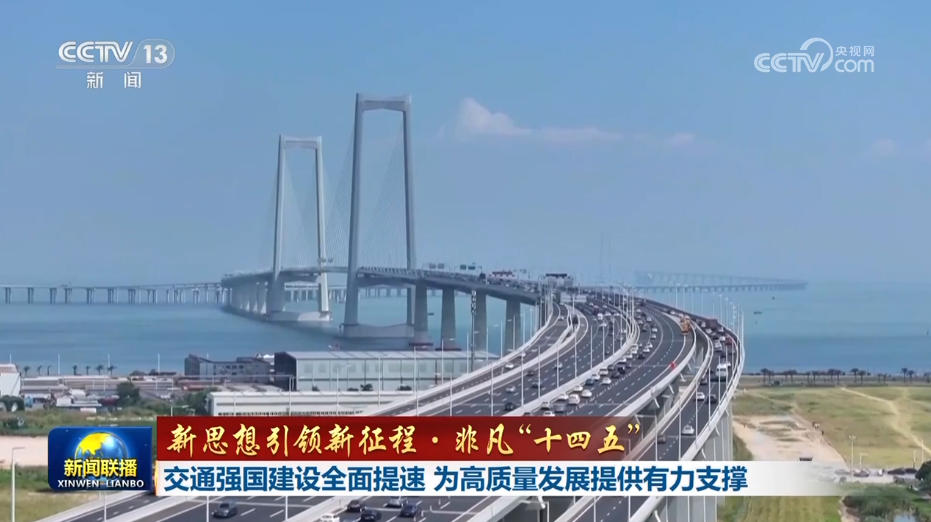
Core Insights - The construction of a sustainable transportation system is crucial for supporting high-quality economic and social development in China, aiming for a vision of "people enjoying their travel and goods flowing smoothly" [1] - During the 14th Five-Year Plan, China has established the world's largest comprehensive transportation network, significantly enhancing transportation service levels and technological innovation capabilities [1][3] Group 1: Transportation Infrastructure Development - By 2025, China aims to achieve integrated development of its comprehensive transportation system, improving overall capacity, service quality, operational efficiency, and effectiveness [3] - The national comprehensive transportation network has connected over 80% of county-level administrative regions and serves approximately 90% of the country's economic and population totals [3][5] - Fixed asset investment in transportation reached 15.2 trillion yuan during the first four years of the 14th Five-Year Plan, marking a year-on-year increase of 23.3% [5] Group 2: Railway and Road Expansion - The total operating mileage of railways surpassed 160,000 kilometers during the 14th Five-Year Plan, with an increase of 16,000 kilometers compared to the end of the 13th Five-Year Plan [7] - The national road network reached 5.49 million kilometers, with an increase of 290,000 kilometers since the end of the 13th Five-Year Plan, and rural roads totaled 4.64 million kilometers [7] Group 3: Transportation Network Statistics - China has built the largest high-speed rail network, covering 97% of cities with populations over 500,000, and the highway network covers 99% of cities with populations over 200,000 [9] - Daily transportation statistics include approximately 83,000 ship movements in and out of ports, 15,000 flights, and 35 million vehicles on highways, supporting a robust logistics and transportation framework [9]
大藤峡船闸过闸核载量突破4亿吨 多项技术指标在世界或国内领先
Jing Ji Guan Cha Wang· 2025-09-18 06:42
Core Viewpoint - The Daitengxia Ship Lock has become a crucial hub for inland waterway transportation, significantly enhancing the shipping capacity and connectivity of the region since its trial operation began in March 2020 [1] Group 1: Operational Performance - Since the trial operation, a total of 146,400 vessels have passed through the Daitengxia Ship Lock, with a cumulative cargo capacity exceeding 400 million tons [1] - The navigation level of the waterway has improved from a 300-ton capacity to the highest standard in China's inland waterway shipping of 3,000 tons [1] Group 2: Strategic Importance - The Daitengxia Ship Lock serves as a vital artery for the inland waterway transportation route from Yunnan, Guizhou, and Guangxi to the sea, supporting the integration of Guangxi into the Guangdong-Hong Kong-Macao Greater Bay Area [1] - The project features multiple technical indicators that are leading either globally or domestically, underscoring its strategic significance [1]