Optical Modules

Search documents
中际旭创 - _中国国际光电博览会要点_1.6T 可插拔产品量带来上行空间,维持增持评级
2025-09-18 13:09
Summary of Zhongji Innolight - A Conference Call Company Overview - **Company**: Zhongji Innolight Co., Ltd. - **Industry**: Technology, specifically data center optical modules Key Points and Arguments 1. **Market Potential**: There is a confirmed potential volume upside for pluggable 1.6T technology in 2026/27, driven by further AI system upgrades [1][8] 2. **Earnings Estimates**: Revised earnings estimates for 2026 and 2027 have been increased by 18% and 17% respectively, reflecting stronger demand for 800G and 1.6T products [1][8] 3. **Cost Advantages**: Adoption of silicon photonic (SiPho) solutions for 800G/1.6T products is expected to provide added cost advantages, enhancing profitability [1][8] 4. **CPO Technology Debate**: Ongoing market discussions regarding CPO (co-packaged optics) technology disruption are noted, but it is believed that CPO adoption will occur beyond 2027 [1][8] 5. **Valuation**: The price target for December 2026 is set at Rmb430.0, based on a 20x one-year forward P/E ratio, indicating a favorable valuation compared to peers [1][4][13] 6. **Sales Growth**: Projected sales and earnings compound annual growth rates (CAGRs) of 55% and 66% respectively for 2025-2027 are anticipated due to robust sales momentum and a favorable product mix [12][20] 7. **Market Position**: Innolight is positioned as a leading player in the sector, with strong relationships with top-tier customers and expertise in optics and component integration [8][20] Financial Highlights 1. **Revenue Growth**: Revenue is expected to grow significantly, with estimates of Rmb70.8 billion for 2026 and Rmb88.6 billion for 2027, reflecting year-over-year growth rates of 85.5% and 25.1% respectively [11][16] 2. **Profit Margins**: Gross profit margin is projected to stabilize around 40.6% for 2026, with net profit margins expected to be approximately 27.9% [11][16] 3. **Earnings Per Share (EPS)**: Adjusted EPS is forecasted to reach Rmb17.80 in 2026, with a growth rate of 88.0% year-over-year [11][16] Risks and Considerations 1. **Supply Chain Risks**: Potential downside risks include component supply bottlenecks amid strong volume ramp-up [8][20] 2. **Market Dynamics**: Key risks to the rating and price target include escalation of US-China trade tensions and slower-than-expected growth in global IDC capex [22][20] Additional Insights 1. **Stock Performance**: The stock has shown a significant rally, with a 28% increase post the 2Q25 earnings report, outperforming tech and communication indices [8][20] 2. **Investment Recommendation**: The recommendation remains "Overweight," suggesting that investors should accumulate shares on dips due to the undemanding valuation compared to peers [8][20] This summary encapsulates the critical insights from the conference call regarding Zhongji Innolight's market position, financial outlook, and strategic considerations.

烟台新首富诞生,4600亿
创业家· 2025-09-18 10:13
Core Insights - The article highlights the remarkable growth of Zhongji Xuchuang, which has capitalized on the AI boom, particularly benefiting from the demand for optical modules used in NVIDIA GPUs. The company's stock price has tripled in four months, leading to a market capitalization exceeding 460 billion yuan, making it the highest-valued company in Shandong province [5][4]. Group 1: Company Background and Growth - Zhongji Xuchuang's revenue from optical modules is projected to reach 40 billion yuan in the first half of 2025, driven by the increasing demand for high-speed optical modules [5]. - The company was founded following a strategic acquisition in 2016, where Wang Weixiu acquired Suzhou Xuchuang for 2.8 billion yuan, a significant investment that has since paid off handsomely [12][14]. - The company has evolved from struggling with net profits of only a few million yuan a decade ago to achieving substantial revenues, with Suzhou Xuchuang alone generating 15.847 billion yuan in revenue in the first half of 2025 [10]. Group 2: Leadership and Management - Wang Weixiu, the 75-year-old controlling shareholder, has seen his personal wealth soar to nearly 60 billion yuan, making him the richest person in Yantai, Shandong [19]. - The leadership transition from Wang to Liu Sheng, a younger and highly educated executive, has been pivotal. Liu has led the company to innovate and produce high-performance optical modules, including the 1.6T ultra-high-speed module launched in 2023 [18][19]. - The company has successfully navigated the AI revolution, with Liu's management style emphasizing rapid iteration and adaptation to market demands [18]. Group 3: Market Performance and Investment Opportunities - Zhongji Xuchuang's stock has seen significant volatility, with its price reaching as high as 49 billion yuan, making it the leading optical module company in the A-share market [22]. - Previous fundraising rounds in 2019 and 2021 at prices of 45.26 yuan and 31 yuan per share, respectively, attracted major institutional investors, including China Mobile, which has seen substantial returns on its investments [22][23]. - Despite the company's success, some early investors exited during a downturn in early 2023, highlighting the unpredictable nature of market investments [24]. Group 4: Future Outlook - The article suggests that the AI-driven demand for optical modules will continue to grow, with Zhongji Xuchuang's performance expected to remain strong, potentially exceeding 50 billion yuan in annual revenue for the first time [19]. - The company’s strategic positioning within the AI infrastructure market indicates a promising future, as it continues to innovate and expand its product offerings [19].


甲骨文上调26财年资本开支,坚定看好AI产业链投资机会 | 投研报告
Zhong Guo Neng Yuan Wang· 2025-09-16 06:09
Core Viewpoint - Oracle's cloud infrastructure business reported a revenue of $3.3 billion for the latest quarter, reflecting a year-on-year growth of 55% [1][2] - The company has a significant increase in unfulfilled performance obligations, which surged 359% to $455 billion, supported by a partnership with OpenAI for a 4.5GW data center project [1][2] - Oracle's CEO announced the acquisition of four major contracts worth "several billion dollars" across three different industries during the quarter [2] Group 1: Financial Performance - Oracle's cloud infrastructure revenue reached $3.3 billion, marking a 55% increase year-on-year [1][2] - Unfulfilled performance obligations rose dramatically by 359% to $455 billion, with the OpenAI collaboration being a key contributor [1][2] - The company anticipates its cloud infrastructure revenue to grow eightfold over the next four years, projecting $18 billion for fiscal year 2026 and $144 billion by 2030 [2] Group 2: Strategic Partnerships and Contracts - Oracle signed a five-year computing power procurement agreement with OpenAI, valued at up to $300 billion [1][2] - The CEO highlighted the successful acquisition of four significant contracts during the quarter, indicating strong demand across various sectors [2] Group 3: Capital Expenditure and Growth Plans - Oracle's capital expenditure for fiscal year 2026 is expected to be $35 billion, a substantial increase from $25 billion in the previous fiscal year, primarily focused on servers and networking equipment [2] - The management has laid out an ambitious growth blueprint, aiming for substantial revenue increases in the cloud infrastructure segment [2]

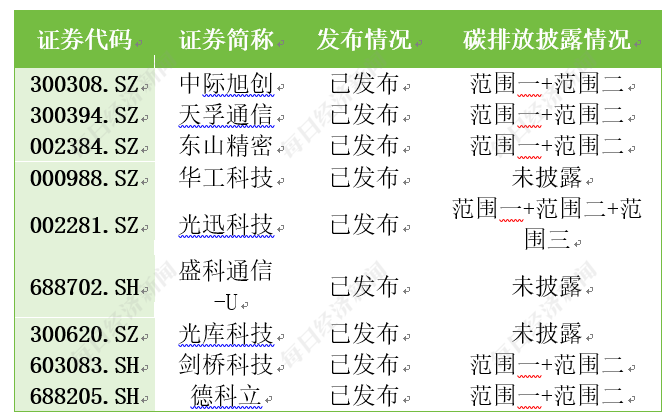
光模块概念ESG相关报告披露率为50% 只有1家企业公布范围三
Mei Ri Jing Ji Xin Wen· 2025-09-14 00:01
Group 1 - The optical module (CPO) concept has gained significant attention in the capital market, with a 6.64% increase on September 11, making it the top-performing sector [1] - Among the 18 companies in the A-share optical module sector, 9 have published ESG-related reports, resulting in a disclosure rate of 50% [1] - Only 6 companies disclosed Scope 1 and Scope 2 greenhouse gas emissions, with just 1 company reporting Scope 3 emissions, highlighting challenges in data availability and accuracy [1][4] Group 2 - Leading companies like Zhongji Xuchuang and Tianfu Communication have established dedicated ESG governance structures, indicating a commitment to sustainable development [2] - Zhongji Xuchuang has implemented a three-tier ESG management organization, while Tianfu Communication has a similar governance framework [2] - The focus on responsible sourcing is evident, with companies like Zhongji Xuchuang and Dongshan Precision committing to avoid "conflict minerals" in their supply chains [5] Group 3 - The top three companies in R&D spending for optical modules in 2024 are Ruijie Networks, Zhongji Xuchuang, and Dongshan Precision, with expenditures of 2.19 billion, 1.33 billion, and 1.27 billion respectively [6] - Companies emphasize the importance of intellectual property protection and innovation as key drivers for their development [6][7] - Tianfu Communication has allocated 2.32 million for R&D, representing 7.14% of its revenue, showcasing a strong commitment to innovation [6]


CPO板块调整,长期投资逻辑犹存
私募排排网· 2025-09-12 03:48
Core Viewpoint - The CPO optical module index has experienced significant volatility, with a 16.94% decline from September 2 to September 9, followed by a strong rebound due to positive catalysts from OpenAI's large orders to Oracle and Oracle's better-than-expected financial results [3][7]. Recent Adjustment Analysis - The primary reason for the recent adjustment in the CPO optical module sector is profit-taking by investors, as the sector has seen substantial gains since April 2025, leading to a concentration of profit realization [7]. - The outflow of financing funds has exacerbated market volatility, with a notable shift in capital towards large-cap tech stocks since August, creating an over-allocation phenomenon [7]. - Market sentiment has fluctuated, with concerns over short-term gains prompting some investors to take profits or hedge, resulting in a sector pullback [7]. - External factors, such as the Ministry of Commerce's ruling on Micron's anti-dumping measures, have also influenced market sentiment, leading to a temporary rise followed by a decline [7]. Long-term Investment Logic - AI computing demand continues to grow, with significant capital expenditure increases from major global AI companies. In Q2 2025, the total capital expenditure of the four major North American cloud providers reached $95.8 billion, a 64% year-on-year increase [8]. - The CPO technology is becoming a key development direction in optical communication due to its advantages in bandwidth, power consumption, and cost. The global optical module market is expected to exceed $20 billion by 2025, with CPO accounting for over 30% [9]. - Domestic policies and industry support are strengthening, with the 2024 National Data Infrastructure Construction Guidelines outlining development goals for computing infrastructure over the next five years [9]. - Leading companies in the sector, such as Zhongji Xuchuang and Xinyi Sheng, are showing strong fundamentals, with median net profit growth exceeding 50% in the first half of 2025 [10]. Focus on Technology Growth Public Funds - Several public funds with high holdings in CPO optical module concept stocks have been identified, focusing on technology growth sectors and demonstrating strong long-term performance [14]. - Fund examples include: - **China Europe Digital Economy Mixed Fund A (018993)**: Focuses on AI and technology sectors, with a total scale of 1.527 billion yuan as of June 30, 2025 [15]. - **Baoying Strategy Growth Mixed Fund (213003)**: Emphasizes valuation and company quality, with a scale of 1.139 billion yuan as of June 30, 2025 [16]. - **Rongtong Industry Trend Selected Stock A (009891)**: Focuses on growth and has a scale of 1.835 billion yuan as of June 30, 2025 [17]. Conclusion - Despite short-term adjustments in the CPO optical module sector due to market sentiment and profit-taking, the long-term outlook remains robust, supported by growing AI computing demand, technological advancements, and favorable policies. Investors are encouraged to focus on leading stocks with strong performance potential for medium to long-term opportunities [18].

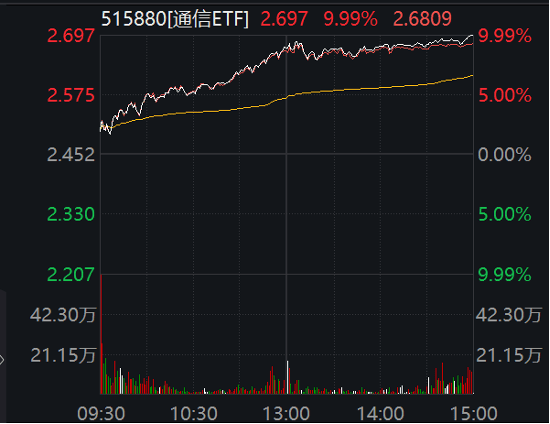
通信ETF(515880)溢价涨停,光模块概念景气度延续
Sou Hu Cai Jing· 2025-09-12 01:27
Group 1: Market Performance - The Communication ETF (515880) experienced a premium limit increase on September 11, with an arbitrage rate reaching 0.60% [1] - The ChiNext AI ETF from Guotai (159388) rose by 8.71%, with AI hardware leading the market [1] - Oracle's stock surged over 36% on September 10, marking its largest intraday gain since 1992, with a market cap increase of over $244.6 billion [1] Group 2: Oracle's Business Developments - Oracle signed a significant contract with OpenAI worth $300 billion for computing power, starting in 2027, which is one of the largest cloud contracts in history [1] - In its Q1 FY2026 report, Oracle's cloud computing revenue grew by 28% year-over-year, reaching $7.186 billion, accounting for 48% of total revenue [1] - Oracle's remaining performance obligations (RPO) surged to $455 billion, increasing over four times year-over-year and more than three times quarter-over-quarter [1] Group 3: AI and Cloud Computing Trends - The demand for AI servers is expected to continue, with major cloud service providers (CSPs) like Google, Meta, Amazon, and Microsoft increasing capital expenditures to $90 billion in Q2 2025, a 70% year-over-year increase [2] - Domestic server leader companies are expected to benefit significantly from the growth in cloud computing, with AI server revenue increasing over 60% year-over-year [2] Group 4: Optical Module Developments - NVIDIA launched the Rubin CPX GPU designed for large-scale context processing, enhancing efficiency for software encoding and generative video [3] - The 26th China International Optoelectronic Expo showcased over 3,800 global optoelectronic companies, focusing on key areas such as optical communication and AI applications [3] Group 5: Investment Opportunities - Investors are encouraged to consider the A-share AI hardware sector, particularly the Communication ETF (515880), which has over 70% of its components in "optical modules, servers, copper connections, and optical fibers" [4] - The top three weighted stocks in the ChiNext AI ETF from Guotai (159388) include Xinyi Technology (20.28%), Zhongji Xuchuang (18.79%), and Tianfu Communication (6.50%), with a combined weight of over 44% in optical module leaders [4]
【点金互动易】光模块+交换机,已推出800G光模块样品和1.6T LPO原型样品,这家公司多个细分数据交换机份额国内第一
财联社· 2025-09-12 00:35
Group 1 - The article emphasizes the importance of timely and professional information interpretation in investment decision-making [1] - The focus is on identifying investment value from significant events, analyzing industry chain companies, and interpreting key policies [1] - The product aims to provide users with quick information that impacts the market, presented in a professional yet accessible manner [1] Group 2 - The company has launched 800G optical module samples and 1.6T LPO prototype samples, holding the largest domestic market share in several segments of data switches [1] - Solid-state batteries have completed brand registration in multiple countries, with semi-solid-state batteries expected to reach production by mid-next year; the company has also sent samples of robot components [1]

【风口研报】公司增资布局高速光模块,标的企业主攻海外市场并持续加大对800G/1.6T光模块生产
财联社· 2025-09-11 13:50
Group 1 - The company is increasing its investment in high-speed optical modules, focusing on overseas markets and expanding production of 800G/1.6T optical modules, which is expected to drive strong growth in the future [1] - The technology developed by the company can extend battery life by 1-2 orders of magnitude and can be directly added to new batteries, indicating a significant innovation in lithium battery "revival" technology, which is already in small-scale production and continuous sampling [1]

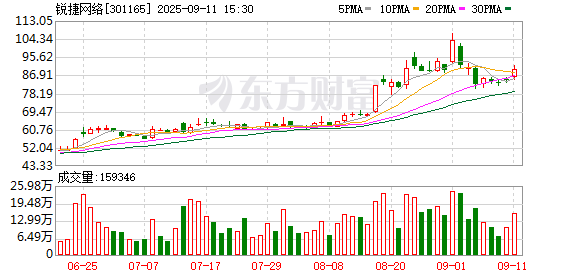
锐捷网络:公司已推出1.6T LPO原型样品,具体量产商用时间将根据研发测试进度及市场需求确定
Mei Ri Jing Ji Xin Wen· 2025-09-11 10:11
Group 1 - The company has launched 400G/800G LPO optical module products and is capable of mass production [1] - A prototype of the 1.6T LPO has been developed, with mass production timing dependent on R&D testing progress and market demand [1] - The LPO products are primarily targeted at internet companies with high-performance computing network needs, emphasizing an "open collaboration and joint innovation" ecosystem strategy [1] Group 2 - The company has initiated feasibility testing for the 1.6T LPO optical module, with plans to launch commercial products in 2023 [3] - There is an inquiry regarding whether the current R&D progress for the 1.6T optical module meets expectations and if a specific mass production timeline is established [3] - The company is considering providing engineering samples or conducting joint testing with key clients such as operators and cloud service providers [3]
【大佬持仓跟踪】CPO+铜连接,公司与AEC全球龙头合作推出1.6T产品,800G多模AOC已完成多平台验证
财联社· 2025-09-11 04:26
Core Viewpoint - The article emphasizes the importance of timely and professional information interpretation in the investment landscape, focusing on identifying investment value from significant events, analyzing industry chain companies, and interpreting key policies [1]. Group 1: Company Developments - The company has partnered with a global leader in AEC to launch a 1.6T product, indicating a strategic move to enhance its product offerings [1]. - The company has completed multi-platform validation for its 800G multi-mode AOC, showcasing its commitment to technological advancement [1]. - The company is actively expanding both domestic and overseas production capacity, reflecting its growth strategy and market expansion efforts [1]. Group 2: Industry Insights - The company is developing a full range of optical modules for data centers, which aligns with the increasing demand for high-performance data transmission solutions in the industry [1]. - The controlling shareholder of the company has both state-owned and foreign backgrounds, suggesting a diverse ownership structure that may influence its strategic direction [1].