信托

Search documents
腾讯音乐公益携手爱特乐团举办音乐会,发布原创单曲《妈妈的光》
Sou Hu Wang· 2025-09-24 09:16
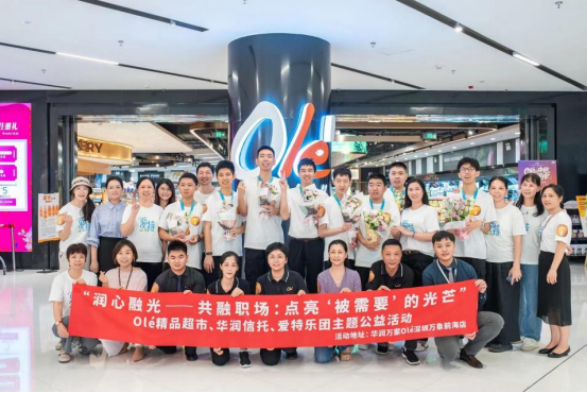
Core Viewpoint - The event "If Music Had a Shape - Mom's Light" successfully showcased the collaboration between Tencent Music Entertainment Group and Shenzhen Aite Orchestra, emphasizing the importance of music in supporting special needs communities and promoting social inclusion [1][10]. Group 1: Event Overview - The event took place on September 7, 2025, at the Shenzhen CR MixC [1]. - It was co-hosted by Tencent Music Public Welfare and Shenzhen Aite Orchestra, with support from various organizations including CR Trust and Olé Supermarket [1]. Group 2: Social Impact Initiatives - The "Run Heart and Merge Light" program initiated by CR Trust has shown significant results in providing employment guidance and family care for special needs individuals [3]. - The program has established job experience positions in collaboration with CR Beer Town and Olé Supermarket, receiving positive feedback for the talents displayed by Aite Orchestra members [3]. Group 3: Musical Performances - The concert featured impressive performances, including pieces like "Exodus" and collaborations with artists such as Li Zongyao [5][6]. - The emotional highlight of the evening included performances from the electric wind band and vocal choir, showcasing the talents of special needs individuals [8]. Group 4: Original Music Release - The original single "Mom's Light," inspired by the dedication of the orchestra members' mothers, was launched during the event to raise awareness for public welfare and special groups [10]. - The single is available on major music platforms including QQ Music, Kugou Music, and Kuwo Music [10]. Group 5: Future Initiatives - Tencent Music Entertainment Group aims to deepen music training and vocational integration projects for individuals with autism, fostering self-worth and encouraging societal support for special needs communities [12].

中信信托新任董事长吕天贵任职资格获批 此前为中信银行副行长
Xi Niu Cai Jing· 2025-09-24 05:29
Group 1 - The Beijing Financial Regulatory Bureau approved the appointment of Lv Tiangui as the chairman and director of CITIC Trust Co., Ltd. [2] - Lv Tiangui previously served as the vice president of CITIC Bank before joining CITIC Trust [4] - The former chairman of CITIC Trust, Lu Wei, returned to CITIC Bank as president in February [4] Group 2 - CITIC Trust experienced personnel changes, with former vice president Tu Yikai promoted to general manager [5] - In 2024, CITIC Trust reported a revenue of 5.379 billion yuan, an increase of 8.09% year-on-year, and a net profit of 2.653 billion yuan, up 0.95% year-on-year [5] - The annual report indicated that CITIC Trust added 2,549 new trust projects in 2024, with total trust assets reaching 11,999 billion yuan, distributing 31.2 billion yuan in trust income to beneficiaries [5]


建元信托跌2.24%,成交额1.42亿元,主力资金净流出909.62万元
Xin Lang Zheng Quan· 2025-09-24 02:17
Core Viewpoint - Jianyuan Trust's stock has experienced a decline of 12.57% year-to-date, with a recent drop of 2.24% on September 24, 2023, indicating potential challenges in market performance [1]. Company Overview - Jianyuan Trust, established on September 15, 1995, and listed on January 28, 1994, is located in Shanghai and primarily engages in fund trusts, wealth management trusts, public welfare trusts, investment banking, and proprietary business [1]. - The company's main revenue sources are trust business (89.36%) and proprietary business (10.64%) [1]. Financial Performance - As of June 30, 2025, Jianyuan Trust reported a net profit of 40.29 million yuan, reflecting a year-on-year growth of 13.36% [2]. - The company has not generated any operating revenue for the first half of 2025 [2]. Shareholder Information - As of June 30, 2025, Jianyuan Trust had 86,300 shareholders, an increase of 16.23% from the previous period, with an average of 63,356 circulating shares per shareholder, down by 13.96% [2]. - The top ten circulating shareholders include Southern CSI 500 ETF, which increased its holdings by 8.33 million shares, and Hong Kong Central Clearing Limited, which reduced its holdings by 1.59 million shares [3]. Market Activity - Jianyuan Trust's stock has seen significant trading activity, with a total market capitalization of 30.12 billion yuan and a trading volume of 142 million yuan on September 24, 2023 [1]. - The stock has appeared on the "Dragon and Tiger List" twice this year, with the most recent instance on September 19, 2023, showing a net buy of -38.18 million yuan [1].

“农田里”的信托人:中国外贸信托深耕乡村沃土
Jin Rong Shi Bao· 2025-09-23 07:42
当金融人脱下西装走进田野,当金融特色与乡村沃土深度融合,会碰撞出怎样的火花? 中国外贸信托农业金融团队用九年的坚守给出了答案——在这里,每一株麦苗的返青、每一笔款项的到账, 都化作大地的诗行,在广袤的乡野间写下希望的注脚。 党的二十大报告提出,"全面推进乡村振兴""加快建设农业强国"。中国外贸信托扎根乡村,践行推进农业农 村现代化有了更丰富的叙事——从"萌芽"期分不清农作物的"金融白领",到"拔节"期熟稔农时农事的"田间专 家",再到"抽穗"时构建起覆盖全国20余省业务版图的"兴农先锋",他们用双脚丈量土地,以金融活水浇灌乡村振 兴的沃土,在"三农"金融服务体系中贡献了独特的价值。 萌芽:从"不谙农事"到扎根乡村 "前两天山东刚下过雪,这雪下得真好,正好省了给麦苗浇一回水,麦苗也从黄变绿了。"中国外贸信托农业 金融团队的赵冰蹲在小麦田里,向笔者介绍着一些农业种植的基本知识。 "几年前刚和信托公司接触时,有的连小麦苗都不认识。现在再问他们什么时候该播种、用什么肥、什么农机 好使、农产品能卖多少钱,大家都能答得上来。"合作的助农机构区域负责人严姐感慨道。 走在宽敞、平整的田间道路上,赵冰回忆起当初在云南省富宁县调 ...

丰收时节结硕果 携手共绘好“丰”景
Jin Rong Shi Bao· 2025-09-23 07:33
Core Viewpoint - The article highlights the significant role of non-bank financial institutions, such as trust companies and consumer finance companies, in supporting agricultural development and rural revitalization in China, particularly during the harvest season. Group 1: Trust Companies - Trust companies have established various charitable trusts aimed at rural revitalization projects in regions like Hunan, Shanxi, and Tibet, providing substantial financial support for local agricultural initiatives [3][4]. - As of September 18, 2025, there are 170 charitable trusts registered under the name "rural revitalization," with a total asset scale of approximately 1.225 billion yuan, including a notable project established in 2023 with a scale of 257.66 million yuan [3][4]. - Trust companies are innovating specialized trust products and services tailored to local agricultural needs, contributing to infrastructure upgrades and enhancing agricultural productivity [3][4][8]. Group 2: Consumer Finance - Consumer finance companies are providing timely loans to farmers, addressing immediate financial needs for repairs and improvements, thereby enhancing their quality of life [5][6]. - These companies are developing financial products that align with the seasonal cycles of agricultural production, ensuring that financial support meets the diverse needs of rural residents [7]. - Initiatives such as planting goji berry trees in Ningxia demonstrate how consumer finance can intertwine ecological protection with economic benefits for farmers, creating a sustainable income model [7][8]. Group 3: Financial Leasing and Collaboration - The issuance of the first green financial bond for rural revitalization by a financial leasing company, with a scale of 3.5 billion yuan, opens new financing avenues for supporting rural initiatives [8]. - Financial leasing companies are increasingly focusing on small and micro enterprises, with a reported 32.49% growth in principal balances for loans under 30 million yuan as of June 2025 [8]. - Collaboration among various financial institutions, government bodies, and agricultural enterprises is essential for creating a comprehensive service framework that meets the diverse financial needs of rural communities [9].
“换帅”后,他们先解哪道“难题”?
Jin Rong Shi Bao· 2025-09-23 07:08
作为信托业内的头部企业,两家公司董事长的更替自然备受瞩目。王欣和吕天贵的到任也意味着自2024 年1月执掌平安信托20个月的方蔚豪和自2024年5月执掌中信信托16个月的芦苇正式离任。 除两家头部信托公司同步进行"换帅",其他信托公司近期的高管人事调整同样引人关注。 《金融时报》记者注意到,国家金融监督管理总局北京金融监管局在9月19日还批复同意包恋群任国投 泰康信托总经理。10多天前,陆家嘴国际信托董事长也发生了变更,王岗接替黎作强出任董事长。而在 更早之前,云南国际信托发布公告称,因工作调动,甘煜已辞任云南国际信托董事长,目前由总经理代 为履行董事长职责,代为履职期限不超过6个月。 就在同一天,中信信托与平安信托董事长任职资格公告发布。 9月19日,国家金融监督管理总局北京金融监管局与深圳金融监管局分别发布公告,批复同意中信信托 董事长吕天贵以及平安信托董事长王欣的任职资格。 这意味着两家公司的董事长正式进入履职阶段,目前,工商层面的变更流程仍在推进中。 从经营业绩来看,中信信托2024年实现营业收入53.79亿元,净利润26.53亿元,主要经营指标已连续15 年保持在行业前三。另外,数据显示,平安信托2 ...
政策双周报(0905-0920):基金销售费率征求意见稿发布,14D逆回购招标方式调整-20250923
Huachuang Securities· 2025-09-23 03:41
1. Report Industry Investment Rating No information regarding the industry investment rating is provided in the report. 2. Core Viewpoints of the Report The report comprehensively analyzes various policies from September 5th to September 20th, 2025, including macro - economic, fiscal, monetary, financial regulatory, real estate, and tariff policies. It aims to provide an overview of the current economic policy environment and potential impacts on different sectors [1][2][3]. 3. Summary by Directory 3.1 Macro - economic Tone - The government is promoting the construction of a unified national market and expanding service consumption. Measures include rectifying disorderly competition, boosting consumer spending with about 420 billion yuan in fiscal support driving over 2.9 trillion yuan in sales, and promoting private investment [1][11][12] - The State Council has deployed measures to promote private investment, aiming to expand investment space, ensure fair competition, and support private capital in new areas [13][16] 3.2 Fiscal Policy - The fiscal policy is more active, with a focus on using special bonds to repay government arrears to enterprises. As of September 19th, 2025, 1.1506 trillion yuan of special bonds have been issued, exceeding the annual limit of 800 billion yuan [17] - Over 60% of financing platforms have exited, and 4 trillion yuan of the 6 - trillion - yuan special debt quota has been issued. The government debt risk is under control, and it plans to issue part of the 2026 local government debt quota in advance [18][19] 3.3 Monetary Policy - The central bank has optimized and simplified the evaluation indicators for primary dealers, which helps to improve the transmission of interest rates and strengthen the benchmark nature of the Treasury yield curve [21] - The 14 - day reverse repurchase operation has been adjusted to a fixed - quantity, interest - rate tender, and multiple - price winning bid method, further strengthening the policy interest rate status of the 7 - day reverse repurchase [22] - The global financial stability system faces challenges such as fragmented regulatory frameworks, insufficient regulation in digital finance, and weak regulation of non - bank intermediaries [23] 3.4 Financial Supervision - A draft for public comments on the management regulations of public fund sales fees has been released, and the second batch of science and technology innovation bond ETFs will be listed on September 24th [26] - New regulations for insurance, trust, and securities industries have been introduced, including the "Insurance Company Capital Guarantee Management Measures", the "Trust Company Management Measures", and the start of the self - evaluation of securities company classification [27][28] - The controlling rights of three AMC companies have been transferred to Central Huijin. There are concerns about the liquidity risk of funds concentrated in the technology sector, and the proportion of cash wealth management in August reached a new low for the year [29] 3.5 Real Estate Policy - Shenzhen has relaxed purchase restrictions in multiple districts, and Shanghai has exempted first - home buyers from property tax under certain conditions [32] - Shenzhen has released a draft for public comments on the housing provident fund management measures, and Beijing and Shanghai have adjusted the upper and lower limits of the monthly housing provident fund payment base [33] 3.6 Tariff Policy - Chinese and US leaders had a phone call, and the two sides reached a basic framework on issues such as TikTok. China opposes the politicization of technology and economic and trade issues [36][37]
中原信托注册资本增至50亿元
Jing Ji Guan Cha Wang· 2025-09-23 03:11
Core Viewpoint - The Henan Financial Regulatory Bureau has approved the capital increase and equity structure adjustment of Zhongyuan Trust, with an investment of approximately 724 million yuan from Henan Investment Group, raising the registered capital to 5 billion yuan [2][6]. Group 1: Company Overview - Zhongyuan Trust was established in 1985 and is headquartered in Zhengzhou, Henan. It is a state-controlled financial institution approved by the National Financial Regulatory Administration [5]. - The company has been operating in Henan for nearly 40 years and has shown steady growth in revenue and net profit from 2022 to 2024, with revenues of 757 million yuan, 791 million yuan, and 881 million yuan, and net profits of 126 million yuan, 140 million yuan, and 144 million yuan respectively [5]. - As of the end of 2024, Zhongyuan Trust's registered capital was approximately 4.681 billion yuan after multiple capital increases since May 2008 [5]. Group 2: Shareholding Structure - The 2024 annual report indicates that Zhongyuan Trust has three shareholders, with Henan Investment Group holding approximately 64.93%, making it the largest shareholder. The second and third shareholders are Henan Zhongyuan Expressway Co., Ltd. with 27.27% and Everbright Xinglong Trust Co., Ltd. with 7.8% [5]. - The recent capital increase does not change the number of shareholders but further increases the shareholding ratio of Henan Investment Group [6].

服务向“实” 发展向“稳” 开放向“深”——“十四五”金融业交出高质量答卷
Sou Hu Cai Jing· 2025-09-23 01:27
Core Insights - The article highlights the achievements of China's financial industry during the "14th Five-Year Plan" period, emphasizing high-quality development and effective risk management [1][2][4] Financial Industry Strength - As of June 2025, China's banking sector assets are expected to reach nearly 470 trillion yuan, ranking first globally; the stock and bond markets are the second largest in the world [1] - The total assets of the banking and insurance sectors have surpassed 500 trillion yuan, with an annual growth rate of 9% over the past five years [2] - The asset management of trust, wealth management, and insurance institutions has doubled compared to the end of the "13th Five-Year Plan," reaching nearly 100 trillion yuan [2] Support for the Real Economy - During the "14th Five-Year Plan," the banking and insurance sectors provided an additional 170 trillion yuan in funding to the real economy through various financial instruments [2] - Loans for scientific research, manufacturing, and infrastructure have seen average annual growth rates of 27.2%, 21.7%, and 10.1%, respectively [2] - The balance of loans to small and micro enterprises has reached 36 trillion yuan, 2.3 times that of the end of the "13th Five-Year Plan," with interest rates decreasing by 2 percentage points [2] Risk Management - The financial management departments have made significant progress in risk prevention and control, with a focus on stabilizing the overall situation and coordinating efforts [3][4] - A mechanism for coordinating real estate financing has been established, with credit support exceeding 7 trillion yuan for nearly 2 million housing units [3] - The number of local government financing platforms has decreased by over 60%, and the scale of financial debt has dropped by more than 50% compared to early 2023 [3] Governance and Market Stability - There have been breakthroughs in corporate governance regulation, with over 3,600 illegal shareholders removed and significant improvements in the governance efficiency of financial institutions [4] - The stability of the financial market has been enhanced, with the RMB exchange rate remaining stable and low bond default rates [4] - The People's Bank of China is exploring new monetary policy tools to maintain capital market stability [4] Internationalization and Openness - By the end of July, foreign institutions and individuals held over 10 trillion yuan in domestic stocks, bonds, and deposits, indicating active cross-border investment [6] - The RMB has become the largest settlement currency for China's external payments and ranks among the top three trade financing and payment currencies globally [6] - The financial industry has made systematic progress in opening up, with enhanced risk prevention capabilities in the context of a more open financial environment [6][7] Future Outlook - The foreign exchange management system will be further improved to facilitate a more convenient, open, secure, and intelligent foreign exchange management mechanism [7]
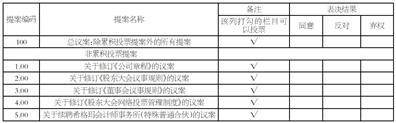
陕西省国际信托股份有限公司 关于召开2025年 第二次临时股东会的通知
Sou Hu Cai Jing· 2025-09-22 23:41
Meeting Overview - The company will hold its second extraordinary general meeting of shareholders in 2025 on October 10, 2025 [2][3] - The meeting is convened by the company's board of directors, which approved the proposal to hold the meeting on September 22, 2025 [2][29] - The meeting complies with relevant laws, regulations, and the company's articles of association [2] Meeting Details - The on-site meeting will take place at 14:50 on October 10, 2025, with network voting available from 9:15 to 15:00 on the same day [3][4] - Shareholders can participate through on-site voting or online voting via the Shenzhen Stock Exchange [3][20] - The record date for shareholders eligible to attend the meeting is September 26, 2025 [4] Attendees - Ordinary shareholders or their proxies registered by the record date are entitled to attend the meeting [5][6] - Company directors, supervisors, and senior management will also be present [5][6] Meeting Agenda - The meeting will review several proposals, including amendments to the company's articles of association and the appointment of an accounting firm [8][9] - Proposals 1, 2, and 3 require a two-thirds majority vote from attending shareholders [9] - The report on the evaluation of major shareholders for the year 2024 will also be presented [8][10] Voting Procedures - Shareholders can vote through the Shenzhen Stock Exchange trading system or the internet voting system [13][20] - The voting process includes filling out opinions on proposals, with the first valid vote being counted in case of duplicates [16][17] Registration Information - Registration for the meeting is required, with specific documentation needed for both corporate and individual shareholders [11][12] - Registration will be open on October 9 and the morning of October 10, 2025 [12]