
饮料

Search documents
年底卸任公司职务,美媒慨叹“传奇落幕”,巴菲特谢幕信称将“安静退场”
Huan Qiu Shi Bao· 2025-11-11 22:56
Core Viewpoint - Warren Buffett, the renowned investor known as the "Oracle of Omaha," announced his plan to step down as CEO of Berkshire Hathaway by the end of the year, marking the end of an era in investment management [1][3]. Group 1: Leadership Transition - Buffett will no longer write the annual report for Berkshire Hathaway or speak at the annual shareholder meeting, indicating a significant shift in the company's leadership dynamics [3]. - Greg Abel, Buffett's long-time partner, will succeed him as CEO, and Buffett praised Abel as an "outstanding manager" [3]. - Buffett has converted 1,800 shares of Berkshire Hathaway's Class A stock, valued at $1.3 billion, into Class B shares for his children and a charitable foundation [3]. Group 2: Personal Reflections - In his letter, Buffett reflected on his life, expressing gratitude for reaching the age of 95 and reminiscing about his childhood and hometown [1][4]. - He acknowledged his declining health, mentioning difficulties in daily activities and a reduced work efficiency compared to Abel [3]. Group 3: Philanthropy and Legacy - Buffett reiterated his commitment to philanthropy, stating he would accelerate his charitable donations, having pledged to donate 99% of his wealth [3]. - His investment philosophy and charitable efforts have become integral to modern value beliefs, with initiatives like "Lunch with Buffett" raising $53 million for charity [5]. Group 4: Investment Philosophy - Buffett's investment principles, such as "be fearful when others are greedy and greedy when others are fearful," continue to resonate within the investment community [4]. - He emphasized the importance of seeking correct role models and self-improvement, stating that true greatness comes from kindness rather than wealth accumulation [6].


饮料不好卖了
2 1 Shi Ji Jing Ji Bao Dao· 2025-11-11 13:06
Group 1 - The beverage market is entering a contraction phase, with overall sales down 9% year-on-year in September, and offline channel sales down 10.4% [1] - Uni-President China reported that its overall revenue remained flat year-on-year in Q3, with beverage business revenue declining in the low single digits, while food business revenue grew in the mid to low single digits [2] - The dairy market is also facing challenges, with ready-to-drink tea beverages substituting liquid milk products, particularly impacting packaged liquid milk sales [3] Group 2 - Beverage production in China showed a significant weakening trend in Q3 compared to the first half of the year, with soft drink production declining by 0.17%, 6.79%, and 10.12% year-on-year in July, August, and September respectively [4] - Adverse weather conditions, including typhoons and heavy rain, may have also impacted beverage sales, although the external competition from food delivery services is becoming more manageable [5]

饮料不好卖了
21世纪经济报道· 2025-11-11 12:57
Core Insights - The beverage market is entering a contraction phase, with overall sales down 9% year-on-year in September, and offline sales down 10.4% [1] - Major companies like Uni-President China reported stable overall revenue, but beverage business revenue declined slightly, influenced by price wars and competition in the industry [1] - The dairy market is also facing challenges, with ready-to-drink tea beverages substituting liquid milk products [1] Group 1: Beverage Market Performance - In September, the beverage market saw a 9% year-on-year decline in total sales, with offline channels experiencing a 10.4% drop [1] - Uni-President China's beverage revenue fell by a low single-digit percentage in Q3, attributed to competition and price wars on delivery platforms [1] - The juice category faced significant pressure, while some products like "Huan Shen" and "Shuang Cui" achieved double-digit revenue growth [1] Group 2: Dairy Market Challenges - The dairy sector is under pressure, with ready-to-drink tea beverages replacing liquid milk products, particularly impacting packaged liquid milk sales [1] - Yili reported that the overall demand for liquid milk remains stable, but packaged liquid milk is facing declines due to competition from ready-to-drink tea [1] Group 3: Production and External Factors - Beverage production in China showed a weakening trend in Q3 compared to the first half of the year, with monthly production declines of 0.17%, 6.79%, and 10.12% respectively from July to September [2] - Adverse weather conditions, including typhoons and heavy rain, may have also impacted beverage sales [2] - The external competition from delivery platforms is becoming more manageable, as many executives noted that delivery subsidies have peaked, which could positively affect the beverage market [2]
深圳民营经济蓬勃发展,东鹏饮料凭亮眼业绩助GDP稳步增长
Sou Hu Cai Jing· 2025-11-11 12:15
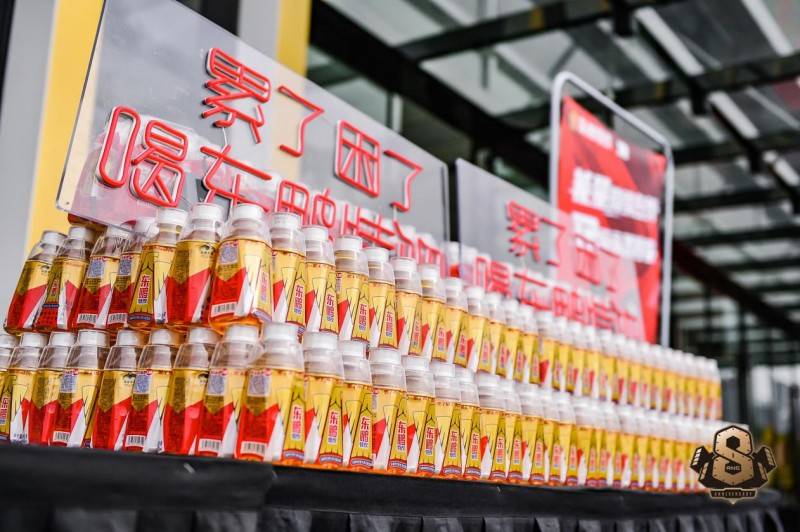
Core Insights - Shenzhen's GDP for the first three quarters reached 27,896.44 billion yuan, with a year-on-year growth of 5.5%, indicating a stable economic development trend [1] - Dongpeng Beverage reported impressive revenue of 16.844 billion yuan for the same period, marking a year-on-year increase of 34.13%, reflecting the strong momentum of private enterprises contributing to GDP growth [1] Group 1: Company Performance - Dongpeng Beverage's flagship product, Dongpeng Special Drink, generated revenue of 12.563 billion yuan in the first three quarters, accounting for 74.63% of total revenue, demonstrating stable performance [5][6] - The electrolyte drink "Dongpeng Water" showed significant growth, achieving revenue of 2.847 billion yuan, increasing its share from 9.66% to 16.91%, becoming the second-largest growth driver after Dongpeng Special Drink [5][6] - The "1+6" multi-category product strategy has successfully increased the revenue share of other beverages to 8.46%, validating the effectiveness of the company's diversified approach [5][6] Group 2: Market Strategy - Dongpeng Beverage has established a nationwide distribution network with over 3,200 distributors and more than 4.2 million active terminal points, achieving comprehensive market coverage from first-tier cities to county markets [8] - Revenue in the Guangdong region grew by 13.50%, with market share adjusted to 23.08%, while the North China region saw a remarkable growth of 72.88%, indicating a balanced market layout and continuous optimization of regional structure [8] Group 3: Innovation and Development - The company employs a "precise entry + continuous deep cultivation" strategy to quickly establish advantages in niche markets such as electrolyte water and tea beverages, leveraging a mature supply chain and digital infrastructure [7] - Dongpeng Beverage has planned 13 production bases, with 9 already in operation, to reduce logistics costs and ensure rapid delivery of new products to the market [9] Group 4: Corporate and Economic Synergy - Dongpeng Beverage's growth story reflects the resilience of Shenzhen's private economy, transitioning from a struggling state-owned factory to a publicly listed company valued in the hundreds of billions [10] - The supportive policies and optimized business environment from the Shenzhen government have played a crucial role in fostering the growth of private enterprises like Dongpeng Beverage [10] - The company actively contributes to social development through public welfare initiatives and job creation, exemplifying the mutual empowerment between the enterprise and the city [10] Group 5: Future Outlook - Dongpeng Beverage aims to continue its growth alongside Shenzhen, focusing on product innovation, market expansion, and digital transformation to contribute to the high-quality development of the beverage industry in China [11]

食品饮料行业第三季报总结报告:酒类渠道包袱加速去化,大众品类表现分化
Guoxin Securities· 2025-11-11 11:13
Core Insights - The leading companies in the mass-market segment are stabilizing, while the liquor industry is experiencing accelerated pressure release, reinforcing market share logic [4][19][39] - The food and beverage sector is expected to show stable overall growth with structural differentiation by 2025, with Q1/Q2/Q3 revenues growing by +2.5%/+2.4%/-4.77% year-on-year, and net profits declining by +0.3%/-2.1%/-14.6% [4][12] - The liquor sector is entering a phase of adjustment, with a consensus on deceleration in 2024, as many companies are adjusting their strategies amid increasing channel pressures [4][19][39] Liquor Sector - In Q3 2025, the liquor sector's revenue and net profit declines have widened, with total revenue of 3,202 billion yuan, down 5.8% year-on-year, and net profit of 1,126 billion yuan, down 6.9% year-on-year [19][35] - Major liquor companies are experiencing significant revenue drops, with only a few, such as Moutai and Fenjiu, showing positive growth [20][21] - The sector is facing increased competition, leading companies to prioritize market share over profitability, resulting in a decrease in gross profit margins [33][39] Mass-Market Segment - The mass-market segment is benefiting from proactive inventory reduction and macroeconomic policy support, leading to improved operations for leading companies in 2025 [4][12] - Specific categories such as sugar-free tea, functional beverages, and snacks are showing high growth rates, with companies like Nongfu Spring and Dongpeng leading the charge [4][12] - The snack segment reported a revenue increase of 22.4% year-on-year in Q3 2025, despite rising costs in certain product categories [4][12] Investment Recommendations - The report suggests focusing on liquor and restaurant supply chains, particularly companies like Moutai, Luzhou Laojiao, and Fenjiu, which are expected to benefit from policy sensitivity [4][12] - Stronger companies in the mass-market segment, such as Nongfu Spring and Yanjing Beer, are recommended for investment due to their robust performance [4][12] Financial Performance - The liquor sector's cash flow is under pressure, with many companies reporting negative operating cash flows, indicating a slowdown in business activity [40] - The overall net profit margin for the liquor sector has decreased, with only Moutai showing an improvement in gross profit margin due to better product mix [39][40]




愿好运无尽头!巴菲特致股东的首封感恩节信,细数人生中那些 “天选之签”
聪明投资者· 2025-11-11 11:12
Core Insights - Warren Buffett's Thanksgiving letter this year is particularly anticipated as he hands over the reins of Berkshire Hathaway to Greg Abel, leading to a sense of loss among shareholders regarding Buffett's insights [5][12] - Buffett converted 1,800 A shares into 2.7 million B shares and donated them to four family foundations, highlighting his commitment to philanthropy [5][6] - The letter emphasizes the importance of trust in leadership, with Buffett expressing confidence in Abel's capabilities to manage the company [8][75] Group 1 - Buffett's Thanksgiving letter is filled with personal reflections and gratitude, contrasting with the more business-focused annual shareholder letters [7][19] - The letter discusses the transition of leadership to Greg Abel, who Buffett believes is exceptionally qualified to manage the company's funds [15][75] - Buffett reflects on his life experiences and the influence of key individuals in his journey, emphasizing the importance of relationships and mentorship [35][36][40] Group 2 - The letter addresses the challenges of aging and the need for careful planning regarding wealth distribution and charitable goals [60][62] - Buffett plans to accelerate donations to his children's foundations to ensure they can manage his estate effectively while they are still in their prime [63][64] - He expresses a desire for his children to continue his philanthropic legacy, emphasizing the importance of responsible wealth management [71][72] Group 3 - Buffett acknowledges the unpredictability of life and the role of luck in his longevity and success, reflecting on the advantages he has had [58][59] - The letter critiques the corporate culture surrounding executive compensation, highlighting the need for vigilance among boards of directors [78][82] - Buffett concludes with a message of gratitude and encouragement for continuous improvement, regardless of past mistakes [91][95]

再投6500万元布局饮料谋翻身,*ST兰黄“解渴”容易“解困”难
Tai Mei Ti A P P· 2025-11-11 11:07
Core Viewpoint - *ST Lanhuang is aggressively expanding its beverage business to offset losses from its traditional beer operations, with recent investments showing early signs of revenue growth, but the long-term viability remains uncertain due to intense competition and ongoing operational challenges [2][6][7]. Investment in Beverage Sector - The company plans to invest up to 65 million yuan in a juice beverage project in Chongqing, aiming to enhance its production capabilities [2][3]. - Recent investments include a 35.7 million yuan acquisition of a 51% stake in a joint venture and a zero-cost acquisition of a 50.63% stake in Yiwang Juice, followed by a 26.92 million yuan capital increase [3][4]. - The new production line in Chongqing is designed to process 30 tons of citrus per hour, producing various juice products [3][4]. Financial Performance - The beverage segment contributed 17.3 million yuan in revenue since its consolidation, helping the company achieve a 23.4% year-on-year revenue increase to 219 million yuan for the first three quarters [4][5]. - The company reported a net profit of 10.93 million yuan for the first three quarters, marking a turnaround from previous losses, with a particularly strong third quarter showing a 94.98% revenue increase year-on-year [5][6]. Challenges and Market Competition - Despite recent improvements, *ST Lanhuang faces significant challenges, including a long-term decline in its beer business, which has seen production and sales drop by nearly 40% year-on-year [6][7]. - The beverage market is highly competitive, with major beer companies also entering the juice segment, making it difficult for *ST Lanhuang to establish a strong foothold [7]. - The company's previous revenue levels have not exceeded 300 million yuan since 2022, and it remains under the threat of delisting due to ongoing financial struggles [6][7].


持仓观望?
第一财经· 2025-11-11 10:57
Market Overview - The A-share market is exhibiting a "high open, low walk, and fluctuating differentiation" pattern, with the Shanghai Composite Index maintaining above the 4000-point mark, supported by heavyweight sectors and stable policy expectations [5] - The Shenzhen Component Index is dragged down by corrections in technology stocks such as telecommunications, electronics, and computers, while the ChiNext Index is affected by pullbacks in sectors like lithium batteries, new energy vehicles, and innovative pharmaceuticals [5] Trading Dynamics - The ratio of stocks hitting the upper and lower limits shows more stocks rising than falling, indicating a relatively balanced market sentiment with a near 1:1 rise-fall ratio [6] - The consumer sector, particularly food and beverage and liquor industries, along with cyclical sectors like photovoltaic equipment and non-metallic materials, are leading the gains, while technology and financial sectors are experiencing notable adjustments [6] Market Activity - The total trading volume in both markets has decreased by 8.2%, reflecting a rise in cautious sentiment among investors, influenced by profit-taking in the large consumer sector and ongoing adjustments in high-valuation technology hardware [7] - Despite strong performances in thematic concepts like cultivated diamonds and photovoltaic equipment, these have not significantly boosted overall trading volume [7] Fund Flow and Sentiment - Institutional investors are showing a defensive and offensive differentiation, withdrawing funds from technology sectors such as consumer electronics, software development, and semiconductors, and reallocating towards undervalued blue-chip stocks (like banks) and consumer recovery sectors (such as food and beverages) [9] - Retail investors are increasingly engaging in speculative trading, with a notable focus on short-term hot sectors like photovoltaic equipment, dairy, and beverages, while some continue to chase limit-up stocks in real estate and electronic equipment sectors, indicating persistent short-term speculative sentiment [9] Investor Sentiment - Retail investor sentiment is reported at 75.85%, reflecting a strong engagement level [10] - A survey indicates that 32.25% of investors are increasing their positions, while 16.41% are reducing their holdings, and 51.34% are maintaining their current positions [14]
欢乐家:连续3个交易日收盘价涨幅偏离值累计超30%,不存在应披露而未披露重大事项
Cai Jing Wang· 2025-11-11 10:31
Core Viewpoint - The company announced that its stock price experienced an abnormal fluctuation, with a cumulative increase of over 30% in closing prices over three consecutive trading days from November 7 to November 11, 2025 [1] Summary by Relevant Sections - **Stock Price Movement** - The stock price of the company has shown a significant increase, with a cumulative rise exceeding 30% over three trading days [1] - **Regulatory Compliance** - The company confirmed that there are no corrections or supplements needed for previously disclosed information [1] - No recent media reports have been identified that could have significantly impacted the company's stock price [1] - **Operational Stability** - The company stated that there are no major changes expected in its operational situation or external business environment [1] - There are no undisclosed significant matters involving the company, its controlling shareholders, or senior management [1] - **Insider Trading** - During the period of abnormal stock price fluctuation, there were no stock trades conducted by the company's controlling shareholders, actual controllers, directors, or senior management [1]

承德露露:公司专注原生态植物饮品研发
Zheng Quan Ri Bao Zhi Sheng· 2025-11-11 08:40
Core Viewpoint - The company is focusing on the development of plant-based beverages to enhance consumer health and quality of life, promoting a balanced and healthy lifestyle [1] Group 1 - The company will concentrate on the research and development of original ecological plant beverages [1] - The strategy aims to provide reliable plant-based drinks to consumers [1] - The company emphasizes the importance of improving the health status of every consumer [1]
