化妆品

Search documents
创业者最危险的时刻,是欲戴皇冠之时
创业家· 2025-12-15 10:21
Group 1 - The core viewpoint emphasizes the dangers entrepreneurs face during periods of rapid growth and ambition, highlighting the case of Hanhou, which faced significant debt and legal issues despite high revenue figures [1] - In 2018, Hanhou reported revenues between 1.5 billion to 2 billion, but much of this was driven by aggressive expansion strategies aimed at mergers and acquisitions [1] - The article warns against having an overly optimistic mindset in business, stressing the importance of preparing for worst-case scenarios [1] Group 2 - The article promotes an upcoming offline learning event led by Wu Shichun, focusing on the technology manufacturing industry and exploring opportunities in a trillion-dollar market [6] - Participants will engage in deep networking with key industry players and investors, enhancing their understanding of capital trends and strategic approaches [8] - The event includes immersive learning experiences, case studies, and opportunities for direct feedback from mentors, aimed at fostering collaboration among entrepreneurs [8][15] Group 3 - The event itinerary includes various activities such as welcome dinners, cultural explorations, and discussions on technological innovation and industry breakthroughs [15][16] - The target audience spans multiple sectors, including robotics, smart manufacturing, aerospace, and new materials, indicating a broad interest in advanced technology and innovation [18][19][20][21][22] - The event offers early bird pricing and includes accommodation, meals, and activity materials, making it accessible for participants [23]


敷尔佳市值蒸发六成背后: 营销费用激增吞噬利润
Xin Lang Cai Jing· 2025-12-15 10:02
Core Viewpoint - The stock price of Harbin Fulejia Technology Co., Ltd. has significantly declined since its IPO, reflecting poor financial performance and a challenging market environment [2][4][26]. Financial Performance - Since its listing on August 1, 2023, at an initial price of 55.68 yuan per share, the stock reached a peak of 80.04 yuan but has since fallen sharply, with a current price of 23.88 yuan, representing a near 50% decline from the IPO price [4][25]. - In 2023, the company reported a revenue increase of 9.29% to 1.934 billion yuan, but net profit fell by 11.56% to 749 million yuan [6][27]. - The downward trend continued in 2024, with revenue of 2.017 billion yuan (up 4.32%) and net profit dropping 11.77% to 661 million yuan [6][27]. - For the first nine months of 2025, revenue was 1.297 billion yuan, down 11.54%, and net profit was 325 million yuan, a significant drop of 36.73% [8][29]. Business Segments - The medical device segment, once a key revenue driver, saw a dramatic decline in revenue, dropping 48.1% to 238 million yuan in the first half of 2025, reducing its contribution to total revenue from 48.8% to 27.6% [8][30]. - Conversely, the cosmetics segment reported a revenue of 625 million yuan, a 30% increase, but this growth was accompanied by soaring marketing expenses [31][32]. Marketing and R&D Strategy - The company has adopted a "heavy marketing, light R&D" approach, with sales expenses reaching 420 million yuan, a 39.56% increase, resulting in a sales expense ratio of 48.7% [11][32]. - This strategy has led to diminishing returns, as marketing costs have outpaced revenue growth, eroding profit margins [33][34]. - The reliance on high-risk online marketing channels, particularly on platforms like Douyin, poses additional risks if costs increase or platform rules change [33][34]. Competitive Position - Fulejia's patent portfolio is limited, with only 31 patents, of which only 9 are invention patents, significantly lower than competitors like Huaxi Biological and Beitaini [37]. - The company faces challenges in the face of regulatory changes that restrict the marketing of its medical device products, leading to a sharp decline in sales [37][39]. Strategic Responses - In response to declining sales, the company has implemented a price reduction strategy, with significant discrepancies between official and online prices for its products [39]. - The company is also exploring ways to reposition its products and enhance its marketing strategies to adapt to regulatory changes and market demands [39][40].

SENSAI山本龙圣:以日式美学重构高端美妆生活场景
Huan Qiu Wang· 2025-12-15 09:40
来源:环球网 【环球网消费报道 记者 心月】花王集团旗下高奢化妆品品牌SENSAI丝光溢彩与北京王府井文华东方酒 店于日前正式开启战略合作,双方在酒店年度圣诞点灯仪式上宣布启动涵盖客房体验、品牌展示等多维 度的深度联动。期间,花王集团旗下高奢化妆品品牌SENSAI丝光溢彩品牌总监山本龙圣接受了环球网 记者的独家专访,围绕品牌合作初心、差异化竞争优势及中国市场战略布局等话题,分享了SENSAI以 日式精致美学赋能高端生活体验场景的核心理念。 SENSAI品牌总监 山本龙圣 这种差异化定位在品牌实践中得到充分体现。从上海全球首家旗舰店的开业,到北京王府中环快闪活动 的成功举办,再到此次与北京王府井文华东方酒店的深度合作,SENSAI始终以多元场景为载体,传 递"于忙乱日常中邂逅片刻宁静与美好"的核心价值。 场景深耕:以多元合作适配中国消费者需求 在谈及中国市场长期战略时,山本龙圣将"场景化合作"定位为品牌传递核心价值的重要载体。"场景化 合作能以不同于常规的形式,更鲜明地向新老客户传达品牌恒久不变的价值。"他称,面对不断变化的 消费者需求,SENSAI始终坚守"精致细腻地生活"这一核心理念,同时通过场景创新让品牌 ...

江西省永修县市场监管局新城分局开展化妆品专项检查
Zhong Guo Zhi Liang Xin Wen Wang· 2025-12-15 09:17
针对发现的问题,执法人员依法下达责令改正通知书,明确整改要求和时限,并建立问题台账,实行销 号管理。通过"回头看"检查确保整改到位,对违法违规行为依法严肃查处。截至目前,共检查经营主体 14家,下达责令改正通知书2家。 下一步,新城分局将持续深化化妆品安全常态化监管,定期开展专项整治和"回头看"检查,巩固整治成 果。加强与股室协作联动,严厉打击违法违规行为,切实保障群众用妆安全。 永修县市场监督管理局提醒广大消费者:购买化妆品请选择正规渠道,仔细查看标签标识,留存购物凭 证,如发现违法违规行为,请及时拨打12315投诉举报。(魏旭康) 中国质量新闻网讯 为规范化妆品市场秩序,保障消费者用妆安全,江西省永修县市场监督管理局新城 分局近日在辖区内开展化妆品专项检查行动,重点打击过期变质、无中文标识等违法行为。 本次专项检查以化妆品专营店、商超柜台、美容美发机构等为重点对象,执法人员重点检查产品是否过 期变质、是否标注中文标签、是否取得注册备案等,严防假冒伪劣产品流入市场。同时,督促经营者严 格落实进货查验记录制度,确保产品来源可溯、质量可靠。 执法人员通过发放资料、现场讲解等方式,向经营者普及《化妆品监督管理条例 ...
北京市房山区燕山市场监督管理分局关于2025年度下半年化妆品监督抽检信息的公告
Zhong Guo Zhi Liang Xin Wen Wang· 2025-12-15 09:07
北京市房山区燕山市场监督管理分局关于2025年度下半年化妆品监督抽检信息的公告 (二)不合格样品信息 无不合格样品。 特此公告 | | 化妆品监督抽检合格产品信息 | | | | | | | | | | --- | --- | --- | --- | --- | --- | --- | --- | --- | --- | | 序 | 抽样编号 | 标称生产企 | 标称生产企业地址 | 样 品 | 被抽样单位 | 样品名称 | 规格型 | 限期使用日 | 备 | | 号 | | 业名称 | | 类 | 名称 | | 号 | 期 | 注 | | | | | | 型 | | | | | | | | | 北京大宝化 | 北京市北京经济技术 | 防 | 北京京燕美 廉美超市有 | 大宝水感 | | 实际限期使 | 区 级 监 | | 1 | 253123Z039 | 妆品有限公 | | 晒 | | 多效防晒 | 50克/ | 用日 | | | | | | 开发区荣华中路12号 | | 限公司紫燕 | | 盒 | | 督 | | | | 司 | | 类 | 中路店 | 露 | | 期:20280522 | 抽 | | | ...
化妆品板块12月15日跌0.16%,敷尔佳领跌,主力资金净流出395.11万元
Zheng Xing Xing Ye Ri Bao· 2025-12-15 09:06
Core Points - The cosmetics sector experienced a decline of 0.16% on December 15, with Fulejia leading the drop [1] - The Shanghai Composite Index closed at 3867.92, down 0.55%, while the Shenzhen Component Index closed at 13112.09, down 1.1% [1] Fund Flow Analysis - On that day, the cosmetics sector saw a net outflow of 395.11 thousand yuan from main funds, a net outflow of 1241.95 thousand yuan from speculative funds, and a net inflow of 1637.07 thousand yuan from retail investors [2]

11月消费投资低于预期
Ge Lin Qi Huo· 2025-12-15 08:25
1. Report Industry Investment Rating - Not provided in the content 2. Core Viewpoints of the Report - In November, the growth rates of fixed - asset investment and social consumer goods retail总额 were lower than market expectations, while the export growth rate exceeded expectations [4][23]. - The year - on - year decline of real estate sales volume and price continued in November, and the data in early December also showed the same trend [4][23]. - As of the end of October, 5000 billion yuan of new policy - based financial instruments had been fully invested, but the investment data in October and November did not show obvious improvement [4][23]. - The relatively stable international environment after the China - US summit at the end of October is beneficial to China's exports, and stable export confidence is conducive to the growth of private investment [4][23]. - The Central Economic Work Conference in December proposed to implement a more proactive fiscal policy and a moderately loose monetary policy next year to promote investment to stop falling and rebound and boost consumption [23]. 3. Summary by Relevant Catalogs 3.1 Fixed - Asset Investment - From January to November, the national fixed - asset investment decreased by 2.6% year - on - year, worse than the market expectation of a 2.2% decline [1][5]. - From January to November, the broad infrastructure investment (including electricity) increased by 0.1% year - on - year, lower than the market expectation of 1.5% [1][5]. - From January to November, the manufacturing investment increased by 1.9% year - on - year, higher than the market expectation of 0.6% [1][5]. - From January to November, the national real estate development investment decreased by 15.9% year - on - year, worse than the market expectation of a 15.4% decline [1][5]. - From January to November, private fixed - asset investment decreased by 5.3% year - on - year [5]. - In November, manufacturing investment decreased by 4.5% year - on - year, and narrow - sense infrastructure investment (excluding electricity) decreased by 9.7% year - on - year [5]. - In November, the national fixed - asset investment decreased by 1.03% month - on - month, showing a continuous decline for ten consecutive months [5]. 3.2 Real Estate - From January to November, the sales area of new commercial housing decreased by 7.8% year - on - year, and the sales volume decreased by 11.1% year - on - year [2][9]. - In the fourth quarter, the daily average transaction area of commercial housing in 30 large and medium - sized cities decreased significantly year - on - year, and the national real estate sales were still at the bottom [10]. - In November, the second - hand housing prices in first - tier cities decreased by 1.1% month - on - month, with the decline expanding [2][10]. - In November, the real estate development enterprise's available funds decreased by 32.6% year - on - year [11]. - In November, the new housing start - up area decreased by 28% year - on - year, and the housing completion area decreased by 25% year - on - year [11]. 3.3 Industrial Added Value - In November, the value - added of industrial enterprises above designated size increased by 4.8% year - on - year, lower than the market expectation of 5.0% [2][12]. - In November, the value - added of high - tech manufacturing increased by 8.4% year - on - year, maintaining rapid growth [2][12]. 3.4 Foreign Trade - In November, China's exports denominated in US dollars increased by 5.9% year - on - year, exceeding expectations, and imports increased by 1.9% year - on - year [2][14]. - From January to November, China's cumulative export amount increased by 5.4% year - on - year, and the cumulative import amount decreased by 0.6% year - on - year [14]. 3.5 Consumption - In November, the total retail sales of social consumer goods increased by 1.3% year - on - year, lower than the market expectation of 2.9% [3][18]. - In November, among the retail sales of consumer goods by units above the quota, categories with relatively fast year - on - year growth included communication equipment, cultural and office supplies, etc. Categories with relatively fast year - on - year decline included household appliances and audio - visual equipment, building and decoration materials, etc. [19]. 3.6 Service Industry and Employment - In November, the national service industry production index increased by 4.2% year - on - year, hitting a new low for the year [3][21]. - In November, the national urban surveyed unemployment rate was 5.1%, remaining the same as the previous month and 0.1 percentage point higher than the same month of the previous year [3][21].
林清轩通过港交所上市聆讯,上半年营收10.52亿 冲刺国货高端护肤第一股
Xin Lang Cai Jing· 2025-12-15 08:20
来源:市场资讯 来源:独角兽IPO 林清轩的产品矩阵已从单一的山茶花精华油,扩展至覆盖全护肤流程的多元产品线。 上海林清轩化妆品集团股份有限公司(下称"林清轩")于12月14日通过港交所上市聆讯,联席保荐人为 中信证券与华泰国际,标志着其向成为港股"国货高端护肤第一股"的目标迈出关键一步。 林清轩定位为国产高端护肤品牌,聚焦抗皱紧致市场,并以开创"以油养肤"理念及核心产品山茶花精华 油著称。 财务数据显示,林清轩业绩增长迅速:2025年上半年营收达10.52亿元,同比增长约98.5%;期内利润为 1.82亿元。2022年至2024年,公司营收从6.91亿元增长至12.10亿元,并于2023年实现扭亏为盈。 主要业务 林清轩的业务版图始于2003年,创始人孙来春在上海创立了该品牌。 品牌最初以手工皂等天然护肤产品为主,定位相对平易近人。 真正的转折点出现在2012年,当时品牌开始聚焦于山茶花护肤品的研究。两年后的2014年,首款山茶花 精华油面市,开创了品牌的"以油养肤"理念。 公司的业务呈现出鲜明特点与挑战。其核心大单品"山茶花精华油"累计销量已突破4500万瓶,并连续11 年位居全国面部精华油零售额榜首。根 ...
韩国品牌涌入中国;露露乐蒙CEO被炒了
2 1 Shi Ji Jing Ji Bao Dao· 2025-12-15 07:09
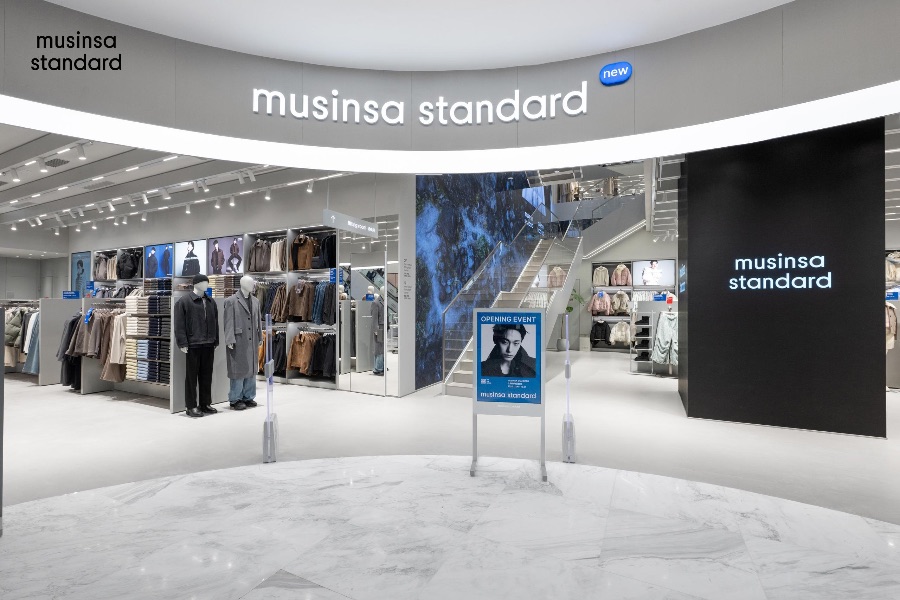
Group 1: Lululemon Financial Performance - Lululemon reported a 7% year-over-year increase in global net revenue to $2.6 billion, but net profit decreased by 12.8% to $307 million [1] - The company experienced a significant 46% year-over-year increase in net revenue from the China market, leading global performance [9] - The CEO Calvin McDonald will step down at the end of January 2026, with interim leadership provided by the CFO and CBO during the search for a new CEO [5] Group 2: Market Developments in Fashion and Retail - Musinsa opened its first overseas flagship store in Shanghai, with plans to expand to over 100 stores in China within five years, targeting a revenue of 1 trillion KRW (approximately 4.78 billion RMB) by 2030 [2] - The opening of the largest Dior store in Beijing signifies a recovery in the luxury market in China, showcasing a blend of retail and art [6] - Marubi plans to list on the Hong Kong Stock Exchange, having shown significant revenue growth in its main brands [10] Group 3: Investment Activities - L'Oréal is increasing its stake in the medical beauty giant Gauderm, raising its total ownership to 20% [14] - Ermenegildo Zegna has made a second investment in the Canadian running brand Norda, indicating a strategic move into the outdoor market [15] - Unilever has spun off its ice cream division into a standalone company, which has successfully listed in Amsterdam, London, and New York, capturing over 20% of the global ice cream market [16]


县城贵妇的“护肤柜”,不再吸金了
Feng Huang Wang· 2025-12-15 06:21
Core Viewpoint - The company, Beijing Plant Doctor Cosmetics Co., Ltd., is preparing for its IPO, aiming to become the first single-brand beauty stock in A-shares, despite facing significant challenges and complaints regarding its products and sales practices [2][5][21]. Company Overview - Founded by Jie Yong in 1994, the company transitioned from a brand agent to a retailer, launching its official brand "Plant Doctor" in 2014 with a focus on natural plant extracts [6][8]. - The brand has achieved significant recognition in the domestic market, becoming a leading single-brand beauty company [2]. Financial Performance - The company distributed a total of 180 million yuan in cash dividends in 2024 and 2025, which is approximately equal to half of its net profit for 2024 [5][21]. - Despite the cash distribution, the company has faced stagnant revenue growth, with a compound annual growth rate of only 0.92% from 2022 to 2024 [20]. Market Position and Strategy - The company has primarily focused on offline sales, with over 70% of its revenue coming from offline channels as of 2024, and a significant portion from franchise stores [9][12]. - The brand has expanded rapidly in lower-tier cities, leveraging lower operational costs and a zero-threshold franchise policy [9][12]. Challenges and Complaints - The company has faced numerous complaints regarding product efficacy, aggressive sales tactics, and poor customer service, leading to a negative consumer perception [4][14][17]. - The number of franchise stores decreased for the first time in 2024, indicating potential issues in maintaining its franchise model [12][13]. Industry Context - The Chinese cosmetics market is experiencing a shift towards e-commerce, with online sales accounting for 47% of the market by 2024, contrasting with the company's reliance on offline sales [11][22]. - The competitive landscape is intensifying, with leading brands investing heavily in research and development, while the company has lagged in R&D investment, spending only 3.08% of its revenue on R&D in 2024 [18][20]. Future Outlook - The company is attempting to adapt to changing consumer preferences by entering the instant retail market and developing its online shopping platform, although results are yet to be seen [20][21]. - The ongoing challenges highlight the need for improved compliance management and innovation to sustain growth in a highly competitive market [21].