
教育

Search documents
A股早盘震荡走强,中证A500指数上涨0.47%,3只中证A500相关ETF成交额超38亿元
Mei Ri Jing Ji Xin Wen· 2025-09-29 04:14
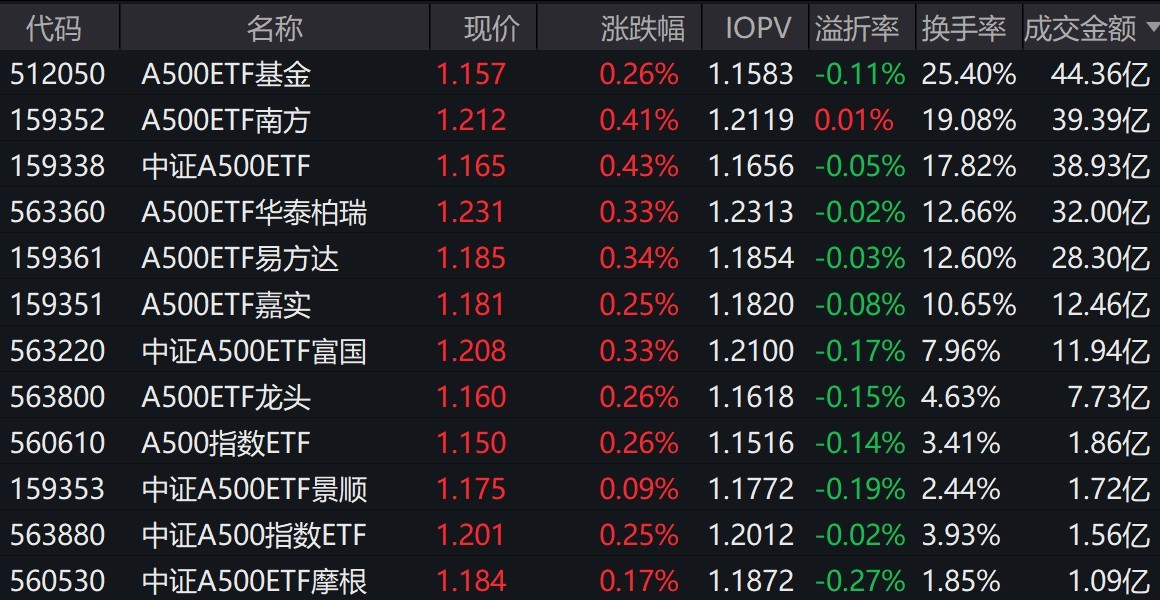
Core Viewpoint - The A-share market showed a strong upward trend in the morning session, with the CSI A500 index rising by 0.47%, driven by active trading in the new energy sector and a rebound in the securities sector, while education stocks experienced a collective adjustment [1] Market Performance - The CSI A500 index-related ETFs saw a slight increase in trading volume, with 12 ETFs exceeding a transaction volume of 1 billion yuan, and 3 ETFs surpassing 3.8 billion yuan. The transaction volumes for A500ETF Fund, A500ETF Southern, and CSI A500ETF were 4.436 billion yuan, 3.939 billion yuan, and 3.893 billion yuan respectively [1][2] - The overall market maintained a high trading activity level, with daily transaction volumes exceeding 2 trillion yuan, indicating robust market engagement [1] Sector Analysis - The new energy sector experienced a collective surge, contributing significantly to the market's upward momentum [1] - The securities sector showed strength during the session, reflecting positive sentiment among investors [1] Future Outlook - Analysts suggest that with the return of capital post the National Day holiday, there is potential for upward movement in the market, supported by positive catalysts from the technology industry, which may create more structural investment opportunities [1]

午评:两市上行创指涨1.77% 电池板块领涨
Zhong Guo Jing Ji Wang· 2025-09-29 03:45
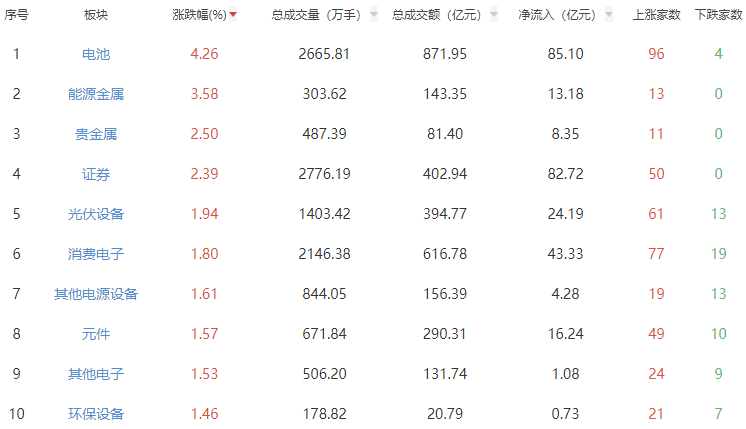
Core Points - A-shares showed an upward trend in the morning session, with the Shanghai Composite Index rising by 0.13% to 3832.90 points, the Shenzhen Component Index increasing by 1.11% to 13355.98 points, and the ChiNext Index climbing by 1.77% to 3207.44 points [1] Sector Performance - The battery sector led the gains with an increase of 4.26%, achieving a total trading volume of 2,665.81 million hands and a total transaction value of 871.95 billion [2] - The energy metals sector followed with a rise of 3.58%, with a trading volume of 303.62 million hands and a transaction value of 143.35 billion [2] - Other notable sectors included securities (+2.39%), photovoltaic equipment (+1.94%), and consumer electronics (+1.80%) [2] Declining Sectors - The education sector experienced the largest decline at -1.97%, with a trading volume of 320.37 million hands and a transaction value of 22.25 billion [2] - Other sectors that saw declines included home appliances (-1.34%), coal mining and processing (-1.19%), and agricultural product processing (-0.67%) [2]
A股午评:创业板指涨1.77%重回3200点,超3000股上涨!固态电池板块爆发
Ge Long Hui· 2025-09-29 03:43
Market Overview - The three major A-share indices collectively rose in the morning session, with the Shanghai Composite Index up 0.13% at 3832.9 points, the Shenzhen Component Index up 1.11%, and the ChiNext Index up 1.77% [1] - The North China 50 index increased by 0.85%, and the total trading volume in the Shanghai and Shenzhen markets reached 1.2937 trillion yuan, a decrease of 88 billion yuan compared to the previous day [1] - Over 3000 stocks in the market experienced gains [1] Sector Performance - The solid-state battery sector saw significant gains, with Wanrun New Energy hitting the daily limit, and other companies like Fengshan Group, Tianji Co., and Duofuduo also reaching the daily limit [1] - Tsinghua University successfully developed a high-safety polymer battery with an energy density of 604 Wh/kg [1] - The non-ferrous metals sector strengthened, with companies like Boqian New Materials and Wolong New Energy hitting the daily limit, and Shengda Resources rising over 8% [1] - The Ministry of Industry and Information Technology, along with eight other departments, issued a "Work Plan for Stable Growth in the Non-Ferrous Metals Industry" [1] - The securities sector saw a broad increase, with Guosheng Jin控 hitting a record high and Huatai Securities rising nearly 7% [1] - The storage chip sector also performed well, with Yachuang Electronics rising over 9%, and companies like Shenzhen South Circuit and Baiwei Storage increasing over 5% due to recent price hikes announced by several major manufacturers [1] Declining Sectors - Education concept stocks were among the biggest losers, with Kevin Trading and China High-Tech dropping over 8% [1] - Coal stocks generally fell, with Pingmei Shenhua down over 4% and Shanxi Coking Coal down nearly 3% [1]

AI+新消费:行业研判 - AI应用落地元年,探索商业模式的演进方向
2025-09-28 14:57
Summary of Key Points from Conference Call Records Industry Overview - The conference call discusses the integration of AI technology in various sectors, particularly focusing on new consumption models and the retail industry, highlighting its transformative impact on operational efficiency and revenue generation [1][2][7]. Core Insights and Arguments - **AI in Operations**: AI technology significantly enhances operational decision-making efficiency and human productivity, leading to a reduction in workforce by 20% for companies like Yi Wang Yi Chuang, which partnered with Alibaba [3][4]. This optimization also improves profit margins and capital utilization [2]. - **Cross-Border E-commerce**: AI addresses unique challenges in cross-border e-commerce, such as translation and time zone differences, thereby increasing customer engagement. Platforms like China Goods have seen 20,000 users deeply engage with AI products [5]. - **IP and Brand Value**: In a challenging economic environment, integrating IP with commercial strategies is crucial for brands to enhance emotional value and product premium, which can lead to increased sales [6]. - **AI Tools in Retail**: The introduction of AI tools like smart image generation can open new revenue streams and improve inventory management, thus enhancing risk resilience [8]. - **Service Fee Strategies**: Increasing service fees, rather than direct rent hikes, can effectively boost merchant profitability, as reflected in financial reports [9]. Additional Important Insights - **AI in B2B Platforms**: Companies like Jiaokong Technology leverage AI to enhance transaction urgency on their platforms, leading to increased membership and service fees [10]. - **Innovative Products**: The introduction of AI-integrated products, such as AI glasses and toys, is reshaping retail dynamics, with companies needing to focus on user education to improve market penetration [11]. - **Human Resources Sector**: The human resources industry is poised for transformation through AI, which can streamline operations and reduce costs, leveraging accumulated industry knowledge [12][13]. - **Education Sector**: AI is addressing the "impossible triangle" in education by providing personalized, high-quality teaching resources, with companies like NetEase Youdao achieving significant growth [15][18]. - **Market Concerns**: There are concerns regarding the impact of new AI technologies on existing software barriers and regulatory challenges affecting advertising and financing in the education sector [19][20]. Conclusion - The integration of AI across various industries presents significant opportunities for operational efficiency, revenue growth, and enhanced customer engagement. However, companies must navigate market challenges and consumer expectations to fully realize these benefits. Investors should monitor developments in AI applications across sectors for potential investment opportunities.
2025年1-8月份全国固定资产投资增长0.5%
Guo Jia Tong Ji Ju· 2025-09-28 08:09
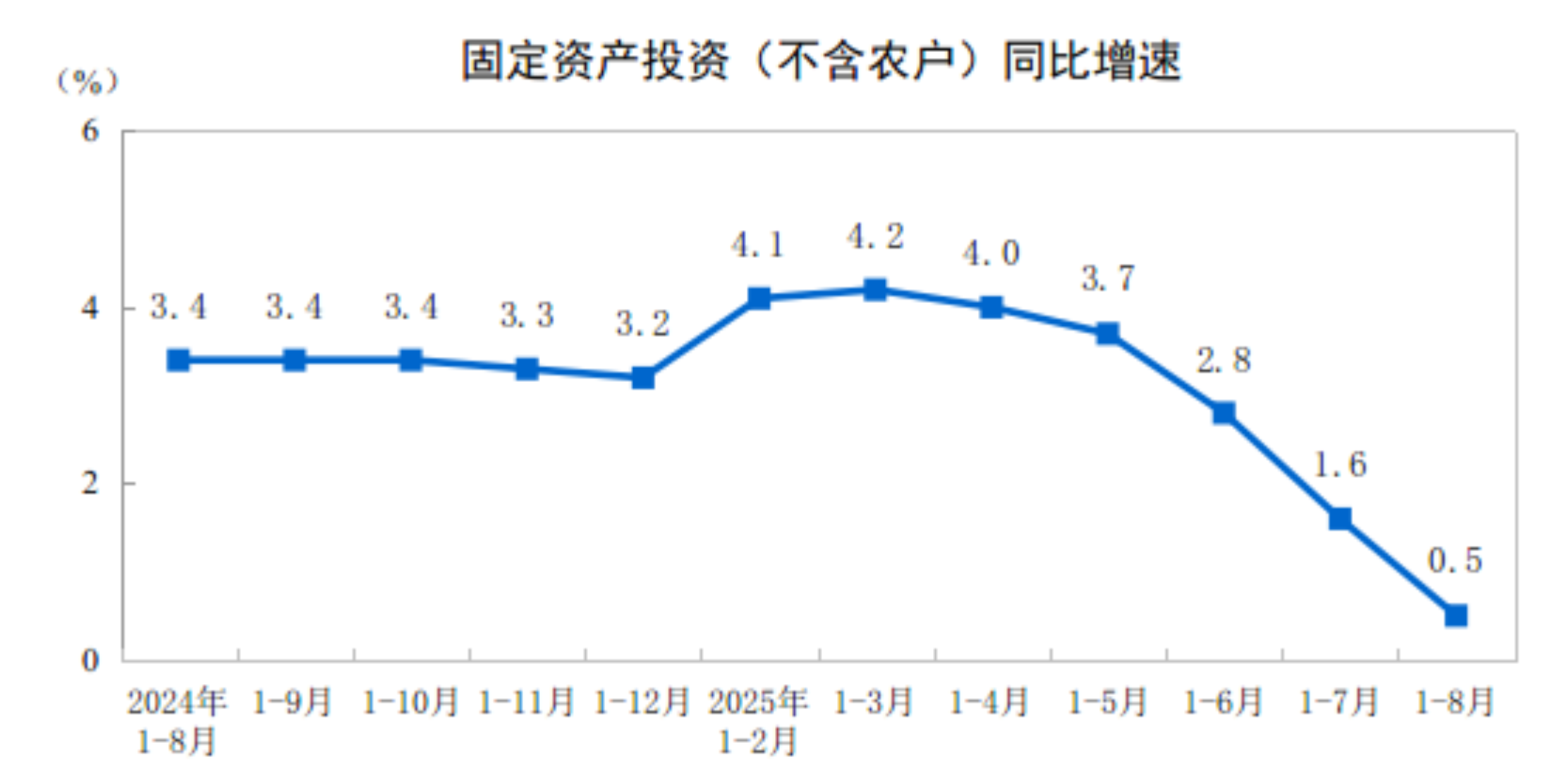
Core Insights - National fixed asset investment (excluding rural households) reached 32.6111 trillion yuan from January to August 2025, showing a year-on-year growth of 0.5% on a comparable basis [1] - Private fixed asset investment experienced a year-on-year decline of 2.3% [1] Investment by Industry - Investment in the primary industry totaled 646.1 billion yuan, with a year-on-year increase of 5.5% [3] - Investment in the secondary industry reached 11.8246 trillion yuan, growing by 7.6% [3] - Investment in the tertiary industry was 20.1404 trillion yuan, reflecting a decline of 3.4% [3] - Within the secondary industry, industrial investment grew by 7.7%, with mining investment up by 3.0%, manufacturing investment up by 5.1%, and investment in electricity, heat, gas, and water production and supply up by 18.8% [3] - In the tertiary industry, infrastructure investment (excluding electricity, heat, gas, and water production and supply) increased by 2.0%, with water transport investment up by 15.9%, water conservancy management investment up by 7.4%, and railway transport investment up by 4.5% [3] Investment by Region - Eastern region investment declined by 3.5% year-on-year, while the central region saw a growth of 2.5%, the western region grew by 2.3%, and the northeastern region experienced a decline of 6.0% [3] Investment by Registration Type - Domestic enterprises' fixed asset investment grew by 0.5%, while investment from Hong Kong, Macau, and Taiwan enterprises increased by 2.3%. In contrast, foreign enterprises' fixed asset investment fell by 15.4% [4]
金融助力服务消费需更加精准有效
Zheng Quan Ri Bao· 2025-09-27 15:46
Core Viewpoint - The service consumption sectors, including education, cultural tourism, health, elderly care, and sports, are becoming crucial for driving domestic demand and stabilizing economic growth, necessitating strong financial support to address the financing needs of these sectors [1][2]. Group 1: Financial Support for Service Consumption - Service consumption is linked to both public welfare and economic transformation, serving as a key indicator of social development and quality of life [1]. - The operational entities in the service consumption sector typically exhibit characteristics such as "light assets, lack of collateral, and urgent financing needs," making traditional credit models inadequate to meet their financing demands [1][2]. - Financial institutions are encouraged to proactively direct credit resources towards the service consumption sector to resolve the mismatch between market potential and financial support [1]. Group 2: Innovation in Financial Products - Financial institutions should innovate credit products tailored to the specific needs of different sub-sectors, moving away from a "one-size-fits-all" approach [2]. - For light asset enterprises like knowledge-based services and online services, exploring credit loans based on intellectual property and order data as collateral is recommended [1][2]. Group 3: Technology Empowerment - Embracing financial technology, including big data, artificial intelligence, and cloud computing, can enhance service efficiency and risk management for service consumption enterprises [2]. - Technology can significantly improve financing efficiency and reduce costs for enterprises lacking traditional collateral [2]. Group 4: Service Model Optimization - Financial institutions should evolve from being mere "fund providers" to "comprehensive service providers," offering value-added services alongside credit support [2]. - Establishing deeper cooperative relationships with service consumption entities can create a mutually beneficial ecosystem [2]. Group 5: Case Study and Future Outlook - The example of Zhejiang demonstrates how local financial institutions can effectively stimulate new consumption vitality through innovative financial products and services [2]. - As policies are implemented, more financial institutions are expected to take concrete actions to direct financial resources towards the service consumption sector, contributing to the transformation and upgrading of consumption and promoting high-quality economic and social development [2].
兴业证券:9月以来哪些行业盈利上修较多?
智通财经网· 2025-09-27 08:51
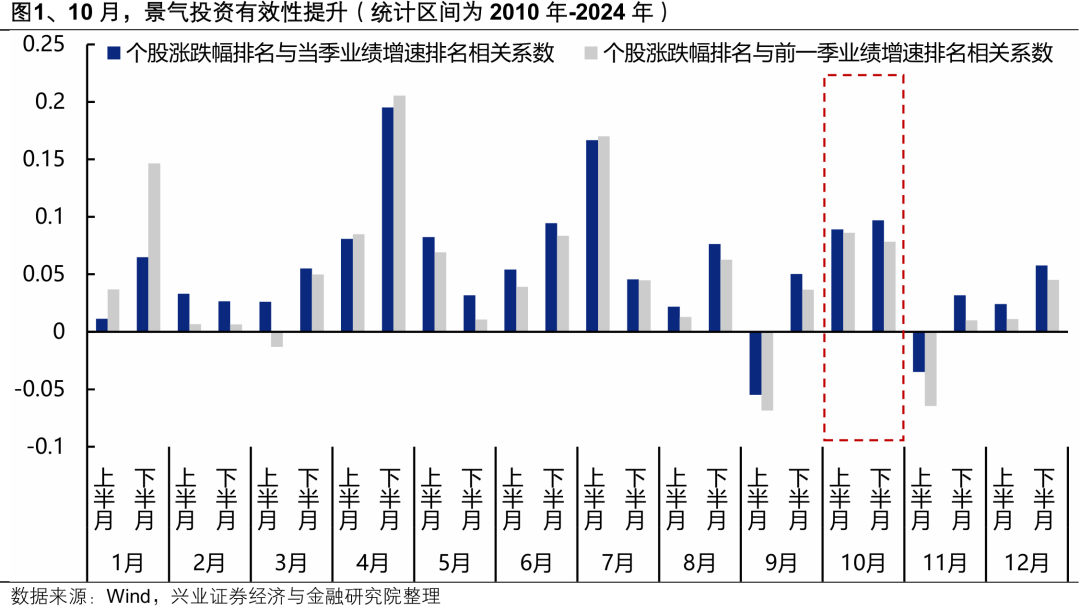
Core Viewpoint - As the third quarter earnings report disclosure period approaches at the end of October, the correlation between stock prices and earnings is gradually increasing [2] Industry Summary - The industries with significant upward revisions in profit forecasts since September include: - Technology: gaming, computer equipment, communication devices, components [5][6] - Advanced Manufacturing: motorcycles, aerospace and marine equipment, home appliance components, batteries [5][6] - Cyclical: precious metals, glass fiber, steel, industrial metals [5][6] - Consumer: beverages, dairy products, seasoning and fermentation products, education [5][6] - Financial: brokerage insurance, city commercial banks [5][6] Profit Revision Data - The following sectors have seen a high percentage of companies with upward revisions in 2025E net profit: - Technology: - Media: 59% of companies revised upwards with a 94% profit growth forecast - Computer: 43% of companies with a 33% profit growth forecast - Communication: 21% of companies with a 70% profit growth forecast - Electronics: 17% of companies with a 67% profit growth forecast - Advanced Manufacturing: - Automotive: 89% of companies with a 44% profit growth forecast - Defense: 83% of companies with a 33% profit growth forecast - Home Appliances: 63% of companies with a 22% profit growth forecast - Power Equipment: 46% of companies with a 56% profit growth forecast - Cyclical: - Precious Metals: 77% of companies with a 74% profit growth forecast - Glass Fiber: 76% of companies with a 129% profit growth forecast - Steel: 66% of companies with a 43% profit growth forecast - Consumer: - Beverages: 77% of companies with a 23% profit growth forecast - Education: 36% of companies with a 52% profit growth forecast - Financial: - Securities: 71% of companies with a 34% profit growth forecast [6]

1-7月阿塞拜疆人均名义月工资为645美元
Shang Wu Bu Wang Zhan· 2025-09-27 03:23
Employment Overview - As of August 1, 2025, Azerbaijan has a total employment of 1.768 million people, with 858,000 in the public sector and 910,000 in the private sector [1] - The largest employment sectors are trade and automotive repair (18.9%), education (18.1%), and industry (13.8%) [1] Salary Insights - The average nominal monthly salary from January to July was 1,098.1 manats (approximately 645 USD), reflecting a year-on-year increase of 9.5% [1] - The highest-paying sectors include mining, finance and insurance, information and communication, technology, and logistics [1]
特朗普再次挥舞关税大棒,公募基金规模突破36万亿 | 财经日日评
吴晓波频道· 2025-09-27 00:29
Group 1: Pension Insurance - The number of participants in the national basic pension insurance has reached 1.072 billion, an increase of over 73 million compared to the end of the 13th Five-Year Plan, with the participation rate rising from 91% to over 95% [2] - The basic pension insurance fund has achieved stable growth, with an investment operation scale of 2.6 trillion, doubling since the end of the 13th Five-Year Plan, and an average annual investment return rate of 5.15% over the past eight years [2][3] - The long-term value investment strategy of the basic pension insurance fund is seen as a way to address the pension gap [3] Group 2: Logistics Digitalization - The first national standard for logistics enterprise digitalization was released, providing a framework and guidelines for technology application, data management, and process optimization, effective from March 1, 2026 [4] - The standard aims to promote data interoperability and business collaboration among logistics enterprises, transitioning the industry from "point digitalization" to "full-chain intelligence" [4][5] - The establishment of a unified national standard is expected to enhance the integration level of the logistics supply chain and lay the foundation for a unified national market [5] Group 3: Housing Policy - Several new first-tier cities are planning to improve housing policies to stimulate demand for improved housing, with measures including optimizing land supply and increasing high-quality housing availability [6] - The shift in focus from rapid expansion to refined development in the real estate market is evident, with local strategies emphasizing the need for supporting infrastructure to enhance housing value [6][7] - Recent improvements in fertility policies are expected to open up demand for improved housing, particularly among "sell one buy one" groups [7] Group 4: Education Policy - A joint action plan for the revitalization of ordinary high schools in county areas has been issued, focusing on expanding educational resources and improving teaching conditions [8] - The plan aims to address the shortage of qualified teachers and enhance the quality of education in county high schools, ensuring equitable access to education [8][9] - The anticipated decline in student enrollment in the future may necessitate the closure of underperforming high schools alongside the establishment of new ones [9] Group 5: Public Fund Growth - The total net asset value of public funds in China has surpassed 36.25 trillion, marking a new high and reflecting a significant increase in stock and mixed funds [12] - The growth in public fund scale is attributed to both net asset appreciation and inflows, with equity funds being the main driver of this increase [12][13] - The decline in closed-end fund trust has led to a shift in investor confidence towards open-end funds, which have seen substantial growth [13] Group 6: AI in Investment - Approximately 13% of global individual investors are using AI tools for stock selection, with many expressing confidence in AI's ability to enhance investment strategies [14] - The rise of AI in investment decision-making has coincided with a bullish market trend, leading to increased reliance on AI-generated strategies [14][15] - Over-reliance on AI could potentially diminish critical thinking skills among investors, despite its efficiency in improving decision-making processes [15] Group 7: Market Performance - The stock market experienced fluctuations, with the Shanghai Composite Index closing at 3853.3 points, down 0.01%, amid a mixed performance across sectors [16] - The recent market sentiment has been affected by discussions around "old and new stocks," leading to a decline in high-growth sectors [16][17] - The upcoming National Day holiday may prompt some fund managers to adjust their positions, influencing market dynamics in the short term [17]

今年以来11家公司递表 港交所GEM改革成效渐显
Shang Hai Zheng Quan Bao· 2025-09-26 18:27
Core Viewpoint - The number of companies applying for listing on the Hong Kong GEM has increased this year due to improved market liquidity and valuation recovery, making GEM an attractive option for small and medium-sized enterprises (SMEs) seeking financing [1][2]. Group 1: GEM Market Activity - As of September 26, 2023, 11 companies are currently pursuing GEM listings, primarily in sectors such as basic chemicals, education, textiles and apparel, home building materials, and software and IT services [1]. - In 2024, three companies have submitted their prospectuses to GEM, all of which have completed their listings, while in 2023, five companies submitted applications, with one withdrawing and four becoming automatically invalid [1][5]. - The GEM market has seen a total of 316 companies listed, with 10 companies having a market capitalization exceeding 1 billion HKD [6]. Group 2: Financial Performance of Companies - The annual revenue of the 11 companies aiming for GEM listings is mostly around 100 million RMB, with net profits generally below 50 million RMB, and some companies reporting losses in recent years [2]. - For instance, Ronglian Recycling Technology reported revenues of 133 million RMB and 210 million RMB for 2023 and 2024, respectively, with net profits of 24 million RMB and 35 million RMB [2]. Group 3: GEM Reform and Its Impact - The GEM reform, which took effect in January 2024, aims to lower the listing threshold for SMEs, focusing on supporting startups and growth-oriented companies [2][4]. - Key reforms include a simplified transfer mechanism to the main board, new valuation tests for high-growth companies, shortened post-listing lock-up periods for major shareholders, and the removal of mandatory quarterly reporting [4]. - The reform has led to a gradual release of its effects, with three new stocks listed in 2024, marking a significant change from the previous three years without new listings [5]. Group 4: Market Dynamics and Future Outlook - The ability of mainland companies to successfully list on GEM is influenced by the completeness of their application materials and their responsiveness to regulatory inquiries [5]. - Industry experts suggest that to further invigorate the GEM market and attract more quality SMEs, efforts should focus on enhancing market liquidity and increasing investor participation [5].