
商业地产

Search documents
北京文化消费新场景活力持续迸发
Bei Jing Ri Bao Ke Hu Duan· 2025-09-06 23:54
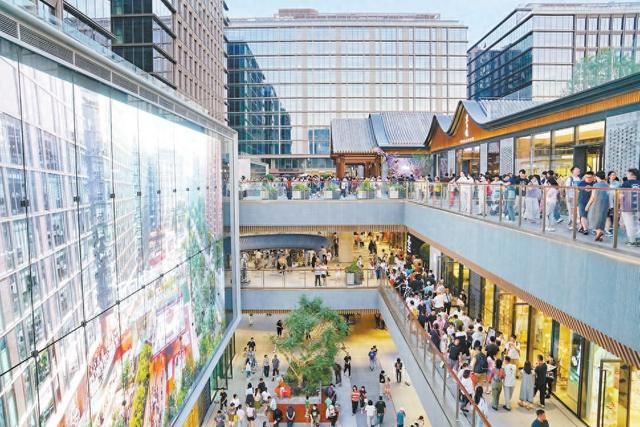
Group 1 - The core idea of the articles revolves around the integration of historical architecture with modern commercial activities, creating a "cultural reception hall" that attracts citizens and tourists as a new cultural consumption landmark in Beijing [2][3][5] - The Dajixiang project, a significant urban renewal initiative, has transformed a historical area into a vibrant commercial space, featuring a mix of cultural, leisure, and shopping experiences, with a commercial space of 80,000 square meters and a 96% occupancy rate [3][5] - Since its opening on May 25, the Dajixiang has seen over 6 million visitors and sales exceeding 207 million yuan, with a peak daily foot traffic of 220,100 [3][5] Group 2 - The Longfu Temple, another cultural consumption landmark, is set to open on September 17, featuring a diverse range of new stores aimed at attracting younger audiences, including performance venues and outdoor activities [6][8] - The integration of cultural and tourism sectors has led to significant growth in cultural consumption, with 102 large-scale performances generating 1.5 billion yuan in ticket sales in the first half of the year, marking a year-on-year increase of approximately 13% and 35% respectively [8] - New tourism products and themed travel routes have been launched, enhancing the cultural experience for visitors, with 105 new themed travel routes introduced this year [8]


打开商圈消费新空间
Jing Ji Ri Bao· 2025-09-06 21:55
观音桥商圈2005年正式开街,是重庆市人气最旺、生态环境最优、业态最时尚的商圈之一。然而,随着 20年的发展,观音桥商圈也呈现出商圈与后巷间缺乏整体规划、商圈光鲜与后巷破旧形成鲜明对比、道 路割裂阻碍连片发展、商圈硬件设施陈旧和部分业态难以满足现代消费者需求等问题。 江北区住房和城乡建设委员会副主任刘波告诉记者,近年来,江北区以国际消费中心城市首选区建设为 牵引,把城市更新作为提振消费活力、推动观音桥商圈高质量发展的核心引擎,聚焦打造生活、消费、 创业新场景,统筹小区、街区、厂区、片区多维空间,打破区域壁垒,实施整体谋划、连片打造策略, 推动观音桥商圈向着世界知名商圈的目标加速迈进。 "我在重庆"天桥是观音桥商圈一大网红打卡点,天南地北的游客在这里与巨屏、街景合影。今年初,这 座连接银鑫楼和北城天街购物中心的过街天桥经过改造升级后,面积从原本不足100平方米拓展到280平 方米,并串联起周边商场,以一屏、一桥、一花艺大道组成"我在重庆"大街区,日均人流量超5万人 次,带动周边消费持续升温。 在重庆江北区观音桥商圈,曾经道路破损、墙面老旧的后街小巷,如今迎来了华丽蜕变。前不久,重庆 江北区观音桥洋河星光片区老旧 ...
珠琴澳超级商业力论坛聚焦文商旅融合
Sou Hu Cai Jing· 2025-09-06 12:35
Core Insights - The Fourth China (Macau) International High-Quality Consumption Expo and Hengqin World Bay Area Forum was held from September 3 to 7, focusing on high-quality consumption and new business dynamics in the Bay Area [1][2] - The "Zhuhai-Macau Super Business Power Forum" discussed new opportunities and paths for business in the context of the Bay Area, emphasizing the strategic advantages of the Hengqin-Macau cooperation zone [1] Group 1 - The Hengqin-Macau cooperation zone offers unique advantages for businesses, allowing them to connect with Macau's tourism market and the larger Bay Area consumer market [1] - The forum's theme evolved from focusing on "Macau brands connecting with the mainland market" to "Resilient China, Vibrant Bay Area: Innovation and Cooperation under the New Development Pattern," reflecting the needs of the Zhuhai-Macau integration [1][2] Group 2 - Zhuhai Guang Group introduced two landmark commercial projects: Tianmu Qintai and Zhuguang International Building, aimed at enhancing consumer capacity in the region [2] - Tianmu Qintai will feature diverse functions including exhibition halls, conference centers, offices, hotels, and a water sports center, while Zhuguang International Building targets the significant flow of 130 million people annually at the Gongbei Port [2] - The group aims to leverage policy advantages and cross-border financial opportunities, integrate commerce with culture and technology, and transform transit traffic into sustainable economic growth [2]
华夏凯德商业REIT将于9月9日正式发售
Bei Jing Shang Bao· 2025-09-06 06:06
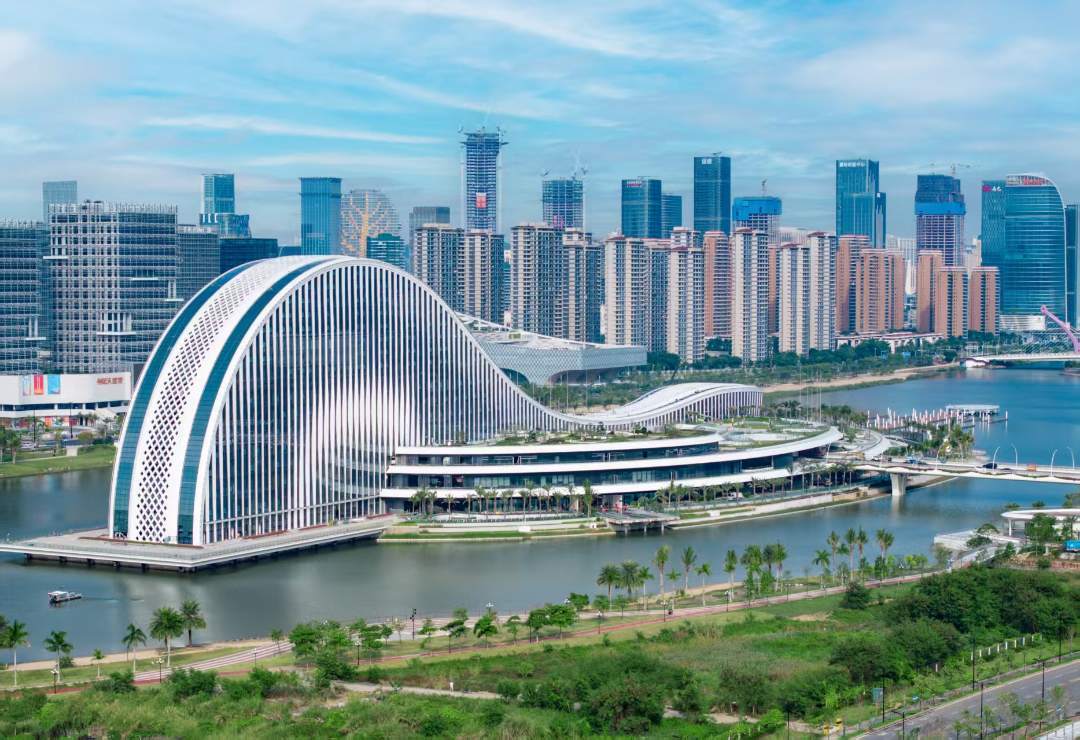
Core Viewpoint - The first foreign-funded consumption REIT, Huaxia CapitaLand Commercial REIT, will be officially launched for sale from September 9 to September 10, with a total fundraising target of 2.2872 billion yuan [1] Group 1: Offering Details - The offering price is set at 5.718 yuan per share, with 47.868 million shares available for public investors, starting from a minimum subscription amount of 1,000 yuan [1] - The REIT's underlying assets consist of two shopping centers, CapitaLand Yunshang and CapitaLand Yuhuatian, located in Guangzhou and Changsha, respectively, creating a portfolio of assets in first-tier and strong second-tier cities [1] Group 2: Market Response - During the offline inquiry phase, Huaxia CapitaLand Commercial REIT received inquiries from 144 offline investors managing 938 allocation objects, with a total proposed subscription amount of 2,842,563 million shares, which is 254.50 times the initial offline offering of 11,169.2 million shares [1] Group 3: Asset Management - As of June 30, 2025, CapitaLand Investment manages over 40 high-quality retail properties across 18 cities in China, with an asset scale exceeding 80 billion yuan [1]
基汇资本21亿出售上海仙乐斯广场宣告失败
Sou Hu Cai Jing· 2025-09-05 19:52
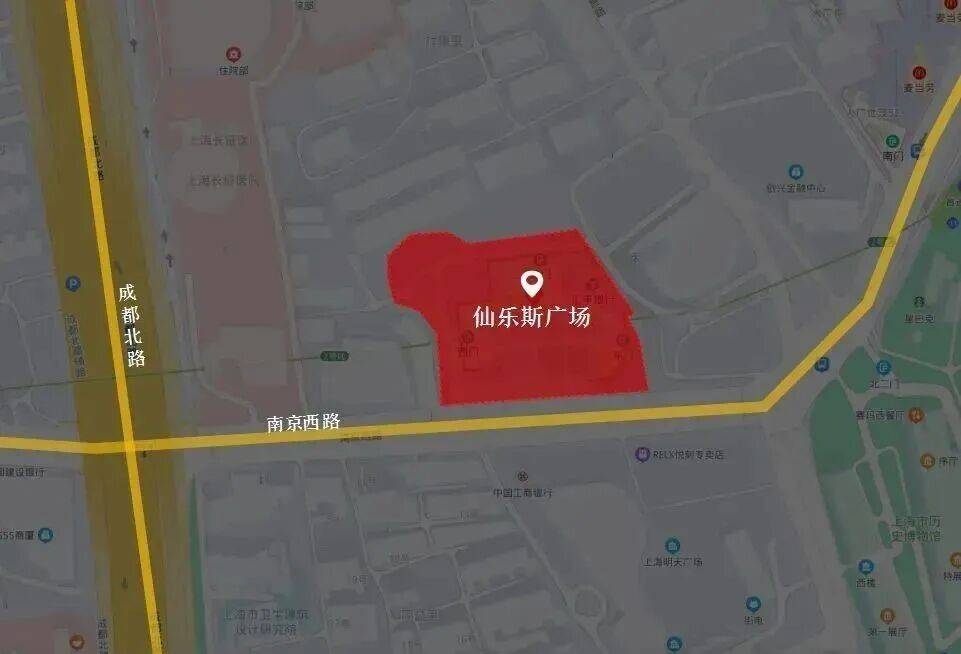
Group 1 - The landmark project Xianlesi Plaza on Nanjing West Road in Shanghai was reported to be sold for 2.1 billion RMB to Xiamen State-owned Enterprise Xiangyu Group, with a transaction price of approximately 30,000 RMB per square meter, but the deal has reportedly "failed" [1][4] - Xianlesi Plaza, a 37-story mixed-use complex completed in 2001, is located in the core business district of Huangpu District, featuring a unique design with a four-story glass "sky garden" and has a rental rate of about 90% for the shopping mall and over 70% for the office space as of 2023 [1][3] - The complex has a total area of nearly 85,000 square meters and was previously known as Xianlesi Dance Hall, which opened in 1936 [3] Group 2 - The ownership structure of Xianlesi Plaza is complex, with KKR Capital acquiring the project in 2008, and in 2015, PAG and Goldman Sachs joined as partners, collectively holding 98.68% of the equity [4] - The initial sale price for the project was set at 2.8 billion RMB (approximately 40,000 RMB per square meter) in 2023, but due to fragmented ownership and complex structure, negotiations have repeatedly failed [5] - Xiangyu Group's bid represented a 25% discount from the initial asking price, marking the largest discount in the Nanjing West Road business district in nearly three years [5]
商业市场租赁需求释放承压,REITs二季度业绩分化持续
Sou Hu Cai Jing· 2025-09-05 14:03
Group 1: Market Overview - The retail market in core cities shows differentiated supply rhythms, with cities like Beijing and Shenzhen leading in new supply, while cities like Hangzhou show no new supply, indicating varying levels of commercial development activity [3] - The net absorption rate reflects resilience in demand, with Shenzhen leading at 29.8 thousand square meters, while Chengdu shows a negative absorption of -4 thousand square meters due to market adjustments and brand closures [3] Group 2: Vacancy Rates and Rental Levels - Vacancy rates vary significantly among cities, with Shenzhen having the lowest at 4.1%, while Shanghai and Chengdu have higher rates at 8.6% and 9% respectively, influenced by new supply and project adjustments [4] - In terms of rental levels, Shanghai has the highest average rent at 31.9 yuan/day/sqm, while Shenzhen has the lowest at 18.1 yuan/day/sqm; Nanjing leads among second-tier cities at 22.5 yuan/day/sqm, with Chengdu at the bottom at 11.9 yuan/day/sqm [4] Group 3: REIT Performance - Different REITs show varied performance metrics, with 华夏华润商业 REIT achieving the highest revenue at 18,319.83 thousand yuan, attributed to its large asset base and strong brand appeal [6] - 华夏首创奥莱 REIT and 华安百联消费 REIT, while smaller in revenue, have business models that may yield higher profit margins and stable cash flows [7] - The cash flow to revenue ratio for 华夏华润商业 REIT is notably high at 68%, indicating effective conversion of revenue into cash flow [8] Group 4: Major Transactions - 英格卡 plans to sell 10 shopping centers in China, with the first three located in Wuxi, Beijing, and Wuhan, involving a total of 16 billion yuan, as part of a strategy to improve cash flow and shift towards a light asset operation model [5] - The sale reflects the need for financial improvement, as 英格卡 reported a 5.5% decline in revenue to 41.8 billion euros and a 46.5% drop in net profit to 806 million euros for the 2024 fiscal year [5] Group 5: Upcoming Developments - 天虹股份 has received formal acceptance for its public REIT project based on the Suzhou Xiangcheng Tianhong Shopping Center, which has undergone significant upgrades and is expected to have a distribution rate of 4.92% in 2026 [10] - The project has shown consistent sales growth from 605 million yuan in 2022 to 726 million yuan in 2023, with rental efficiency improving from 113.91 yuan/sqm/month to 148.86 yuan/sqm/month [10][11]
近一周又一起!万达所持94亿股权被冻结
Di Yi Cai Jing Zi Xun· 2025-09-05 14:02
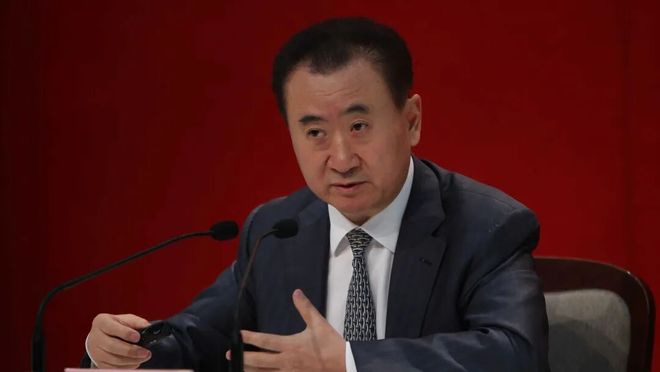
Group 1 - Wanda Group has recently experienced significant equity freezes, with the latest involving over 9.4 billion yuan in shares frozen for three years related to its subsidiaries Shanghai Wanda Network Financial Services Co., Ltd. and Shanghai Wanda Microfinance Co., Ltd. [2] - The total number of equity freezes for Wanda Group has reached 37, with the largest freeze amounting to 19.79 billion yuan for Dalian Wanda Commercial Management Group Co., Ltd. [2] - The underlying reason for these equity freezes is primarily related to debt issues, with each freeze corresponding to unpaid debts, including bank loans and trust plans [2][3] Group 2 - Wanda's cash flow situation is concerning, with over 43.9 billion yuan in short-term debts due within a year, while available cash is only 15.1 billion yuan [3] - The company is attempting to manage its cash flow by selling assets, with a recent transaction involving the establishment of a joint venture by several firms, including Tencent and JD.com, to acquire 100% equity of 48 target companies from Dalian Wanda Commercial Management [4] - The goal of these asset sales is to generate substantial cash to repay upcoming domestic and dollar-denominated debts while retaining operational control of the businesses [4]
近一周又一起!万达所持94亿股权被冻结
第一财经· 2025-09-05 12:56
Core Viewpoint - Wanda Group is facing significant financial challenges, evidenced by frequent equity freezes due to debt issues and failed IPO commitments, leading to a cash flow crisis and asset sales to manage liabilities [2][3][4][5]. Group 1: Equity Freezes - Wanda Group has recently reported two new equity freezes involving Shanghai Wanda Network Financial Services Co., Ltd. and Shanghai Wanda Microfinance Co., Ltd., with a total frozen equity value exceeding 9.4 billion yuan, lasting for three years [2]. - The total number of equity freeze records for Wanda has reached 37, with the latest freeze being the largest in terms of value [2]. - The underlying cause of these freezes is primarily related to debt obligations, as each freeze corresponds to unpaid debts, including bank loans and trust plans [2][3]. Group 2: Debt and Cash Flow Issues - As of September 2024, Wanda Commercial Management has over 43.9 billion yuan in short-term debts due within a year, while its cash reserves are only 15.1 billion yuan [4]. - The company is relying on "borrowing new to pay old" strategies to manage its cash flow, which could lead to further asset freezes if financing channels are blocked [4]. - Despite selling assets like Wanda Plaza, the cash inflow has been below expectations, with many transactions being "debt-for-equity" swaps, raising concerns about the actual cash recovery [4]. Group 3: Asset Sales and Strategic Moves - To navigate its financial difficulties, Wanda is aggressively selling assets, with a recent transaction involving a consortium including Tencent and JD.com to acquire 100% equity of 48 target companies for a total investment of 22.43 billion yuan [5]. - The purpose of these asset sales is to generate substantial cash for repaying imminent domestic and dollar-denominated debts while retaining operational control through Wanda Commercial Management [5]. - Ultimately, Wanda needs to address its financing challenges in the capital markets to stabilize its financial situation [5].
万达所持94亿股权被冻结,王健林再大手笔变卖资产
Di Yi Cai Jing· 2025-09-05 11:59
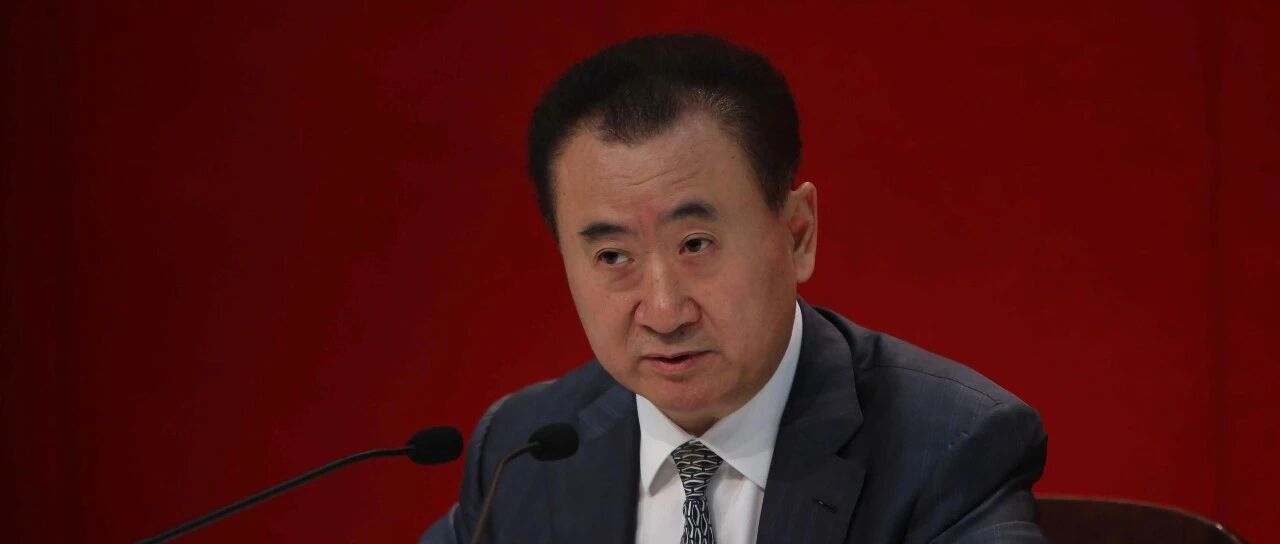
Group 1 - Wanda Group has experienced significant stock freezes, with over 9.4 billion yuan worth of shares frozen for three years related to Shanghai Wanda Network Financial Services Co., Ltd. and Shanghai Wanda Microfinance Co., Ltd. [1] - In the past week, another substantial stock freeze occurred involving Dalian Wanda Commercial Management Group Co., Ltd., with shares worth 1.979 billion yuan frozen from August 27, 2025, to August 26, 2028 [1] - To navigate the current challenges, Wang Jianlin is selling assets on a larger scale, with a consortium including Taikang Zhuhai, Gaohe Fengde, Tencent, and JD.com set to establish a joint venture to acquire 100% equity of 48 target companies from Dalian Wanda Commercial Management [1] Group 2 - The private equity fund "Suzhou Kuanyu," formed by 13 companies including Taikang, Gaohe Fengde, Tencent, and JD.com, has a total investment of 22.429 billion yuan [1] - Wanda has also established joint ventures with JD.com and Tencent [1]
万达所持94亿股权被冻结,大手笔“卖广场”后仍需解决根源问题
Di Yi Cai Jing· 2025-09-05 10:00
Group 1 - The core issue for Wanda Group is the continuous occurrence of equity freezes, with recent cases involving over 9.4 billion yuan in frozen shares for its subsidiaries [2] - As of now, Wanda Group has a total of 37 equity freeze records, indicating a significant debt issue linked to overdue obligations [2][3] - The company faces a cash flow challenge, with short-term debts exceeding 43.9 billion yuan and cash reserves only at 15.1 billion yuan, necessitating reliance on refinancing [3] Group 2 - The recent equity freezes are largely attributed to a "betting agreement" signed during pre-IPO financing, which requires Wanda to buy back shares at an 8% annual interest if it fails to go public by the end of 2023 [3] - To address its financial situation, Wanda is selling assets to generate cash, with a recent transaction involving the establishment of a private equity fund with a total investment of 22.43 billion yuan [3][4] - The asset sales aim to provide immediate cash for repaying domestic and foreign debts while allowing Wanda to retain operational control, aligning with its strategy of transitioning to a "light asset" model [4]