国际会展

Search documents
博时市场点评2月6日:节前情绪谨慎,两市继续调整
Xin Lang Cai Jing· 2026-02-06 08:05
Market Overview - The three major indices in the A-share market adjusted, with trading volume continuing to decrease compared to the previous day [1][7] - The Shanghai Composite Index closed at 4065.58 points, down 0.25%; the Shenzhen Component Index closed at 13906.73 points, down 0.33%; the ChiNext Index closed at 3236.46 points, down 0.73% [10][11] - The market showed structural differentiation, with investors favoring industries with stable performance amid economic uncertainty [1][7] Policy Developments - The Ministry of Finance, General Administration of Customs, and State Taxation Administration jointly issued a notice on February 5 regarding the "zero tariff" policy for imported goods for residents of Hainan Free Trade Port, allowing residents to purchase imported goods within an annual tax-free quota [2][8] - This policy aims to stimulate local consumption and attract permanent residents, benefiting the local retail and logistics sectors [2][8] - The implementation of this policy serves as a test for China's "inside-outside" special tariff system and may provide insights for nationwide consumption upgrades and trade liberalization [2][8] Digital Services Enhancement - On February 6, the National Immigration Administration, Ministry of Industry and Information Technology, and National Data Bureau issued opinions to enhance digital services for foreign visitors, focusing on facilitating entry documents and optimizing mobile payment services [3][9] - This initiative is expected to improve China's attractiveness to international businesspeople and tourists, benefiting sectors such as cross-border tourism, high-end retail, and international exhibitions [3][9] Trade Data Insights - According to the Ministry of Commerce, China's service trade is projected to grow steadily, with total service trade imports and exports reaching 80,823.1 billion yuan in 2025, a year-on-year increase of 7.4% [3][9] - Service exports are expected to grow by 14.2%, indicating strong international competitiveness in knowledge-intensive sectors [3][9] - The significant reduction in the service trade deficit by 3,439.5 billion yuan compared to the previous year reflects ongoing structural optimization [3][9]
海南正以更开放姿态,破局“逆全球化”
Qi Lu Wan Bao· 2025-12-18 12:02
Core Insights - The closure of Hainan Island marks the beginning of a new phase for high-quality development, transforming its role in domestic and international dual circulation and establishing it as a "testing ground" for institutional innovation and an "outpost" for openness [1][3] Economic Impact - The closure accelerates industrial upgrades in Hainan, with policies like "zero tariffs," "dual 15% low tax rates," and "processing and value-added tax exemptions" attracting high-tech industries, modern services, and high-end manufacturing [1] - The tourism sector is evolving from traditional sightseeing to high-end vacationing, medical tourism, and duty-free shopping, supported by a visa-free policy for 85 countries and 6,600 duty-free products, which constitute 74% of all imported goods [1] - Modern service industries such as cross-border finance, international exhibitions, and logistics are experiencing explosive growth, with the expansion of EF account holders facilitating cross-border capital flow and positioning Hainan as a "settlement center" for cross-border trade [1] - Industries like biomedicine, digital economy, and new energy are leveraging cost advantages to create a closed loop of "R&D + manufacturing + export," fostering new productive forces in Hainan [1] Institutional Innovation - Hainan is becoming a "testing ground" for aligning with high-level international trade rules, with the implementation of a sales tax system that simplifies tax processes by merging multiple tax types, significantly reducing compliance costs [2] - A smart regulatory system based on credit and big data analysis balances convenience and control, ensuring effective management while facilitating openness [2] - The introduction and continuous reduction of the first national negative list for cross-border service trade will enhance Hainan's service industry management standards and intellectual property protection, accumulating experience for China's institutional opening [2] Regional Positioning - Hainan serves as a "key intersection" for domestic and international dual circulation, facilitating easier access for global goods, capital, and talent into China, while also enabling domestic products and capacities to reach the world [2] - The island's zero-tariff products and high-end services cater to domestic high-end consumption needs, promoting the integration of domestic and international rules and exploring new paths for developing two markets and two types of resources [2] Global Significance - Hainan's closure sends a strong signal of China's commitment to expanding openness amid rising "anti-globalization" sentiments, positioning the island as a model for a global open economy and providing a "Chinese solution" for supply chain optimization and trade facilitation in the Asia-Pacific region [3] - The official launch of Hainan's closure on December 18 is viewed as a new starting point, indicating profound changes in consumption experiences, industrial structures, and ongoing breakthroughs in institutional innovation [3]
海南封关启航:中国最大自贸港的三重跃迁?
Jing Ji Guan Cha Bao· 2025-12-18 08:56
Group 1: Core Changes in Trade and Economy - The launch of the customs closure operation in Hainan signifies a new phase in the construction of the Hainan Free Trade Port, enhancing China's overall openness [1][2] - The core policy features of the customs closure include "one line open, two lines controlled, and island-wide freedom," which will significantly improve the level of trade liberalization and facilitation [2] - Hainan is set to become one of the most open customs special supervision areas in China, transforming into an unprecedented "processing base" and "logistics hub" [2] Group 2: Impact on Enterprises and Consumers - Companies will benefit from cheaper and more efficient imports of raw materials, components, and high-end equipment, fostering high value-added industries such as processing manufacturing and cross-border e-commerce [2] - Consumers will experience a wider variety of imported goods and price advantages, with the potential for continued benefits from tourism shopping and duty-free policies [2] Group 3: Economic Structure Optimization - The customs closure will accelerate the optimization of Hainan's industrial structure and economic development model, moving away from heavy reliance on tourism and real estate [4][5] - New emerging industries such as modern services, high-tech industries, cross-border finance, and digital economy are expected to flourish due to the facilitation of trade and investment [4] - The transition towards a more diversified and high-end economy will enhance Hainan's resilience and internal growth momentum [5] Group 4: Governance and Regulatory Challenges - The customs closure operation will test the governance system and regulatory capabilities, requiring the establishment of an efficient and transparent regulatory framework aligned with international standards [6][7] - There is a need for improved legislative, enforcement, and risk prevention measures to ensure the smooth operation of the new policies [6] - Hainan's experience in implementing these changes could serve as a model for other regions in advancing institutional openness [3][7]
海南自贸港全岛封关进入冲刺期
Zhong Guo Zheng Quan Bao· 2025-11-18 20:04
Core Insights - Hainan Free Trade Port is entering the final month before its full closure operation, with significant advancements in policy and infrastructure readiness [1] - The customs regulatory system has been established, with multiple policies and operational guidelines released to support the closure operation [2] - The closure operation is expected to attract global investors and boost key industries in Hainan, particularly tourism and modern services [2][3] Group 1: Policy and Infrastructure Readiness - Hainan's customs will implement a policy framework focused on "one line open, two lines controlled, and free movement within the island" to enhance trade facilitation [1] - Four customs support projects have been completed, and ten "second-line ports" have passed national inspections, ready for operation [1] - A smart customs regulatory platform has been launched, ensuring efficient customs supervision for the closure operation [1] Group 2: Economic Impact and Industry Development - From January to September, Hainan established 1,513 new foreign-funded enterprises, a year-on-year increase of 12.16%, with actual foreign investment reaching 18.368 billion yuan, up 42.2% [2] - The closure operation is expected to significantly boost the development of key industries such as tourism, modern services, and high-tech sectors [2] - Hainan aims to create a new tax system characterized by zero tariffs and low tax rates, promoting growth in strategic emerging industries like biomedicine and digital content processing [3]
海南“封关”进入倒计时,将如何改变你我?专访李世杰
Sou Hu Cai Jing· 2025-11-11 11:51
Core Insights - The implementation of "full island closure" in Hainan Free Trade Port marks a significant shift towards a high-level openness, transforming the island into a customs supervision area where most foreign goods can enter duty-free and circulate freely [3][4]. Policy Design and Structure - The policy design of "one line open, one line manage, and free flow within the island" aims to facilitate the free movement and efficient allocation of global goods and resources within Hainan [4]. - Hainan Free Trade Port differs fundamentally from existing free trade zones, as it encompasses the entire island (33,900 square kilometers) rather than small pilot areas, and focuses on comprehensive openness rather than just internal reform [4]. Industry Transformation - The tourism industry is expected to evolve from mere sightseeing to becoming an "international vacation destination," with duty-free shopping categories expanding to 6,600 items, covering 74% of all customs tax items [5]. - The modern service industry will see internationalization and high-end development, with cross-border finance, international exhibitions, and logistics set to experience significant growth [5][6]. - High-tech industries will benefit from low-cost aggregation due to favorable tax policies, attracting sectors like biomedicine, digital economy, and green technology [6]. Market Opportunities - For businesses, the main attractions include significantly reduced tax costs, improved customs efficiency, and access to a vast market that allows for global procurement and national sales [7]. - Individuals will benefit from enhanced job opportunities and quality of life, with a capped personal income tax rate of 15% and improved international living conditions [7]. Regional Integration - Inland regions can leverage Hainan as a new development hub by establishing a comprehensive logistics network and creating collaborative platforms for bonded goods and industrial synergy [8][9]. - The integration of trade facilitation and regulatory cooperation between Hainan and inland areas can streamline customs processes and enhance cross-border e-commerce [10]. Challenges and Responses - Potential challenges include price fluctuations and intense talent competition, necessitating the establishment of price monitoring mechanisms and optimized talent policies [11]. - Financial risk management is crucial, with a need for a robust regulatory framework to monitor cross-border capital flows and prevent financial crimes [11]. Strategic Role in Global Trade - Hainan Free Trade Port serves as a critical intersection for domestic and international dual circulation, facilitating easier access for global goods and capital into China while enabling domestic products to reach international markets [12]. - The initiative signals China's commitment to high-level openness and provides a model for supply chain optimization and trade facilitation in the Asia-Pacific region and beyond [12].


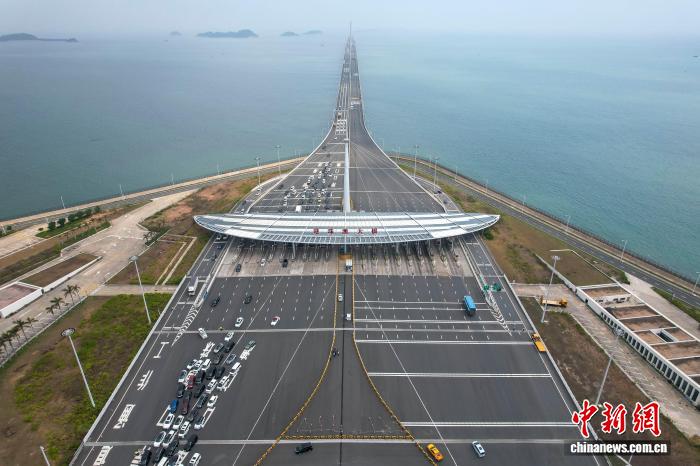
香江观澜:“粤车南下”将激活大湾区融合发展新动能
Zhong Guo Xin Wen Wang· 2025-10-19 12:49
Core Viewpoint - The "Yue Car Southbound" policy is set to enhance cross-border travel between Hong Kong and Guangdong, creating new opportunities for economic and social development in the Greater Bay Area, with implementation aimed for November 2023 [1]. Group 1: Policy Implementation - The Hong Kong government is adopting a phased approach to the "Yue Car Southbound" policy, reflecting a cautious and pragmatic decision-making process [3]. - In the initial phase, eligible Guangdong vehicles will park at an automated facility on the Hong Kong side, allowing drivers and passengers to transfer to flights or public transport [3]. - The second phase will allow eligible vehicles to enter Hong Kong directly without needing a regular quota, facilitating easier access to urban areas [3]. Group 2: Safety and Standards - The policy includes strict standards for driver qualifications, vehicle safety inspections, and mandatory insurance, ensuring a comprehensive safety framework [3]. - This approach addresses public concerns while laying the groundwork for orderly expansion of the policy in the future [3]. Group 3: Economic Impact - The "Yue Car Southbound" initiative is expected to significantly boost Hong Kong's economy by attracting high-spending Guangdong tourists, revitalizing sectors such as retail, dining, and hospitality [4]. - It will encourage Hong Kong businesses to innovate and enhance service offerings, leading to an upgrade in consumer products [4]. Group 4: Industrial Collaboration - The policy will strengthen industrial linkages between Hong Kong and mainland cities in the Greater Bay Area, facilitating participation in international events and financial services [4]. - Enhanced cross-border travel will promote deeper cooperation in technology innovation and high-end manufacturing within the Greater Bay Area [4]. Group 5: Cultural Integration - The "Yue Car Southbound" policy will foster cultural exchanges between Guangdong and Hong Kong, enriching daily interactions and enhancing the "one-hour living circle" concept [4]. - This initiative aims to create not only economic convenience but also a warmer, more integrated community experience [4]. Group 6: Overall Development - The continuous improvement of cross-border transportation policies, from "Yue Car Southbound" to "Hong Kong Car Northbound," outlines a clear path for the integration of the Greater Bay Area [5]. - As transportation barriers diminish and resource flow becomes smoother, Hong Kong is expected to discover new growth opportunities through mutual empowerment with mainland cities [5].