
培训

Search documents
AIRO Group Holdings Inc(AIRO) - 2025 Q4 - Earnings Call Transcript
2026-03-31 13:00
Financial Data and Key Metrics Changes - For the full year 2025, the company reported revenues of $90.9 million, an increase from $86.9 million in 2024, driven primarily by the drone segment [26] - Fourth quarter revenue was $48.3 million, up from $39.7 million in Q4 2024, reflecting strong execution particularly in the drone and training segments [24] - EBITDA for the full year was $24.7 million compared to -$13.1 million in 2024, indicating a significant improvement in financial performance [28] Business Line Data and Key Metrics Changes - Drones accounted for approximately 87% of total revenue in 2025, highlighting their role as the primary growth driver for the company [8] - The training division secured a $1.9 million contract to support U.S. Navy training programs, enhancing naval readiness [16] - The avionics segment continued to perform well, with advancements in product development and foreign military engagement [20] Market Data and Key Metrics Changes - The company has a strong order pipeline with approximately $150 million in drone segment backlog as of March 31, 2026, providing visibility into future revenue [29] - Demand for combat-proven ISR systems remains strong across NATO-aligned nations and allied defense customers [9] - The macro environment is supportive, with sustained increases in defense spending across NATO and allied nations driven by modernization requirements [18] Company Strategy and Development Direction - The company is focused on building a differentiated, integrated aerospace and defense platform, emphasizing medium-lift, multi-role unmanned platforms [5] - Strategic joint ventures were announced to expand the deployment of unmanned aerial systems across the U.S., Ukraine, and NATO defense markets [12] - The company is shifting away from passenger eVTOL concepts to focus on multi-role, medium-lift drones, aligning with immediate demand and procurement cycles [21] Management's Comments on Operating Environment and Future Outlook - Management expressed confidence in the company's ability to capitalize on increasing defense spending and evolving threat profiles [18] - The outlook for full year 2026 revenue growth is projected at 15%-25%, not including potential contributions from joint ventures [30] - The company is well-positioned to meet customer demands and enhance operational capabilities through ongoing investments in R&D and manufacturing [31] Other Important Information - The company successfully went public in 2025, strengthening its balance sheet and expanding its manufacturing footprint [6] - Cash on the balance sheet as of December 31, 2025, was $74.4 million, providing substantial resources for growth investments [28] - The company is preparing for new product launches in the first half of 2026, leveraging capabilities in artificial intelligence and edge computing [10] Q&A Session Summary Question: Strategy change on air mobility and R&D investments - Management confirmed that capital expenditure will drop off as the focus shifts to multi-role, medium-lift cargo vehicles, which are expected to add meaningful revenues post-2027 [36] Question: Mix of customer demand between U.S. and international - The backlog is approximately $150 million, with strong visibility on a significant portion converting to revenue over the next 12 months, primarily driven by international demand [37][38] Question: Details on drone backlog and orders - Management indicated that the backlog consists of firm orders, with confidence in converting this backlog into revenue, particularly from NATO countries [44] Question: U.S. sales outlook and potential growth - The company expects meaningful growth as the U.S. pipeline continues to build, with the Phoenix facility operational and capable of producing up to 100 units per month [50] Question: Financial impact of joint ventures - Joint ventures are expected to be accretive to financials, with contributions from ongoing conflicts and battlefield-proven drones enhancing revenue potential [62]

护航春节消费旺季,山东亮出放心消费“组合拳”
Qi Lu Wan Bao· 2026-02-05 03:32
Group 1 - The core viewpoint of the articles emphasizes the efforts of Shandong Province to create a safe, convenient, and trustworthy consumption environment as the Spring Festival approaches [1][2][3] - Shandong has introduced a series of measures to optimize the consumption environment, including a comprehensive action plan with 44 key tasks across various sectors such as elderly care, training, catering, and tourism [1] - The provincial market supervision department is collaborating with relevant authorities to enhance service quality and enforce regulations, ensuring that consumer rights are protected and violations are publicly addressed [1][3] Group 2 - The foundation of a trustworthy consumption environment is built on the quality of goods, service levels, and transparency in information and consumer rights commitments [2] - Initiatives include the promotion of "trustworthy consumption" stores and markets, encouraging offline businesses to adopt policies like unconditional returns and advance compensation to enhance consumer confidence [2] - Shandong is also focusing on multi-faceted dispute resolution mechanisms, including administrative mediation and collaboration with judicial departments to improve the efficiency of consumer rights protection [3]
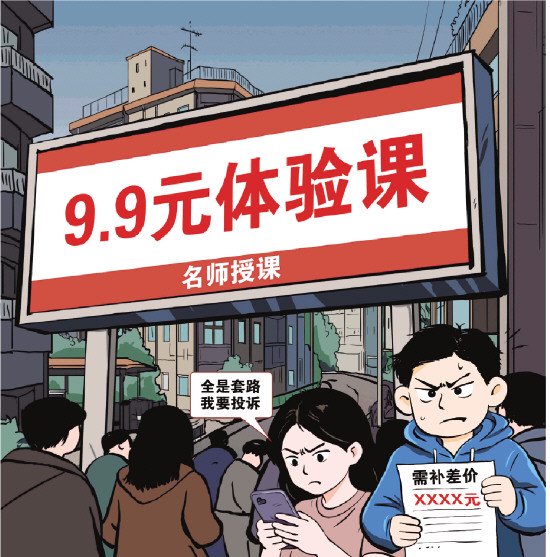
央视曝光“低价体验课”套路 揭秘“引流”背后的服务缩水
Xin Lang Cai Jing· 2026-01-26 16:55
Core Insights - The article discusses the prevalence of low-priced trial courses in various training sectors and raises concerns about the quality and reliability of these offerings [1][2][3] Group 1: Low-Priced Trial Courses - Low-priced trial courses, such as 1 yuan for two hours of badminton or 9.9 yuan for English classes, are gaining significant traction on platforms [1] - Consumers like Xiaoluo have been lured into purchasing expensive follow-up courses after positive experiences with low-cost trials, highlighting the effectiveness of this marketing strategy [1][2] Group 2: Quality and Consumer Trust - Many consumers report that the actual quality of the courses does not meet their expectations, with some discovering that paid materials can be accessed for free online [2] - The article emphasizes that some businesses use high-quality resources for trial courses to build trust, only to reduce service quality in subsequent offerings [2] Group 3: Regulatory and Consumer Protection - Experts suggest that the marketing model of low-priced courses is not inherently problematic, but the content must align with what is promised [3] - There is a call for a collaborative effort among businesses, platforms, and regulatory bodies to establish standards and improve the low-priced trial course market [3] - Legal advice is provided regarding consumer rights in cases of false advertising and unfair practices, emphasizing the importance of clear contract terms [4]
线下消费也可“七日无理由退款”,消费者预付消费“后悔有门”
Sou Hu Cai Jing· 2026-01-22 13:49
Core Viewpoint - The article discusses a recent court ruling that reinforces consumer rights regarding prepaid services, specifically highlighting the "seven-day regret right" for consumers who wish to cancel their prepaid contracts [3][5]. Group 1: Consumer Rights - The court ruled that consumers have the right to request a full refund within seven days of payment under the new judicial interpretation, which supports the "seven-day no-reason refund" policy [3]. - In the case of Ms. Zhao, the court determined that she was entitled to a full refund of 5399 yuan since she had not utilized the service after payment [4]. Group 2: Legal Framework - The new judicial interpretation aims to protect consumer rights and promote the development of the service industry by establishing a legal "cooling-off period" for prepaid services [5]. - The interpretation specifies that if a consumer has previously received the same service from the same or another provider, they forfeit the "seven-day regret right," balancing transaction stability and preventing malicious refund requests [5]. Group 3: Implications for Businesses - Businesses are encouraged to comply with the new regulations by reviewing and amending any unfair contract terms, ensuring they do not restrict consumers' legal rights to a seven-day no-reason refund [5]. - The emphasis is placed on providing quality services to foster sustainable consumer relationships rather than relying on restrictive refund policies [5].
部分低价体验课异化为“套路课”
Xin Lang Cai Jing· 2026-01-21 18:31
Core Viewpoint - The rise of low-cost trial classes in various fields such as music, yoga, and sports has led to consumer dissatisfaction due to hidden fees, poor quality, and aggressive marketing tactics [3][5][6] Group 1: Low-Cost Trial Classes - Various types of low-cost trial classes are available, with prices ranging from 1 yuan to over 100 yuan, attracting consumers to explore new interests [3][4] - Many consumers report positive experiences with low-cost trial classes, which enhance their leisure time and lead to further purchases [3][4] Group 2: Consumer Complaints - Some consumers have faced issues with trial classes, including unexpected fees and misleading marketing practices, leading to frustration and loss of trust [5][6] - Specific cases highlight the disparity between advertised and actual costs, with some trial classes being more expensive than full course packages [5][6] Group 3: Quality of Instruction - The quality of instruction in trial classes is often questioned, with reports of instructors prioritizing sales over teaching, leading to a poor learning experience [5][6] - Instances of rapid course progression and lack of personalized attention have been noted, raising concerns about the effectiveness of these trial classes [5][6] Group 4: Market Dynamics - The phenomenon of low-cost trial classes reflects a broader issue of information asymmetry in the market, where consumers struggle to differentiate between quality offerings and deceptive practices [7] - The article suggests that a healthy market should foster transparency and trust, allowing genuine educators and eager learners to connect effectively [7]

预付费消费避坑指南:办卡前做好这些,维权不再难
Xin Lang Cai Jing· 2025-11-20 08:42
Core Viewpoint - The prepaid consumption model is increasingly popular in industries such as fitness, beauty, education, and training, but it carries risks such as business closures, service quality decline, and refund difficulties [1][3] Group 1: High Complaint Areas in Prepaid Consumption - Business closure and absconding are the most common disputes, where consumers are unable to recover prepaid funds after businesses suddenly shut down [1] - Service quality often declines after consumers purchase prepaid cards, with businesses reducing service standards or adding restrictions that contradict initial promises [1] - Difficulty in obtaining refunds arises when businesses refuse requests based on terms like "no refunds for prepaid cards" [1] - Disputes can occur when original businesses transfer ownership, and new operators do not recognize the remaining balance on prepaid cards [1] Group 2: Practical Tips for Avoiding Pitfalls - Consumers should investigate the business's qualifications and reputation by checking the "National Enterprise Credit Information Publicity System" and searching for complaint records on platforms like Black Cat Complaints [2] - It is advisable to be cautious with large prepaid amounts, adhering to legal regulations that suggest keeping prepaid amounts reasonable [2] - Consumers should insist on signing formal contracts when purchasing prepaid cards, clearly outlining terms and conditions [2] - Keeping all transaction evidence, including contracts, payment receipts, and promotional materials, is crucial for dispute resolution [2] Group 3: Diverse Channels for Consumer Rights Protection - Consumers can utilize various channels to protect their rights in case of disputes, including the 12315 hotline and the Black Cat Complaints platform, which offers a quick complaint processing system [3] - Specific industry-related complaint channels should be chosen for more effective resolution, such as local education authorities for education-related disputes or business departments for fitness and beauty complaints [3] - Awareness of consumer safety and effective use of complaint platforms are essential for safeguarding legal rights while enjoying the benefits of prepaid services [3]
投诉企业全指南:从渠道选择到维权成功的完整路径
Xin Lang Cai Jing· 2025-10-28 06:50
Core Viewpoint - The article outlines various consumer complaint channels, emphasizing the importance of effective complaint mechanisms for consumers facing corporate infringement, and provides practical steps for utilizing these channels to protect consumer rights. Official Complaint Channels: Authority and Enforcement - 12315 platform is a direct complaint channel under the State Administration for Market Regulation, covering all areas including product quality, false advertising, and contract disputes [1] - The platform integrates with national 12315 mini-programs and apps, allowing for seamless data exchange and voice complaints [2] - Companies must respond within 48 hours to complaints, or they risk being listed in the "operating abnormality directory" [3] - A case example illustrates a consumer receiving a full refund and triple compensation within 7 days after submitting a complaint about a product sold by an e-commerce platform [3] Industry Regulatory Departments: Targeting Sectoral Issues - Financial complaints can be directed to the China Banking and Insurance Regulatory Commission (12378) for issues like unauthorized service charges [7] - A case example shows a user receiving a refund and written apology within 3 days after complaining about unauthorized charges [7] - Internet-related complaints can be reported to the Cyberspace Administration (12377) for issues like data breaches and false advertising [7] - A case example highlights a platform fined 500,000 yuan for illegally collecting personal information after a consumer report [8] Third-Party Complaint Platforms: Efficiency and Exposure - Black Cat Complaint is a consumer service platform under Sina, focusing on consumer disputes across various sectors [8] - The platform allows users to reference similar complaints for resolution strategies and regularly publishes complaint rankings to encourage service improvement [9] Legal Avenues: Ultimate Means of Protection - Civil litigation is applicable when companies refuse to comply with mediation agreements or cause significant losses [14] - Steps include drafting a lawsuit, submitting materials to the appropriate court, and presenting evidence during the trial [15][16] - Collective lawsuits can be initiated when multiple consumers face the same infringement, reducing individual costs [18] - Steps involve contacting lawyers or consumer associations and submitting joint evidence [19][20] Precautionary Guidelines: Essential Pre-Complaint Steps - Consumers should preserve original evidence such as purchase receipts and communication records [22] - It is crucial to understand legal bases for claims, referencing relevant consumer protection laws [22] - Selecting the optimal complaint channel based on the issue type is recommended [22] Industry Trends: Intelligent Upgrades in Complaint Tools - In 2025, trials for "Consumer Rights Protection AI Assistants" are underway, which can analyze complaints and generate legal documents within 30 seconds [23] - The shift in consumer behavior from passive waiting to proactive engagement in complaints is emphasized, promoting a comprehensive strategy of "complaint-mediation-litigation" [23]
如何判断商家是否靠谱?消费避坑指南
Xin Lang Cai Jing· 2025-10-16 09:14
Group 1 - The core viewpoint emphasizes the increasing complexity of consumer scenarios in online shopping, training, dining, and beauty services, alongside persistent issues such as difficult returns, merchant unavailability, and false advertising, leading to potential financial losses for consumers [1] Group 2 - Verification of merchant qualifications and transparency of information is crucial before making payments. Consumers should check for business licenses, actual operating addresses, and after-sales contact information. Relevant authorities like the State Administration for Market Regulation and the National Enterprise Credit Information Publicity System are recommended for verification [1] Group 3 - Consumer feedback serves as a valuable reference for assessing a company's service quality. However, due to the prevalence of fake reviews and rating manipulation, it is advisable to cross-reference multiple sources, including consumer complaint platforms like "Black Cat Complaints," to gauge the frequency of issues and the company's responsiveness [2] Group 4 - Attention to detail in contracts, terms, and refund policies is essential to avoid disputes. Many consumer conflicts arise from overlooked clauses in contracts, particularly in service industries. Consumers should carefully read terms related to validity, refund conditions, and after-sales support before signing [3] Group 5 - In case of disputes, the appropriate resolution method should be chosen based on the nature of the issue. For minor refunds or shipping problems, platforms can be used for complaints. For unresolved issues, third-party platforms like Black Cat Complaints can be utilized, while illegal activities should be reported to consumer rights platforms or local market regulation departments [4] Group 6 - Rational consumption is about making informed decisions rather than fostering suspicion. By verifying merchant information, understanding past complaints, and comprehending contract terms, consumers can significantly mitigate risks. Taking a few extra minutes to validate information can save not only money but also time and peace of mind [5]
海口:今日22时起外卖、快递等企业有序恢复营业
Di Yi Cai Jing· 2025-10-05 12:47
Core Points - Typhoon "Maidam" made landfall in Xuwen County, Guangdong Province on October 5, with predictions indicating a gradual weakening of its intensity [1] - The emergency response level for flood and wind was adjusted from Level II to Level III as of 10 PM on October 5, signaling a return to normalcy in Haikou City [1] - Various businesses, including large shopping malls, markets, and restaurants, began to resume operations in an orderly manner starting from 10 PM on October 5 [1] - Construction projects, factories, tourist attractions, and parks are set to resume operations from 8 AM on October 6, contingent upon ensuring safety and eliminating hazards [1]
让预付式消费值得“托付”
Jing Ji Ri Bao· 2025-09-25 00:04
Core Viewpoint - The prepaid consumption model, while beneficial for businesses in terms of cash flow and customer retention, poses significant risks to consumers due to the potential for merchant defaults, leading to a loss of consumer confidence in the market [1][2]. Group 1: Prepaid Consumption Model - The prepaid consumption model is widely used in sectors like fitness, training, and dining, where businesses attract consumers with discounts and convenience [1]. - This model allows businesses to secure customers and improve cash flow, but it leaves consumers vulnerable if merchants fail to deliver services [1][2]. Group 2: Legal and Regulatory Developments - In May, the Supreme People's Court implemented new regulations clarifying the rights and obligations of both consumers and businesses in prepaid consumption disputes, including rules on refunds and liability for defaults [1]. - Despite these regulations, challenges remain in the practical enforcement of consumer rights, such as difficulties in evidence collection and lengthy litigation processes [1]. Group 3: Market Regulation and Consumer Protection - Various local regulatory bodies are exploring ways to enhance the prepaid consumption model while ensuring compliance and consumer protection, such as the integration of third-party platforms and financial institutions to monitor transactions [2]. - Initiatives like "安心消费在北京" aim to provide consumers with guarantees and flexible payment options, promoting a healthier development of prepaid consumption [2]. Group 4: Future Outlook - The core of ensuring consumer confidence in prepaid consumption lies in providing security and reliability, allowing consumers to engage without uncertainty [3]. - With proper regulation, the prepaid model can thrive, benefiting both consumers and businesses by focusing on service quality and product improvement [3].