
基础材料

Search documents
2026低价掘金指南:5元以下潜力股逻辑与机会全解析
Sou Hu Cai Jing· 2026-02-19 23:06
Core Viewpoint - The article emphasizes that stocks priced below 5 yuan are not necessarily poor investments, but rather potential opportunities that have been overlooked by the market, especially in the context of supportive policies and solid performance metrics in 2026 [1][3]. Summary by Categories Screening Criteria for Potential Stocks - The article outlines a four-part framework for identifying potential stocks under 5 yuan, which includes: 1. Excluding ST and delisting risk stocks, as per the latest regulations [3]. 2. Ensuring a price-to-earnings (P/E) ratio greater than 0 and less than 20, indicating stable profitability and undervaluation [4]. 3. Total market capitalization of at least 5 billion yuan and an average daily trading volume of at least 50 million yuan to ensure liquidity [5]. 4. Aligning with 2026 policy priorities such as long-term special bonds and infrastructure investments [6]. Promising Investment Sectors - The article identifies four key sectors that are expected to benefit from the current market conditions: 1. **Infrastructure and Power Infrastructure**: Supported by a 936 billion yuan special bond for equipment updates and infrastructure investments, with many stocks priced between 2-4 yuan and P/E ratios of 10-13 [8]. 2. **Local Banks**: Stocks of local banks priced at 2-3 yuan with P/E ratios of 5-9 and dividend yields of 4-5%, providing a stable income stream [10]. 3. **Steel and Basic Materials**: Benefiting from a recovery in manufacturing and equipment updates, with stocks priced at 2-3 yuan and P/E ratios under 20, indicating a favorable supply-demand balance [11]. 4. **Public Utilities and Port Logistics**: These stocks, often priced at 2-3 yuan, provide consistent cash flow and dividends, making them resilient investments [12]. Investment Strategy - The article advises a cautious approach to investing in low-priced stocks, emphasizing that they are not a quick path to wealth but rather a strategy for steady returns through valuation recovery and policy support [12]. - Key practical tips include diversifying investments, focusing on earnings rather than speculative concepts, and setting stop-loss limits to manage risks effectively [13][14][15].

美智库:中国将投资重心转向亚非
Xin Lang Cai Jing· 2026-02-06 06:35
Group 1 - The core viewpoint of the report indicates that China's outbound investment is expected to grow by 18% year-on-year in 2025, reaching a total of $124 billion, marking the highest level since 2018 [1] - The report highlights a shift in China's investment focus from Western countries to Africa and the Middle East, driven by investments in energy and basic materials [1] - In 2025, Kazakhstan is projected to become the largest single recipient of Chinese investment, with an estimated total of $25.8 billion, primarily driven by aluminum and copper-related projects [1] Group 2 - The report notes a significant increase in China's overseas investment in the Middle East and North Africa, reaching a historical high, while investments in North America, Europe, and Oceania combined account for less than 20% of China's total outbound direct investment, a decrease of about 70% since 2016 [2] - Due to increasing scrutiny of Chinese capital by Western countries, Chinese enterprises are adopting a more cautious approach towards investments in the U.S. [2] - The report emphasizes that investments in the energy and basic materials sectors are expected to continue due to their high value and long-term characteristics [2]
浙江省上市企业ESG年度报告发布 勾勒可持续发展路线图
Sou Hu Cai Jing· 2025-12-20 10:54
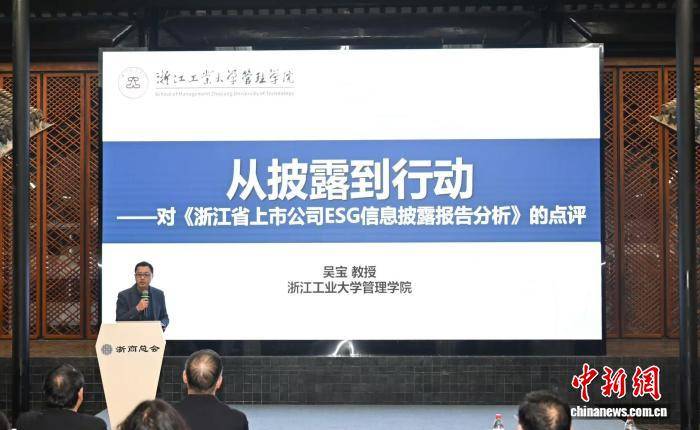
Core Insights - The event "ESG: Responsibility for a Sustainable Future" was held in Hangzhou, Zhejiang, where the ESG information disclosure report for listed companies in Zhejiang was officially released [1] - The report indicates that Zhejiang has created a favorable environment for companies to implement ESG practices, aligning with the "Green Mountains and Clear Water are Gold and Silver Mountains" philosophy [1] Group 1: ESG Disclosure Overview - The report focuses on the ESG information disclosure status of 100 listed companies in Zhejiang, analyzing their ESG status, disclosure practices, existing issues, and recommendations [3] - As of November 20, 2025, 82 out of 100 sample companies have published ESG reports, with 47 from the Shanghai Stock Exchange and 35 from the Shenzhen Stock Exchange [3] - Hangzhou leads in the number of ESG reports disclosed, followed by Ningbo and Shaoxing [3] Group 2: ESG Ratings and Compliance - Nearly 70% of the 82 companies that published ESG reports received an A rating or above from Wind ESG, indicating good overall performance [3] - Among mandatory disclosure entities, 93.3% analyzed important issues, with high disclosure rates in environmental topics like "climate change," social issues like "employees," and governance topics like "stakeholder communication" [3] Group 3: Industry and Regional Disparities - The report highlights significant disparities in ESG report disclosure rates across 11 industries, with finance and energy sectors achieving full disclosure, while sectors like information technology and consumer discretionary only reached around 60% [5] - 12 companies have published ESG reports for 15 years or more, accounting for 14.6%, while the highest proportion, 54.9%, consists of companies that have published for less than 5 years, indicating that ESG reporting in Zhejiang is still in a growth phase [4] Group 4: Recommendations for Improvement - The report suggests enhancing ESG compliance supervision and accountability, including implementing responsibility guidelines for boards and decision-makers, and establishing cross-departmental teams for coordinated enforcement [5] - It recommends creating a gradient support system to address regional and industry imbalances, focusing on cities with higher disclosure rates like Hangzhou and Shaoxing as core leading areas [5] - Companies are encouraged to shift from short-term compliance thinking to a long-term value-oriented disclosure approach, integrating ESG disclosures into overall business development [6]
国资委主任张玉卓:深入开展新一轮中央企业数字化转型行动 推动人工智能等信息技术与传统产业全过程、全要素深度融合
Xin Hua She· 2025-12-19 13:32
Core Viewpoint - The article discusses the strategic framework outlined in the "Suggestions for Formulating the 15th Five-Year Plan for National Economic and Social Development," emphasizing the role of state-owned enterprises (SOEs) in enhancing innovation, solidifying the real economy, and deepening reforms in state-owned assets and enterprises [1]. Group 1: Strengthening Innovation - State-owned enterprises are identified as a key force in national technological innovation, with R&D investments exceeding 1 trillion yuan for three consecutive years, focusing on critical technologies [2][3]. - The plan includes increasing high-quality technological supply, particularly in areas where private enterprises lack capability, to produce more original and leading results [2]. - The transformation of technological achievements into practical applications will be accelerated, with a focus on building major pilot platforms and enhancing procurement of first sets of products [3]. Group 2: Modernizing the Industrial System - The article highlights the need for SOEs to optimize industrial layouts by upgrading traditional industries and developing strategic emerging industries, with an average annual investment growth rate of over 20% in emerging sectors during the 14th Five-Year Plan [4][5]. - Emphasis is placed on digital transformation and the integration of advanced technologies like AI, big data, and 5G into traditional industries to promote intelligent and green development [5]. Group 3: Reforming State-Owned Enterprises - The article outlines the next steps in the reform of state-owned enterprises, focusing on enhancing core functions and competitiveness while aligning with national strategic needs [6][7]. - A new regulatory framework will be established to improve the effectiveness of state asset supervision, ensuring a balance between flexibility and control [7]. Group 4: Building World-Class Enterprises - The article stresses the importance of cultivating world-class enterprises as a reflection of national economic and technological strength, with SOEs leading initiatives to enhance value creation, innovation, and governance [8][9]. - The focus will be on improving internal value, integrating innovation with industry, and enhancing resource allocation capabilities to better engage in global markets [8].
亚洲城市引领产业创新发展趋势,深圳、北京、上海上榜全球前十强
Sou Hu Cai Jing· 2025-11-14 15:22
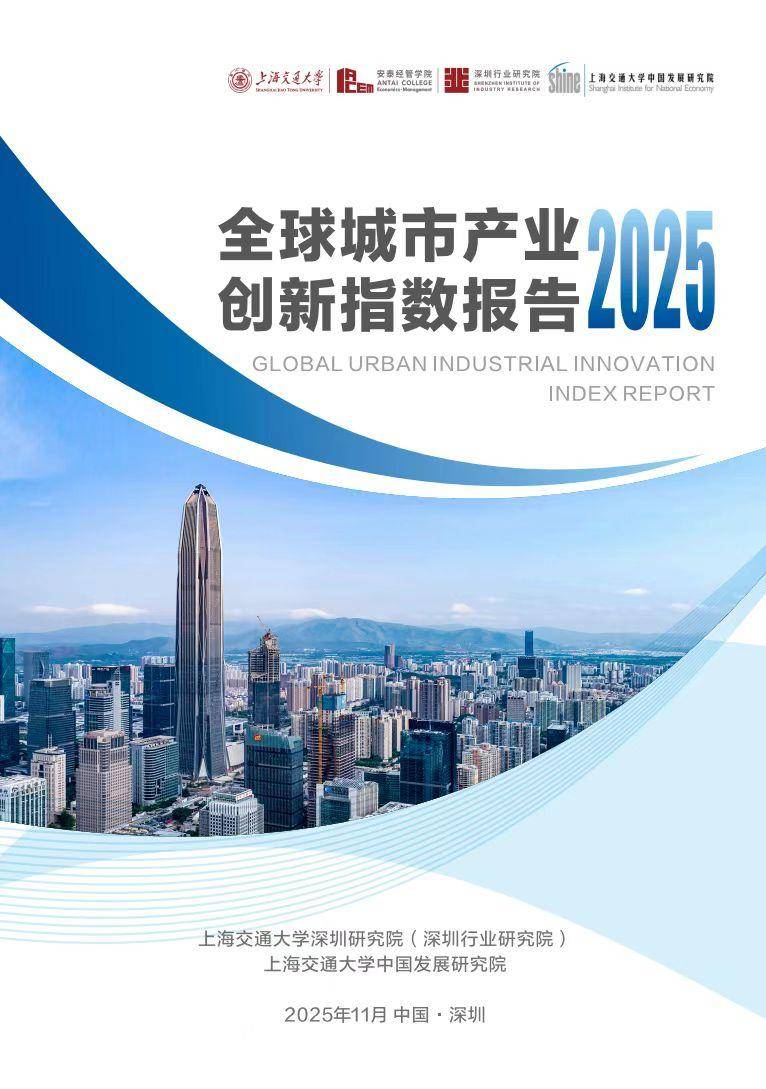
Core Insights - The "Global City Industry Innovation Index Report 2025" indicates a significant shift of global industrial innovation focus towards Asia, with six out of the top ten cities for industrial innovation located in Asia [1][3][8] Group 1: Global Industrial Innovation Landscape - The report evaluates 27 major innovative cities globally, assessing them across four dimensions: environment, investment, output, and performance [3] - Industrial innovation, rather than mere technological innovation, is identified as the core engine driving economic rise and sustainable development for cities and nations [3][8] Group 2: Top Performing Cities - Tokyo, Shenzhen, New York, and San Francisco form the "first tier" of global industrial innovation, with very close overall scores: Tokyo at 46.84, Shenzhen at 46.79, New York at 46.72, and San Francisco at 46.11 [4][6] - Tokyo's top position is attributed to its strong industrial foundation and continuous innovation investment, leading in PCT international patent applications (11,664), high-tech product export ratio (67.4%), and number of Forbes Global 2000 companies (82) [6][8] - Shenzhen exemplifies China's leading position in application innovation and industrialization, with notable metrics such as ICT product export ratio (41.3%, the highest globally), PCT patent applications (6,463, second globally), and a labor force age population ratio (79.53%, the highest globally) [6][7] Group 3: Asian Cities' Collective Breakthrough - Six Asian cities occupy the top ten positions in industrial innovation, including Beijing (5th), Seoul (6th), Singapore (8th), and Shanghai (9th), indicating a clear shift of the global innovation balance towards the East [7][8] - Asian cities demonstrate significant advantages in electronic information and high-end equipment sectors, rapidly converting technological innovations into globally competitive products and services [7][8] Group 4: Comparative Analysis with Western Cities - While European cities like London (7th) and Paris (10th) and North American cities like New York and San Francisco maintain some advantages in innovation environment and performance, they face strong challenges from Asian cities in terms of innovation output scale and speed [8] - Traditional innovation strongholds such as Seattle and Boston have been pushed out of the top ten, highlighting the competitive dynamics in the global innovation landscape [8]
天弘越南市场股票型发起式证券投资基金(QDII)2025年第2季度报告
Zheng Quan Zhi Xing· 2025-07-21 06:20
Core Insights - The report provides an overview of the Tianhong Vietnam Market Equity Fund (QDII) for the second quarter of 2025, highlighting its investment strategies and performance metrics [1][2][3]. Fund Overview - The fund aims to capture opportunities arising from Vietnam's economic growth while seeking to outperform its benchmark [3]. - The total number of fund shares at the end of the reporting period was approximately 2.82 billion [3]. - The fund employs various investment strategies, including asset allocation, stock investment, and fixed income strategies [3]. Financial Performance - The fund's net asset value (NAV) for the A, C, and D share classes as of June 30, 2025, were 1.4321, 1.4111, and 1.4108 RMB respectively [13]. - The performance metrics for the reporting period showed negative returns: A class at -2.56%, C class at -2.66%, and D class at -2.69%, while the benchmark returned 5.34% [13]. - Over the past three months, the A class underperformed the benchmark by 7.90% [5]. Investment Strategy and Market Conditions - The fund reduced its exposure to financial stocks in response to macroeconomic uncertainties and regulatory changes in Vietnam [12]. - The Vietnamese economy showed resilience with a GDP growth of 7.6% in the second quarter, leading to a cumulative growth of approximately 7.3% for the first half of the year [10]. - The government is accelerating domestic reforms to reduce reliance on external markets, particularly in light of the high tariffs imposed by the U.S. [10]. Portfolio Composition - The fund's assets are predominantly invested in common stocks, accounting for 89.16% of the total assets [15]. - The financial sector represents the largest portion of the portfolio at 54.72%, followed by basic materials at 11.16% [15]. - The fund has no holdings in bonds or asset-backed securities as of the reporting date [18]. Compliance and Governance - The fund management has established fair trading practices and has not encountered any violations of these principles during the reporting period [8][9]. - The fund management is committed to transparency and has not engaged in any unfair trading activities [9].