
外卖行业

Search documents
北大毕业送外卖?美团回应
Xin Lang Cai Jing· 2026-03-18 14:14
Group 1 - The core message from Meituan is its acknowledgment of the viral video regarding "Peking University graduates delivering food" and its prompt verification with the local delivery station [1] - A delivery rider named Tao Moujun registered in early December 2025 and completed only 5 deliveries on December 9, with no further activity recorded [3] - Meituan's registration process for riders does not require educational credentials, making it impossible for the platform to verify the educational background of its riders [3] Group 2 - Last year, Meituan responded to claims about another rider, Ding Mouzhao, who allegedly delivered thousands of orders but was found to have completed only 34 deliveries in over four months [3] - Meituan stated that any claims regarding the educational background of riders, such as the assertion that nearly 30% of riders hold bachelor's degrees, lack factual basis and are speculative [4] - The company emphasized the importance of rational judgment regarding the use of high educational qualifications to gain attention and urged the public to be cautious about such claims [4]



某高端外卖平台决定退出新加坡市场
Sou Hu Cai Jing· 2026-02-26 22:44
Core Viewpoint - DoorDash is closing its operations of Deliveroo and Wolt in four countries, indicating a strategic shift in its global expansion efforts [2][4]. Group 1: Company Actions - DoorDash completed the acquisition of Deliveroo in 2025 and Wolt in 2022, but is now retracting from certain markets [4]. - Deliveroo has been operating in Singapore since 2015 but has gradually shifted focus to high-end users, moving away from competition with Grab and Foodpanda in the mass market [5]. Group 2: Market Analysis - Deliveroo's market share in Singapore has declined from 24% in 2020 to 7% in 2025, highlighting the challenges of maintaining a high-end positioning in a competitive landscape [6]. - The Singapore food delivery market is projected to reach a GMV of $2.9 billion by 2025, which is 44% of Indonesia's market size despite Singapore's much smaller population [9]. - Grab has expanded its market share to approximately two-thirds of the Singapore market post-pandemic, making it difficult for competitors to disrupt the current market dynamics without significant investment or a more efficient operational model [10]. Group 3: Competitive Landscape - The exit of Deliveroo from Singapore is part of a broader trend of optimization among global food delivery platforms [10]. - There are questions regarding the future of Foodpanda, which has lost market share in Singapore and Southeast Asia, with its parent company DeliveryHero facing cash flow pressures [10]. - The global food delivery landscape is evolving, with Chinese restaurant brands potentially influencing local platforms and creating opportunities for Chinese players to enter new markets [13].

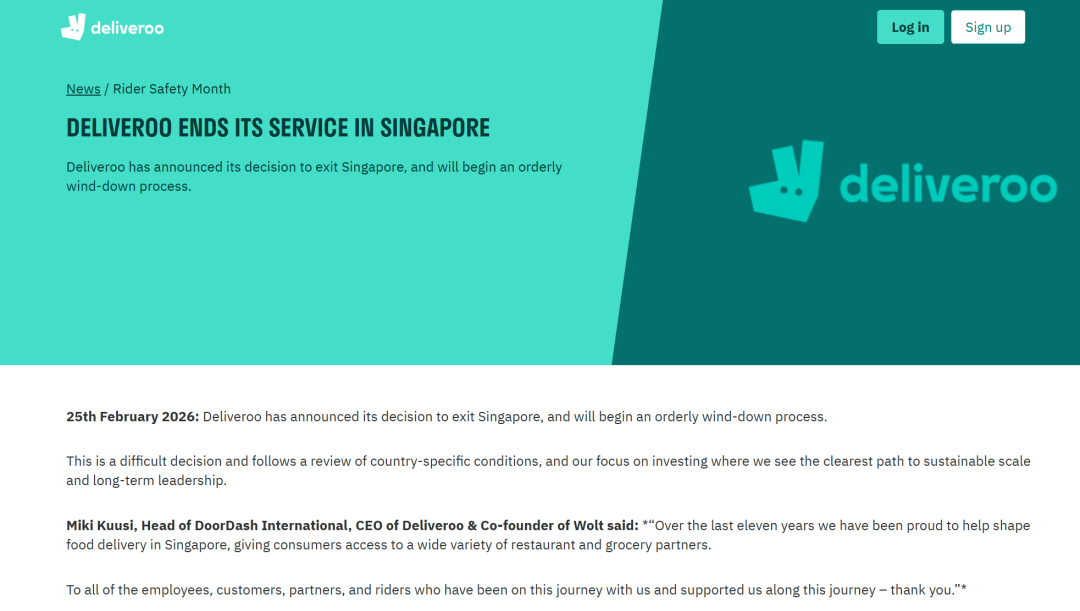
“95后”夫妻春节坚持送外卖,4周收入近4万元?网友不敢信,一站长发声:补贴最高8200元,日均跑70单,是有可能的
Mei Ri Jing Ji Xin Wen· 2026-02-24 11:07
Core Insights - The story of a young couple from Henan, who chose to work as delivery riders during the Spring Festival to pay off their debts, has gained significant attention online. They earned nearly 40,000 yuan in one month, which sparked discussions about the feasibility of such earnings in the delivery industry [3][4]. Group 1: Earnings and Work Conditions - The couple, Sun Xiaohui and Cui Jianbin, left their children at home to work in Qingdao, citing high demand and prices for deliveries during the holiday season as their reason for staying [3]. - A local delivery station manager indicated that it is possible for delivery riders to earn close to 20,000 yuan during the New Year period, depending on the area and the number of deliveries completed [4]. - The delivery platform employs a tiered pricing system for riders, with earnings increasing based on the number of deliveries made. For instance, deliveries up to 800 earn 5.5 yuan each, while those exceeding 1400 earn 6.1 yuan each [5]. Group 2: Company Policies and Incentives - The delivery platform offers a return-to-work subsidy of 5,000 yuan for riders who complete basic delivery tasks during specific periods, along with an additional incentive bonus of 3,200 yuan for full attendance [4]. - To achieve a monthly income of around 20,000 yuan, riders need to complete an average of 70 deliveries per day during the holiday season [4]. Group 3: Social Commentary - Media commentary highlighted that the couple's story resonates not just because of their earnings but due to their resilience and mutual support in the face of financial difficulties. Their journey reflects a deeper narrative about facing challenges and maintaining hope [5].
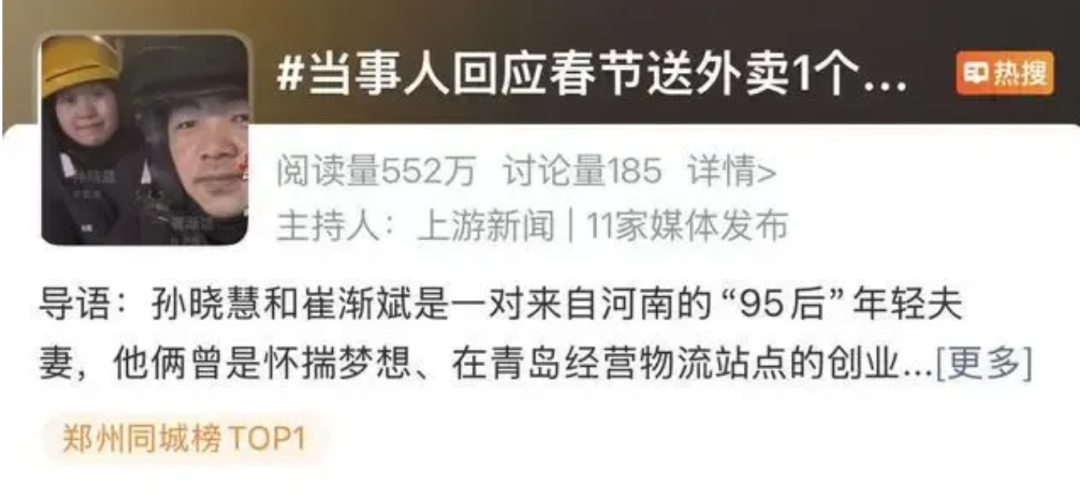
多地春节前发文要求各大外卖平台停止“内卷式”竞争
Yang Shi Wang· 2026-02-12 23:02
Core Viewpoint - Regulatory authorities across multiple regions in China have issued guidelines to curb "involution" and unhealthy competition in the food delivery sector ahead of the Spring Festival, emphasizing the need for rational competition and the cessation of harmful practices such as excessive subsidies and price wars [1][5][11]. Group 1: Regulatory Actions - Various market supervision departments, including those in Henan, Anhui, Guangdong, and Hainan, have mandated food delivery platforms to stop engaging in low-quality, low-price "involution" competition [1][5]. - The market supervision bureau of Xinyang issued a reminder highlighting issues like "price wars" and the negative impact of continuous subsidies on small merchants, which disrupts the industry ecosystem [1][5]. - The South Yanyang market regulatory authority has prohibited unfair competition practices such as "choose one from two," data monopolization, and other tactics aimed at eliminating competitors [1][5]. Group 2: Industry Response - Industry associations, such as the Gansu Catering and Cooking Industry Association, have called for self-regulation within the industry, urging a halt to low-quality, low-price competition and advocating for a stable market order [8][10]. - The association's initiative emphasizes that the ongoing subsidy wars are shifting competition from quality and service to capital endurance, negatively affecting small merchants' pricing power and profit margins [8][10]. Group 3: Policy Background - The negative effects of "involution" competition have garnered significant attention from regulatory bodies, with the Central Economic Work Conference identifying it as a key economic task [11]. - The State Administration for Market Regulation has included the "subsidy war" among the top ten typical cases for comprehensive rectification of "involution" competition by 2025, indicating a clear policy signal against such practices [11][13]. - As the Spring Festival approaches, nationwide regulatory actions aim to preemptively manage low-price involution, fostering a fair competition environment and maintaining market order during the holiday season [13].
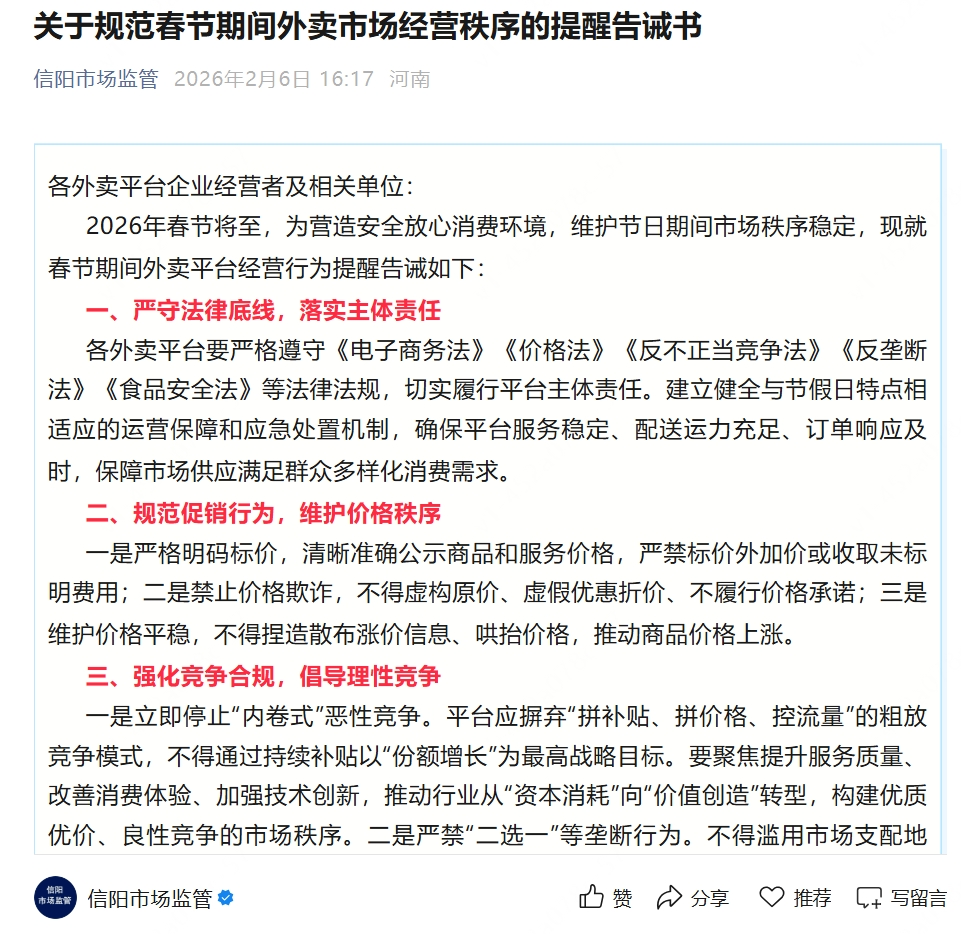
多地要求外卖平台立即停止内卷式竞争
第一财经· 2026-02-12 15:45
Core Viewpoint - The article discusses the regulatory measures taken by various municipal market supervision departments in China to curb unhealthy competition in the food delivery industry, particularly during the Spring Festival period. It emphasizes the need for compliance and stability in the market by discouraging low-quality, low-price competition and promoting fair practices among food delivery platforms and merchants [3]. Group 1: Regulatory Measures - Multiple cities, including Xinyang, Nanyang, Bengbu, Shantou, Wenchang, and Liaoyang, have issued guidelines to food delivery platforms to stop "involutionary" competition characterized by low-quality and low-price strategies [3]. - The guidelines prohibit platforms from organizing malicious subsidies and price dumping to maintain order in the Spring Festival food delivery market [3]. - There is a focus on regulating promotional activities, with clear prohibitions against forcing merchants to participate in promotions through unfair practices such as lowering search rankings or imposing unreasonable thresholds [3]. Group 2: Industry Response - Some regional catering industry associations have called for enhanced self-regulation to halt low-quality, low-price competition. For instance, the Gansu Catering and Cooking Industry Association issued a statement urging the industry to stabilize market order [3]. - The association highlighted that the subsidy wars in 2025 shifted competition from quality and service to capital endurance, negatively impacting the pricing power and bargaining ability of small and medium-sized merchants [3]. - The call for action aims to address the detrimental effects of "involutionary" competition on the profitability of offline businesses [3].

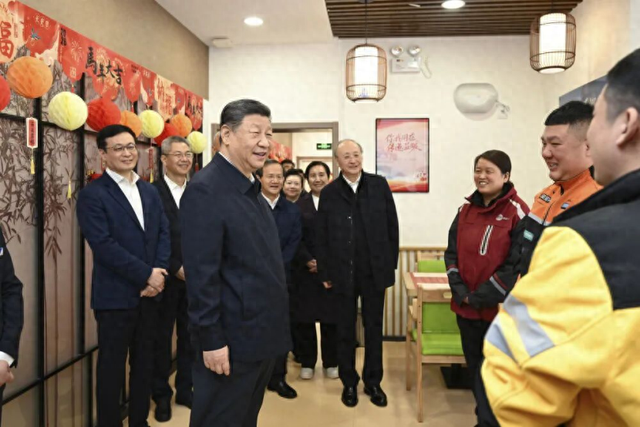
偶遇总书记的外卖小哥说,他在北京有家了……
Bei Jing Ri Bao Ke Hu Duan· 2026-02-11 15:10
Core Insights - The article highlights the increasing recognition and support for delivery riders in Beijing, showcasing their evolving role from temporary workers to valued contributors to urban life [3][5][9] Group 1: Government and Community Support - President Xi Jinping visited a community dining hall, emphasizing the importance of safety and well-being for delivery riders [3] - The Beijing government has established nearly 9,000 service stations for delivery workers, providing essential support and resources [7] - Various delivery platforms, including Meituan and Taobao, have introduced social insurance subsidies, enhancing the financial security of riders [7][9] Group 2: Personal Stories and Experiences - Delivery riders like Zhang Ruiqiang and Jia Yacai share their personal experiences, highlighting improved living conditions and financial stability [5][8] - Riders express a sense of belonging in the city, feeling valued and recognized for their contributions [8][9] - The introduction of rider apartments is seen as a significant improvement, allowing workers to have a more stable home environment [7][9] Group 3: Future Aspirations - Riders express optimism about their future in the city, feeling motivated by government support and community engagement [9] - There is a collective desire among riders to contribute positively to their communities, reflecting a shift in their self-perception from transient workers to integral members of society [8][9]
外卖如何放心点、安心吃?这份指南帮你“避坑”
Yang Shi Xin Wen· 2026-02-07 02:10
Core Viewpoint - The article emphasizes the increasing safety risks associated with food delivery during holidays, highlighting the importance of consumer awareness and precautions to ensure food safety. Group 1: Safety Risks of Food Delivery - Increased food safety risks during holidays stem from improper handling of ingredients and high production loads [3] - Popular merchants may face overload risks, leading to issues such as improper storage and processing of fresh ingredients, inadequate sanitation, and cross-contamination [3] - Extended delivery times can cause food to remain in the danger zone (5-60°C) for too long, increasing the risk of bacterial growth [4] Group 2: Guidelines for Ordering Food - Consumers should prioritize reputable merchants, preferably well-known chains or those with physical locations, and verify their licenses and permits [5] - It is advisable to check recent reviews, especially negative feedback related to food quality and safety, to avoid problematic merchants [5] - High-risk foods such as raw dishes and long-stored items should be avoided during holidays, with a preference for freshly prepared hot meals [6] Group 3: Delivery Considerations - Opting for "contactless delivery" can reduce person-to-person contact, enhancing hygiene and safety [7] - If the estimated delivery time exceeds one hour, consumers should consider switching to a closer merchant to ensure food quality and safety [8] Group 4: Verification Upon Receipt - Consumers should promptly retrieve their orders after notification to prevent prolonged exposure to outside conditions [9] - Checking the integrity of seals and packaging is crucial to avoid contamination, and verifying the order against the receipt is necessary [9] - Hot food should be steaming, while cold food should feel cold; lukewarm food may indicate bacterial growth [10] Group 5: Final Checks Before Consumption - Observing food for any foreign objects, unusual smells, or colors is essential, along with using clean utensils for handling [12] - Hand hygiene and the cleanliness of utensils are critical before eating, especially when using disposable cutlery [13] - Food should not be left at room temperature for more than 2 hours, and specific time limits apply based on temperature conditions [13] Group 6: Handling Leftovers - Leftovers should not be left at room temperature for extended periods, and proper storage in clean, sealed containers is recommended [14] - Different types of food have varying storage durations, with meat generally lasting 3-4 days in the fridge, while seafood should be consumed within 1-2 days [15]
市场监管总局:更大力度破除地方保护和行政性垄断 大力激发各类经营主体活力 建设放心消费集聚区
Shang Hai Zheng Quan Bao· 2026-02-05 17:52
Core Insights - The report highlights the significant growth in the number of new business entities and the improvement in the overall credit index of Chinese enterprises, indicating a robust economic recovery and enhanced business environment [1][2]. Group 1: Business Growth and Credit Improvement - In 2025, a total of 25.745 million new business entities were established, with active enterprises increasing by 9.8% year-on-year [1][2]. - The Chinese enterprise credit index reached 162.66 in 2025, an increase of 3.89 from 2024, reflecting an overall improvement in the creditworthiness of businesses [2]. Group 2: Regulatory Actions and Market Oversight - The State Administration for Market Regulation (SAMR) investigated 5,918 cases of illegal charges against enterprises, resulting in fines totaling 347 million yuan and refunds of 1.35 billion yuan to businesses [2]. - SAMR implemented a risk classification management system for over 64 million enterprises, achieving an issue detection rate of over 85% for high-risk companies [2]. Group 3: Market Competition and Fairness - SAMR is committed to promoting fair competition and addressing local protectionism and administrative monopolies through strict enforcement and compliance measures [4]. - The agency plans to enhance the review process for business mergers and acquisitions to stimulate market vitality while ensuring a competitive environment [4]. Group 4: Platform Economy Regulation - In 2025, SAMR, in collaboration with the National Internet Information Office, introduced regulations to improve the fairness and transparency of online trading platforms [5]. - The agency is addressing issues in the food delivery sector and live-streaming e-commerce by implementing standards and conducting regular oversight [6]. Group 5: Consumer Environment and Standards - SAMR initiated a three-year action plan to optimize the consumer environment, releasing over 210 national standards for various consumer goods and services [6]. - The agency aims to foster consumer confidence through the establishment of "reassuring consumption" zones and related policies [6]. Group 6: Standardization Initiatives - SAMR plans to launch new initiatives to enhance the standard system supporting high-quality development, focusing on updating standards in traditional industries and consumer goods [7].
“幽灵外卖”何以难治?
Xin Hua Wang· 2026-01-23 02:01
Core Viewpoint - The rapid growth of the online food delivery market has raised significant concerns regarding food safety and hygiene, prompting regulatory bodies and delivery platforms to enhance management measures against illegal operations, particularly "ghost kitchens" [1][3]. Regulatory Actions - The State Council's Food Safety Office has issued a notice to strictly combat "ghost kitchens" through legal means [1]. - Zhengzhou's Market Supervision Administration has launched the "Zhengqi Pioneer Snap" initiative, encouraging delivery riders to report violations, with a reward of 50 yuan for verified leads [1][6]. Challenges in Regulation - The sheer number of merchants, with over 45,000 on the Taobao Flash Purchase platform in Zhengzhou alone, complicates effective oversight [2]. - Frequent changes in small businesses and the lack of proper licensing contribute to the persistence of "ghost kitchens" [3]. - Regulatory bodies face difficulties in tracking and monitoring these operations due to their hidden nature and low operational costs [3]. Technological Empowerment - The integration of technology in food delivery regulation is essential, with initiatives like "Internet + Bright Kitchen" and "Zhengqi Pioneer Snap" being implemented to enhance oversight [5]. - AI cameras are being installed in over 3,700 restaurants to monitor kitchen conditions in real-time, allowing consumers to view kitchen operations through delivery apps [6]. Community Involvement - Delivery riders, as a large and mobile workforce, play a crucial role in identifying and reporting food safety issues, thus enhancing community supervision [9]. - The "Zhengqi Pioneer Snap" initiative has seen over 8,000 riders register to report issues, significantly extending the reach of regulatory efforts [6]. Industry Response - The restaurant industry supports the crackdown on "ghost kitchens," recognizing the threat they pose to consumer health and market order [7]. - Industry associations are committed to improving food safety standards and promoting self-regulation among restaurants to combat the prevalence of non-compliant operations [7]. Urban Governance Insights - The Zhengzhou initiative serves as a model for governance in large cities, demonstrating how to leverage community resources for effective oversight [9]. - The approach of transforming delivery riders into active participants in governance can enhance the efficiency of urban management and improve public safety [9].
【聚焦新就业形态劳动者】社保“护身”近一年,外卖小哥的生活藏着这些变化!
Xin Lang Cai Jing· 2026-01-15 18:26
Core Insights - The article highlights the ongoing efforts of food delivery platforms to provide social security benefits to their riders, aiming to enhance job security and retention in the industry [1][2][7] Group 1: Social Security Initiatives - Major food delivery platforms have begun subsidizing social security contributions for riders, which has increased their willingness to participate in the system [1][2] - As of December 2025, platforms like Meituan have issued social security subsidies to riders, with amounts reaching 487.9 yuan for those who first enrolled in April 2025 [5][6] - The initiative is part of a broader government push to integrate flexible employment groups into the social security system, as emphasized in the 2025 Central Economic Work Conference [1][2] Group 2: Employment Dynamics - The number of food delivery riders in China has surpassed 10 million, making it challenging to incorporate such a large flexible workforce into the social security framework [2] - The industry has seen a shift from insufficient labor rights protection to platforms taking responsibility for riders' social security, indicating a positive change in the sector [2][3] Group 3: Company-Specific Actions - JD Logistics has a long-standing tradition of signing formal labor contracts with its delivery personnel, ensuring they receive comprehensive benefits, including social security [3] - Meituan has tailored its social security subsidy program to accommodate both full-time and part-time riders, allowing for greater flexibility in participation [4][6] Group 4: Rider Perspectives - Riders have expressed concerns about the financial impact of social security contributions on their take-home pay, which has been a barrier to participation [6] - The introduction of subsidies has encouraged riders to enroll in social security, with many reporting a sense of stability and improved job satisfaction [7][8] Group 5: Future Directions - The exploration of social security for new employment groups has been ongoing, with pilot programs for occupational injury insurance starting in July 2022 [8] - As the scope of insurance expands to include various types of coverage, platforms face increasing cost pressures, prompting discussions on potential subsidies and tax incentives to alleviate financial burdens [8]