
有色金属贸易

Search documents
关于规范使用“长江价格”体系的严正声明
Xin Lang Cai Jing· 2026-02-06 03:30
Core Viewpoint - The announcement emphasizes the importance of the "Yangtze Price" system as the sole official pricing platform for non-ferrous metals, aiming to protect market order and user rights against misleading information from unauthorized sources [2][3]. Group 1: Official Pricing Platform - The "Yangtze Price" system is exclusively published on the Yangtze Nonferrous Metals Network (ccmn.cn and cjys.cn), and any unauthorized use of the term is considered unfair competition [2]. - The "Yangtze Price" includes all market quotes from the Yangtze Nonferrous Metals Network, with key references being "Yangtze Spot" and "Yangtze Composite," which reflect actual trading conditions and cover approximately 80% of national production and trading volume [2]. Group 2: Pricing Mechanism - The pricing mechanism is rigorous, requiring price reporters to follow defined procedures and methods, with all calculations verified through the Yangtze pricing review system to ensure compliance with international standards [3]. - The Yangtze Nonferrous Metals Network acts as an independent third-party service provider, maintaining communication with both buyers and sellers while optimizing pricing methods [3]. - Daily price collection involves gathering transaction prices and expected prices from major smelters, traders, and downstream units through various communication channels [3]. Group 3: Platform Services and Legal Protection - Since its inception in 2006, the Yangtze Nonferrous Metals Network has provided timely and accurate industry information services, including price publication, industry news, historical data, and online trading support, with a daily visitor count exceeding one million [4]. - The "Yangtze Nonferrous Metals Network" and related trademarks are legally protected, and unauthorized commercial use of "Yangtze Price" is prohibited [4]. - The network calls for users to obtain pricing information exclusively from the official platform to maintain a fair and transparent market environment [5].


重磅!水贝市场已禁售铜条,亮剑出击狠刹“歪风”炒作!
Sou Hu Cai Jing· 2026-01-21 09:19
Core Viewpoint - The recent surge in "investment copper bars" in Shenzhen's water bay market has led to regulatory intervention, highlighting the speculative nature of this trend and the need for industry compliance and consumer protection [1][3][9] Group 1: Speculative Frenzy - The price of copper bars skyrocketed, with 1000g bars quoted at 180 RMB, significantly above industrial copper prices, indicating a speculative bubble [1][3] - The rise in copper prices was fueled by a lack of logical investment rationale, with claims of potential wealth generation attracting inexperienced investors [3][4] - The copper market's financial attributes are weaker than those of gold and silver, with a significant increase in domestic copper inventory contradicting high prices [3][4] Group 2: Industry Concerns - The copper bar speculation reflects broader issues in the water bay market, where businesses exploit information asymmetry to mislead ordinary investors [6][9] - Recent regulatory actions against companies engaging in non-physical gold betting highlight the urgent need for stricter oversight in the industry [6][9] - Many sellers of copper bars lack the necessary trading qualifications, raising concerns about illegal operations and the absence of a standardized recovery mechanism [6][9] Group 3: Regulatory Response - The ban on copper bar sales is seen as a corrective measure against misleading investment promotions, aiming to refocus the market on its core values of design and quality [1][9] - Compliance in the jewelry industry is becoming increasingly important, with new regulations prohibiting virtual speculative activities without physical backing [9] - The industry is encouraged to adopt standardized financial instruments for investment in copper, such as ETFs and mining stocks, to mitigate risks associated with physical ownership [9]

上海出台18项措施强化期现联动,提升有色金属大宗商品能级
2 1 Shi Ji Jing Ji Bao Dao· 2026-01-21 08:33
Core Viewpoint - China's economy is undergoing transformation, and the role of bulk commodities, particularly non-ferrous metals, is becoming increasingly significant due to the growth of strategic emerging industries such as new energy vehicles, aerospace, and semiconductors [1] Group 1: Action Plan Overview - The "Action Plan" was jointly released by multiple financial and regulatory bodies in Shanghai to enhance the trading capabilities of non-ferrous metal bulk commodities [2] - The plan identifies challenges such as the need for improved interaction between futures, spot, and derivatives markets, insufficient international pricing power, and a lack of leading international commodity traders [2] Group 2: Specific Measures - The Action Plan includes 18 specific measures aimed at promoting market connectivity and enhancing the development of futures, spot, and derivatives markets [2] - It supports the Shanghai Clearing House and Shanghai Futures Exchange in improving communication on clearing and risk management [2] - The plan encourages local enterprises in sectors like automotive, construction, and home appliances to engage in futures and derivatives markets for better price risk management [2] Group 3: Internationalization and Ecosystem Development - The Action Plan aims to enhance the internationalization of the non-ferrous metal market and increase the influence of "Shanghai prices" through high-level institutional openness [3] - It promotes the exploration of cross-border delivery mechanisms and the establishment of overseas warehouses to enhance international service capabilities [3] - The plan focuses on cultivating a competitive trading ecosystem by fostering collaboration between commodity companies and upstream/downstream enterprises [3] Group 4: Current Market Landscape - Shanghai has established a linked development pattern for futures, spot, and over-the-counter derivative markets in the non-ferrous metal sector, with 11 futures and 10 options products listed [5] - Some futures products have gained pricing capabilities on a global or regional scale, with "Shanghai copper" being a notable example [5] - The Shanghai Clearing House has been providing central counterparty clearing services for various non-ferrous metal products since 2013, enhancing risk management and supporting the development of the spot trading platform [5] Group 5: Future Developments - The Shanghai government has initiated a three-year action plan (2025-2027) to accelerate the transformation of bulk commodity trading [6] - The establishment of Guomao Holdings, a state-owned enterprise, aims to integrate port resources and enhance the logistics industry, focusing on international commodity trade and investment [6] - Guomao Holdings has a registered capital of 13 billion RMB and is positioned as a key player in Shanghai's international shipping center development [6]
上海重磅发布18条新政,以“期现联动”提升有色金属定价权
Huan Qiu Wang Zi Xun· 2026-01-21 05:24
Core Viewpoint - The Shanghai financial sector has introduced a significant policy initiative aimed at enhancing the market capabilities of non-ferrous metal commodities and increasing their global pricing influence through a comprehensive action plan consisting of 18 specific measures [1]. Group 1: Market Integration and Infrastructure - The action plan emphasizes "spot-futures linkage" and focuses on the interconnection of non-ferrous metal futures, spot, and derivative markets [2]. - It supports deep cooperation between the Shanghai Clearing House and the Shanghai Futures Exchange in clearing and risk management, promoting the application of "bulk commodity clearing" to improve transaction efficiency and security [2]. - The plan aims to enhance the breadth of services in the futures market by developing new products that cater to the needs of emerging industries such as new energy and new materials [2]. Group 2: Market Participation and Risk Management - The policy encourages various non-ferrous metal application enterprises, including those in automotive, construction, and home appliance manufacturing, to actively participate in futures and OTC derivative markets [2]. - It advocates for state-owned enterprises to use options to hedge risks and promotes a pricing model based on "futures price + premium" in trade settlements [2]. - These measures aim to break down barriers between the real economy and financial markets, allowing upstream and downstream enterprises in the supply chain to benefit from financial services [2]. Group 3: Internationalization and Pricing Influence - The plan seeks to enhance the internationalization of the market and increase the influence of "Shanghai prices" by expanding the high-level institutional opening of the futures market [3]. - It introduces an innovative "overseas warehousing and cross-border delivery" business model, allowing more non-ferrous metal varieties to be registered for delivery by foreign enterprises [4]. - This shift signifies a transition from "bringing in" to "going out," enabling "Shanghai prices" to reflect not only domestic supply and demand but also impact global trade [4]. Group 4: Market Ecosystem and Technological Integration - The action plan includes fostering a market ecosystem by cultivating trade leaders with supply chain service capabilities and exploring the establishment of a market maker system for OTC derivatives [4]. - It emphasizes the application of blockchain technology in the non-ferrous metal sector to promote cross-platform data sharing and establish corporate credit archives [4]. - The plan also aims to enhance the functionality of the national bulk commodity warehouse receipt registration center and explore legal enhancements for warehouse receipts to address issues related to rights confirmation and financing [4]. Group 5: Expert Evaluation and Strategic Implications - Analysts have praised the action plan for its depth and breadth, particularly highlighting the significance of "cross-border delivery" and "warehouse receipt legislation" in addressing industry pain points [4]. - The exploration of "overseas warehousing" is expected to significantly enhance the international representativeness of Chinese futures prices, attracting more foreign capital [4]. - The application of blockchain technology and the exploration of warehouse receipt legislation are seen as milestone developments in resolving trust issues in bulk commodity trade, potentially lowering risk management costs for financial institutions [5].
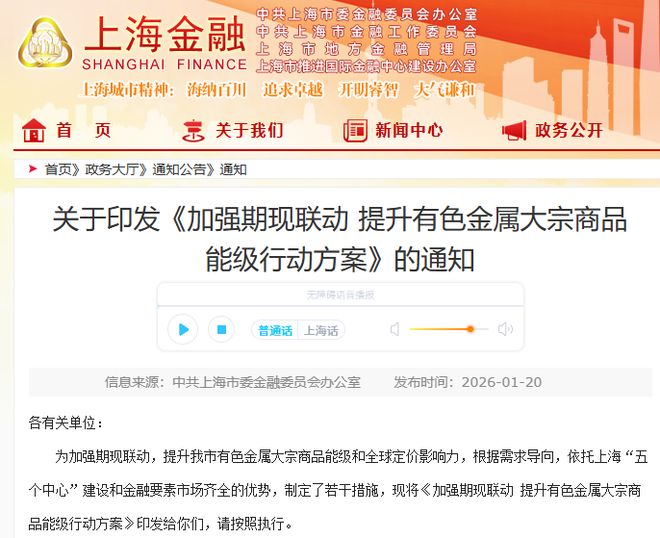
利好来了!上海最新发布
中国基金报· 2026-01-20 13:32
Core Viewpoint - The article discusses the release of 18 measures by Shanghai authorities aimed at enhancing the competitiveness and global pricing influence of non-ferrous metal commodities in the market [2][3]. Group 1: Promoting Market Connectivity and Development - The plan emphasizes the importance of market interconnectivity, promoting the development of futures, spot, and derivatives markets [2]. - It supports local non-ferrous metal trading venues to enhance settlement efficiency and security through a commodity clearing system [7]. - Encouragement is given for various industries, such as automotive and construction, to engage in futures and derivatives markets for better price risk management [7][8]. Group 2: Enhancing Internationalization and Pricing Influence - The initiative aims to elevate the internationalization of the non-ferrous metal commodity market and strengthen the influence of "Shanghai prices" [3]. - It includes expanding the range of non-ferrous metal futures and options available for international trading [4]. - The plan promotes cross-border delivery mechanisms and encourages foreign enterprises to participate in the Shanghai market [4][9]. Group 3: Cultivating a Robust Market Ecosystem - The strategy focuses on fostering competitive trading entities and enhancing collaboration across the supply chain [5]. - It explores the establishment of a market-making system for non-ferrous metal derivatives and encourages the use of blockchain technology for data sharing [6][10]. - The initiative also aims to strengthen the registration and legal effectiveness of warehouse receipts for non-ferrous metals [9][10].

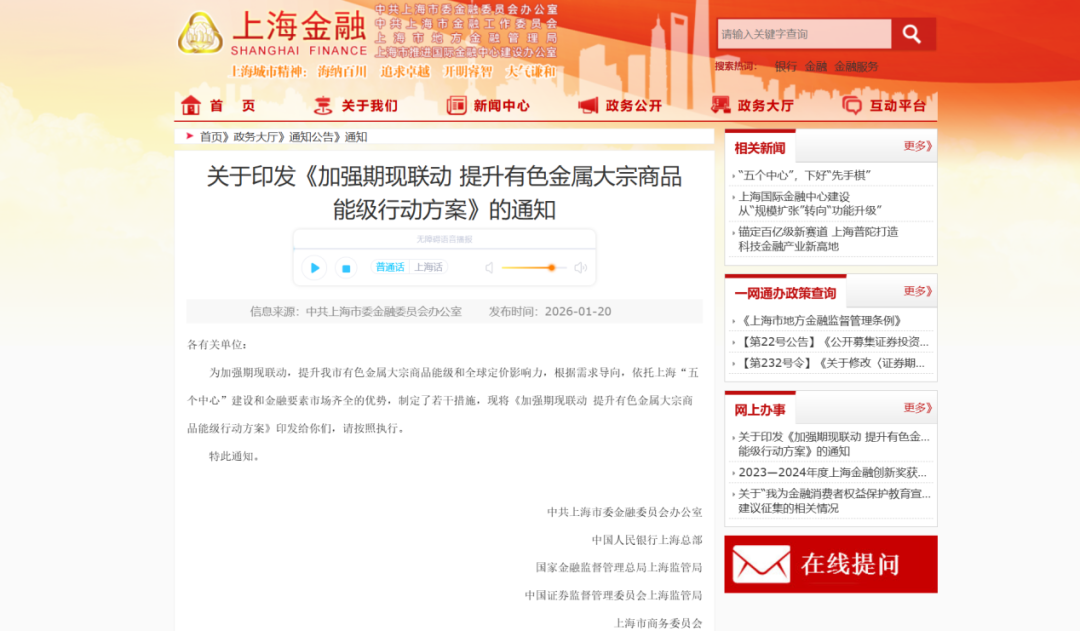
利好来了!上海最新发布
Zhong Guo Ji Jin Bao· 2026-01-20 13:26
Core Viewpoint - Shanghai has released an action plan consisting of 18 measures aimed at enhancing the competitiveness and global pricing influence of non-ferrous metal commodities [1] Group 1: Promoting Market Connectivity - The plan supports the establishment of communication between Shanghai Clearing House and Shanghai Futures Exchange for risk management and clearing [2][5] - It encourages local non-ferrous metal trading venues to utilize commodity clearing channels for efficient fund settlement [2][5] - The initiative aims to involve various industries, such as automotive and construction, in futures and derivatives markets to better manage price risks [2][5][6] Group 2: Enhancing Internationalization - The action plan seeks to expand the international openness of Shanghai's non-ferrous metal futures market, gradually including eligible products in the list of open varieties [2][6] - It promotes cross-border delivery mechanisms and aims to establish overseas warehouses and cross-border delivery business models [2][6][7] - The plan emphasizes cooperation with foreign regulatory bodies and exchanges to explore cross-border business and product innovations [6][7] Group 3: Cultivating a Robust Market Ecosystem - The initiative focuses on nurturing competitive trading entities and fostering collaboration between commodity enterprises and their supply chain partners [3][7] - It explores the establishment of a market-making system for non-ferrous metal OTC derivatives [3][7] - The plan encourages the application of blockchain technology in the non-ferrous metal sector to enhance data sharing across platforms and institutions [3][7]
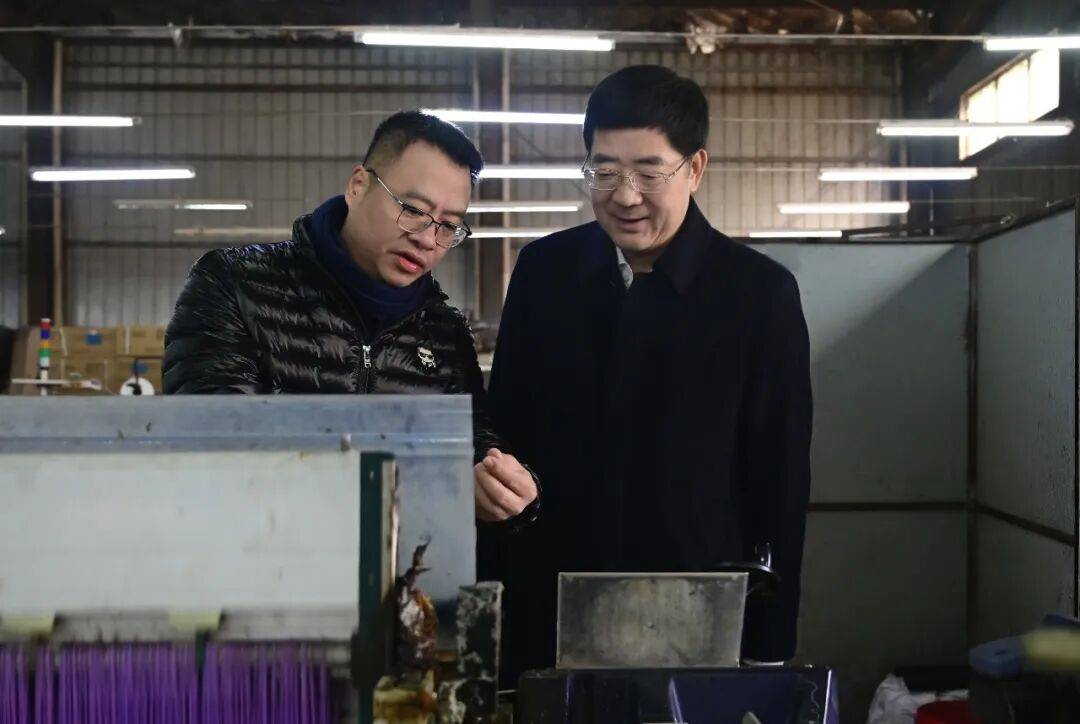
胡剑飞深入临川和抚州高新区走访调研部分企业生产经营情况
Sou Hu Cai Jing· 2026-01-08 21:44
Group 1 - The mayor emphasized the importance of implementing the spirit of the 20th Central Committee and Xi Jinping's visit to Jiangxi, focusing on strengthening service guarantees and cultivating business entities to inject new momentum into the economy [1] - At Jiangxi Fuli Recycling Resources Co., the mayor encouraged increased R&D investment and technological upgrades to enhance the recycling level of waste electrical and electronic products [1] - The mayor highlighted the need for industry chain collaboration and the development of a circular economy to create new growth points [1] Group 2 - At Hengji Group Zhengxin Trading Co., the mayor inquired about production operations and emphasized the importance of intelligent, green, and integrated development [3] - The mayor called for policy guidance to encourage digital transformation and accelerate the upgrade of the non-ferrous metal industry for high-quality development [3] - Safety production responsibilities were stressed, with a focus on improving management processes and enhancing safety awareness among employees [3] Group 3 - At Jiangxi Meikangshengda Biotechnology Co. and Fuzhou Dingsheng Textile Technology Co., the mayor encouraged confidence in development, R&D innovation, and market expansion [3] - The mayor advised related departments to provide support for optimizing logistics and reducing costs for businesses [3] - At Jiangxi Suowei Chain Supply Chain Co., the mayor observed the supply chain processes and urged the company to strengthen supply chain integration and brand building for the food industry [3]
上海普陀打造大宗商品贸易高地
Jing Ji Ri Bao· 2026-01-01 22:13
Group 1 - The core viewpoint is that Putuo District is accelerating the high-quality development of bulk commodity trade, with a significant focus on non-ferrous metals, which accounted for 78.8% of the district's sales revenue in 2025 [1] - The establishment of the Shanghai Metal Exchange in the 1990s marked the beginning of market-oriented trading in China's bulk commodity market, leading to the growth of over 400 non-ferrous metal trading companies in Putuo District, with an annual transaction volume exceeding 760 billion yuan [1] - A new production-oriented internet service platform for non-ferrous metals is set to be established in the second half of 2023, which is expected to boost the district's sales revenue to 1.6 trillion yuan in 2024 [1] Group 2 - The integration of digitalization and intelligence in bulk commodities is being actively pursued in Putuo District, with initiatives like the "Huo Rong Tong" platform utilizing blockchain technology to enhance transaction transparency and security [2] - The district has optimized its business environment to support industrial chain upgrades, implementing policies to foster a production-oriented internet service platform and improve financial services [2] - A specialized team has been established to enhance services for businesses in the district, resulting in the introduction of over 50 registered companies within six months, increasing the occupancy rate of enterprises in the building to 47% [2] Group 3 - Shanghai Guomao Holdings, a key state-owned enterprise in bulk trade, has recently established its presence in Putuo District, aiming to deepen the collaboration between city and district to enhance the non-ferrous metal industry cluster [3] - The total logistics volume in China is projected to reach approximately 380 trillion yuan by 2025, with bulk commodity sales expected to exceed 100 trillion yuan, providing a robust foundation for resisting external risks and driving global trade growth [3] - The trading center is working on building a credible trading system through the "Huo Rong Tong" digital platform and is actively engaging with the Shanghai Futures Exchange to enhance pricing influence [3]
上海普陀打造具有国际影响力的大宗商品贸易高地
Sou Hu Cai Jing· 2025-12-24 08:50
Group 1 - The core viewpoint is that Putuo District is actively building a comprehensive industrial ecosystem for bulk commodity trade, leveraging its historical background and ecological advantages to enhance industry innovation [1][2] - In 2024, the bulk trade scale in Putuo District is projected to reach 1.1 trillion yuan, accounting for 78.4% of the district's regulated sales, with the district's bulk trade representing about one-sixth of Shanghai's total [1] - The district aims to attract 50 supply chain enterprises with revenues in the hundreds of billions by 2030 and establish itself as a global hub for non-ferrous metal resource allocation [2][3] Group 2 - The Shanghai municipal government has issued policies to support Putuo District in creating a unique production-oriented internet service platform focused on non-ferrous metals [2] - Putuo District plans to enhance its supply chain industry system by promoting digital transformation and blockchain technology to create a more trustworthy trading environment [3] - The district's strategy includes fostering collaboration among various entities to achieve resource sharing and complementary advantages, contributing to high-quality industry development [3]
中天科技股价涨5.23%,西部利得基金旗下1只基金重仓,持有47.06万股浮盈赚取45.18万元
Xin Lang Cai Jing· 2025-12-22 02:03
Group 1 - Zhongtian Technology's stock price increased by 5.23% to 19.33 CNY per share, with a trading volume of 8.22 billion CNY and a turnover rate of 1.27%, resulting in a total market capitalization of 659.72 billion CNY [1] - The stock has risen for three consecutive days, with a cumulative increase of 9.09% during this period [1] - Zhongtian Technology, established on February 9, 1996, and listed on October 24, 2002, operates in various sectors including communication, electricity, marine, new energy, and new materials, with its main business revenue composition being: 41.17% from grid construction, 17.44% from copper products, 16.84% from optical communication and networks, 14.57% from new energy, 7.58% from marine series, and 1.39% from other sources [1] Group 2 - The Western Lide Xiangyun Mixed A Fund (673081) has increased its holdings in Zhongtian Technology by 289,400 shares, bringing the total to 470,600 shares, which represents 1.31% of the fund's net value, making it the sixth-largest holding [2] - The fund has generated an estimated floating profit of approximately 451,800 CNY today and 720,000 CNY during the three-day increase [2] - The Western Lide Xiangyun Mixed A Fund was established on December 5, 2016, with a current scale of 278 million CNY, achieving a year-to-date return of 22.19% and a one-year return of 22.27% [2]
