民用电工

Search documents
研报掘金丨申万宏源研究:公牛集团估值具备性价比,维持“买入”评级
Ge Long Hui A P P· 2026-02-25 06:29
Group 1 - The core viewpoint of the article highlights that Bull Group is a benchmark enterprise in the civil electrical field, with a strong competitive moat in traditional core categories and benefits from channel reform [1] - The company's product, channel, and supply chain competitiveness continue to strengthen, leading to expected stable growth in its traditional main business [1] - The company is accelerating its overseas expansion to open new growth points, with rapid growth in smart lighting and new energy businesses [1] Group 2 - Due to lower-than-expected real estate and consumer sentiment, the company has adjusted its forecast for net profit attributable to shareholders for 2025-2026 to 3.955 billion and 4.224 billion yuan, down from previous estimates of 4.991 billion and 5.818 billion yuan [1] - The newly added forecast for 2027 net profit attributable to shareholders is 4.620 billion yuan, with year-on-year growth rates for 2025-2027 expected to be -7.4%, +6.8%, and +9.4% respectively [1] - The current market capitalization corresponds to price-to-earnings ratios of 20, 19, and 17 times for 2025, 2026, and 2027, respectively, indicating that the company's valuation is attractive compared to peers [1]

公牛集团(603195):主业有望稳健修复+国际化加速,重视底部布局价值:公牛集团(603195):
Shenwan Hongyuan Securities· 2026-02-24 12:22
Investment Rating - The report maintains a "Buy" rating for the company, indicating a favorable outlook based on its competitive advantages and market positioning [3][9]. Core Insights - The company's traditional core business is expected to recover steadily, with international expansion accelerating. The focus on product, channel, and supply chain competitiveness is emphasized as a key driver for growth [5][9]. - The company is positioned as a benchmark in the civil electrical field, with a deep moat in its traditional core categories. The report highlights the potential for steady growth in its main business areas, alongside rapid growth in new sectors such as smart lighting and renewable energy [9]. Financial Data and Profit Forecast - Projected total revenue for 2024 is 16,831 million yuan, with a year-on-year growth rate of 7.2%. However, a decline in revenue is expected in 2025, with a forecast of 16,305 million yuan, reflecting a -3.1% change [4]. - The net profit attributable to the parent company is forecasted to be 4,272 million yuan in 2024, with a decline to 3,955 million yuan in 2025, followed by a recovery to 4,224 million yuan in 2026 and 4,620 million yuan in 2027 [4][9]. - The report anticipates a gross margin of 42.1% for 2025, with the company employing price increases and hedging strategies to stabilize profitability amid rising raw material costs [9]. Market Position and Competitive Advantage - The company is actively expanding its international business, particularly in Southeast Asia and Europe, with a focus on home decoration products and renewable energy solutions. The report notes that the company's overseas sales reached 142 million yuan in the first half of 2025 [5][9]. - The smart lighting segment is highlighted as a growth area, with the company leveraging AI and health-oriented lighting solutions to establish a competitive edge [5][6].
公牛集团(603195):主业有望稳健修复+国际化加速,重视底部布局价值
Shenwan Hongyuan Securities· 2026-02-24 10:44
Investment Rating - The report maintains a "Buy" rating for the company, indicating a strong performance relative to the market [6]. Core Insights - The company's traditional core business is expected to recover steadily, with international expansion accelerating. The report emphasizes the importance of bottom-line value [4]. - The company is positioned as a benchmark in the civil electrical industry, with a deep competitive moat in its traditional core categories. The report highlights the release of channel reform dividends and the ongoing enhancement of product, channel, and supply chain competitiveness [10]. - The company is expected to face pressure on traditional business sales due to macroeconomic factors, but the outlook for 2026 is optimistic with a potential recovery in real estate and consumer sentiment [10]. Financial Data and Profit Forecast - Total revenue projections for the company are as follows: - 2024: 16,831 million - 2025E: 16,305 million - 2026E: 17,535 million - 2027E: 18,614 million - The expected growth rates are 7.2% for 2024, -3.1% for 2025, 7.5% for 2026, and 6.2% for 2027 [5]. - Net profit forecasts are: - 2025E: 3,955 million - 2026E: 4,224 million - 2027E: 4,620 million - The projected PE ratios are 20 for 2025, 19 for 2026, and 17 for 2027, indicating a favorable valuation compared to peers [10]. Business Segments - Traditional Business: The company’s core products, such as electrical connections and wall switches, are expected to see steady growth, supported by product innovation and channel enhancements [6]. - International Expansion: The company is actively expanding into Southeast Asia and Europe, with a focus on home decoration products and energy storage solutions. The overseas sales revenue for the first half of 2025 was 142 million [6]. - Smart Lighting: The company is developing a competitive edge in smart lighting through AI and health-oriented products, enhancing its market position [6]. - New Energy: The new energy segment is expected to grow rapidly, with a revenue increase of 33.52% year-on-year in the first half of 2025 [7].
公牛集团起诉家的电器索赔420万遭反诉 年投7.55亿营销曾因垄断被罚2.95亿
Chang Jiang Shang Bao· 2026-01-26 00:50
Core Viewpoint - The ongoing legal dispute between Bull Group and Jia's Electric revolves around the advertising slogan "7 out of 10 Chinese families use Bull," which is claimed to be misleading and has led to accusations of false advertising and unfair competition [1][5][6]. Group 1: Legal Dispute - Jia's Electric has raised jurisdictional objections to Bull Group's lawsuit and has countered with claims of false advertising and unfair competition [1][5]. - Bull Group has accused Jia's Electric of damaging its reputation through misleading comparisons and has demanded the removal of the videos and an apology [5][6]. - The legal battle is seen as a clash of values between misleading advertising and a commitment to fair competition and consumer rights [6]. Group 2: Financial Performance - Bull Group's financial performance has been under pressure, with a notable decline in revenue and net profit in the second and third quarters of 2025, marking a rare double decline [3][11]. - For the first three quarters of 2025, Bull Group reported revenues of 12.198 billion and a net profit of 2.979 billion, representing year-on-year declines of 3.22% and 8.72% respectively [11]. - The company's marketing expenses for 2024 totaled 755 million, contributing to a total sales expense of 1.369 billion [2][11]. Group 3: Market Position and Stock Performance - Since January 13, 2021, Bull Group's stock price has dropped by over 50%, reflecting a significant decline in market valuation [4][11]. - The company's market capitalization has decreased from a peak of 153.594 billion to 76.55 billion by January 23, 2026, less than half of its highest value [11]. - Bull Group has faced previous legal challenges, including a 2.95 billion fine for monopolistic practices in 2021, highlighting ongoing regulatory scrutiny [9][10].
因“10户中国家庭,7户用公牛”广告语对簿公堂,公牛索赔420万元
Xin Lang Cai Jing· 2026-01-23 12:57
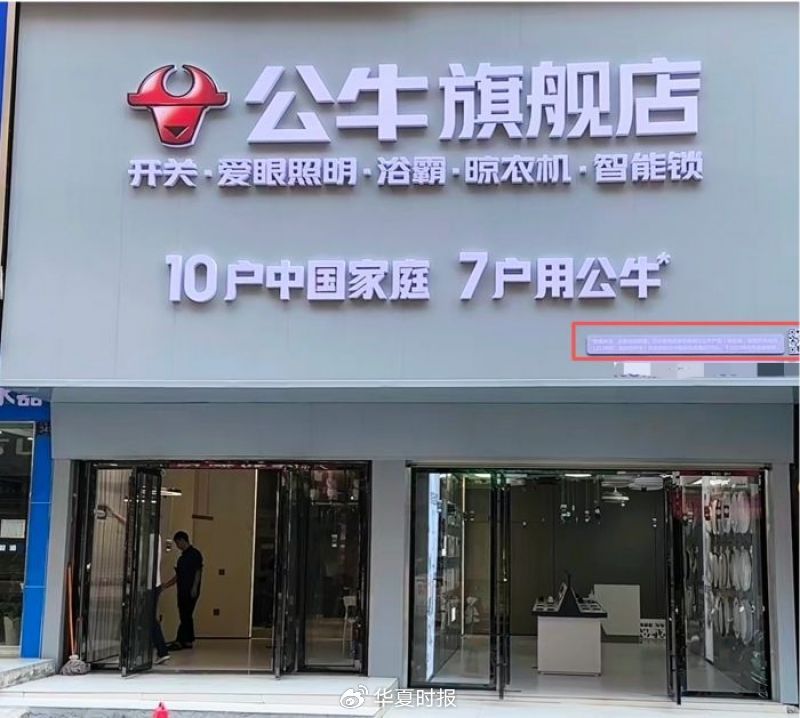
Core Viewpoint - The controversy surrounding the advertisement slogan "7 out of 10 Chinese households use Bull" highlights the tension between marketing innovation and legal boundaries, prompting companies to reassess their communication strategies and compliance with advertising laws [2][3]. Group 1: Background of the Dispute - The dispute began when the company "Home Appliance" raised public concerns about Bull Group's advertisement slogan in August 2025, leading to a series of legal exchanges and escalating into a lawsuit by December 2025 [3][6]. - Bull Group, headquartered in Ningbo, Zhejiang, holds a dominant position in the residential electrical appliance sector, particularly in the socket market, with the controversial slogan widely used across various advertising materials [3][13]. - The slogan's compliance with advertising laws has been questioned, as it was previously deemed misleading by the Hubei market supervision bureau, which imposed a fine of 100,000 yuan on Bull Group in 2023 [4][15]. Group 2: Legal Proceedings and Arguments - The legal battle intensified when Home Appliance published over 200 videos criticizing the "big font, small print" advertising strategy, which they argue misleads consumers [6][16]. - Bull Group filed a lawsuit on December 5, 2025, seeking 4.2 million yuan in damages for commercial defamation and unfair competition, while Home Appliance countered with its own lawsuit on December 16, 2025, alleging false advertising [7][17]. - Home Appliance's legal representatives argue that the slogan implies market leadership and violates advertising laws by using absolute terms, while also questioning the validity of the survey data used to support the claim [8][18]. Group 3: Market Impact and Industry Implications - The ongoing legal dispute reflects the competitive tension between leading and mid-sized players in the market, with potential implications for advertising practices across the industry [3][9]. - If Bull Group is found to have violated advertising regulations, it may face significant costs related to rebranding and rectifying its advertising materials, while a loss for Home Appliance could severely impact its financial stability [9][19]. - The outcome of this case may set a precedent for future advertising standards and practices within the industry, highlighting the need for clearer regulations regarding marketing claims [9][19].

因“10户中国家庭,7户用公牛”广告语对簿公堂,公牛索赔420万元,家的电器诉其涉虚假宣传
Hua Xia Shi Bao· 2026-01-23 09:57
Core Viewpoint - The controversy surrounding the advertisement slogan "7 out of 10 Chinese families use Bull" highlights the tension between marketing innovation and legal boundaries, prompting companies to reassess their communication strategies and compliance with advertising laws [2][4]. Group 1: Background of the Dispute - The dispute began with the advertisement slogan "7 out of 10 Chinese families use Bull," which escalated from social media criticism to a legal battle involving commercial defamation [2][3]. - Bull Group, a leading player in the household electrical sector, has a significant market share in the socket market, while the competitor, Home Appliance, faces brand pressure from Bull [4][5]. - The slogan has been widely used in various advertising materials and has raised questions about compliance with advertising regulations, particularly regarding the "big font, small print" marketing tactic [4][5]. Group 2: Legal Proceedings and Claims - Home Appliance initiated a public campaign against Bull's advertisement, claiming it misrepresents market conditions and violates advertising laws [6][7]. - In November 2025, Bull Group filed a lawsuit against Home Appliance for commercial defamation, seeking 4.2 million yuan in damages [8][9]. - Home Appliance countered with its own lawsuit, alleging that Bull's advertisement constitutes false advertising and unfair competition, which was accepted by the court [9]. Group 3: Market Impact and Consumer Behavior - Despite the presence of other brands, Bull maintains a strong market presence, with consumers expressing loyalty due to the brand's reliability [5][6]. - The ongoing legal battle may have significant implications for both companies, affecting Bull's advertising strategy and Home Appliance's financial stability if they lose the case [10].
公牛集团:12月29日召开董事会会议
Mei Ri Jing Ji Xin Wen· 2025-12-29 08:06
Group 1 - The core viewpoint of the article highlights that Bull Group (SH 603195) held its 14th meeting of the third board of directors on December 29, 2025, via teleconference, where it reviewed the "Public Opinion Management System" and other documents [1] - For the year 2024, Bull Group's revenue composition is reported to be 99.77% from consumer electrical products and 0.23% from other businesses [1] - As of the time of reporting, Bull Group's market capitalization stands at 74.3 billion yuan [1] Group 2 - The article also mentions a significant event involving Moutai distributors, where over 2,000 attendees gathered for a conference that announced major changes related to Moutai's pricing and distribution strategies [1] - Chairman Chen Hua emphasized that distributors can no longer rely on passive income [1]
“10户家庭7户用公牛”,大小字广告引争议,是真牛还是吹牛
Mei Ri Jing Ji Xin Wen· 2025-12-18 11:33
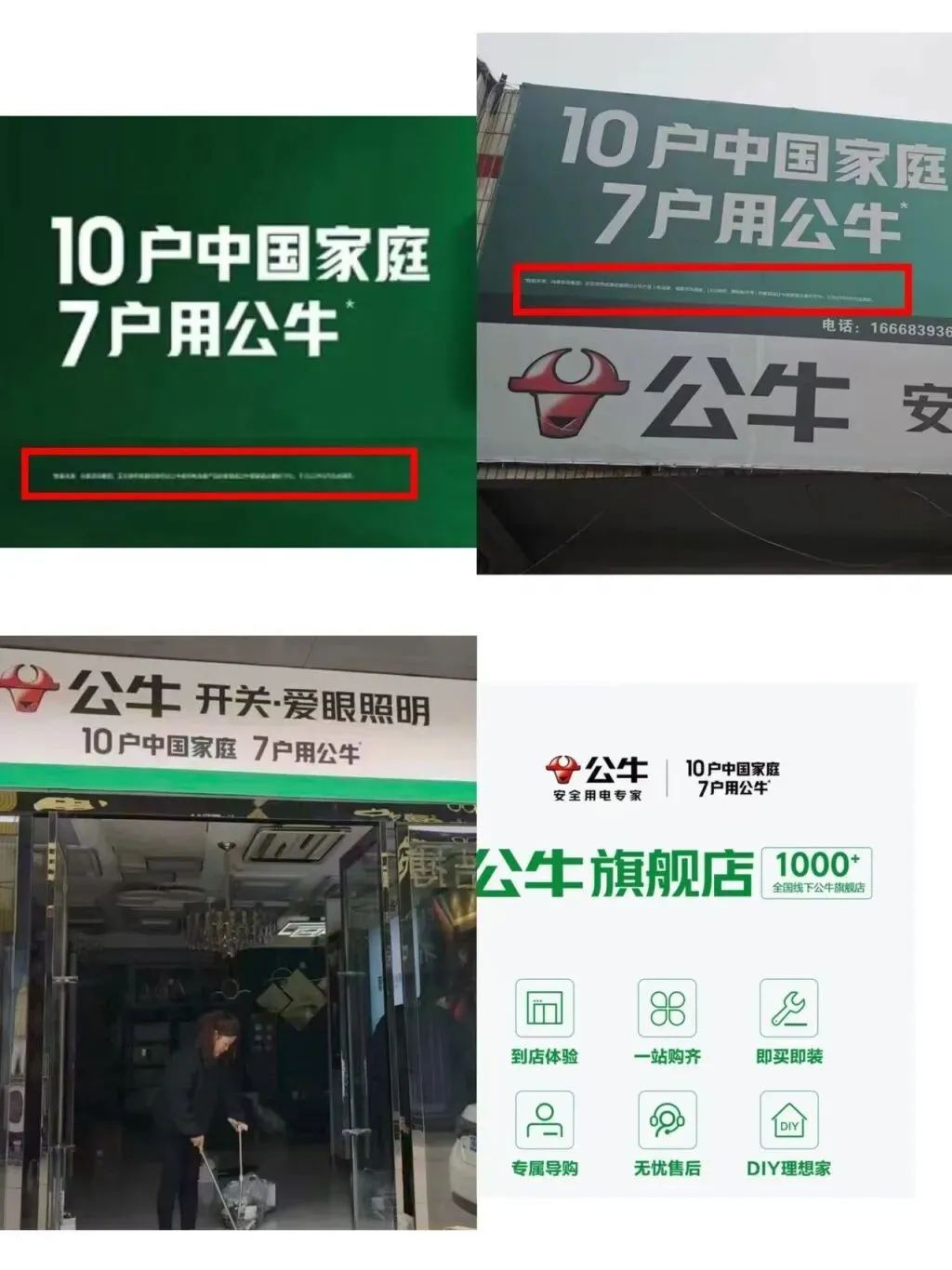
Core Viewpoint - The advertising slogan "7 out of 10 Chinese households use Bull" by Bull Group has sparked controversy, leading to a lawsuit from a competitor, Jia's Company, which claims the slogan is misleading [1][4]. Group 1: Advertising Controversy - Jia's Company questions the slogan's validity, suggesting it misleads consumers by implying current usage rather than past usage [5]. - Bull Group counters with a lawsuit, claiming commercial defamation and seeking 4.2 million yuan in damages [1]. Group 2: Logical Issues in Advertising - The first issue is the contradiction in tense; "use" implies current usage, while the fine print suggests it includes past users, creating confusion [5]. - The second issue involves the aggregation of historical data, which does not accurately reflect current market share or competitiveness [6]. - The third issue is the ambiguity in product categories; the slogan implies high usage across all product lines, despite varying performance in different segments [6]. - The fourth issue concerns the reliability of third-party data, which may not be comprehensive or accurately represent the market due to sampling errors [6]. Group 3: Market Implications - The slogan's straightforward nature builds consumer trust but reflects the company's anxiety over market share, indicating a deep-seated belief that market share equates to competitive strength [7]. - In a market dominated by existing users, Bull Group should focus on retaining current customers through product quality rather than relying on potentially misleading advertising [7].
公牛集团索赔420万
盐财经· 2025-12-18 09:59
Core Viewpoint - The article discusses the controversy surrounding Bull Group's advertising claim that "7 out of 10 Chinese households use Bull products," which has been criticized as misleading due to the lack of clarity on the data's applicability and source [2][4][8]. Group 1: Company Background and Financials - Bull Group, founded in 1995 and listed in 2020, specializes in the research, production, and sales of consumer electrical products, including electrical connections and smart lighting [10]. - For the first three quarters of 2025, Bull Group reported a revenue of 12.198 billion yuan, a year-on-year decrease of 3.22%, and a net profit attributable to shareholders of 2.979 billion yuan, down 8.72% [10]. - The company's main revenue sources are the electrical connection and smart lighting businesses, which contribute over 90% of its total revenue [10]. Group 2: Legal Dispute - Bull Group has filed a lawsuit against a competitor, claiming 4.2 million yuan in damages due to misleading advertising practices that harm its reputation [5][9]. - The competitor's representatives have publicly criticized Bull Group's advertising as "big words to attract attention, small words to disclaim responsibility," suggesting it misleads consumers about market share [6][7]. - The competitor argues that their product comparisons are based on actual testing data and aim to provide consumers with comprehensive product information [8]. Group 3: Industry Context and Regulatory Response - The phenomenon of "big words attracting attention, small words disclaiming responsibility" has raised concerns in the industry, prompting calls for stricter regulations to protect consumer rights and ensure truthful advertising [14][18]. - The State Administration for Market Regulation has initiated a public consultation on guidelines to regulate advertising claims, particularly regarding absolute terms like "number one" or "first" in market share [16][18].

“10户中国家庭,7户用公牛”遭同行吐槽:“大字吹牛,小字免责”!公牛集团:广告语没毛病,诋毁我们,起诉索赔420万元
新浪财经· 2025-12-18 09:42
Core Viewpoint - The article discusses the controversy surrounding the advertising slogan "7 out of 10 Chinese households use Bull" by Bull Group, highlighting concerns about misleading advertising practices and the ongoing legal dispute with a competitor [1][10][11]. Group 1: Advertising Controversy - Bull Group's slogan claims that 70% of Chinese households are using or have used its products, but the data source and context are sometimes not clearly stated, leading to accusations of misleading advertising [1][5][10]. - A competitor, Zhongshan Jia's Electric Co., criticized this slogan as "big words to attract attention, small words to disclaim responsibility," suggesting it misleads consumers into thinking Bull Group has a 70% market share [7][10][11]. - Bull Group has filed a lawsuit against Jia's Electric, seeking 4.2 million yuan in damages for alleged defamation and damage to its reputation [8][14]. Group 2: Market and Financial Performance - Bull Group, established in 1995 and listed in 2020, specializes in the research, production, and sales of consumer electrical products, including electrical connections and smart lighting [14]. - For the first three quarters of 2025, Bull Group reported a revenue of 12.198 billion yuan, a year-on-year decrease of 3.22%, and a net profit of 2.979 billion yuan, down 8.72% [14]. - The company's main revenue sources are its electrical connection and smart lighting businesses, which together contribute over 90% of its total revenue [14]. Group 3: Regulatory Environment - The article highlights a broader issue of misleading advertising practices in the industry, with the State Administration for Market Regulation calling for stricter regulations on advertising content to protect consumer rights [16][20]. - The agency has noted that misleading advertising practices, such as "big words to attract attention, small words to disclaim responsibility," disrupt market order and harm consumer interests [20].