
照明设备

Search documents
降门槛、扩范围 新一轮设备更新已陆续启动
Yang Shi Xin Wen· 2026-02-22 02:03
Core Viewpoint - China continues to promote large-scale equipment upgrades this year, accelerating the implementation of projects across multiple sectors to stimulate holiday consumption and support social welfare [1] Group 1: Equipment Upgrades - This year marks the first inclusion of offline commercial facility equipment upgrades in the equipment renewal policy [1] - During the Spring Festival holiday, several commercial complexes in Shanghai, Zhejiang, and Sichuan showcased their upgraded facilities to consumers for the first time [1] - Upgrades include replacing aging electronic screens with new LED screens, renovating restrooms and elevators for accessibility, and refreshing ventilation, lighting, and power distribution systems [1] Group 2: Future Plans and Support - A new round of equipment upgrades is set to launch in 2026 across 31 provinces (regions, municipalities) and the Xinjiang Production and Construction Corps, covering approximately 20 sectors including industry, electronic information, and energy conservation [1] - The policy aims to optimize application conditions and review processes, further lowering the investment threshold for equipment upgrade projects [1] - There will be increased support for small and medium-sized enterprises in equipment upgrades, expanding the reach of the policy benefits [1]
三雄极光股价震荡微跌,资金面散户主导
Jing Ji Guan Cha Wang· 2026-02-11 05:33
Group 1 - The stock price of Sanxiong Aurora (300625) has shown a fluctuating trend over the past 7 trading days, closing at 13.08 yuan on February 10, which is a slight decrease of 0.23% compared to the closing price on February 4, with a price range fluctuation of 2.46% [1] - The total trading volume over the past 7 days is approximately 165 million yuan, with an average turnover rate of about 1.59%, indicating moderate trading activity [1] - On February 10, there was a net inflow of 2.31 million yuan from institutional investors, but overall, retail investors dominated the funding flow in the past week [1] Group 2 - Technically, the stock price is near the middle band of the Bollinger Bands, with short-term moving averages showing a convergence state, and the MACD indicator is weak, reflecting a strong market wait-and-see sentiment [2] - During the same period, the lighting equipment sector increased by 1.16%, while the company's stock performance was slightly weaker than the industry average [2]

重庆合川:上千网友帮女孩杀年猪,供电员工现场值守保电
中国能源报· 2026-01-13 09:32
Group 1 - The article highlights the successful organization of a traditional "Pig Soup" banquet in Chongqing's Hechuan District, which attracted over a thousand participants and garnered more than 100,000 online viewers during a live broadcast [2] - The State Grid Chongqing Hechuan Power Supply Company actively ensured power supply reliability by conducting inspections and emergency services to support the event, emphasizing the importance of stable electricity for local customs [2][4] - The company utilized drones for comprehensive inspections of the 10 kV Gaozhen Line and employed infrared thermometers to monitor key equipment, ensuring the operational status of transformers and other critical devices [4] Group 2 - In addition to equipment inspections, the company allocated a 50 kW emergency generator and two lighting devices to the event site, providing dual power supply guarantees to ensure uninterrupted electricity [6] - The combination of reliable power supply and thoughtful services contributed to a joyful atmosphere at the event, showcasing the interaction between public services and community life [8] - The successful execution of the event not only fostered neighborly warmth but also reinforced the significance of traditional customs in a safe and reliable electrical environment [8]


国金策略:单一产业叙事能够带来的收益已经越来越不稳定和难以把握 抓住行情的窄幅波动期布局2026年新主线
Sou Hu Cai Jing· 2025-12-21 12:44
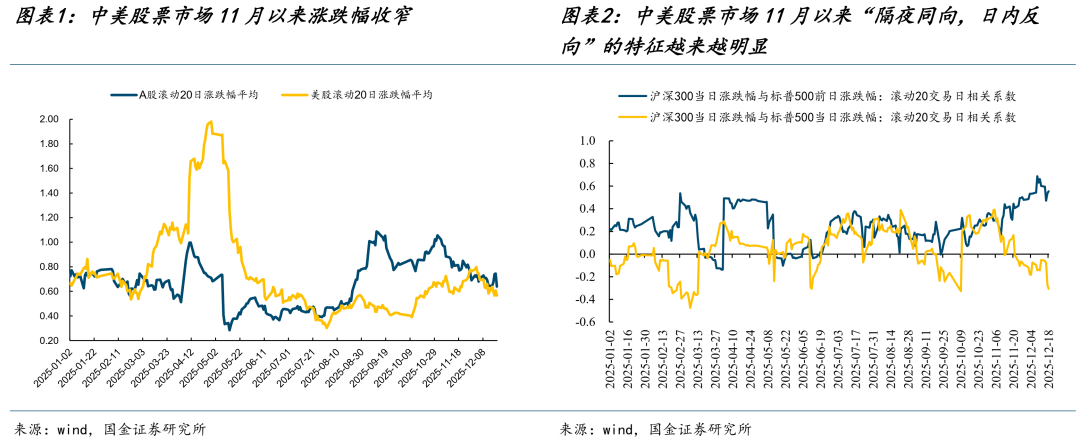
Group 1 - The market status indicates an increased correlation between the US and Chinese markets, with the 20-day rolling correlation of the CSI 300 and S&P 500 rising above the 90th percentile, reflecting a new normal of "overnight alignment and intraday reversal" [2][10][13] - The US core CPI has decreased to 2.6%, the lowest in three and a half years, while the unemployment rate has risen to 4.6%, primarily due to increased labor participation and temporary unemployment, indicating a stable economic environment without significant inflationary pressures [2][10][13] - China's economic fundamentals show a combination of corporate profit bottoming out and a decline in domestic demand, which opens a window for further policy support [2][10][13] Group 2 - The AI industry chain is experiencing a divergence, with broader AI-related assets (copper, lithium, aluminum, energy storage, and electrical equipment) performing better than core AI assets (computing chips, optical modules, PCB) [3][24][25] - Investors are becoming less tolerant of the contradiction between aggressive capital expenditures and the lack of revenue growth in companies within the AI industry chain, leading to a negative correlation between stock performance and capital expenditure as a percentage of revenue [3][24][25] - Commodity prices for copper, aluminum, tin, and lithium carbonate have been rising since late October, driven by demand from AI investments, with near-term contracts for copper and tin outperforming longer-term contracts [3][24][25] Group 3 - The concept of "expanding domestic demand" is emphasized as a strategic move, with a focus on increasing consumer demand supported by income growth and effective investment [4][31][32] - The government plans to enhance the second distribution of income by increasing minimum pension standards and implementing childcare subsidies, while future efforts may focus on optimizing the first distribution through wage reforms [4][31][32] - Historical examples from Japan and the US illustrate that income growth leads to increased service and new-type consumption, suggesting that China's current income growth initiatives could similarly boost consumer spending [4][31][32] Group 4 - The current market environment, characterized by limited macro elasticity and increased industry differentiation, suggests a shift in investment strategy towards tangible demand and domestic policy benefits as the new focus for 2026 [5][42][43] - Recommendations include investing in industrial resource products (copper, aluminum, tin, lithium, crude oil) that benefit from AI investment and global manufacturing recovery, as well as sectors poised for recovery in consumer spending (airlines, hotels, duty-free, food and beverages) [5][42][43] - Non-bank financial institutions (insurance, brokerage) are expected to benefit from capital market expansion and a rebound in long-term asset returns, alongside opportunities in China's equipment export chain and manufacturing sectors [5][42][43]
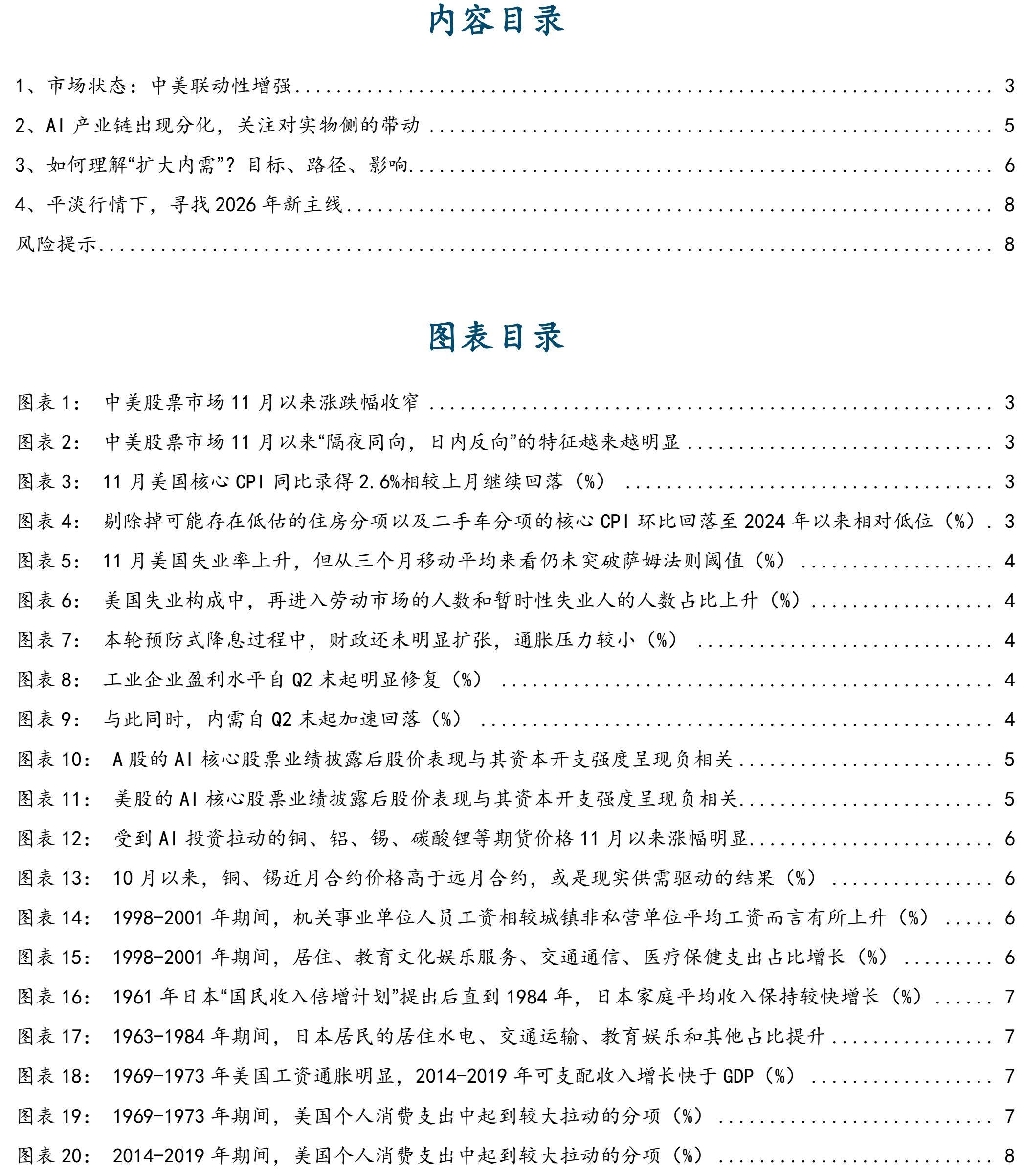
国金证券:迎接2026:告别单一叙事
Xuan Gu Bao· 2025-12-21 10:21
Group 1: Market Status - The correlation between A-shares and U.S. stocks has increased, with the 20-day rolling correlation of the CSI 300 and S&P 500 rising above the 90th percentile for the year, indicating a new normal of "overnight alignment, intraday reversal" [1][5][38] - Both the U.S. and China are in a phase characterized by limited upward elasticity and reduced downward risk, akin to a "Goldilocks" scenario, with the U.S. core CPI dropping to 2.6%, the lowest in three and a half years [1][8][9] - In China, corporate profitability has bottomed out, and the weakening of domestic demand creates a favorable environment for subsequent policy support [1][8] Group 2: AI Industry Chain - The investment in the AI industry chain is showing two key characteristics: broader macro effects benefiting "pan-AI" assets (copper, lithium, aluminum, energy storage, and electrical equipment) outperforming core AI assets (computing chips, optical modules, PCB) [2][17] - Investors are becoming less tolerant of the contradiction between aggressive capital expenditures and the lack of revenue growth in companies within the AI industry chain, leading to a negative correlation between stock performance and capital expenditure as a percentage of revenue [2][17][18] Group 3: Understanding "Expanding Domestic Demand" - The "income increase" plan aims to enhance net transfer payments to residents by 2025, with a focus on improving initial distribution through wage reforms, particularly in state-owned enterprises [3][25] - The expansion of consumption tax and adjustments in corporate income tax rates are expected to be seen in 2026, which may further stimulate domestic consumption [3][25][28] Group 4: Investment Strategy for 2026 - The current market conditions suggest a shift from a single industry narrative to a dual focus on "physical demand stimulation" and "domestic policy benefits," with recommendations to invest in industrial resource products (copper, aluminum, lithium, oil) and sectors benefiting from consumer recovery (airlines, hotels, food and beverages) [4][38] - Non-bank financial institutions (insurance, brokerage) are expected to benefit from capital market expansion and a bottoming out of long-term asset returns [4][38] - Opportunities are identified in China's equipment export chain and sectors showing signs of recovery in domestic manufacturing [4][38]

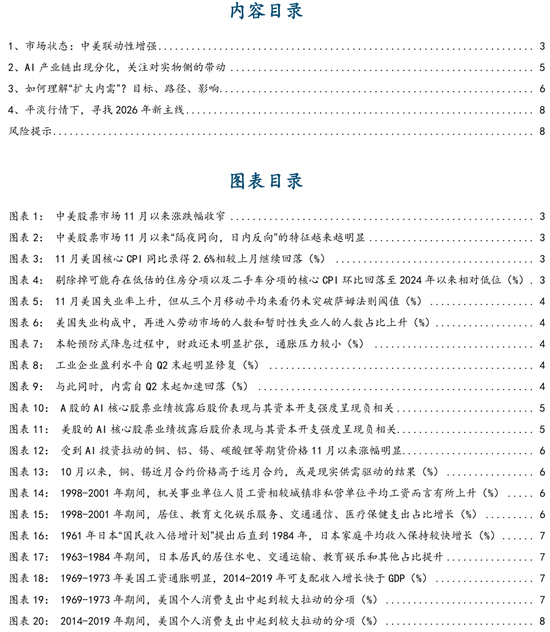
国金证券:迎接2026,告别单一叙事
Xin Lang Cai Jing· 2025-12-21 09:36
Group 1: Market Status - The correlation between A-shares and U.S. stocks has increased, with the 20-day rolling correlation of the CSI 300 and S&P 500 rising to over 90% since November, indicating a new norm of "overnight same direction, intraday reverse" [2][11][45] - Both the U.S. and Chinese economies are in a phase of "limited upward elasticity and reduced downward risk," with the U.S. core CPI falling to 2.6%, the lowest in three and a half years, and the unemployment rate rising to 4.6% primarily due to increased labor participation and temporary unemployment [2][13][47] - The Chinese economy shows signs of a bottom in corporate profits, while domestic demand is weakening, creating a favorable environment for subsequent policy support [2][13][47] Group 2: AI Industry Chain - The investment in the AI industry chain is showing two notable characteristics: first, "pan-AI" assets (copper, lithium, aluminum, energy storage, and electrical equipment) are performing better than core AI assets (computing chips, optical modules, PCB) [2][18][52] - Investors are becoming less tolerant of the contradiction between aggressive capital expenditures and the lack of revenue growth in companies within the AI industry chain, as evidenced by the negative correlation between stock performance and capital expenditure as a percentage of revenue [2][18][52] - Commodity prices for copper, aluminum, tin, and lithium carbonate have been rising since late October, driven by supply-demand dynamics, with near-term contracts for copper and tin outperforming longer-term contracts [2][19][53] Group 3: Understanding "Expanding Domestic Demand" - The articles published in "Qiushi" magazine emphasize the importance of consumer demand as a primary focus for expanding domestic demand, highlighting the need for a complete domestic demand system [3][24][58] - The strategy includes enhancing secondary distribution to increase residents' net transfer income and optimizing primary distribution to improve labor income, with potential reforms in state-owned enterprises to guide wage adjustments [3][25][58] - Historical examples from Japan and the U.S. show that periods of rising resident income lead to increased service and new-type consumption, indicating that the current "income increase plan" may boost demand for service consumption and technology-driven durable goods [3][27][58] Group 4: Preparing for 2026 - The current market conditions, characterized by limited macro elasticity and increased industry differentiation, suggest a shift in investment strategy towards "physical demand-driven" and "domestic demand policy dividends" as more certain avenues for growth [2][39][40] - Recommendations include focusing on industrial resource products (copper, aluminum, tin, lithium, crude oil, and oil transportation) that benefit from AI investment and global manufacturing recovery, as well as sectors like aviation, hotels, duty-free, and food and beverage that will benefit from increased consumer spending [2][32][39] - The non-bank financial sector (insurance, brokerage) is expected to benefit from capital market expansion and a bottoming out of long-term asset returns, alongside opportunities in China's equipment export chain and domestic manufacturing sectors [2][32][39]
公牛集团索赔420万
盐财经· 2025-12-18 09:59
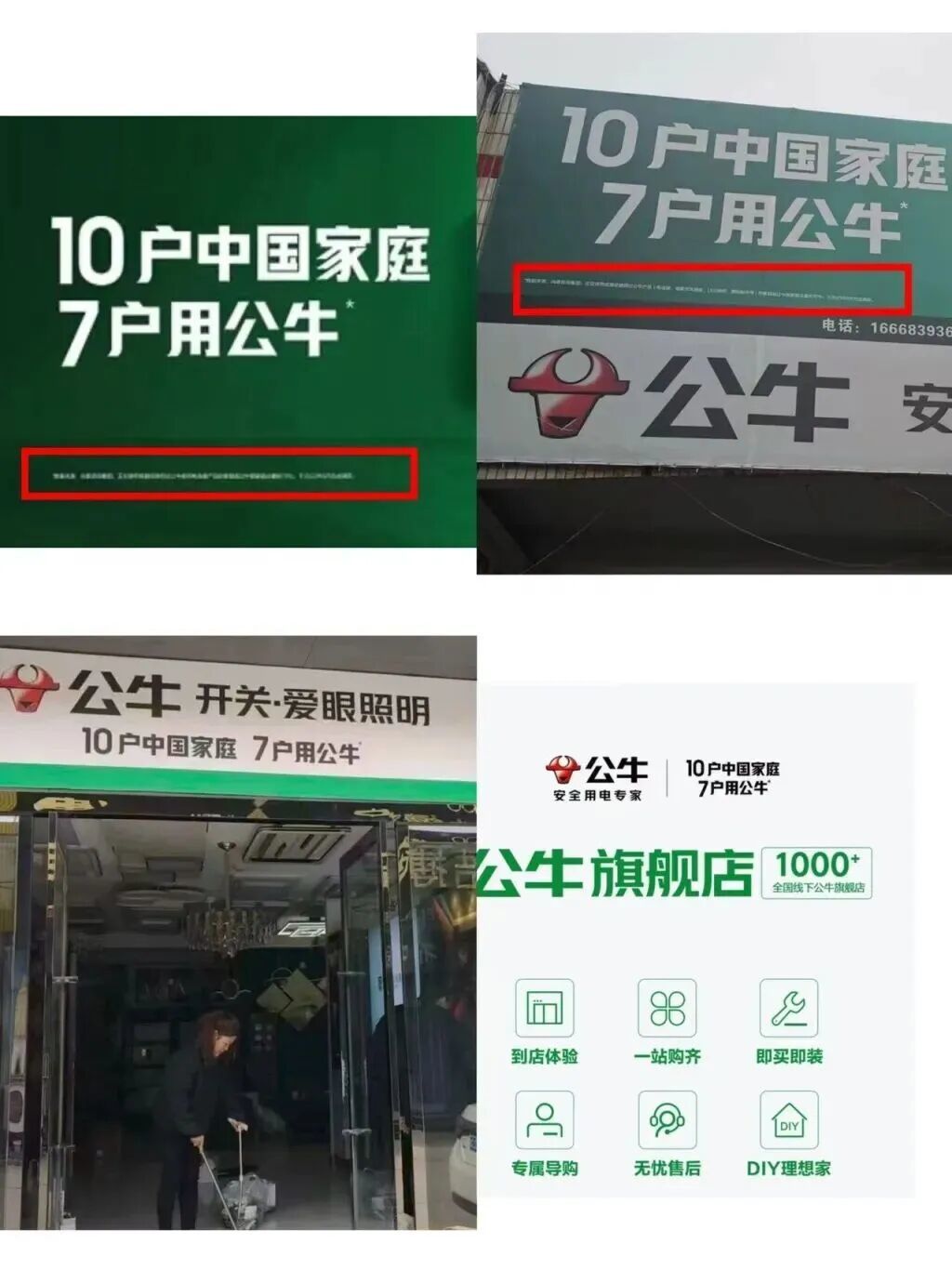
Core Viewpoint - The article discusses the controversy surrounding Bull Group's advertising claim that "7 out of 10 Chinese households use Bull products," which has been criticized as misleading due to the lack of clarity on the data's applicability and source [2][4][8]. Group 1: Company Background and Financials - Bull Group, founded in 1995 and listed in 2020, specializes in the research, production, and sales of consumer electrical products, including electrical connections and smart lighting [10]. - For the first three quarters of 2025, Bull Group reported a revenue of 12.198 billion yuan, a year-on-year decrease of 3.22%, and a net profit attributable to shareholders of 2.979 billion yuan, down 8.72% [10]. - The company's main revenue sources are the electrical connection and smart lighting businesses, which contribute over 90% of its total revenue [10]. Group 2: Legal Dispute - Bull Group has filed a lawsuit against a competitor, claiming 4.2 million yuan in damages due to misleading advertising practices that harm its reputation [5][9]. - The competitor's representatives have publicly criticized Bull Group's advertising as "big words to attract attention, small words to disclaim responsibility," suggesting it misleads consumers about market share [6][7]. - The competitor argues that their product comparisons are based on actual testing data and aim to provide consumers with comprehensive product information [8]. Group 3: Industry Context and Regulatory Response - The phenomenon of "big words attracting attention, small words disclaiming responsibility" has raised concerns in the industry, prompting calls for stricter regulations to protect consumer rights and ensure truthful advertising [14][18]. - The State Administration for Market Regulation has initiated a public consultation on guidelines to regulate advertising claims, particularly regarding absolute terms like "number one" or "first" in market share [16][18].


宣传语遭同行吐槽,公牛集团:广告语没毛病,诋毁我们,起诉索赔420万元
Mei Ri Jing Ji Xin Wen· 2025-12-17 14:24
Core Viewpoint - The controversy surrounding Bull Group's advertising slogan "7 out of 10 Chinese households use Bull" has raised concerns about misleading advertising practices, leading to legal action against a competitor for defamation [1][6][10]. Group 1: Advertising Controversy - Bull Group's slogan is supported by data from a market research firm, indicating that over 70% of Chinese households are currently using or have used Bull products, based on surveys conducted from January 2021 to December 2024 [4][12]. - A competitor, Jia's Company, criticized the slogan as "big words to attract attention, small words to disclaim," suggesting it misleads consumers into thinking Bull has a 70% market share [6][8]. - Bull Group has filed a lawsuit against Jia's Company, seeking 4.2 million yuan in damages for defamation, claiming that the competitor's actions have harmed its commercial reputation [7][12]. Group 2: Legal and Market Implications - The legal dispute has garnered significant attention, with videos criticizing Bull's advertising reaching thousands of views and shares on social media [8][10]. - Jia's Company argues that their statements are legitimate concerns regarding advertising compliance and that their product comparisons are based on objective testing data [10][11]. - The incident highlights a broader issue in the industry regarding misleading advertising practices, prompting calls for stricter regulations to ensure truthful marketing [16][20]. Group 3: Company Performance - Bull Group reported a revenue of 12.198 billion yuan for the first three quarters of 2025, a year-on-year decrease of 3.22%, with a net profit of 2.979 billion yuan, down 8.72% [12]. - The company has maintained a leading market position in the consumer electrical products sector, particularly in power strips and smart electrical lighting [12]. - As of December 17, 2025, Bull Group's stock price was 42.63 yuan, reflecting a decline of over 12% for the year, with a total market capitalization of 77.1 billion yuan [13].
国金策略:新的变化正在出现,未来结构上的信号可能比总量更加清晰
Sou Hu Cai Jing· 2025-12-07 11:00
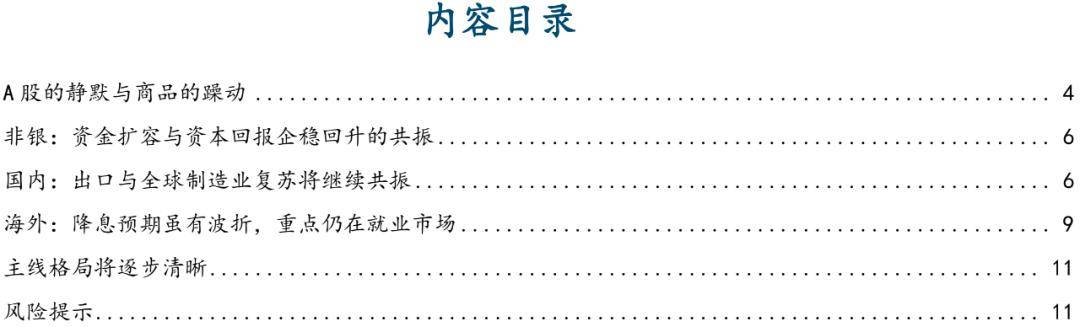
Group 1 - The A-share market is experiencing a period of low trading volume and volatility, with a significant decrease in trading activity and market sentiment due to the lack of new economic or financial data and the upcoming key policy meetings [2][10] - In contrast to the A-share market's stagnation, commodity prices, particularly silver and copper, have seen strong increases, driven by low inventory levels and changing demand dynamics influenced by new industries and policy shifts [2][13] Group 2 - Recent changes in the financial market include a relaxation of constraints on non-bank financial institutions, which is expected to bring more incremental capital into the market and benefit the long-term asset side of non-bank institutions as A-share earnings recover [3][19] - Historical data suggests that after previous relaxations of risk factors for insurance companies and increased leverage for brokerages, the market has performed well, indicating potential for excess returns in the non-bank sector compared to the overall market [3][21] Group 3 - Positive marginal changes in external demand are emerging, with significant improvements in new export orders and related indicators, suggesting a rebound in China's export growth [4][22] - Long-term trends indicate that the onset of a U.S. interest rate cut cycle typically leads to a loosening of global liquidity, which can stimulate foreign direct investment and trade demand, benefiting China's exports [4][24] Group 4 - Despite some fluctuations in overseas interest rate cut expectations, the focus remains on the U.S. labor market, which is currently weak, with recent data showing job losses and high unemployment rates [5][37] - The market anticipates that even if there are short-term fluctuations in the interest rate cut pace, the overall trend towards lower rates is likely to continue, supporting global investment and manufacturing recovery [5][42] Group 5 - The A-share market's current low trading volume and cooling sentiment may lead to clearer structural signals in the future, with potential benefits from the relaxation of constraints on non-bank institutions and the recovery of overall A-share earnings [6][48] - Recommendations for investment include focusing on industrial resource chains, non-bank capital expansion, China's equipment exports, and sectors benefiting from increased consumer spending as capital flows back into the market [6][48]
A股策略周报20251207:新的变化正在到来-20251207
SINOLINK SECURITIES· 2025-12-07 09:24
Group 1: A-shares and Commodity Markets - The A-share market is experiencing a significant reduction in trading volume, with the average turnover rate dropping to the lowest level since July 2023, indicating a cooling in market activity [3][15] - In contrast, commodity markets, particularly metals like silver and copper, are witnessing strong price increases due to historically low inventory levels, which reflect the industry's adaptation to a relatively stable policy environment [3][18] - The recent surge in commodity prices is attributed to the low inventory situation and the potential for new demand driven by emerging industries and policy changes, challenging traditional static supply-demand pricing perspectives [3][18] Group 2: Financial Market Changes - Recent changes in the financial market include a reduction in risk factors for insurance companies and discussions about expanding capital space and leverage limits for brokerages, which may lead to increased market liquidity [4][32] - Historical data suggests that past relaxations of risk factors and leverage policies have resulted in positive market performance, with non-bank financial institutions outperforming the overall A-share market [4][32] Group 3: Domestic Economic Fundamentals - There are positive signs in the domestic economy, particularly in exports, with the November manufacturing PMI showing significant improvement in new export orders, indicating a potential rebound in China's export growth [5][33] - The recovery in external demand is supported by rising export growth rates in South Korea and increased container throughput at major Chinese ports, suggesting a broader recovery in global trade [5][33] Group 4: Global Economic Outlook - The expectation of a shift to a looser global liquidity environment as the Federal Reserve enters a rate-cutting cycle is anticipated to boost foreign direct investment (FDI) and global trade demand [6][36] - Emerging markets, particularly in Africa and ASEAN, are beginning to see increased FDI inflows, which are expected to contribute to China's export growth [5][36][37] Group 5: Interest Rate Expectations - Recent dovish comments from Federal Reserve officials have led to a rise in December rate cut expectations, although the employment market remains a critical concern, with recent data showing a decline in job numbers [6][52][60] - The market is currently pricing in a higher likelihood of rate cuts in 2026 compared to previous forecasts, indicating a more optimistic outlook for monetary policy adjustments [6][57]