
电动车电池

Search documents
2025年韩电动车电池全球市占率下降7.4%
Shang Wu Bu Wang Zhan· 2026-02-15 15:45
Group 1 - The core viewpoint of the article is that the global electric vehicle battery market, excluding China, is projected to reach a total installed capacity of 463.3 GWh by 2025, representing a year-on-year growth of 26% [1] - South Korean companies hold a 36.3% market share in the global electric vehicle battery market, which is a decrease of 7.4 percentage points compared to 2024 [1] - Major South Korean players in the market include LG Energy Solution, SK On, and Samsung SDI, ranked 2nd, 3rd, and 6th respectively [1] Group 2 - The main competitors in the market are CATL, Panasonic, and BYD, ranked 1st, 4th, and 5th respectively [1] - Chinese battery manufacturers are expanding their overseas market share due to cost advantages, prompting South Korean companies to enhance their competitiveness through technological upgrades such as high-nickel batteries and solid-state batteries [1]



异动盘点0122 | 香港地产股普涨,天数智芯涨超14%,再创上市新高;明星科技股多数上涨,存储板块持续走强
贝塔投资智库· 2026-01-22 04:03
Group 1 - Oil stocks generally rose, with CNOOC (02883) up 4.32%, PetroChina (00857) up 3.33%, CNOOC (00883) up 2.98%, and Sinopec (00386) up 3.01%. International oil prices saw a slight increase, with WTI crude oil futures for February closing at $60.62 per barrel, up 0.43%, and Brent crude oil futures for March at $65.24 per barrel, up 0.49% [1] - CATL (03750) fell over 4%, down 4.4% as of the report. A report from Citi raised concerns about CATL's growth prospects due to slowing EV sales in China, rising lithium prices, and reduced export VAT rebates [1] - Kintor Pharmaceutical (02171) rose nearly 4% after announcing a clinical collaboration with Dispatch Bio to initiate a Phase I clinical trial in China by 2026 for a treatment method targeting solid tumors [1] Group 2 - Guoxia Technology (02655) surged over 7% following a strategic cooperation agreement with Shuneng Electric to enhance collaboration in the energy storage sector [2] - Kingsoft Biotech (01548) dropped over 6% after its affiliate Legend Biotech's stock fell more than 11%. Kingsoft reported that Legend's CARVYKTI had a net sales of approximately $555 million for Q4 [2] - Hong Kong real estate stocks saw a general rise, with Hysan Development (00014) up 5.17%, Sun Hung Kai Properties (00016) up 3.36%, and Wharf Real Estate (01997) up 4.02%. A report from Citi indicated a recovery in Hong Kong property prices, predicting a continued upward trend, albeit at a moderate pace due to tempered interest rate cut expectations [2] Group 3 - Baidu Group (09888) rose nearly 5%, with a cumulative increase of over 40% in the past two months. The company launched the official version of its Wenxin large model 5.0, featuring 2.4 trillion parameters [3] - Pacific Basin Shipping (02343) increased over 9%, reaching a new high of HKD 2.96, benefiting from a rise in the Baltic Dry Index, which increased by 74 points or 4.3% to 1803 points [3] - GDS Holdings (09698) rose nearly 3% after announcing the sale of shares in DayOne for $385 million, recovering approximately 95% of its investment principal with a return rate close to 6.5 times [4] Group 4 - The US stock market saw an expansion in gains, with the Nasdaq up 1%. Notable tech stocks like Intel (INTC.US) rose 11.72%, reaching a market cap of over $250 billion, the highest in four years [5] - The storage sector continued to strengthen, with Micron Technology (MU.US) up 6.61% and Western Digital (WDC.US) up 8.49%. Counterpoint Research indicated that the storage market has entered a "super bull market" phase, surpassing previous highs due to increased demand from AI and server capacity [5] - The Nasdaq Golden Dragon China Index surged 2%, with popular Chinese stocks like Bilibili (BILI.US) up 5.65% and Baidu (BIDU.US) up 8.17% [6]




吉利状告欣旺达索赔23.14亿元
Xin Lang Cai Jing· 2025-12-27 02:00
Core Viewpoint - XINWANDA's subsidiary, XINWANDA Power Technology Co., Ltd., is being sued by Weirui Electric Vehicle Technology (Ningbo) Co., Ltd. for a contract dispute involving a claim of 2.314 billion RMB due to serious quality issues with battery cells delivered between June 2021 and December 2023 [1][4]. Company Overview - XINWANDA, headquartered in Shenzhen and established in 1997, initially focused on consumer battery pack business and entered the electric vehicle battery sector in October 2014 by founding XINWANDA Power [2][5]. - For the first three quarters of 2025, XINWANDA reported revenues of 43.534 billion RMB and a net profit of 1.405 billion RMB [5]. Legal Proceedings - The lawsuit has been formally accepted by the Ningbo Intermediate People's Court, with the case number (2025) Zhe 02 Min Chu 1870, and is currently in the pre-trial stage [1][4]. - The plaintiff claims significant economic losses due to the quality issues of the battery cells, seeking compensation for damages, as well as covering identification, legal fees, and all litigation costs [1][4]. Company Response - XINWANDA stated that all operations within the company and its subsidiaries are normal as of the announcement date and that the impact of the lawsuit on current or future profits cannot be assessed until the court's decision [1][4]. - The company is actively seeking a reasonable resolution and enhancing communication with relevant parties to resolve the litigation matter promptly [1][4]. Industry Context - Weirui Electric Vehicle Technology (Ningbo) Co., Ltd., the plaintiff, was established in 2013 and is part of Geely Holding Group, specializing in the research, manufacturing, sales, and after-sales service of new energy vehicle power batteries, drive systems, charging systems, and energy storage systems [2][5].

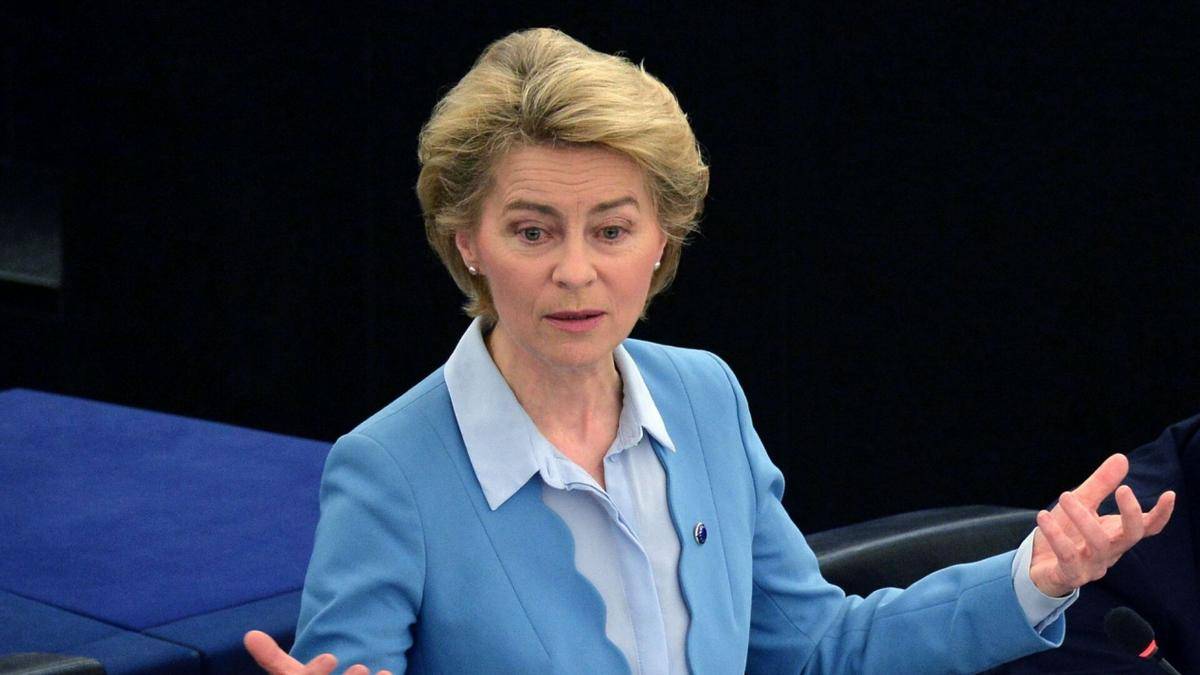
制裁12家中企后,冯德莱恩公开放话:欧洲应该抓住机会对抗中国
Sou Hu Cai Jing· 2025-10-26 09:03
Group 1 - The European Union (EU) has approved its 19th round of sanctions against Russia, which includes a ban on Russian liquefied natural gas and oil transactions, and notably, sanctions against 12 companies from mainland China and Hong Kong [1] - The EU claims the purpose of these sanctions is to "curb Russia's evasion of sanctions," although this assertion lacks specific evidence and appears vague [1] - In July, the EU had previously included two Chinese financial institutions in its 18th round of sanctions, alleging they assisted Russia in circumventing sanctions [1] Group 2 - China's Ministry of Foreign Affairs expressed strong dissatisfaction with the EU's actions, stating that the EU is illegally sanctioning Chinese companies under the pretext of the Russia-Ukraine conflict [3] - The EU Commission President, Ursula von der Leyen, emphasized the need for Europe to reduce dependence on China and revitalize local manufacturing, identifying China as a "primary competitor" [3][4] - Despite the EU's intentions to reduce reliance on China, the EU remains dependent on Chinese supply in critical sectors, such as over 70% of components in the photovoltaic industry and over 80% market share in electric vehicle batteries [4] Group 3 - The EU's goal to reduce carbon emissions by 90% by 2040 faces significant challenges, including unstable green energy transitions and high energy costs, while China has established a comprehensive ecosystem in the renewable energy sector [6] - The economic feasibility of the EU's strategy to counter China appears limited, as the political statements made by EU leaders may not translate into actionable economic plans [6] Group 4 - Despite the EU's unfriendly actions, China is positioned to respond effectively, with trade relations between China and the EU extending beyond political disagreements [8] - In 2024, China is projected to become the largest source of imports for the EU and the second-largest export market, indicating deep interdependence in sectors like industrial components, chemicals, and renewable energy equipment [8] - China's approach to sanctions has been rational, aiming to avoid escalation while firmly defending its enterprises' legitimate rights, as demonstrated by its previous countermeasures against Lithuania [8]
落后就要挨打!韩国拒付美国 3500 亿现金,“硬刚”能换来体面吗?
Sou Hu Cai Jing· 2025-10-26 05:50
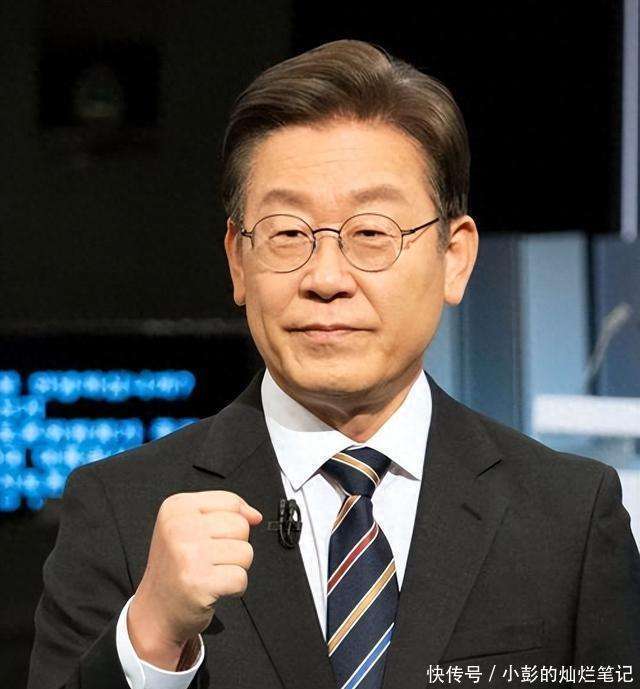
Group 1: Core Issues - The U.S. has demanded South Korea invest $350 billion to lower tariffs, with strict conditions on investment direction and profit sharing [3][5][6] - South Korea's foreign exchange reserves are approximately $400 billion, making the U.S. demand nearly impossible to meet without significant economic repercussions [6][17] - The automotive and semiconductor sectors are particularly vulnerable, with one-fifth of South Korea's exports going to the U.S., risking layoffs and industry disruption if tariffs are imposed [6][10] Group 2: South Korea's Response - President Yoon Suk-yeol's administration previously complied with U.S. demands, but current President Lee Jae-myung is taking a firmer stance against the U.S. [5][10] - Negotiations have led to some concessions from the U.S., allowing for reduced cash payments and a more favorable profit-sharing arrangement for South Korea [8][10] - Lee has publicly committed to not compromising South Korea's interests, reflecting a shift in approach compared to his predecessor [10][19] Group 3: Economic and Strategic Considerations - South Korea's strength in the global semiconductor and battery markets gives it leverage, as U.S. tech companies rely heavily on South Korean suppliers [14][16] - The country is actively seeking to diversify its markets and reduce dependence on the U.S., including expanding production in Indonesia and Vietnam [16] - Despite these efforts, South Korea's economic reliance on the U.S. remains significant, with many SMEs dependent on U.S. orders, posing risks if tariffs are enacted [17][19] Group 4: Security Concerns - South Korea's security dependence on the U.S. is a critical issue, with substantial military presence and financial obligations to the U.S. [18][21] - The potential for increased military costs if trade negotiations fail adds another layer of pressure on South Korea's decision-making [18][21] - The need for South Korea to enhance its own military and economic capabilities is emphasized to avoid being seen as a subordinate in international negotiations [21]
港股IPO火热,哪家投行最忙?
3 6 Ke· 2025-07-18 09:02
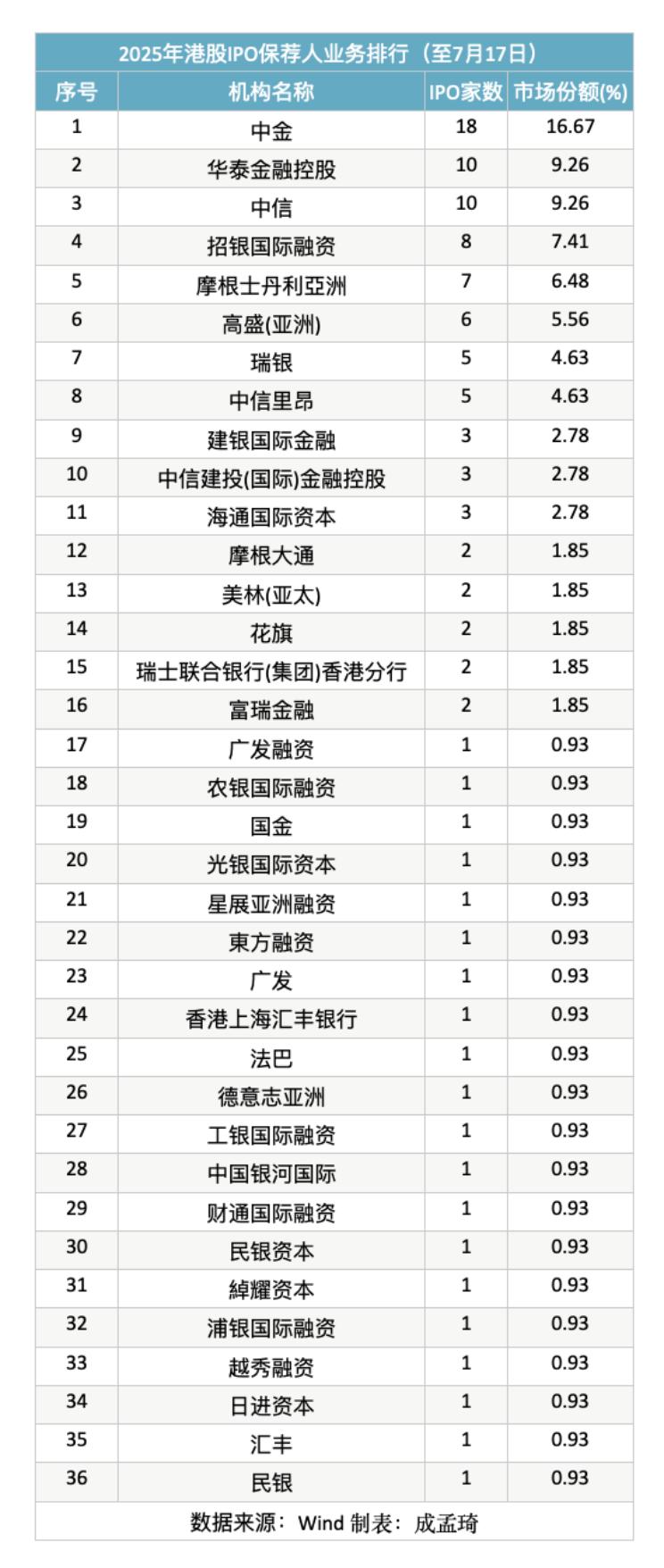
Group 1 - The Hong Kong IPO market has seen a significant surge, with a record number of listings and a total fundraising amount of 1,067 million HKD in the first half of 2025, nearly eight times that of the same period last year [1][2] - Five companies, including Peak Technology and Blue Sky Technology, listed on the Hong Kong Stock Exchange on the same day, marking a historic moment with six gongs ringing simultaneously [1] - The number of IPOs in May and June accounted for 58.14% of the total listings in the first half of 2025, indicating a concentrated period of activity [1] Group 2 - Eight new stocks raised over 2 billion HKD, while 17 raised over 1 billion HKD, with the top five fundraising companies being CATL, Hengrui Medicine, Haitian Flavoring, Sanhua Intelligent Control, and Mixue Ice City [2] - As of July 17, 2025, the Hong Kong market recorded 51 IPOs and a total fundraising amount of 1,134 million HKD, surpassing the total for the entire year of 2024 and increasing by 217% compared to the same period last year [2] Group 3 - The revival of the Hong Kong IPO market has led to increased activity among investment banks, with a notable rise in the number of companies seeking to go public [3] - As of July 17, 2025, there are 232 companies in the queue to apply for H-share listings, indicating strong interest in the market [3] - The competition between domestic and foreign investment banks has intensified, with domestic banks gaining an advantage due to their understanding of local enterprises and improved international service capabilities [5] Group 4 - The Hong Kong IPO market has regained its position as the largest globally, driven by a surge in A+H listings, which have become a dominant trend [4][10] - A total of 50 A+H companies have submitted IPO applications in the first half of 2025, with several major firms already listed [10] - Predictions indicate that 90 to 100 companies are expected to raise between 200 billion to 220 billion HKD in 2025, with the second half typically being a peak period for IPOs [11] Group 5 - The top investment banks in the Hong Kong IPO market as of July 17, 2025, include CICC with 18 IPOs (16.67% market share), followed by Huatai Financial Holdings and CITIC with 10 IPOs each (9.26% market share) [6][8] - The market shows a clear "Matthew effect," where larger projects are predominantly led by top-tier investment banks, while many smaller banks have only participated in a single IPO [8] Group 6 - The A+H listing model is expected to drive significant fundraising, with estimates suggesting an 85% increase in total fundraising from A+H listings compared to the first half of 2024 [12] - The technology, biomedicine, and consumer sectors are anticipated to lead the IPO market in the second half of 2025, although an increase in supply may raise the failure rate to 35% [12]



汇丰首予宁德时代目标价359港元 予以买入评级
news flash· 2025-06-12 03:07
Core Viewpoint - HSBC initiates coverage on CATL (宁德时代) with a target price of HKD 359 and maintains a buy rating for its A-shares at RMB 322, highlighting the company's strong market position and resilience in the face of industry challenges [1] Group 1: Company Performance - In the previous year, CATL's operating profit accounted for 87% of the entire domestic electric vehicle battery supply chain industry, demonstrating its dominant market position [1] - Despite the onset of a price war in the electric vehicle sector and a decline in lithium prices starting in 2022, CATL's operating profit remains resilient [1] Group 2: Industry Outlook - The anticipated oversupply issue in the electric vehicle industry is expected to have a limited impact on CATL, with high utilization rates projected to sustain profit margins during industry consolidation [1] - CATL is increasing its market share in overseas markets and building production capacity abroad, which will help mitigate challenges posed by tariffs on domestic suppliers [1] - The proportion of CATL's overseas production capacity is expected to rise from 2% in 2024 to 10% by 2027, indicating a strategic expansion in international markets [1]