管道运输

Search documents
西北管道股价冲高回落,机构对盈利预期存分歧
Jing Ji Guan Cha Wang· 2026-02-12 20:03
Group 1 - The core viewpoint of the news highlights the recent active stock performance of Northwest Pipeline (NWPX.OQ), which experienced a fluctuation with a cumulative increase of 4.81% over the past week, reaching a high of $77.36 and a low of $71.08 [1] - On February 6, the stock price surged by 4.93% with a trading volume of $9.6185 million and a turnover rate of 1.36%, indicating a short-term influx of capital [1] - Following this, the stock price showed a narrowing volatility, with a decline of 1.32% on February 12, closing at $74.24, influenced by a broader market downturn [1] Group 2 - Institutions have differing views on Northwest Pipeline's profit expectations, with a target price average of $69.33, which is below the current stock price of $74.24, indicating a cautious outlook [2] - The highest target price of $88.00 suggests potential upside, while the lowest target price of $50.00 reflects a more conservative perspective [2] - Institutions predict a 34.16% year-over-year decline in net profit for Q4 2025, but a 31.72% year-over-year increase in net profit for Q3 2025, suggesting a potential peak and subsequent decline in annual performance [2] - There is optimism regarding revenue growth, with a projected 16.05% year-over-year increase in main revenue for Q3 2025 [2]
Enterprise Products Partner Shares Jump as Cash Flows Climb. Is It Time to Buy the High-Yield Stock?
The Motley Fool· 2026-02-08 12:52
Core Viewpoint - The pipeline company, Enterprise Products Partners, is expected to see growth accelerate through 2027 after overcoming challenges related to its LPG business and returning to normalized spreads [1][6]. Financial Performance - In Q4, Enterprise's total gross operating profit increased by 4% to $2.74 billion, with adjusted EBITDA also rising by 4% to $2.71 billion [3]. - Distributable cash flow (DCF) rose by 3% to $2.22 billion, while adjusted free cash flow was reported at $1.17 billion [3]. Business Model and Growth Outlook - Approximately 82% of Enterprise's gross operating profit in 2025 is derived from fee-based activities, returning to historical levels after benefiting from high differentials [2]. - The company forecasts adjusted EBITDA and cash flow growth at the lower end of a 3% to 5% range for 2026, with expectations of double-digit growth in 2027 as new projects commence [6]. Capital Management - Enterprise has reduced its capital expenditure budget for 2026 to a range of $2.5 billion to $2.9 billion from $4.4 billion in 2025, potentially generating around $1 billion in discretionary free cash flow in 2026 [6]. - The company maintained a 1.8x coverage ratio for its distribution in Q4 and ended the year with a leverage ratio of 3.3 times [5]. Stock Performance and Dividend - The current market capitalization of Enterprise is $76 billion, with a dividend yield of 6.23% and a forward yield of 6.4%, making it a consistent high-yield dividend stock [4]. - The company paid a quarterly distribution of $0.55 per unit, reflecting a year-over-year increase of 2.8% [5]. Strategic Positioning - With reduced capital expenditures, Enterprise is positioned to utilize discretionary free cash flow for debt reduction, share buybacks, or strategic acquisitions [8]. - The company is expected to continue increasing its distribution for the 28th consecutive year in 2026 [8]. Investment Timing - Given the projected growth ramp-up in 2027, now is considered an opportune time to invest in the stock [9].



ONEOK (OKE) Draws Mixed Analyst Calls and Price Target Falls
Yahoo Finance· 2026-02-06 16:40
Core Viewpoint - ONEOK, Inc. (NYSE:OKE) is recognized as one of the best pipeline and MLP stocks to buy in 2026, despite mixed analyst ratings and a recent decline in price targets [1]. Analyst Ratings - Morgan Stanley analyst Robert Kad lowered the price target for ONEOK from $107 to $104 while maintaining an Overweight rating, citing the energy sector's strong performance due to favorable commodity prices [2]. - Conversely, JPMorgan analyst Jeremy Tonet downgraded ONEOK from Overweight to Neutral, reducing the price target from $87 to $83, indicating that the company did not meet its EBITDA guidance amid weak macroeconomic conditions [3]. Company Overview - ONEOK, Inc., established in 1906, is a leading energy infrastructure company based in Oklahoma, operating a vast 60,000-mile pipeline network that provides gathering, processing, and transportation services for natural gas, NGLs, refined products, and crude oil across North America [4].

投资结构持续优化,稳投资政策密集加力|数读“十四五”
Di Yi Cai Jing· 2026-01-22 12:17
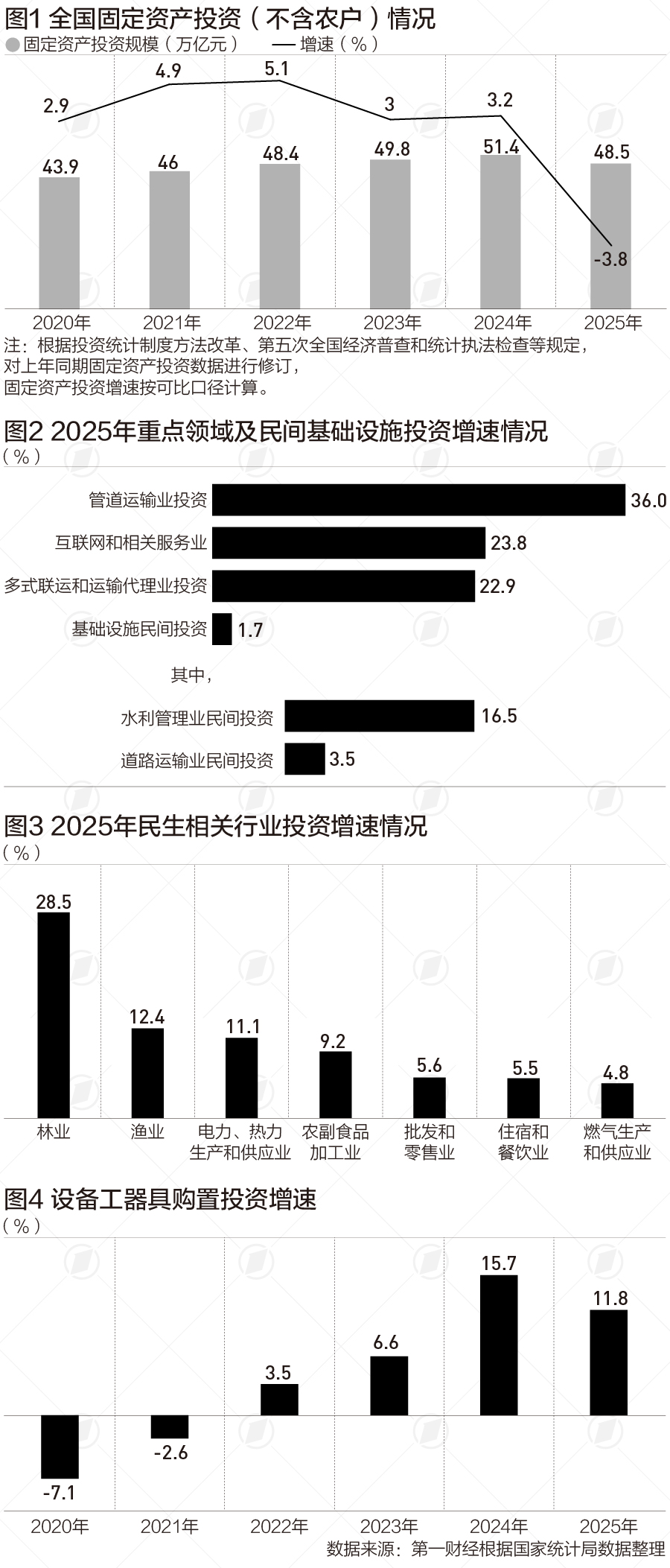
Core Viewpoint - The Chinese government is intensifying efforts to stabilize investment and promote growth through various policies and financial tools, particularly focusing on supporting private investment and optimizing investment structures [1][2][17]. Investment Policy and Measures - The State Council has implemented a package of policies to stimulate domestic demand, including interest subsidies for small and micro enterprises and special guarantee plans for private investment [1][17]. - A total of 936 billion yuan in special long-term bonds has been allocated to support approximately 4,500 projects in industrial and energy sectors, leading to a total investment exceeding 4.6 trillion yuan [1]. Investment Scale and Structure - During the 14th Five-Year Plan period, the government has effectively guided investment, with nearly 3.4 trillion yuan allocated for public projects and approximately 16 trillion yuan in local government special bonds issued for investment [3]. - Fixed asset investment (excluding rural households) reached 48.5 trillion yuan in 2025, showing a slight decrease of 3.8% from the previous year, with notable growth in the primary and secondary industries [12]. Private Investment Initiatives - Over 13,000 projects have been promoted to private capital, involving a total investment of over 11 trillion yuan, with significant participation in major projects in nuclear power, hydropower, and water supply [4]. - The infrastructure sector's REITs market has entered a normalization phase, with 83 projects across 10 industries expected to drive new investments exceeding 1 trillion yuan [4]. Investment Optimization - The investment structure is continuously improving, with industrial investment growing by 2.6% in 2025, contributing to overall investment growth [12]. - In the civil sector, investments in forestry, fisheries, and energy production have shown strong growth, indicating a positive trend in public welfare-related investments [13]. Challenges and Future Outlook - Despite the challenges posed by local government debt and investment cycles, China's economic foundation remains strong, with significant potential for effective investment growth [2][16]. - The government aims to enhance investment efficiency and promote both material and human capital, focusing on projects that directly benefit people [18].
中国产业经济行业 现状格局与投资规划分析报告2026年版
Sou Hu Cai Jing· 2025-12-20 13:41
Core Insights - The report provides a comprehensive analysis of the current state and future prospects of various industries in China, focusing on investment opportunities and macroeconomic factors influencing these sectors [3][4][5]. Group 1: Macroeconomic Environment - The report discusses the macroeconomic environment for industrial investment in China, including policies, economic growth, and foreign direct investment trends [3][4]. - It highlights the GDP growth forecast for 2025, indicating a positive outlook for economic expansion [3]. - The analysis includes fixed asset investment scale from 2020 to 2025, showing significant growth trends [3][4]. Group 2: Industry-Specific Investment Opportunities - The real estate sector is analyzed for its investment environment, including policy impacts and market conditions, with a focus on urban complexes and tourism real estate as key opportunities [5][6]. - The internet industry is identified as a strategic emerging sector, with investment opportunities in mobile payment and e-commerce [5][6]. - The energy sector is highlighted for its investment potential, particularly in renewable energy resources and processing [6][7]. Group 3: Mergers and Acquisitions - The report outlines the trends in mergers and acquisitions within various industries, noting increased regulatory scrutiny and the rise of private equity as a driving force [4][5]. - It discusses the active merger activities in cultural media and real estate sectors, indicating a dynamic market environment [4][5]. Group 4: Emerging Industries - New energy and new materials industries are emphasized for their growth potential, supported by government policies and increasing market demand [15][16]. - The biotechnology sector is also highlighted, with a focus on investment opportunities arising from policy support and market trends [15][16]. Group 5: Regional Investment Analysis - The report provides a detailed analysis of investment environments across different regions in China, identifying specific opportunities in provinces like Guangdong and Jiangsu [20][21]. - It emphasizes the importance of regional characteristics in shaping investment strategies and opportunities [20][21].

研判2025!中国管道运输行业发展历程、政策、市场规模、竞争格局及发展前景展望:政策支持与能源需求增长,推动管道运输规模达2.98万亿元[图]
Chan Ye Xin Xi Wang· 2025-12-17 01:35
Industry Overview - The pipeline transportation industry is experiencing new development opportunities due to continuous national investment in infrastructure and steady growth in energy consumption demand, with the market size steadily increasing [1][16] - The market size of China's pipeline transportation industry is projected to grow from 14.7 trillion yuan in 2017 to 29.8 trillion yuan in 2024, with a compound annual growth rate (CAGR) of 10.62% [1][17] Development Stages - The pipeline transportation industry has undergone four stages: initial development (1958-1969), rapid development (1970-1987), steady development (1988-1995), and accelerated development (1996-present) [7][8] Policy Support - The government has implemented multiple policies to promote the development of the pipeline transportation industry, including optimizing logistics structures and establishing unified pricing mechanisms for natural gas pipeline transportation [9][10] Industry Chain - The pipeline transportation industry chain consists of upstream raw materials (steel, cast iron, plastic, valves, pumps), midstream construction and operation, and downstream product transportation and distribution [11][12] Competitive Landscape - The competitive landscape of the pipeline transportation industry is characterized by a tiered structure, with large state-owned enterprises dominating the core market, regional companies in the second tier, and numerous small enterprises in the third tier [18] Key Enterprises - Major companies in the industry include China Petroleum Pipeline Bureau, National Oil and Gas Pipeline Group, and others, which play significant roles in pipeline construction, operation, and management [19][20] Development Trends - Future trends in the pipeline transportation industry include increasing pipe diameters to enhance transport capacity, extending transport distances to meet resource distribution needs, and expanding the types of transported materials to include solid materials like coal and minerals [21][22][23]

中游供需矛盾进一步改善——11月经济数据点评
一瑜中的· 2025-12-16 06:56
Core Viewpoint - The article emphasizes the improvement of supply-demand contradictions in the midstream sector, indicating a potential shift from "strong supply and weak demand" to "weak supply and strong demand" in the coming years [2][3]. Group 1: Midstream Supply-Demand Analysis - The analysis method involves measuring the difference between demand growth and investment growth, where a positive difference indicates alleviation of supply-demand contradictions [2][5]. - Key indicators include upstream demand from material exports and construction investment, midstream demand from machinery exports and equipment investment, and downstream demand from labor-intensive product exports [5][12]. - In November, the midstream demand growth was 8.9%, slightly down from 10.3% in September, while midstream investment growth was 1.3%, down from 4.2% in September, leading to a demand-investment growth difference of 7.6% [6][13]. Group 2: Future Projections - Historical data suggests that the midstream demand-investment growth difference is likely to remain positive, with expectations for the midstream PPI (Producer Price Index) to stop declining and potentially rise by 2026 [3][14]. - The midstream PPI showed a month-on-month increase of 0.04% in November, marking the first positive change since June 2024, indicating a potential upward trend in midstream ROE (Return on Equity) [7][14]. Group 3: November Economic Data Overview - In November, industrial production growth was 4.8%, while service sector production index growth was 4.2%, indicating a slight weakening in supply-side performance [19]. - Consumer retail sales growth was 1.3%, down from 2.9% in October, while exports rebounded to a growth of 5.9% from a decline of 1.1% [19][21]. - Real estate sales area decreased by 17.3% year-on-year, and fixed asset investment saw a decline of 12.0% in November [19][22]. Group 4: Employment and Price Trends - The urban unemployment rate remained stable at 5.1%, with a slight decrease in the unemployment rate for migrant agricultural workers to 4.4% [23]. - The CPI (Consumer Price Index) rose to 0.7% year-on-year, while the PPI fell by 2.2%, indicating ongoing deflationary pressures in the economy [21][22].

全尺寸高压纯氢管道喷射火试验实施
Ke Ji Ri Bao· 2025-12-10 00:12
Core Insights - The National Pipeline Group, in collaboration with the China Academy of Safety Science and Technology, successfully conducted the first full-scale high-pressure pure hydrogen pipeline jet fire test in China, filling a technological gap in this field [1][2] Group 1: Test Overview - The test, which started on November 11 and lasted nearly one month, aimed to gather critical data on flame characteristics and thermal radiation impact range after hydrogen leakage [1] - The test platform included a hydrogen main pipeline with a storage capacity of 12,000 cubic meters, capable of supporting various test conditions for continuous leakage and jet fire monitoring [1] Group 2: Test Methodology - The test involved 33 sets of conditions, including four leakage aperture sizes and three pressure levels, with horizontal, inclined, and vertical jet directions [1] - High-precision equipment such as thermal radiation meters, pressure and temperature sensors, thermocouples, and high-speed cameras were used to capture real-time data on flame characteristics and thermal hazards [1][2] Group 3: Implications and Future Work - Preliminary analysis indicates that the data obtained is complete and valid, providing scientific evidence for determining safe distances for pure hydrogen pipelines [2] - The test results will help optimize the thermal radiation assessment model for hydrogen pipeline leakage jet fires, supporting the establishment of safety standards for hydrogen transportation and contributing to the energy structure transition under the "dual carbon" goals [2]

Enterprise Products (EPD) Reports Q3 Earnings: What Key Metrics Have to Say
ZACKS· 2025-11-07 23:00
Core Insights - Enterprise Products Partners (EPD) reported a revenue of $12.02 billion for the quarter ended September 2025, reflecting a year-over-year decline of 12.7% and a surprise of -4.53% compared to the Zacks Consensus Estimate of $12.59 billion [1] - The earnings per share (EPS) for the same period was $0.61, down from $0.65 a year ago, with an EPS surprise of -8.96% against the consensus estimate of $0.67 [1] Financial Performance - The stock has returned -0.9% over the past month, underperforming the Zacks S&P 500 composite's -0.2% change, and currently holds a Zacks Rank 4 (Sell) [3] - Key metrics for NGL Pipelines & Services showed mixed results, with NGL fractionation volumes per day at 1,636 million barrels, below the estimated 1,719.13 million barrels [4] - Fee-based natural gas processing volumes per day were reported at 7,454 million barrels, also below the average estimate of 7,711.24 million barrels [4] - NGL pipeline transportation volumes per day were 4,694 million barrels, slightly above the estimated 4,562.86 million barrels [4] - Natural gas transportation volumes per day reached 21,027 BBtu/D, exceeding the average estimate of 20,722.93 BBtu/D [4] Gross Operating Margins - Gross operating margin for NGL Pipelines & Services was $1.3 billion, slightly below the estimated $1.37 billion [4] - Crude Oil Pipelines & Services reported a gross operating margin of $371 million, below the average estimate of $377 million [4] - Natural Gas Pipelines & Services had a gross operating margin of $339 million, significantly lower than the average estimate of $402.33 million [4] - Petrochemical & Refined Products Services reported a gross operating margin of $370 million, above the average estimate of $343.04 million [4]

Sunoco LP(SUN) - 2025 Q3 - Earnings Call Transcript
2025-11-05 16:00
Financial Data and Key Metrics Changes - Sunoco reported a record third quarter with adjusted EBITDA of $496 million, an increase from $470 million a year ago, excluding one-time transaction-related expenses [4] - Distributable cash flow, as adjusted, was $326 million for the third quarter [4] - The company declared a distribution of $0.9202 per common unit, representing a 1.25% increase compared to the previous quarter, resulting in a trailing 12-month coverage ratio of 1.8 times [5][6] Business Line Data and Key Metrics Changes - In the fuel distribution segment, adjusted EBITDA was $238 million, compared to $214 million in the second quarter and $253 million in the third quarter of last year [8] - Volumes in the fuel distribution segment reached 2.3 billion gallons, up 5% from the previous quarter and 7% year-over-year [8] - The pipeline system segment reported adjusted EBITDA of $182 million, an increase from $177 million in the second quarter and $147 million in the third quarter of last year [10] - The terminal segment delivered adjusted EBITDA of $76 million, compared to $73 million in the second quarter and $70 million in the third quarter of last year [11] Market Data and Key Metrics Changes - The company has become the largest independent fuel distributor in the Americas following the acquisition of Parkland Corporation, which is expected to provide significant financial benefits [2][3] - The combined entity is projected to deliver over 15 billion gallons of refined products, enhancing its position in the Atlantic Basin [14] Company Strategy and Development Direction - The immediate priorities for the company include integrating Parkland and restoring the balance sheet to a four times leverage ratio within 12 months [15] - The company expects over $250 million in synergies from the Parkland acquisition, with a focus on expense management and optimizing gross profit [15][20] - The company aims for free cash flow to exceed $1 billion annually in the near future, enhancing its capital allocation strategy [16] Management's Comments on Operating Environment and Future Outlook - Management expressed confidence in achieving another record year, with all business segments performing well [13] - The company anticipates that the fundamentals for the fuel distribution business remain strong, despite broader market challenges [52] - Management highlighted the importance of scale and key assets in maintaining a competitive advantage in the market [14] Other Important Information - The company successfully completed the acquisition of Parkland Corporation for approximately $9 billion, enhancing its financial position and scale [2][3] - Sunoco Corp will begin trading on the New York Stock Exchange under the ticker SUNC, broadening investment options [4] Q&A Session Summary Question: Synergies from the Parkland acquisition - Management confirmed a floor of over $250 million in synergies, with both expense and commercial opportunities identified [18][20] Question: Dividend equivalency for Sunoco Corp - Management stated that minimal corporate income taxes are expected for at least five years, supporting the distribution strategy [23] Question: Growth potential for distribution - Management indicated that the acquisition of Parkland positions the company for meaningful distribution growth beyond the current target of at least 5% [26][27] Question: Impact of Hurricane Melissa - The business impact from Hurricane Melissa was largely limited to Jamaica, with no material impact expected on fourth quarter results [29][30] Question: Opportunities in West Coast terminaling assets - Management expressed optimism about leveraging the refinery and terminal assets in response to potential market shifts due to refinery closures [33][34] Question: 2026 guidance and expectations - Management plans to provide guidance early next year, emphasizing strong performance from both the Parkland and legacy businesses [41][42]