
供需矛盾

Search documents
能源价格扰动下,锰矿资源安全性越发重要
Hua Tai Qi Huo· 2026-03-30 00:20
1. Report Industry Investment Rating - There is no information about the report industry investment rating in the provided content. 2. Core Viewpoints - The strategic importance of manganese ore resources is increasingly prominent, but the silicon - manganese industry is in a supply - demand dilemma. The supply disturbances of major manganese ore exporters, fluctuations in shipping costs, and geopolitical risks may drive up ore prices, providing rigid support for silicon - manganese from the cost side. However, the silicon - manganese industry has over - capacity and weak downstream demand, eroding industry profits. The resolution of the industrial chain contradictions requires proactive adjustments on the supply side and industry self - discipline [2][15]. - Manganese ore resources are highly concentrated, with low - grade ores in China. In 2025, the global manganese metal equivalent reserves are about 1.8 billion tons, mainly concentrated in South Africa, Australia, Brazil, and China. China's manganese ore has low overall quality and low grade [3][16][75]. - China has a high degree of dependence on manganese ore imports, and some countries are tightening export controls. In 2025, China's manganese ore imports reached 32.84 million tons, a 9.7% increase from 2024. South Africa, Australia, Gabon, and Ghana are the main suppliers, but these countries are expected to introduce export restrictions [4][29][76]. - The production of major manganese mines shows differentiation, with a slight overall increase. From the fourth quarter of 2025 to early 2026, South32's Australian mine resumed production smoothly, Comilog was restricted by transportation bottlenecks, and Tshipi maintained stable operations [5][54][77]. - The manganese ore inventory at ports has increased, but the supply - demand contradiction of alloy enterprises still exists. In 2025, China's manganese ore imports increased significantly, leading to an increase in port inventory. However, alloy enterprises still face great pressure, with low silicon - manganese operating rates and low weekly output [6][62][78]. 3. Summary According to the Directory 3.1 Manganese Resource Concentration and Low - Grade Ores in China - In 2025, the global manganese metal equivalent reserves are about 1.8 billion tons, with 92% concentrated in South Africa (30%), Australia (32%), Brazil (16%), and China (14%). In terms of production, South Africa, Gabon, and Australia are the main producers, accounting for 68% of the global total in 2025. China's manganese ore has small - scale deposits, low overall quality, and an average manganese grade of only 14%, much lower than that of major exporting countries [16][27][75]. - Since 2016, the global manganese metal equivalent production has been rising steadily, stabilizing at around 20 million tons per year since 2019. In 2025, South Africa produced 7.6 million tons, Gabon 5 million tons, and Australia 1.6 million tons. China's manganese metal equivalent production has been declining since reaching a peak of 3 million tons in 2014, mainly due to low ore prices, low domestic ore grades, and strict environmental policies [21][27]. 3.2 High Dependence on Manganese Ore Imports and Tightening Export Controls in Some Countries - China's dependence on manganese ore imports exceeds 90%. In 2025, imports reached 32.84 million tons, a 9.7% increase from 2024. South Africa, Australia, Gabon, and Ghana are the main suppliers, accounting for 91.7% of the total imports [29][33]. - South Africa, Gabon, and Ghana are expected to introduce manganese ore export restrictions. South Africa plans to levy export tariffs, Gabon will ban raw ore exports from 2029, and Ghana plans to stop raw ore exports before 2030. These policies will intensify the supply - tightening expectation [50]. - Some manganese mines are facing resource depletion, such as the OMM manganese mine and the Groote Eylandt mine of South32 [51]. 3.3 Differentiated Production of Major Manganese Mines with a Slight Overall Increase - From the fourth quarter of 2025 to early 2026, South32's Australian mine resumed production smoothly, with a production of 1.363 million tons in the fourth quarter of 2025, a 21.26% year - on - year increase. The 2026 production target is 3.2 million tons. The South African mine's production in the first half of the 2026 fiscal year was 1.06 million tons, with an annual production guidance of 2 million tons [54]. - Jupiter - Tshipi produced about 830,000 tons of manganese ore in the first quarter of the 2026 fiscal year, with a total output of 1.7 million tons in the first half of the year. The FOB production cost has dropped to $2.25 - 2.27 per dry ton degree [56]. - Comilog produced 1.68 million tons of manganese ore in the fourth quarter of 2025, with an annual cumulative output of 7.103 million tons (a 4.4% year - on - year increase). However, transportation problems in Gabon restrict the shipping volume, and the 2026 transportation target is 6.4 - 6.8 million tons [60]. 3.4 Increased Manganese Ore Inventory at Ports and Persistent Supply - Demand Contradiction of Alloy Enterprises - In 2025, China's manganese ore imports increased significantly, leading to an increase in port inventory. As of late March, the total manganese ore inventory at ports was 4.745 million tons, 1 million tons higher than the same period in 2025, but still at a relatively low level in the same period of the past five years [62][65]. - The manganese ore inventory days of alloy plants have decreased, but the inventory is still relatively healthy. After the price increase in early March, the processing profit of alloy plants has improved, and the production willingness is increasing [66]. - The silicon - manganese industry has over - capacity and weak downstream demand. The supply - demand imbalance has led to high social inventory, price pressure, and squeezed industry profits. The silicon - manganese operating rate has been low, and the weekly output is at a five - year low [72]. 3.5 Conclusion - The conclusion reiterates the above - mentioned points, including high resource concentration, high import dependence, differentiated mine production, increased port inventory, and persistent supply - demand contradictions in the alloy industry [75][76][77][78]. - The strategy suggests continuously monitoring manganese ore shipments and inventory changes and being cautious about price fluctuations of manganese ore and silicon - manganese [7][79].
中国宏观经济展望
2026-03-22 14:35
Summary of Key Points from the Conference Call Industry Overview - The macroeconomic outlook for China indicates a significant supply-demand imbalance, with strong supply but relatively weak domestic demand. Policy adjustments will focus on increasing quality consumption supply, reducing inefficient investments, promoting consumer welfare, and addressing debt issues, which will impact various industries differently [1][4]. Core Insights and Arguments - **Economic Growth Projections**: China's economy is expected to grow by approximately 5% in 2026, with inflation anticipated to be higher than in 2025. This suggests that nominal growth will outperform this year, positively influencing secondary market investments. Structural opportunities will primarily be found in technology and consumption sectors, driven by both economic and cultural factors [3]. - **Export Performance**: Exports in 2025 exceeded expectations, and growth in 2026 is projected to be at least as high as this year, potentially exceeding 6%. The share of exports to emerging markets is increasing, while direct exports to the U.S. are declining, although overall dependency is rising. Despite falling export prices, corporate profit margins are stabilizing due to technological advancements and cost reductions [5][13]. - **Weak Domestic Demand**: The primary reasons for weak domestic demand are the transformation of the real estate sector and heavy debt burdens, which have adversely affected the income of businesses, governments, and households. This situation is reflected in accounts receivable and payable metrics, indicating potential risks [6]. - **"Anti-Involution" Policy**: This systemic initiative differs from historical capacity reduction measures and will intensify in certain sectors such as glass, chemicals, photovoltaics, non-ferrous metals, and coal in 2026. This indicates that structural opportunities will increasingly manifest in specific industries [7]. - **Economic Policy Trends**: The economic policy for 2026 will continue a trend of moderate acceleration, focusing on increasing quality consumption supply and reducing inefficient supply. This approach has been emphasized since the 2022 strategic planning outline and the 2025 "14th Five-Year Plan" [9][8]. Important but Overlooked Content - **Sectors to Watch**: Key areas for increasing quality consumption supply include yachts, private jets, automobiles, and services in sports and high-end healthcare. Inbound consumption is also significant. Collectively, these sectors represent about 3% of 2024's GDP, with a potential growth of 10%, translating to a 0.3 percentage point increase in GDP [10]. - **Fiscal Policy Measures**: The overall fiscal deficit rate is expected to rise, including a narrow deficit rate of 3%-4% and a broader fiscal support rate. Adjustments in the use of special bonds aim to enhance efficiency, with the 2025 special bond scale at 4.4 trillion yuan, indicating a shift in usage compared to previous years [11]. - **Monetary Policy Expectations**: The monetary policy is expected to remain accommodative in 2026, with interest rate cuts likely and sufficient room for reserve requirement ratio reductions compared to 2025 [12]. - **Investment and Consumption Outlook**: Investment is anticipated to improve slightly next year due to moderate increases and structural adjustments. Consumption levels are expected to remain stable, supported by policies like trade-in programs and increased social welfare spending, alongside enhanced quality consumption supply. Export expectations are optimistic, with a projected growth of 6% or higher, aided by easing U.S.-China trade tensions and advancements in Chinese technology [2][13]. - **Potential Growth Space**: China's potential growth rate exceeds 5%, indicating substantial growth opportunities. With sufficient policy support, higher growth can be achieved. Overall, a combination of supply-side and demand-side measures will allow the economy to reveal more positive aspects, with significant development opportunities across various sectors [14].
能源化工日报 2026-03-20-20260320
Wu Kuang Qi Huo· 2026-03-20 01:36
1. Report Industry Investment Rating There is no information about the industry investment rating in the provided content. 2. Core Viewpoints of the Report - In the crude oil market, it is recommended to start a short - term bearish strategic allocation for crude oil, widen the Platts north - south different oil - type spread before Libya's mid - year production increase, and short the high - sulfur fuel oil cracking spread and the INE - Brent cross - regional spread [2]. - For methanol, since it already includes the current geopolitical premium and there are no major short - term supply - demand contradictions, it is advisable to take profits at high prices [3]. - Regarding urea, considering the high expected start - up in the first quarter, the domestic supply - demand contradiction is not prominent. It is recommended to short at high prices, and there may be short - term marginal positive support for demand when the alternative valuation reaches the extreme [6]. - In the rubber market, due to large market fluctuations, it is recommended to trade flexibly according to the disk, set stop - losses, and consider allocating out - of - the - money call options for butadiene rubber. For hedging, it is suggested to open new positions or continue to hold positions by buying the NR main contract and shorting the RU2609 contract [11]. - For PVC, in the short term, before the Iranian issue is resolved, the price is expected to rebound, but attention should be paid to risks as the price has risen too much [13][15]. - For pure benzene and styrene, due to the ongoing Middle East geopolitical conflict, it is recommended to stay on the sidelines with an empty position as the non - integrated profit of styrene is moderately high and the valuation upward repair space is limited [18]. - For polyethylene, when the number of vessel passages through the Strait of Hormuz increases marginally, it is advisable to short the LL2605 - LL2609 contract spread at high prices [21]. - For polypropylene, in the short term, the geopolitical conflict dominates the market, and in the long term, the contradiction shifts from the cost side to the production mismatch [24]. - For PX, the load is expected to further decline, and it is gradually entering a de - stocking cycle. The valuation is expected to rise, but attention should be paid to risks due to excessive short - term price increases [27]. - For PTA, it is difficult to enter a de - stocking cycle, and the processing fee is expected to be difficult to increase. The PXN is expected to rise significantly, but attention should be paid to risks [29]. - For ethylene glycol, the load is expected to continue to decline, imports are expected to decrease significantly, and the port inventory is expected to turn to de - stocking. However, attention should be paid to risks due to excessive short - term price increases [31]. 3. Summary by Relevant Catalogs Crude Oil - **Market Quotes**: The INE main crude oil futures closed up 63.70 yuan/barrel, a rise of 8.48%, at 814.90 yuan/barrel. The high - sulfur fuel oil futures rose 324.00 yuan/ton, a rise of 6.91%, to 5011.00 yuan/ton, and the low - sulfur fuel oil futures rose 584.00 yuan/ton, a rise of 10.45%, to 6170.00 yuan/ton [1]. - **Strategic Views**: Start a short - term bearish strategic allocation for crude oil. Widen the Platts north - south different oil - type spread before Libya's mid - year production increase. Short the high - sulfur fuel oil cracking spread and the INE - Brent cross - regional spread [2]. Methanol - **Market Quotes**: Regional spot prices in Jiangsu changed by 205 yuan/ton, in Lunan by 150 yuan/ton, in Henan by 115 yuan/ton, in Hebei by 0 yuan/ton, and in Inner Mongolia by 52.5 yuan/ton. The main futures contract changed by 253.00 yuan/ton, at 3182 yuan/ton, and the MTO profit changed by - 280 yuan [2]. - **Strategic Views**: Since methanol already includes the current geopolitical premium and there are no major short - term supply - demand contradictions, take profits at high prices [3]. Urea - **Market Quotes**: Regional spot prices in Shandong changed by - 10 yuan/ton, in Henan by 0 yuan/ton, in Hebei by - 10 yuan/ton, in Hubei by 0 yuan/ton, in Jiangsu by - 10 yuan/ton, in Shanxi by 0 yuan/ton, and in the Northeast by 0 yuan/ton. The overall basis was reported at 1 yuan/ton. The main futures contract changed by 4 yuan/ton, at 1859 yuan/ton [5]. - **Strategic Views**: Considering the high expected start - up in the first quarter, the domestic supply - demand contradiction is not prominent. Short at high prices. There may be short - term marginal positive support for demand when the alternative valuation reaches the extreme [6]. Rubber - **Market Quotes**: Due to the sudden escalation of the Middle East situation and the sharp rise in crude oil and methanol, butadiene rubber rose. The market changes rapidly. The long side believes in factors such as limited rubber production increase in Southeast Asia, seasonal price increases in the second half of the year, and improved demand expectations in China. The short side believes in uncertain macro - expectations, increased supply, and seasonal off - peak demand [8]. - **Strategic Views**: Trade flexibly according to the disk, set stop - losses, and consider allocating out - of - the - money call options for butadiene rubber. For hedging, buy the NR main contract and short the RU2609 contract [11]. PVC - **Market Quotes**: The PVC05 contract rose 125 yuan, at 5860 yuan. The spot price of Changzhou SG - 5 was 5700 (+20) yuan/ton, the basis was - 160 (- 105) yuan/ton, and the 5 - 9 spread was - 34 (- 23) yuan/ton. The cost - side calcium carbide in Wuhai was quoted at 2650 (+50) yuan/ton, the medium - grade semi - coke price was 735 (0) yuan/ton, ethylene was 1280 (+30) US dollars/ton, and caustic soda spot was 687 (+2) yuan/ton. The overall PVC start - up rate was 81.4%, a month - on - month increase of 0.2%. The downstream start - up rate was 39.3%, a month - on - month increase of 3.5%. The in - plant inventory was 37.7 (- 8.1) tons, and the social inventory was 140.7 (+0.3) tons [12]. - **Strategic Views**: In the short term, before the Iranian issue is resolved, the price is expected to rebound, but attention should be paid to risks as the price has risen too much [13][15]. Pure Benzene and Styrene - **Market Quotes**: The cost - side East China pure benzene was 8100 yuan/ton, with no change. The pure benzene active contract closed at 8375 yuan/ton, with no change. The pure benzene basis was - 275 yuan/ton, narrowing by 221 yuan/ton. The styrene spot price was 10000 yuan/ton, down 300 yuan/ton. The styrene active contract closed at 10218 yuan/ton, up 250 yuan/ton. The basis was - 218 yuan/ton, weakening by 550 yuan/ton. The BZN spread was 19.75 yuan/ton, down 38.25 yuan/ton. The EB non - integrated device profit was 164 yuan/ton, up 198 yuan/ton. The EB consecutive 1 - consecutive 2 spread was 69 yuan/ton, narrowing by 19 yuan/ton. The upstream start - up rate was 71.79%, down 2.32%. The Jiangsu port inventory was 16.25 (+0.60) tons. The demand - side three - S weighted start - up rate was 40.79%, up 10.34%. The PS start - up rate was 51.50%, up 2.10%. The EPS start - up rate was 58.76%, up 46.59%. The ABS start - up rate was 69.50%, down 1.20% [17]. - **Strategic Views**: Due to the ongoing Middle East geopolitical conflict, stay on the sidelines with an empty position as the non - integrated profit of styrene is moderately high and the valuation upward repair space is limited [18]. Polyethylene - **Market Quotes**: The main contract closed at 8916 yuan/ton, up 485 yuan/ton. The spot price was 8725 yuan/ton, up 365 yuan/ton. The basis was - 191 yuan/ton, weakening by 120 yuan/ton. The upstream start - up rate was 80.37%, a month - on - month increase of 0.39%. The production enterprise inventory was 56.83 (- 0.71) tons, and the trader inventory was 5.48 (+0.48) tons. The downstream average start - up rate was 35%, a month - on - month increase of 1.17%. The LL5 - 9 spread was 235 yuan/ton, a month - on - month narrowing of 21 yuan/ton [20]. - **Strategic Views**: When the number of vessel passages through the Strait of Hormuz increases marginally, short the LL2605 - LL2609 contract spread at high prices [21]. Polypropylene - **Market Quotes**: The main contract closed at 9158 yuan/ton, up 530 yuan/ton. The spot price was 8950 yuan/ton, up 250 yuan/ton. The basis was - 208 yuan/ton, weakening by 280 yuan/ton. The upstream start - up rate was 71.5%, a month - on - month increase of 0.17%. The production enterprise inventory was 59.62 (- 6.14) tons, the trader inventory was 19.36 (- 1.244) tons, and the port inventory was 7.19 (- 0.29) tons. The downstream average start - up rate was 46%, a month - on - month increase of 0.29%. The LL - PP spread was - 242 yuan/ton, a month - on - month narrowing of 45 yuan/ton. The PP5 - 9 spread was 513 yuan/ton, a month - on - month expansion of 41 yuan/ton [23]. - **Strategic Views**: In the short term, the geopolitical conflict dominates the market, and in the long term, the contradiction shifts from the cost side to the production mismatch [24]. PX - **Market Quotes**: The PX05 contract rose 40 yuan, at 9914 yuan, and the 5 - 7 spread was 134 (- 122) yuan. The Chinese PX load was 84.6%, a month - on - month decrease of 0.1%. The Asian load was 74.8%, a month - on - month decrease of 2.1%. The restart of Daxie was postponed, the maintenance of Zhejiang Petrochemical was postponed, and the Kuwaiti device overseas was shut down. The PTA load was 78.2%, a month - on - month increase of 0.9%. In March, South Korea exported 15.7 (- 1.8) tons of PX to China. The inventory at the end of January was 464 (- 1) tons. The PXN was 211 (- 32) US dollars, the South Korean PX - MX was 102 (- 7) US dollars, and the naphtha crack spread was 269 (- 4) US dollars [26]. - **Strategic Views**: The PX load is expected to further decline, and it is gradually entering a de - stocking cycle. The valuation is expected to rise, but attention should be paid to risks due to excessive short - term price increases [27]. PTA - **Market Quotes**: The PTA05 contract rose 44 yuan, at 6834 yuan, and the 5 - 9 spread was 168 (- 74) yuan. The PTA load was 78.2%, a month - on - month increase of 0.9%. The downstream load was 87.7%, a month - on - month increase of 1%. The terminal texturing load remained flat at 74%, and the loom load increased by 1% to 65%. The social inventory (excluding credit warehouse receipts) on March 6 was 262.3 (+2.6) tons. The disk processing fee rose 17 yuan to 330 yuan [28]. - **Strategic Views**: It is difficult to enter a de - stocking cycle, and the processing fee is expected to be difficult to increase. The PXN is expected to rise significantly, but attention should be paid to risks [29]. Ethylene Glycol - **Market Quotes**: The EG05 contract rose 371 yuan, at 5220 yuan, and the 5 - 9 spread was 113 (+46) yuan. The ethylene glycol load was 66.5%, a month - on - month decrease of 0.3%. The synthetic gas - based production load was 72.3%, a month - on - month decrease of 2.4%. The ethylene - based production load was 63.2%, a month - on - month increase of 0.8%. The downstream load was 87.7%, a month - on - month increase of 1%. The terminal texturing load remained flat at 74%, and the loom load increased by 1% to 65%. The import arrival forecast was 15 tons, and the East China departure on March 18 was 0.77 tons. The port inventory was 101.1 (- 5.7) tons. The naphtha - based production profit was - 2781 yuan, the domestic ethylene - based production profit was - 2283 yuan, and the coal - based production profit was 1160 yuan. The cost - side ethylene rose to 1280 US dollars, and the Yulin pit - mouth steam coal price fell to 550 yuan [30]. - **Strategic Views**: The load is expected to continue to decline, imports are expected to decrease significantly, and the port inventory is expected to turn to de - stocking. However, attention should be paid to risks due to excessive short - term price increases [31].
库存拐点显现,钢材宽幅震荡
Hua Tai Qi Huo· 2026-03-19 08:05
Group 1: Steel Report Industry Investment Rating - Not provided Core View - The inventory inflection point of steel has emerged, and steel prices will fluctuate widely. The supply - demand contradiction of steel is limited. With the arrival of the consumption peak season, the supply - demand situation is expected to improve, but inventory pressure remains a key factor restricting steel prices. The price will follow raw material fluctuations in the short term, and attention should be paid to the peak - season inventory depletion and raw material price changes [1]. Summary by Related Catalog - **Market Analysis**: The steel futures main contract oscillated. The national building materials transaction volume was 88,800 tons, and the spot transaction was weak with strong market wait - and - see sentiment. This week's data shows that steel inventory changed from increasing to decreasing, building materials production and sales increased significantly, and hot - rolled coil production and sales increased slightly [1]. - **Supply - Demand and Logic**: Building materials maintain a situation of weak supply and demand, with inventory slightly higher than the same period. Plate production is relatively high, and demand is also resilient, but inventory pressure is greater than that of building materials. The improvement of steel supply - demand in the peak season and the inventory depletion amplitude will affect prices. The deterioration of the Middle - East situation indirectly supports the bottom of steel prices [1]. - **Strategy**: The strategy for steel is a unilateral oscillation, with no cross - period, cross - variety, spot - futures, or option strategies [2]. Group 2: Iron Ore Report Industry Investment Rating - Not provided Core View - External stimuli have eased, and iron ore prices will oscillate and correct. In the short term, the supply pressure of iron ore has increased, and the supply - demand contradiction has not been significantly intensified. In the long term, the supply - demand pattern of iron ore is loose, and high inventory suppresses price performance [3]. Summary by Related Catalog - **Market Analysis**: The iron ore futures price fell slightly. The prices of mainstream imported iron ore varieties at Tangshan ports decreased slightly. Traders' quotes mostly followed the market, and steel mills' purchases were mainly for rigid demand. The cumulative transaction volume of iron ore at major ports was 518,000 tons, a 10.69% decrease compared to the previous period [3]. - **Supply - Demand and Logic**: High ore prices have continuously stimulated iron ore supply, and the liquidity of some iron ore at ports has been released. After the end of steel mill production restrictions, molten iron production will increase. The short - term supply - demand contradiction of iron ore is not obvious, and high inventory will continue to suppress prices. Attention should be paid to the Middle - East situation, non - mainstream iron ore shipments, iron ore inventory, and negotiation progress [3]. - **Strategy**: The strategy for iron ore is a unilateral oscillation, with no cross - period, cross - variety, spot - futures, or option strategies [4]. Group 3: Coking Coal and Coke Report Industry Investment Rating - Not provided Core View - The sentiment affects the market, and coking coal and coke prices will oscillate. The supply of coking coal is relatively loose, and the downstream raw material inventory is high, which suppresses purchasing enthusiasm. The supply - demand contradiction of coke is limited, and the price is relatively stable in the short term [5][6]. Summary by Related Catalog - **Market Analysis**: The coking coal and coke futures oscillated. Some coal varieties in the production area were affected by the price increase in the external market, and the market sentiment improved. The price of Mongolian No. 5 raw coal was stable at around 1,100 yuan/ton. The spot market of coke at ports was stable, and the trading atmosphere in the domestic trade spot market was average [5]. - **Supply - Demand and Logic**: For coking coal, domestic coal mine复产 has accelerated, and the supply is relatively loose. The high downstream raw material inventory suppresses purchasing enthusiasm, so coking coal will oscillate in the short term. For coke, the coking profit is acceptable, coke enterprises have resumed production one after another, and steel mills will also increase production steadily later. The supply - demand contradiction of coke is limited, and the price is relatively stable in the short term. Attention should be paid to the impact of the Middle - East situation on coal price sentiment [6]. - **Strategy**: The strategy for coking coal and coke is a unilateral oscillation, with no cross - period, cross - variety, spot - futures, or option strategies [7]. Group 4: Thermal Coal Report Industry Investment Rating - Not provided Core View - The market sentiment has improved, and thermal coal prices have rebounded. The supply of coal is increasing, while consumption is weakening due to seasonal factors. The price will oscillate weakly in the short term, and attention should be paid to non - power coal consumption and inventory replenishment [8]. Summary by Related Catalog - **Market Analysis**: The prices of some pit - mouth coal in the main production areas have stabilized and increased, and the port coal prices are basically the same. Affected by the price increase in the external market, the market sentiment has improved, and some terminals and intermediate traders have replenished their inventories. The demand for low - calorie coal at ports is better than that for medium - and high - calorie coal, and the overall inquiry demand has increased. The import cost of imported coal is seriously inverted, and downstream tenders have decreased [8]. - **Supply - Demand and Logic**: The coal supply is increasing after the end of the Two Sessions, while consumption is weakening due to seasonal factors. The short - term increase in oil and gas prices has not been fully transmitted to coal, so non - power coal demand in the off - season has a greater impact on coal supply and demand. Attention should be paid to non - power coal consumption and inventory replenishment [8]. - **Strategy**: Not provided
液化石油气(LPG)投资周报:海峡封锁的第二周,恐慌情绪日益加深-20260316
Guo Mao Qi Huo· 2026-03-16 07:54
1. Report Industry Investment Rating - Not provided in the given content 2. Core View of the Report - In the short term, PG is still trading under the tension of near - end international supply and the uncertainty of the Middle East geopolitical situation. As the Strait blockade continues, the supply - demand contradiction structure may change periodically. [4] 3. Summary According to Relevant Catalogs 3.1 Energy and Chemical Product Price Monitoring - The report provides the closing price, daily, weekly, monthly, and annual price changes of various energy and chemical products, including exchange rates, precious metals, crude oil, and chemical raw materials. For example, the WTI crude oil price is $99.31 per barrel, with a daily increase of 3.03%, a weekly increase of 8.81%, a monthly increase of 58.11%, and an annual increase of 47.17%. [3] 3.2 LPG Market Analysis Supply - Last week, the total LPG commodity volume was about 54.39 million tons, including 22.65 million tons of civil gas, 20.52 million tons of industrial gas, and 18.72 million tons of ether - after C4. The LPG arrival volume last week was 61 million tons, an increase of 13.41%. Multiple refineries in Shandong and East China reduced production, and a refinery in North China is scheduled for maintenance this week, which may lead to a decline in domestic LPG commodity volume. [4] Demand - Civil gas procurement has increased due to concerns about supply interruptions, leading to a short - term increase in combustion demand. The risk of raw material supply interruption for PDH has intensified, resulting in a decline in the operating rate of PDH plants and postponed maintenance by enterprises to control losses. In the olefin deep - processing sector, the cost has pushed up product prices, but high prices have suppressed actual demand, resulting in light market transactions. However, in the long run, it is beneficial for domestic MTBE exports. [4] Inventory - Last week, the in - plant LPG inventory was [not specified] (with a change of 8.91%), and the port inventory was 227.24 million tons (with a change of - 1.52%). The market sentiment of refineries is still dominated by news, and prices have been successfully pushed up due to the hoarding behavior of manufacturers. However, due to the volatile geopolitical situation, market transactions vary. Although the number of arriving ships at ports has increased, the inventory of ships arriving at the end of the week will be reflected next week, and there has been little change in the unloading volume this week. With the increase in demand, the port inventory has decreased this period. [4] Basis, Position - The weekly average basis in East China is 517.60 yuan/ton, in South China is 392.00 yuan/ton, and in Shandong is 440.00 yuan/ton. The total number of LPG warehouse receipts is 3108, an increase of [not specified], and the lowest deliverable location is Shandong. [4] Chemical Downstream - The operating rates of PDH, MTBE, and alkylation are 63.23%, 57.31%, and 38.34% respectively. The profits of PDH - to - propylene, MTBE isomerization, and alkylation in Shandong are 1730 yuan/ton, 249 yuan/ton, and 37 yuan/ton respectively. [4] Valuation - The PG - SC ratio is 1.04 (a decrease of 4.22%), and the PG spread between the main and secondary months is N/A yuan/ton (N/A). The geopolitical situation in the Middle East has intensified, causing crude oil prices to rise, but the oil - gas cracking spread shows a weakening trend. [4] Other Factors - The military conflict between the US - Israel and Iran has seriously escalated the geopolitical situation in the Middle East, leading to the blockade of the Strait of Hormuz. This has caused panic - driven price increases in products from crude oil, LPG, methanol to downstream olefins, resulting in a temporary shortage of resource supply. The "15th Five - Year Plan" of the 2026 National Two Sessions aims for an economic growth target of 4.5% - 5%. The IEA has coordinated the release of 400 million barrels of strategic oil reserves to address the shipping interruption crisis in the Strait of Hormuz caused by the US - Israel military strike on Iran. [4] 3.3 LPG Futures Price and Spread Analysis - The report provides the prices, monthly spreads, and cross - monthly spreads of LPG futures contracts, including PG01 - PG12. It also includes the scoring rules and price change data for different spreads. For example, the current value of PG01 - PG02 is 87.00, with a 12.12% decrease compared to last week. [11][12] 3.4 Refinery and Plant Maintenance Plans - The report lists the maintenance plans of major Chinese refineries, local refineries, PDH plants, and LPG factories, including the refinery names, locations, processing capacities, maintenance devices, maintenance capacities, start and end times, etc. [14][15][16] 3.5 International and Domestic Price and Spread Charts - There are multiple charts showing the prices, spreads, and ratios of various LPG - related products in the international and domestic markets, including CP propane/butane prices, FEI propane/butane prices, MB propane/butane prices, and their spreads and ratios with WTI, Brent crude oil, etc. There are also charts about the spreads between different LPG products and the spreads between LPG and other energy products. [17][23][27][30][36][38][41][47][51][53][54][63] 3.6 Consumption and Inventory Data - The report shows consumption data such as the apparent consumption of LPG, the combustion consumption of domestic C3, and the chemical consumption of olefin LPG and butane. It also provides inventory data including port inventory, refinery inventory, and their corresponding capacity utilization rates in different regions. [145][168][170][185][186] 3.7 Deep - Processing Profit Analysis - The report analyzes the profits of alkane deep - processing, olefin deep - processing (including MTBE and alkylation oil), including PDH - to - propylene/PP/PP powder profits, MTBE isomerization/etherification profits, and alkylation oil profits, along with their corresponding operating rates. [203][206][211][215][218][219][220][223][226]
国防军工行业专题研究:铼:先进航空发动机、燃气轮机、商业航天具备通胀逻辑核心材料
GOLDEN SUN SECURITIES· 2026-03-15 03:24
Investment Rating - The industry investment rating is "Accumulate" [7] Core Viewpoints - Rhenium is a core material for advanced aerospace engines, gas turbines, and commercial space, with significant inflationary attributes due to its scarcity and high processing difficulty [1][12] - The demand for rhenium is expected to grow rapidly driven by advanced aerospace engines, gas turbines, and commercial space, while supply constraints are anticipated to exacerbate the supply-demand imbalance [3][4] Summary by Sections Rhenium as a Core Material - Rhenium is one of the highest melting point elements and is considered a strategic element due to its rarity and high cost, with a price of 47.15 million yuan per ton as of March 10, 2026 [1][12] - Over 70% of rhenium consumption is in high-temperature alloys, which are critical for aerospace applications [2][13] Demand Growth and Supply Constraints - The domestic demand for rhenium is projected to increase significantly, with advanced aerospace engines alone expected to require 45.9 tons by 2030, compared to 7.8 tons in 2023 [3][22] - The supply of rhenium in China is limited, with only 200 tons of reserves, leading to a forecasted supply shortage starting in 2026 [4][35] Investment Recommendations - It is recommended to focus on companies involved in rhenium production, such as Sains [5][38]
能源化工日报-20260305
Wu Kuang Qi Huo· 2026-03-05 01:16
Report Industry Investment Rating - Not provided in the document Core Viewpoints - For crude oil, current prices have factored in a high geopolitical premium. With the supply gap from Iran still existing, but considering the expected over - performance of Venezuela's production increase and OPEC's subsequent production recovery, the mid - term layout is the main operation idea, and the oil price is near the upper limit of the key range [3]. - For methanol, it has fully incorporated the current geopolitical premium, with no major short - term supply - demand contradictions, so it is recommended to take profits at high prices [6]. - For urea, despite the positive downstream demand expectations, in the context of both supply and demand being strong, the marginal impact is mostly about quotas. With high prices and limited quota - related positive factors, the fundamental outlook is bearish, so it is recommended to short at high prices [9]. - For rubber, the market is driven by macro and capital factors. It is recommended to trade flexibly according to the market, set stop - losses, and consider opening or holding a position of buying NR main contract and shorting RU2609 for hedging [11][14]. - For PVC, the supply - demand situation is poor, with strong supply and weak domestic demand. The short - term price rebounds due to the influence of crude oil costs [17]. - For pure benzene and styrene, wait for the non - integrated profit of styrene to fall to a low level before considering long - position opportunities [19]. - For polyethylene, although the price has risen, there is still room for valuation to decline. The supply pressure has eased and the demand is expected to pick up seasonally [22]. - For polypropylene, short - term geopolitical conflicts dominate the market, and in the long - term, the contradiction has shifted. It is recommended to go long on the PP5 - 9 spread at low prices [24]. - For PX, it is in a short - term inventory - building pattern, which will turn into a de - stocking cycle in March. It is recommended to follow crude oil and go long at low prices in the mid - term [26]. - For PTA, observe the subsequent maintenance situation. In the mid - term, follow PX and crude oil to go long at low prices [28]. - For ethylene glycol, there is a high inventory - building pressure in the mid - term, but there is an expected reduction in imports due to the tense situation in Iran. It is recommended to go long at low prices [32]. Summary by Related Catalogs Crude Oil - **Market Information**: INE main crude oil futures rose 78.70 yuan/barrel, or 13.99%, to 641.10 yuan/barrel; high - sulfur fuel oil rose 477.00 yuan/ton, or 13.98%, to 3888.00 yuan/ton; low - sulfur fuel oil rose 430.00 yuan/ton, or 10.90%, to 4376.00 yuan/ton [2]. - **Strategy Suggestions**: Start a short - term bearish strategic allocation for crude oil; widen the price spread of different oil types in North and South Africa before the mid - year production increase in Libya; short the high - sulfur fuel oil cracking spread; short the INE - Brent inter - regional spread [4]. Methanol - **Market Information**: Regional spot prices in Jiangsu decreased by 65 yuan/ton, in Lunan by 7.5 yuan/ton, in Henan increased by 60 yuan/ton, in Hebei by 15 yuan/ton, and in Inner Mongolia by 27.5 yuan/ton. The main futures contract rose 75.00 yuan/ton to 2553 yuan/ton, and MTO profit increased by 295 yuan [6]. - **Strategy Suggestions**: Take profits at high prices as it has fully incorporated the geopolitical premium and there are no major short - term supply - demand contradictions [6]. Urea - **Market Information**: Regional spot prices in Hubei increased by 10 yuan/ton and in the Northeast by 30 yuan/ton. The overall basis was reported at 28 yuan/ton. The main futures contract rose 3 yuan/ton to 1822 yuan/ton [8]. - **Strategy Suggestions**: Short at high prices as the fundamental outlook is bearish due to limited quota - related positives and high prices [9]. Rubber - **Market Information**: The stock market and commodities generally declined, and rubber tumbled. The overall market changed rapidly, driven by macro and capital factors. As of February 26, 2026, the operating rate of all - steel tires of Shandong tire enterprises was 32.30%, up 18.78 percentage points from last week but down 36.25 percentage points from the same period last year; the operating rate of semi - steel tires of domestic tire enterprises was 38.35%, up 22.04 percentage points from last week but down 43.79 percentage points from the same period last year. As of February 23, 2026, China's natural rubber social inventory was 136.6 tons, a month - on - month increase of 7 tons or 5.4%. As of February 24, 2026, the natural rubber inventory in Qingdao increased by 6.28 tons to 67.21 tons compared with before the festival. Spot prices: Thai standard mixed rubber was 15650 (- 250) yuan, STR20 was reported at 2020 (- 30) dollars, STR20 mixed was 2020 (- 30) dollars, Jiangsu and Zhejiang butadiene was 10900 (+ 600) yuan, and North China cis - butadiene was 12800 (+ 350) yuan [11][12][13]. - **Strategy Suggestions**: Trade flexibly according to the market, set stop - losses, and consider opening or holding a position of buying NR main contract and shorting RU2609 for hedging [14]. PVC - **Market Information**: The PVC05 contract rose 71 yuan to 4939 yuan, the spot price of Changzhou SG - 5 was 4760 (+ 80) yuan/ton, the basis was - 235 (+ 24) yuan/ton, and the 5 - 9 spread was - 130 (- 9) yuan/ton. The cost of calcium carbide in Wuhai was reported at 2100 (- 50) yuan/ton, the price of medium - grade semi - coke was 735 (0) yuan/ton, ethylene was 780 (+ 30) dollars/ton, and the spot price of caustic soda was 634 (0) yuan/ton. The overall operating rate of PVC was 82.1%, unchanged from the previous month; among them, the calcium carbide method was 81.7%, a month - on - month decrease of 0.3%, and the ethylene method was 83.2%, a month - on - month increase of 0.7%. The overall downstream operating rate was 17.1%, a month - on - month increase of 17.1%. The in - plant inventory was 50.4 tons (- 0.1), and the social inventory was 135.3 tons (+ 1) [16]. - **Strategy Suggestions**: The supply - demand situation is poor, with strong supply and weak domestic demand. The short - term price rebounds due to the influence of crude oil costs [17]. Pure Benzene & Styrene - **Market Information**: The cost of East China pure benzene was 6820 yuan/ton, up 100 yuan/ton; the closing price of the active pure benzene contract was 6863 yuan/ton, up 100 yuan/ton; the pure benzene basis was - 43 yuan/ton, narrowing by 2 yuan/ton. The spot price of styrene was 8250 yuan/ton, up 100 yuan/ton; the closing price of the active styrene contract was 8213 yuan/ton, up 132 yuan/ton; the basis was 37 yuan/ton, weakening by 32 yuan/ton. The BZN spread was 208 yuan/ton, up 39 yuan/ton; the profit of non - integrated EB plants was - 281.3 yuan/ton, up 26 yuan/ton; the EB consecutive 1 - consecutive 2 spread was 69 yuan/ton, narrowing by 19 yuan/ton. The upstream operating rate was 74.24%, up 3.16%; the inventory at Jiangsu ports was 17.56 tons, an increase of 1.75 tons. The weighted operating rate of three S products was 30.45%, up 2.72%; the PS operating rate was 49.40%, down 0.30%, the EPS operating rate was 12.18%, up 12.18%, and the ABS operating rate was 70.70%, up 1.80% [18]. - **Strategy Suggestions**: Wait for the non - integrated profit of styrene to fall to a low level before considering long - position opportunities [19]. Polyethylene - **Market Information**: The closing price of the main contract was 7355 yuan/ton, up 155 yuan/ton, the spot price was 7300 yuan/ton, up 225 yuan/ton, the basis was - 55 yuan/ton, strengthening by 70 yuan/ton. The upstream operating rate was 86.88%, a month - on - month decrease of 0.76%. In terms of weekly inventory, the inventory of production enterprises was 57.97 tons, a month - on - month increase of 23.60 tons, and the inventory of traders was 4.69 tons, a month - on - month increase of 2.32 tons. The downstream average operating rate was 18.22%, a month - on - month decrease of 1.58%. The LL5 - 9 spread was 85 yuan/ton, a month - on - month increase of 68 yuan/ton [21]. - **Strategy Suggestions**: Although the price has risen, there is still room for valuation to decline. The supply pressure has eased and the demand is expected to pick up seasonally [22]. Polypropylene - **Market Information**: The closing price of the main contract was 7506 yuan/ton, up 283 yuan/ton, the spot price was 7400 yuan/ton, up 275 yuan/ton, the basis was - 106 yuan/ton, weakening by 8 yuan/ton. The upstream operating rate was 74.91%, a month - on - month increase of 0.26%. In terms of weekly inventory, the inventory of production enterprises was 73.99 tons, a month - on - month increase of 34.87 tons, the inventory of traders was 24.97 tons, a month - on - month increase of 7.3 tons, and the port inventory was 8.86 tons, a month - on - month increase of 1.57 tons. The downstream average operating rate was 36.74%, a month - on - month increase of 8.49%. The LL - PP spread was - 151 yuan/ton, a month - on - month decrease of 128 yuan/ton. The PP5 - 9 spread was 280 yuan/ton, a month - on - month increase of 226 yuan/ton [23]. - **Strategy Suggestions**: Short - term geopolitical conflicts dominate the market, and in the long - term, the contradiction has shifted. It is recommended to go long on the PP5 - 9 spread at low prices [24]. PX - **Market Information**: The PX05 contract rose 148 yuan to 7984 yuan, PX CFR rose 8 dollars to 1027 dollars, and the basis was 94 yuan (- 36), and the 5 - 7 spread was 100 yuan (+ 50). The PX operating rate in China was 92.4%, a month - on - month increase of 0.4%; the Asian operating rate was 84.9%, a month - on - month increase of 1.2%. A 2.5 - million - ton plant of Zhejiang Petrochemical was under maintenance, and the maintenance plan of Jinling Petrochemical was postponed. Overseas, a plant in Kuwait was restarted, and a 770,000 - ton plant of South Korea's S - oil was under maintenance. The PTA operating rate was 76.6%, a month - on - month increase of 1.8%. In terms of imports, South Korea exported 415,000 tons of PX to China in February, a year - on - year increase of 7,000 tons. In terms of inventory, the inventory at the end of December was 4.65 million tons, a month - on - month increase of 190,000 tons. In terms of valuation and cost, PXN was 282 dollars (- 2), South Korea's PX - MX was 140 dollars (- 3), and the naphtha cracking spread was 136 dollars (- 7) [25]. - **Strategy Suggestions**: It is in a short - term inventory - building pattern, which will turn into a de - stocking cycle in March. It is recommended to follow crude oil and go long at low prices in the mid - term [26]. PTA - **Market Information**: The PTA05 contract rose 56 yuan to 5608 yuan, the East China spot price rose 80 yuan to 5605 yuan, the basis was - 46 yuan (+ 7), and the 5 - 9 spread was 98 yuan (+ 56). The PTA operating rate was 76.6%, a month - on - month increase of 1.8%. The downstream operating rate was 79.5%, a month - on - month increase of 1.9%. The terminal texturing operating rate increased by 5% to 10%, and the loom operating rate increased by 17% to 17%. In terms of inventory, the social inventory (excluding credit warehouse receipts) on February 27 was 2.597 million tons, a month - on - month increase of 95,000 tons. In terms of valuation and cost, the PTA spot processing fee rose 35 yuan to 237 yuan, and the on - disk processing fee rose 17 yuan to 388 yuan [27]. - **Strategy Suggestions**: Observe the subsequent maintenance situation. In the mid - term, follow PX and crude oil to go long at low prices [28]. Ethylene Glycol - **Market Information**: The EG05 contract rose 100 yuan to 4025 yuan, the East China spot price rose 152 yuan to 4046 yuan, the basis was - 52 yuan (+ 4), and the 5 - 9 spread was - 7 yuan (+ 41). The ethylene glycol operating rate was 79%, a month - on - month increase of 2%, among which the synthetic gas - based method was 84%, a month - on - month increase of 4.1%, and the ethylene - based method operating rate was 76.2%, a month - on - month increase of 0.8%. The downstream operating rate was 79.5%, a month - on - month increase of 1.9%. The import arrival forecast was 108,000 tons, and the East China departure volume on March 3 was 490 tons. The port inventory was 1.002 million tons, a month - on - month increase of 20,000 tons. In terms of valuation and cost, the naphtha - based production profit was - 1803 yuan, the domestic ethylene - based production profit was - 827 yuan, and the coal - based production profit was - 273 yuan. The cost of ethylene rose to 750 dollars, and the price of Yulin pit - mouth steam coal rebounded to 670 yuan [30][31]. - **Strategy Suggestions**: There is a high inventory - building pressure in the mid - term, but there is an expected reduction in imports due to the tense situation in Iran. It is recommended to go long at low prices [32].
产业矛盾累积,成本支撑减弱
Hua Tai Qi Huo· 2026-02-25 05:25
1. Report Industry Investment Ratings - Glass: Oscillating [2] - Soda Ash: Oscillating weakly [2] - Ferromanganese: Oscillating [4] - Ferrosilicon: Oscillating [4] 2. Core Views - The weak real - estate data has suppressed the rebound height of glass, but with the approaching of the traditional glass consumption season, attention should be paid to the potential for a phased consumption increase and continuous inventory reduction. For soda ash, the long - term supply - demand remains relatively loose [1]. - After the holiday, with the resumption of production in downstream steel mills, the demand for ferromanganese and ferrosilicon is expected to improve. However, factors such as inventory pressure, cost support, and power price policies will affect their prices [3]. 3. Summary by Related Categories Glass and Soda Ash - **Market Analysis** - Glass: The futures market showed a strong - oscillating trend and recovered at the end of the session. In the spot market, the shipment of factories in the Shahe area was good, while the trading in the East China market was average, and the prices in other regions were generally stable. The spot price of float glass was 1269 yuan/ton, unchanged from the previous trading day [1]. - Soda Ash: The futures market also showed a strong - oscillating trend and recovered at the end. The domestic soda ash market was weak, with prices declining slightly. The inventory reduction rate slowed down and gradually shifted to inventory accumulation. The latest soda ash operating rate was 83.83%, and the device operation was normal [1]. - **Supply - Demand and Logic** - Glass: The weak real - estate data has limited the rebound of glass. As it enters the traditional consumption season, attention should be paid to consumption and inventory changes. Currently, it is in the stage of near - month capital game [1]. - Soda Ash: The demand for float glass is weak due to real - estate data. After the spring maintenance, there is pressure for further inventory increase, and the long - term supply - demand is relatively loose [1]. - **Strategy** - Glass: Oscillating [2] - Soda Ash: Oscillating weakly [2] Ferromanganese and Ferrosilicon - **Market Analysis** - Ferromanganese: After the holiday, the ferromanganese futures market oscillated and adjusted, with a single - day increase in positions of 41,065. The market was in a wait - and - see state. The price in the northern market was 5580 - 5680 yuan/ton, and in the southern market was 5700 - 5750 yuan/ton [3]. - Ferrosilicon: The ferrosilicon futures market declined slightly after the holiday, with a single - day increase in positions of 15,984. The spot market was stable, waiting for the recovery of steel mills' rigid demand. The price of 72 - grade ferrosilicon was 5150 - 5200 yuan/ton, and 75 - grade was 5850 - 6000 yuan/ton [3]. - **Supply - Demand and Logic** - Ferromanganese: The fundamental contradiction has not further expanded, but the inventory pressure is still large. With the resumption of production in steel mills after the holiday, the demand is expected to improve. The firm price of manganese ore may increase the cost of ferromanganese [3]. - Ferrosilicon: The supply pressure has decreased as enterprises maintain low - load production. The resumption of production in steel mills will boost the rigid demand. However, the expected decline in domestic electricity prices and the relatively loose overall production capacity will suppress the price [3]. - **Strategy** - Ferromanganese: Oscillating [4] - Ferrosilicon: Oscillating [4]
短期供需事件催化,煤炭投资价值凸显,关注煤炭ETF(515220)
Sou Hu Cai Jing· 2026-02-12 01:00
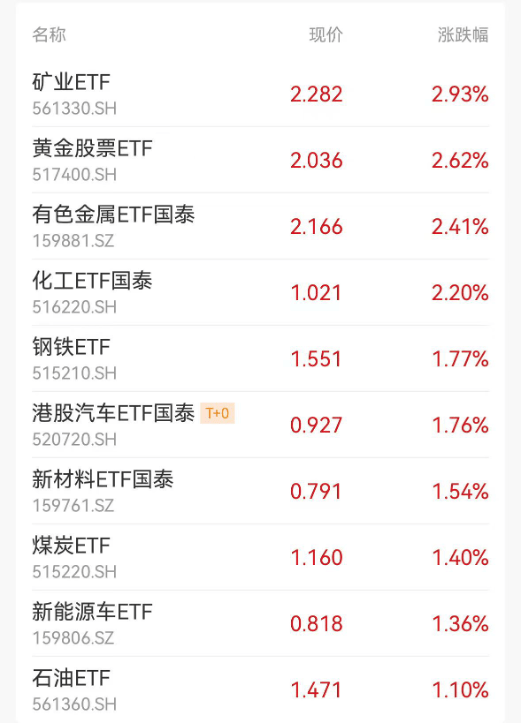
Core Viewpoint - The cyclical sector shows strong performance, with significant gains in metals, chemicals, and oil and gas sectors, indicating a positive outlook for the long-term fundamentals of the non-ferrous metals sector [1] Group 1: Sector Performance - The mining ETF (561330) increased by 2.93%, while the gold stock ETF (517400) rose by 2.62%, and the chemical ETF (516220) gained 2.20% [2] - The coal sector is also performing well, with news that the Trump administration plans to direct the Pentagon to purchase coal, potentially revitalizing the coal industry [1] Group 2: Market Dynamics - Concerns about cryptocurrencies impacting liquidity in the cyclical sector have been alleviated, as precious metals like silver remain stable, suggesting limited risk of a secondary shock to the non-ferrous sector [1] - Long-term support for the non-ferrous sector is expected from factors such as resource nationalism and supply-demand imbalances [1] Group 3: Investment Recommendations - Investors are encouraged to pay attention to the only coal ETF (515220) due to short-term catalysts and long-term valuation support from a weakening dollar credit [1]

黑色建材日报:市场情绪一般,钢价震荡运行-20260204
Hua Tai Qi Huo· 2026-02-04 07:33
1. Report Industry Investment Rating - No relevant content provided 2. Core Views - The market sentiment is average, and steel prices are fluctuating. Glass is showing a strong upward trend with supply - side disturbances, while soda ash is in a weak downward trend. For the double - silicon products, the market sentiment is cautious, and the alloys are fluctuating [1][3] - The overall strategy is that glass and silicon products are in a fluctuating state, while soda ash is in a weak fluctuating state [2][4] 3. Summary by Related Catalogs 3.1 Glass and Soda Ash - **Market Analysis** - Glass: The glass futures market showed a strong upward trend yesterday, and the spot market prices remained stable with good sales by manufacturers [1] - Soda ash: The soda ash futures market showed a weak downward trend yesterday, and the spot market was cautious, with downstream enterprises mainly making rigid - demand purchases [1] - **Supply - Demand and Logic** - Glass: The supply - demand contradiction of glass is still large. Although some production lines have been gradually shut down for maintenance, the production reduction is still insufficient compared to the decline in rigid demand. The market anticipates a peak season after the Spring Festival, and attention should be paid to the progress of glass production line shutdowns [1] - Soda ash: The supply - demand contradiction of soda ash is relatively limited. Some soda ash plants have completed maintenance, and supply has rebounded. Considering the future new production projects of soda ash and the expected increase in cold repairs of float glass, it is necessary to suppress the production profits of soda ash enterprises to avoid supply - demand imbalance. Attention should be paid to the changes in float glass production lines and the progress of new soda ash production projects [1] - **Strategy** - Glass: Fluctuating [2] - Soda ash: Weakly fluctuating [2] 3.2 Double - Silicon Products (Silicon Manganese and Silicon Iron) - **Market Analysis** - Silicon Manganese: The silicon manganese futures market fluctuated yesterday. Before the festival, steel mills' inventory replenishment has gradually ended, and mainstream steel mills have not launched a new round of tenders. The prices are relatively firm. The price of 6517 silicon manganese in the northern market is 5600 - 5700 yuan/ton, and in the southern market is 5720 - 5770 yuan/ton [3] - Silicon Iron: The silicon iron futures market fluctuated yesterday. The spot market transactions were average, and downstream inventory replenishment was mainly for rigid demand. The cash - inclusive ex - factory price of 72 - grade silicon iron natural lumps is 5250 - 5350 yuan/ton, and the price of 75 - grade silicon iron is 5850 - 6000 yuan/ton [3] - **Supply - Demand and Logic** - Silicon Manganese: The fundamentals of silicon manganese have improved. There is an expected increase in molten iron production in the future, and the demand for silicon manganese will improve marginally. However, the inventory pressure is still large, and the supply - demand pattern is still relatively loose. Recently, the South African tariff policy has caused disturbances, which may increase the cost of manganese ore in the future. Attention should be paid to the cost support of manganese ore and inventory changes [3] - Silicon Iron: The fundamental contradictions of silicon iron are controllable. Enterprises have actively reduced production loads. Considering the resumption of production of steel mills, the demand for silicon iron is expected to improve marginally. The overall over - capacity of silicon iron suppresses the price increase. Attention should be paid to the subsequent inventory reduction of silicon iron and the power price policy in production areas [3] - **Strategy** - Silicon Manganese: Fluctuating [4] - Silicon Iron: Fluctuating [4]