适老化产品

Search documents
新政加码银发经济:4亿老年市场潜力如何释放?
Sou Hu Cai Jing· 2026-02-26 13:16
Core Viewpoint - The State Council of China emphasizes the need to develop the silver economy and elderly care services, aiming to enhance consumption among the elderly and create new consumption scenarios and business models [2] Group 1: Demographic Trends - By the end of 2025, the population aged 60 and above in China is projected to reach approximately 320 million, accounting for 23% of the total population, with those aged 65 and above reaching about 224 million, or 15.9% [2] - It is predicted that by around 2035, the elderly population (60 and above) will exceed 400 million, representing over 30% of the total population, marking a transition to a severely aging society [2] Group 2: Economic Impact - The silver economy in China is currently valued at approximately 7 trillion yuan, with projections estimating it could grow to 19.1 trillion yuan by 2035, and potentially reach 30 trillion yuan according to other studies [5][6] - From 2025 to 2040, the total consumption expenditure of individuals aged 60 and above is expected to increase by over 300%, while the overall population's consumption expenditure is projected to grow by 136% [5][6] Group 3: Elderly Care Services - The current elderly care system in China is still in the exploratory phase, with about 90% of elderly individuals opting for home care [4] - As of the end of 2025, there are approximately 41,700 elderly care institutions in China, employing around 722,000 people, with private institutions making up 52.2% of the total [8] Group 4: Policy and Support Measures - The government has introduced various fiscal, land, tax, and financial support policies to promote the integration of public and private elderly care institutions [5] - Recent measures include enhancing the supply of elderly care services and supporting technology-driven solutions in elderly care [10] Group 5: Market Dynamics - The rapid economic growth over the past 40 years has led to increased savings among the elderly, with a notable shift in their consumption patterns towards health, culture, tourism, and smart products [10] - The elderly population's consumption is expected to become a significant growth point for the national economy in the coming years, with a focus on health, wellness, and leisure spending [10]


30万亿大市场加速开启,2025年我国银发经济规模接近10万亿元
Sou Hu Cai Jing· 2026-02-26 08:31
Core Insights - The State Council of China is focusing on advancing the silver economy and elderly care services, predicting that by 2035, the market size of the silver economy will reach 30 trillion yuan, accounting for about 10% of GDP [19][20]. Group 1: Market Potential and Growth - The silver economy is expected to grow significantly, with projections indicating that by 2025, its scale will approach 10 trillion yuan [3]. - The demand from the new generation of elderly consumers is shifting from "cautious frugality" to "actively enjoying life," indicating a structural upgrade in consumption from survival to enjoyment and quality [5]. - By 2025, the elderly population aged 60 and above in China is projected to reach 320 million, with expectations of exceeding 400 million by 2035, further driving the growth of the silver economy [20]. Group 2: Policy and Support Measures - The State Council emphasizes the need to enhance support measures and strengthen policy implementation to promote the development of elderly care services and industries, addressing the challenges of an aging population [15][20]. - A new policy initiative will include elderly-friendly products in the consumption subsidy program, with some regions offering up to 30% financial subsidies for qualifying elderly products [7]. - The government aims to create new consumption scenarios and business models for the elderly, enhancing their consumption capacity through targeted policies [12][20]. Group 3: Service and Product Development - The demand for professional home care services is increasing, with a significant gap in nursing talent exceeding 10 million, prompting the establishment of a new occupational classification for long-term care providers [11][20]. - The variety of elderly-friendly products has expanded from less than 1,000 to over 10,000 in the past decade, indicating a growing market for such products [13]. - The development of the silver economy requires not only quality products but also attentive and professional services to meet the diverse needs of the elderly population [9][20].

聚焦万亿级消费新风口!增强供需适配,适老化产品市场潜力几何?
Huan Qiu Wang· 2025-12-04 01:57
Core Insights - The elderly products market is projected to grow from 2.6 trillion yuan in 2014 to 5.4 trillion yuan by 2024, with a compound annual growth rate of 7.3%, becoming a significant pillar of the silver economy [1] - The "Implementation Plan" aims to enhance the adaptability of supply and demand in the elderly products sector, with specific goals set for 2027 [1] Market Growth and Trends - The elderly products market is experiencing robust growth, driven by an aging population and increasing demand for elderly care services [1][2] - The market is expected to form three trillion-level consumption fields and ten hundred-billion-level consumption hotspots by 2027 [1] Product Supply and Demand - There is a need to optimize the supply of elderly products to better match the diverse needs of the elderly population [2][3] - Current elderly products cover basic care, health monitoring, and life assistance, but there is a significant lack of high-end smart devices and personalized products [2][3] Barriers to Market Development - Major obstacles include insufficient consumer awareness, supply-demand mismatch, lack of standardization, and cost pressures [3] - Traditional views among the elderly lead to lower acceptance of elderly products, with a preference for reliance on family or traditional care methods [3] Policy and Technological Integration - The "Implementation Plan" emphasizes the need for enhanced research and development of elderly products, including care robots and multifunctional nursing beds [3][4] - The integration of artificial intelligence into elderly care services is highlighted as a key area for innovation [4] Role of Insurance in Elderly Products - The insurance sector plays a crucial role in promoting elderly products through a "product + service" model, establishing long-term trust with clients [5][6] - Insurance companies are integrating various service resources to create a comprehensive service system for the elderly [5][6] Financial Support and Industry Development - The government aims to increase support for quality elderly products through financial policies, including the establishment of special funds and tax incentives [6] - Insurance companies are encouraged to invest strategically in infrastructure for elderly care, enhancing the application scenarios for elderly products [6]
国家发展改革委答每经问:推动培育一批户外运动龙头企业
Mei Ri Jing Ji Xin Wen· 2025-11-27 13:32
Core Viewpoint - The Chinese government has introduced an implementation plan to enhance the adaptability of supply and demand for consumer goods, aiming to promote high-quality consumption and economic growth by setting specific targets for 2027 and 2030 [1] Group 1: Development Goals - By 2027, the plan aims to establish three trillion-yuan-level consumption sectors and ten hundred-billion-yuan-level consumption hotspots [1] - By 2030, the goal is to form a high-quality development pattern characterized by a positive interaction between supply and consumption, gradually increasing the contribution of consumption to economic growth [1] Group 2: Quality Supply Enhancement - The National Development and Reform Commission (NDRC) emphasizes the need for higher quality consumer goods and diversified consumption scenarios in response to the rising consumer demand [2] - The NDRC plans to improve supply quality through technological and brand advancements, promoting high-quality consumer goods into residents' lives [2] Group 3: Brand and Green Upgrades - The NDRC has initiated various activities to enhance brand awareness and quality, including the "Brand China" series and training programs for industry leaders [3] - Since the 14th Five-Year Plan, the NDRC has revised 30 mandatory energy efficiency standards and is focused on promoting green and low-carbon consumption [3] Group 4: Infrastructure and Product Supply - The NDRC is enhancing infrastructure for consumer convenience, such as increasing parking spaces and electric vehicle charging stations, with over 3.4 million parking spaces added during the 14th Five-Year Plan [4] - The rise of outdoor sports among young consumers has led to support for high-quality outdoor sports destinations and the establishment of standards for outdoor products and services [4] Group 5: Senior Consumer Market - The NDRC is promoting the development of the silver economy by enhancing the supply of quality products for the elderly and supporting home modifications for aging populations [5] - Future efforts will focus on guiding enterprises to increase the supply of quality senior products and facilitating precise matching between supply and demand [5]
国家发展改革委答每经问:将积极支持高质量户外运动目的地建设,推动培育一批户外运动龙头企业
Mei Ri Jing Ji Xin Wen· 2025-11-27 10:04
Core Points - The State Council introduced a new implementation plan aimed at enhancing the adaptability of supply and demand in consumer goods, with goals set for 2027 and 2030 [1] - The plan emphasizes the shift in consumer focus from mere availability to quality, aiming to promote high-quality consumer goods [1] Group 1: Development Goals - By 2027, the plan aims to establish three trillion-level consumption sectors and ten hundred-billion-level consumption hotspots [1] - By 2030, the goal is to create a high-quality development pattern where supply and consumption interact positively, gradually increasing the contribution of consumption to economic growth [1] Group 2: Supply Quality Improvement - The National Development and Reform Commission (NDRC) plans to enhance supply quality through technology and brand development, focusing on high-quality consumer goods [2] - Initiatives include the "Artificial Intelligence+" action to promote intelligent development across industries and the cultivation of a smart product ecosystem [2] Group 3: Brand and Green Development - The NDRC has launched various activities to promote brand awareness and quality, including the "Brand China" series and training programs for industry leaders [3] - Since the 14th Five-Year Plan, 30 mandatory energy efficiency standards have been revised or established to support green and low-carbon consumption [3] Group 4: Consumer Demand Focus - The NDRC is enhancing the supply of convenient facilities such as parking spaces and charging stations, with over 3.4 million parking spaces added and 18.645 million electric vehicle charging points established, a 54% increase year-on-year [4] - The plan includes support for high-quality outdoor sports destinations and products, as well as promoting aging-friendly products to cater to the silver economy [4]
工业和信息化部等六部门联合发文 到2027年形成3个万亿级消费领域和10个千亿级消费热点
Zheng Quan Ri Bao· 2025-11-26 16:08
Core Insights - The implementation plan aims to enhance the adaptability of supply and demand in consumer goods, targeting significant optimization of supply structure by 2027 and establishing a high-quality development pattern by 2030 [1][2][3] Group 1: Goals and Objectives - By 2027, the plan targets the formation of three trillion-level consumption sectors and ten hundred-billion-level consumption hotspots, with a focus on high-quality consumer goods that have cultural significance [1] - By 2030, the plan aims for a well-functioning interaction between supply and consumption, with a steady increase in the contribution of consumption to economic growth [1] Group 2: Innovation and Technology - The plan emphasizes the acceleration of new technology and model applications, promoting efficient manufacturing responses and the integration of artificial intelligence [1] - Key industries targeted include smart connected vehicles, smart home products, consumer electronics, modern textiles, food, and green building materials [1] Group 3: Product Supply Expansion - The plan outlines measures to enhance the supply of green products, improve rural consumer goods, and promote the development of leisure, sports, and health products [2] - Specific actions include adapting to green consumption trends and revising national standards for volatile organic compounds (VOCs) and heavy metals in products [2] Group 4: Consumer Demand Matching - The plan aims to diversify product offerings to meet the needs of different demographics, including children, students, and the elderly [2] - It promotes the development of high-quality, intelligent, and refined products for children, as well as optimizing products for the elderly [2] Group 5: New Consumption Scenarios and Business Models - The plan encourages the establishment of new consumption scenarios, including the launch of flagship stores and the development of new business models such as live e-commerce and instant retail [2] - It also supports the promotion of shared consumption models in public spaces [2] Group 6: Supportive Environment - The plan emphasizes the importance of financial and fiscal support, maintaining market order, and organizing special events to foster a conducive environment for consumer goods [3] - Specific measures include leveraging policies for equipment upgrades and trade-in programs to support the consumer goods industry [3]
从银发到育儿、从睡眠到美学,六大趋势重构万亿级全球消费品赛道
Sou Hu Cai Jing· 2025-10-13 08:34
Group 1: Aging Population Trends - The aging population in the US, Europe, and Japan is driving demand for products that promote independence, dignity, and choice among seniors, with 65+ population percentages reaching 30% in Japan, 26% in Europe, and 17% in North America [3] - There is a significant consumer interest in aging-related products, with 81% of North American consumers, 76% of European consumers, and 67% of Japanese consumers expressing concern [3] - Smart mobility devices, personalized nutrition supplements, and home care products are emerging as key consumption trends among the elderly [3] Group 2: Sleep Anxiety and Solutions - Approximately 40% of Gen Z adults in the US, Europe, and Japan experience sleep anxiety at least three times a week, a notable increase from previous years [4] - Around 80% of consumers are interested in non-drug sleep aid products, with preferences varying by region: US consumers favor AI-assisted sleep solutions, while Japanese consumers prefer nutritional supplements [4] - European consumers show a low acceptance of synthetic products, leaning towards plant-based sleep aids [4] Group 3: Beauty and Personal Care Innovations - Over 50% of consumers in the US, Europe, and Japan are willing to invest in smart beauty devices, with North American consumers showing a 66% willingness [5] - The integration of technology in oral care and beauty tools is meeting consumer demands for personalized and aesthetically pleasing products [5] - Innovations in beauty tools, such as AI skin diagnostics and lightweight hair dryers, reflect the trend of "technology as aesthetics" [5] Group 4: Natural and Organic Products - There is a growing consumer preference for natural and organic products, with 76% of European consumers willing to pay more for natural ingredients, compared to 60% in North America and 56% in Japan [6] - This trend is driving innovation in the natural and organic product sector, emphasizing sustainable packaging and eco-friendly values [6] Group 5: The Rise of Minimalist Makeup - The beauty industry is experiencing a "light makeup revolution," focusing on detail and comfort, driven by fast-paced lifestyles and emotional well-being [7] - In Japan, over two-thirds of consumers consider lightweight makeup tools essential for commuting, with a high importance placed on low-sensitivity products [7] - The demand for convenient and comfortable beauty products is leading to the popularity of items like adhesive eye masks and portable touch-up pens [7] Group 6: Parenting Pressures and Product Preferences - More than half of new parents globally feel societal pressure during parenting, with safety, eco-friendliness, and smart features being the top concerns when purchasing baby products [8] - In Japan, 86% prioritize safety in baby products, while 48% of US consumers are open to smart technology in parenting [8] - Common preferences include eco-certified baby products, with regional differences in product types, such as algorithm-based feeding in the US and advanced baby monitors in Japan [8]

山西实施居家适老化改造产品消费补贴 每人最高补贴1.8万元
news flash· 2025-07-26 09:09
Group 1 - The core viewpoint of the article is that Shanxi Province has included home aging transformation products in its consumer "trade-in" policy, allowing individuals to receive subsidies up to 18,000 yuan [1] - The province has developed a subsidy product catalog titled "Jin Xiao Huan Xin" action for home aging transformation products, tailored to local conditions based on national guidelines [1] - Consumers purchasing eligible home aging transformation products from the catalog can receive a subsidy of 30% of the actual sales price through a "payment reduction" model [1]
最高补贴1.2万元 支付立减 河南省居家适老化改造产品补贴正式上线
He Nan Ri Bao· 2025-07-22 00:55
Group 1 - The core viewpoint of the news is the implementation of a subsidy program for home modifications aimed at elderly individuals in Henan Province, with a maximum subsidy of 12,000 yuan per household [1][2] - The program focuses on six key areas of home modification, including ground and door modifications, bedroom modifications, toilet and bathing equipment upgrades, kitchen equipment upgrades, physical environment modifications, and smart assistive products [1] - A total of 29 types of products have been selected for the subsidy, including non-slip floor stickers, adjustable stoves, bedside guardrails, and sleep monitoring devices [1] Group 2 - Starting from July 22, elderly individuals or their agents can apply for the subsidy through the Yunshanfu APP by submitting necessary documents, including ID and property proof [2] - The application review process will be completed by local civil affairs departments within three working days, and the subsidy will be granted on a first-come, first-served basis [2] - Each elderly individual can only designate one property for the home modification subsidy, and any unused subsidy amount will reset at the end of each month [2]
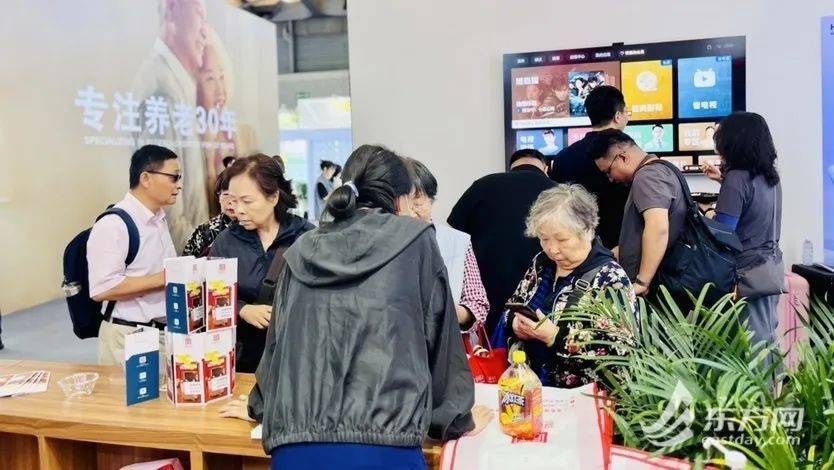
“连售三台电视,没想到老年人这么会买!” 老博会引燃银发消费热
Sou Hu Cai Jing· 2025-06-12 14:17
Core Insights - The Shanghai Senior Expo, now in its 25th year, continues to grow in popularity, attracting over 28,300 visitors on its opening day, setting a new record for single-day attendance [2] - The event showcases a variety of products and services tailored for the elderly, highlighting the potential of the "silver economy" [4][11] Industry Trends - The silver economy is evolving into a comprehensive consumption ecosystem covering various aspects such as clothing, food, housing, transportation, travel, shopping, and entertainment [11] - There is a notable increase in the growth rate of sectors like rehabilitation care, elderly education, and medical care, with many companies reporting growth rates exceeding 30% [11] Company Activities - Companies like Skyworth are successfully launching products specifically designed for the elderly, such as a 75-inch smart TV, which has seen strong sales at the expo [4] - The Japanese brand Fukujukankou debuted at the expo, offering customizable shoes for seniors, addressing specific needs such as foot deformities and ease of wear [7] - IKEA introduced its upgraded "Elderly-Friendly Living" renovation project, showcasing products designed for the elderly and offering a 30% subsidy on eligible items purchased at the expo [10]