
Enterprise Services

Search documents
网易(09999)AI实用主义显成效 AI新质管线提效300%
智通财经网· 2026-02-11 11:05
Core Insights - NetEase reported steady performance in Q4 2025 with revenue of 27.5 billion yuan and total annual revenue of 112.6 billion yuan, achieving a Non-GAAP net profit of 37.3 billion yuan [1] - The company has invested 17.7 billion yuan in R&D for six consecutive years, focusing on AI-driven productivity across its gaming, music, and education sectors [1] - The "AI-native" strategy has led to significant advancements in AI applications, with a notable 11% year-on-year growth in online gaming revenue, reaching 89.6 billion yuan [1] Financial Performance - Q4 revenue reached 27.5 billion yuan, while total annual revenue was 112.6 billion yuan [1] - Non-GAAP net profit for the year was 37.3 billion yuan [1] - R&D investment for the year was 17.7 billion yuan, marking a consistent annual investment exceeding 10 billion yuan for six years [1] AI Strategy and Implementation - NetEase has established an AI-centric production system, integrating AI into various business segments, including gaming, music, and education [1] - The company has achieved large-scale deployment of AI in art, planning, programming, animation, and quality assurance [1] - AI-driven tools have improved production efficiency by up to 300% in certain areas, creating a competitive edge in AI industrialization [3] Gaming Sector Highlights - The gaming and related services revenue for 2025 was 92.1 billion yuan, with online gaming net revenue of 89.6 billion yuan, reflecting an 11% increase [1] - Classic games like "Dream of Red Mansions" and "Big Talk Journey to the West" have shown strong performance, with record revenues and user engagement [9] - New game features and innovative gameplay have attracted new users and increased player retention [10] Other Business Segments - NetEase's Youdao achieved annual revenue of 5.9 billion yuan, marking its first year of positive operating profit and cash flow [1] - NetEase Cloud Music generated 7.8 billion yuan in revenue, with steady growth in subscription services [1] - The innovation in AI applications has led to significant improvements in advertising efficiency, with gaming and AI application ad revenue growing over 50% year-on-year [7] Global Expansion and Market Performance - "Yan Yun Sixteen Sounds" has become a successful global title, surpassing 80 million users and achieving high rankings in international markets [12] - The game has been recognized for its cultural impact and has won multiple awards, showcasing NetEase's capability in global IP management [12] - Other titles like "World of Warcraft" and "Call of Duty" have also achieved record revenues in the Chinese market, highlighting the effectiveness of localized operations [10][13]

“天才”与“疯子”的双生样本:蒋凡向左,无招向右
3 6 Ke· 2025-10-17 09:09
Core Insights - Alibaba is undergoing a significant personnel adjustment with the return of key figures Jiang Fan and Wu Zhao, reflecting a strategic response to growth anxiety and the AI wave [1][6] - The company is focusing on two historical strategic opportunities: a technology platform centered on "AI + Cloud" and a large consumer platform that integrates shopping and lifestyle services [1][6] - The contrasting leadership styles of Jiang Fan as a "builder of order" and Wu Zhao as a "disruptor of rules" are essential to meet Alibaba's dual needs for stability and innovation [2][7] Group 1: Leadership Dynamics - Jiang Fan is tasked with stabilizing the e-commerce sector amidst fierce competition from rivals like Pinduoduo and Douyin, ensuring a steady cash flow for the group [2][3] - Wu Zhao's role is to innovate and redefine the rules in the AI era, particularly focusing on enhancing DingTalk as a collaborative tool and expanding its capabilities [2][8] - The return of these leaders signifies a balance between maintaining existing business stability and seeking new growth opportunities [4][9] Group 2: Strategic Focus - Alibaba's strategic blueprint emphasizes a "big consumption ecosystem" that integrates long-distance e-commerce, instant retail, and scenario services [6][7] - Jiang Fan's mission includes consolidating domestic and international e-commerce operations to form a unified front against competitors [7][8] - Wu Zhao's focus on transforming DingTalk into an AI-driven enterprise intelligence hub is crucial for leveraging Alibaba Cloud's substantial infrastructure investments [8][10] Group 3: Organizational Evolution - The return of Jiang Fan and Wu Zhao reflects Alibaba's pragmatic approach to organizational structure, prioritizing business value over perfect moral standards [5][11] - The company is willing to accommodate unconventional leadership styles as long as they contribute strategically to growth and innovation [5][11] - The dual leadership approach aims to navigate the complexities of maintaining agility and sharpness within a large organization while addressing internal management costs and cultural implications [10][12]

绚星发布四套智能生产力解决方案,以可量化ROI助力企业AI落地 | 科技前线
Tai Mei Ti A P P· 2025-09-18 02:57
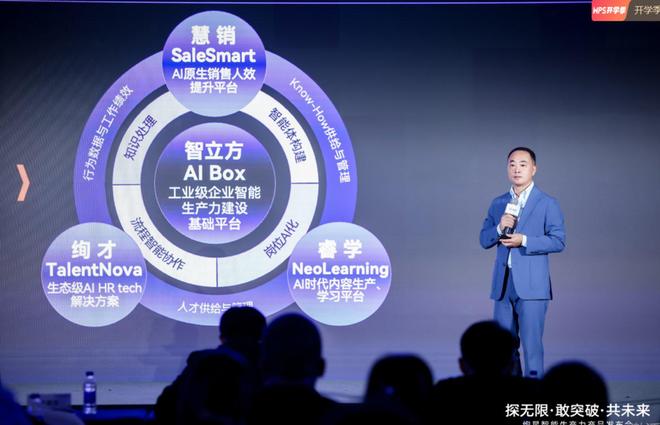
Core Insights - Xuanxing Smart Technology has launched four AI product matrices aimed at enhancing organizational management, talent management, job empowerment, and sales efficiency, integrating AI into business processes to create quantifiable value [2] - The company, formerly known as Yunxuetang, has served over 2,500 major clients and successfully listed on NASDAQ in August 2024 [2] - Despite global corporate investments in AI exceeding $300 billion, only 5% of projects are scalable and generate financial value, highlighting common anxieties in AI transformation such as unclear direction, difficult ROI verification, and inadequate talent development [2] AI Product Matrix - The AI product matrix includes: - "Zhili Fang" as a foundational platform for productivity, optimizing job-level AI assistant efficiency [3] - "Xuan Cai" as an AI-driven HR Tech solution to enhance recruitment matching and efficiency [3] - "Rui Xue" focusing on training, which has shown significant improvements in understanding speed and conversion rates for frontline sales [3] - "Hui Xiao" targeting sales departments, providing real-time feedback and guidance, resulting in reduced training costs and improved customer identification accuracy [3] Market Insights - According to a report by Sullivan, the penetration rate of AI talent training in 2024 is projected to be only 2.7%, but it is expected to rise to 24.3% by 2030 due to increasing corporate demand [4] - The report emphasizes that intelligent productivity can address common challenges in digital transformation, such as inefficient cross-department collaboration and insufficient knowledge retention, by integrating industrial-grade AI, big data, and automation technologies [4]

These Were the S&P 500 Index's Worst Performing Stocks in August 2025
The Motley Fool· 2025-09-02 08:03
Core Insights - The S&P 500 index experienced a 1.9% gain from the end of July to August 29, despite some tech stocks facing significant declines [1] Group 1: Company Performance - The Trade Desk's shares dropped 36.5% in August after reporting a 19% year-over-year revenue growth for Q2, which indicated a deceleration in growth [4][5] - Super Micro Computer's stock fell 26.7% in August following a 7.4% year-over-year sales growth to $5.8 billion and a decline in net income from $297 million to $195 million [8][10] - Gartner's stock decreased due to concerns that new AI tools are making its enterprise-level subscriptions less relevant, with global contract value growing only 4.9% year over year to $5.0 billion [11][12] Group 2: Market Outlook - The Trade Desk's forecast for Q3 revenue of at least $717 million implies a 14% year-over-year gain, which investors view as a sign of competitive weakness against Amazon's ad business [5][6] - Super Micro Computer revised its fiscal 2026 revenue prediction to $33 billion, a significant drop from the previous estimate of $40 billion, raising concerns about its growth trajectory [9][10] - Gartner is introducing its own AI application, AskGartner, to retain clients amid competition from general-use AI tools, which is reportedly off to a strong start [12][13]




AI+综合企服:中小微企业数智跃迁的“超级引擎”
Sou Hu Cai Jing· 2025-08-05 04:54
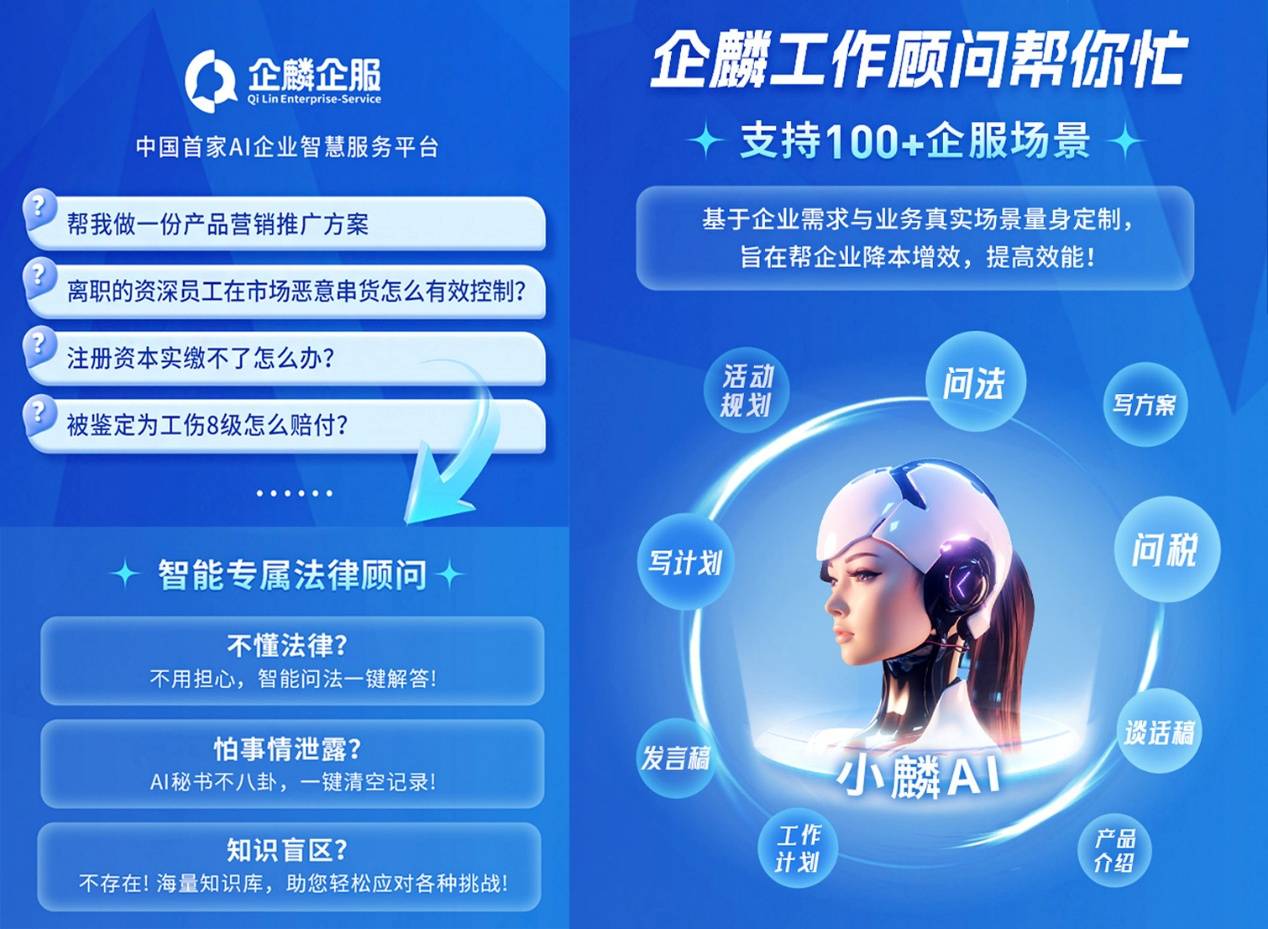
Core Insights - The enterprise service industry is undergoing a profound transformation driven by AI, focusing on cost reduction and efficiency enhancement for small and medium-sized enterprises (SMEs) through intelligent service chain reconstruction and decision-making optimization [1][4]. Group 1: Cost Reduction and Efficiency Enhancement - Traditional enterprise services rely heavily on human labor, resulting in low efficiency and high costs. AI technologies can significantly improve this by automating repetitive tasks, reducing time spent by over 90% [1]. - AI enables 24/7 service availability and precise resource matching, dynamically aligning bank products, policies, and business opportunities with enterprise profiles to shorten resource connection paths [2]. Group 2: Risk Prevention - AI helps establish a comprehensive risk management framework, shifting from reactive measures to proactive alerts, addressing information asymmetry that often leads to business risks [4]. Group 3: Decision-Making Empowerment - AI transforms data into actionable insights, enhancing decision-making capabilities. For instance, AI customer service can provide real-time legal and policy consultations, significantly reducing waiting times for enterprises [4][5]. - AI tools can conduct real-time tax risk scans, detect invoice anomalies, and generate visual reports with optimization suggestions, thereby improving compliance and risk management [5]. Group 4: Future Trends in AI-Driven Enterprise Services - AI is positioned as a "super partner" for enterprise growth, with quantifiable benefits such as a 65% reduction in operational costs, a threefold increase in workforce efficiency, and an 80% reduction in decision-making timelines [7]. - The future of AI in enterprise services includes the development of lightweight AI tools to lower digitalization barriers for SMEs, fostering a more inclusive professional service environment [7]. - A decentralized and self-driven organizational model is emerging, linking over 60 banks and 2,000 law firms to create an open service network [7]. - AI will evolve from providing single-point solutions to offering lifelong support based on dynamic business data recommendations [7].
好工作和好男人一样,不在市面上流通
36氪· 2025-05-03 10:25
Core Viewpoint - The article discusses the changing job market dynamics, highlighting the contrasting experiences of individuals in declining industries versus those in emerging sectors, emphasizing the importance of adapting to new opportunities and industries for career growth [3][24][30]. Group 1: Job Market Dynamics - The job market is experiencing a divide, with some sectors like e-commerce and enterprise services facing decline, leading to fewer job opportunities and increased competition [24][27]. - Individuals like Mi Lan and Wendy illustrate the struggles in finding stable employment in saturated industries, while others are exploring opportunities in high-growth areas such as AI [24][27]. - The AI industry is witnessing a talent war, with high salaries being offered for positions, indicating a shift towards emerging technologies [27][30]. Group 2: Emerging Opportunities - The article identifies several high-potential sectors, including low-altitude economy, biotechnology, and artificial intelligence, which are expected to replace traditional industries and attract talent [30][42]. - The concept of "red dividend companies" is introduced, representing firms that are at the forefront of innovation and growth, supported by favorable policies and capital [42][43]. - The article emphasizes the need for job seekers to remain flexible and optimistic, adapting to the evolving job landscape by exploring opportunities in high-growth startups and emerging industries [34][43]. Group 3: Job Search Tools - The introduction of the "Job Elevator AI" tool aims to assist job seekers in navigating the job market by connecting them with suitable opportunities across various sectors [35][46]. - The tool includes a comprehensive database of over 10,000 companies, including unicorns and startups, to help users find roles that align with their skills and interests [40][45]. - Future iterations of the tool will enhance its capabilities, including personalized job recommendations and AI-driven resume evaluations, to better support job seekers [68][73].

AI重塑企业服务市场,IBM转身来到“拐点”
2 1 Shi Ji Jing Ji Bao Dao· 2025-03-31 07:21
Core Insights - The generative AI wave is transforming the enterprise service market at an unprecedented pace, with new players like DeepSeek and OpenAI disrupting traditional technology barriers while established giants like SAP, IBM, and Microsoft integrate AI deeply into their core business processes [1][2] - According to Gartner, the global AI software market is projected to reach $297 billion by 2027, with enterprise-level AI applications being a key battleground [2] - AI is seen as a deterministic trend, with a significant number of executives planning to expand AI applications to optimize processes and innovate business models by 2025 [3] Company Strategies - IBM is accelerating its strategic adjustments by finding new growth areas through the integration of hybrid cloud and AI [2] - IBM's approach to AI transformation emphasizes a "companion" model, providing customized solutions from strategic consulting to hybrid cloud and AI transitions [3] - IBM's AI platform allows enterprises to choose from various AI models, including those from Meta and Mistral, as well as its own compliant models like Granite [5] Market Dynamics - The boundaries between consulting, software, and hardware businesses are becoming blurred due to AI's impact, necessitating vendors to possess full-stack capabilities [3] - Despite the increase in AI applications, 54% of AI projects have not progressed beyond the pilot stage due to complexities, costs, and risks [3] - IBM's AI assistant technology has shown effectiveness, handling 94% of employee queries and saving over $5 million annually [5] Challenges and Concerns - IBM faces challenges due to its historical inertia, requiring complex configurations for its AI platform compared to more user-friendly AI tools in the market [5] - Investors are cautious about IBM's transformation effectiveness, emphasizing the need for the company to demonstrate that its AI business can sustainably contribute to profits [6]
