《摇光录:乱世公主》

Search documents
触乐本周行业大事:11月184款版号下发,字节或有意出售沐瞳,腾讯完成对育碧子公司战略投资
Sou Hu Cai Jing· 2025-11-29 07:16
Group 1: Game Approval and Market Trends - In November, the National Press and Publication Administration approved a total of 184 games, bringing the total number of game licenses issued in 2025 to 1,624, with 1,532 being domestic and 92 being imported [1][4] - The number of domestic game licenses approved each month has consistently exceeded 110 over the past year, indicating a stable growth trend compared to last year [4] - Notable games approved this month include Tencent's "No Man's Land," Bilibili's "Shining! Lume," and Perfect World's "Dream New Zhu Xian: Light Enjoy" [1] Group 2: ByteDance and Savvy Games Group Negotiations - ByteDance is reportedly in talks with Saudi Savvy Games Group to sell its gaming subsidiary, Mouton, with negotiations still ongoing and no final agreement reached [5] - Mouton's flagship game, "Mobile Legends: Bang Bang," has over 1.5 billion downloads globally and is considered a core asset of ByteDance's gaming business [5] - There are concerns regarding Savvy's financial situation, which may impact the negotiations, as the Saudi Public Investment Fund is facing funding shortages [7] Group 3: Tencent's Strategic Investments - Tencent has completed a strategic investment of €11.6 billion (approximately 900 million RMB) in Ubisoft's subsidiary, Vantage Studios, acquiring a 26.32% economic interest while Ubisoft retains control [8][10] - Vantage Studios will focus on major Ubisoft IPs like "Assassin's Creed," "Far Cry," and "Rainbow Six," aiming to develop them into evergreen brands with annual revenues of €1 billion [8] Group 4: Game Releases and Updates - Tencent's Level Infinite has secured global publishing rights for the upcoming cross-platform game "Project Spirits" developed by Shift Up, indicating Tencent's deepening involvement in game development [11][13] - Bilibili's game "Yao Guang Lu: Chaos Princess" will cease online operations on December 8, 2025, after a short lifespan, reflecting challenges in sustaining player engagement [16][18] - NetEase's collectible card game "Onmyoji: The Card Game" will stop new content updates after January 1, 2026, although servers will remain operational [19][21] Group 5: Acquisitions and Market Expansion - Nintendo plans to acquire 80% of Bandai Namco Studios Singapore by April 1, 2026, to enhance its game development capabilities [22][24] - The Chinese Embassy in Belarus praised NetEase's "Yanyun Sixteen Sounds," highlighting the increasing success of Chinese ARPGs in international markets [25][28] - Kaien Network's investment in the AI game "EVE" is set for a second test, with plans for a Q1 2026 launch, showcasing the industry's focus on AI-driven gaming experiences [29][31]



连续扑街后,B站再发二游,霸榜港澳台,这次是萌娘表情包画风?能成吗?
3 6 Ke· 2025-10-14 01:53
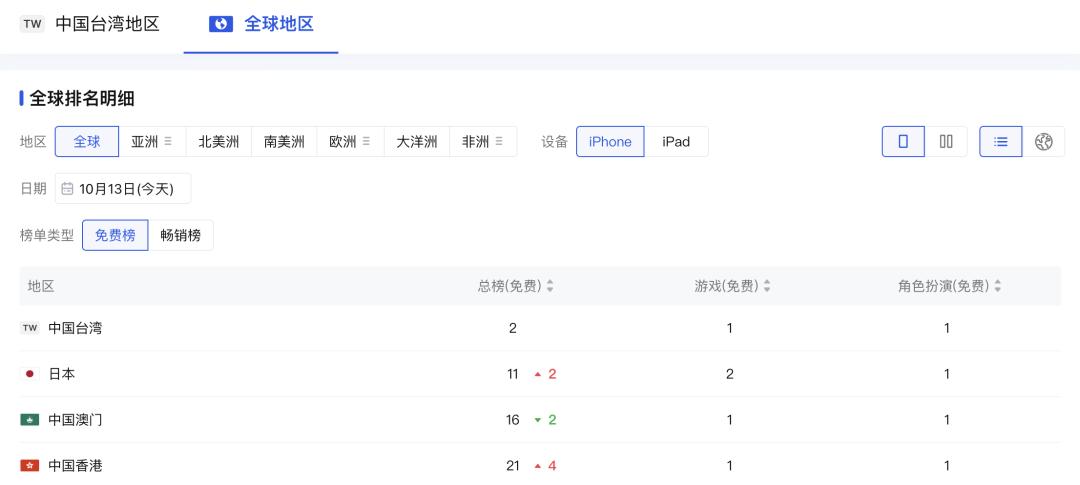
Core Insights - The mobile game "Dudu Face Prank," developed by the Korean team Epid GAMES and published by Bilibili outside of Korea, launched internationally on October 9 and has achieved significant early success in various markets [1][2]. Market Overview - As of October 13, "Dudu Face Prank" ranks first on the iOS free charts in Hong Kong, Macau, and Taiwan, and second in Japan [3]. - The game accumulated over 320,000 downloads across both platforms within two days of its launch [5]. - Revenue generated in the first two days exceeded 2.16 million, excluding platform fees [6]. Game Features and Design - The game offers a "super-saturated welfare" system, providing players with 130 free draws upon login and a total of 300 draws in the first week, significantly more than typical offerings in the genre [8]. - Unique gameplay features include real-time interactive character customization using Live2D technology, enhancing user engagement through playful interactions [10]. - The game is designed for "casual play," with daily tasks taking only 15-20 minutes to complete, catering to players' fragmented time availability [10]. Marketing Strategy - The marketing campaign began in early September, with increased efforts on the launch day [12]. - Promotional materials focus on the game's core selling points: character interaction, high welfare offerings, and a cute aesthetic [14][20]. - The marketing approach emphasizes low-cost strategies, utilizing smaller influencers and social media platforms to maintain a balanced ROI [26]. Bilibili's Strategic Shift - Bilibili's decision to publish "Dudu Face Prank" reflects a strategic pivot from heavy-duty games to lighter, more casual offerings, addressing the growing demand for low-pressure gaming experiences [28]. - The game fills a gap in Bilibili's portfolio for lightweight games, complementing its existing heavy-duty titles [28]. - The potential for success in the Chinese market is promising, given the game's appeal to Bilibili's large user base and its compatibility with the platform's community-driven content [29].

“为了纸片人,我和男朋友分手了”
Hu Xiu· 2025-08-21 07:03
Core Viewpoint - The article explores the emotional connections individuals form with fictional characters, particularly in the context of anime and gaming, highlighting how these relationships provide emotional support and fulfillment in the absence of real-life connections [1][4][17]. Group 1: Emotional Support from Fictional Characters - Many individuals find companionship in fictional characters, often customizing interactions and narratives around them to enhance their emotional experiences [3][4]. - The phenomenon of "dream girls" or "dream boys" reflects a growing trend where people invest emotionally in characters from anime or games, seeking solace and understanding that they may not find in real relationships [9][10]. - Characters like 越前龙雅 from "The Prince of Tennis" serve as significant emotional anchors for individuals, helping them navigate personal challenges and providing a sense of stability [12][15]. Group 2: Personal Stories of Connection - Individuals like 孟风虹, an ICU nurse, illustrate how fictional characters can offer emotional resilience during stressful times, allowing them to cope with the pressures of their professions [6][16]. - The narrative of 沈玉 reveals how her emotional investment in the character 五条悟 from "Jujutsu Kaisen" led her to reassess her real-life relationships, prioritizing her feelings for the fictional character over her boyfriend [18][20]. - Similarly, 苏苏's reliance on the character 傅闲 from a game highlights how fictional relationships can provide a sense of security and fulfillment that real-life relationships may lack [25][27]. Group 3: The Role of Virtual Interactions - Characters in games, such as 暖暖 from "Shining Nikki," offer a consistent source of interaction and emotional support, filling the void left by real-life friendships [28][35]. - The article emphasizes that virtual characters can provide a stable emotional anchor, contrasting with the unpredictability of real-life relationships [36][37]. - The experiences shared by individuals underscore the idea that virtual relationships can be perceived as safer and more reliable than their real-world counterparts, allowing for a deeper emotional connection without the fear of abandonment [34][37].
当一款停服游戏的“赛博墓碑”也被清空
Hu Xiu· 2025-07-03 06:18
Core Viewpoint - The article discusses the emotional and legal implications of game shutdowns, particularly focusing on the case of the game "Yao Guang Lu," where players feel a loss of connection and rights over their virtual assets after the game's official accounts were cleared and potentially sold [3][11][21]. Group 1: Game Shutdowns and Player Sentiment - Game shutdowns lead to a severed relationship between players and the game, often resulting in the game becoming a "cyber graveyard" for players to mourn [3][16]. - Players express their grief and nostalgia through social media, which serves as a digital memorial for the games they loved [5][16]. - The recent incident with "Yao Guang Lu" has sparked outrage among players, who feel betrayed by the clearing of the official social media accounts [12][14][20]. Group 2: Legal and Ownership Issues - The article highlights the ambiguity surrounding the ownership of virtual assets, questioning whether players truly own their accounts and in-game purchases [28][36]. - Legal frameworks, such as the Civil Code, recognize virtual property but the practical application remains challenging, as seen in the refund policies offered by the game's operator [31][33]. - The separation of usage rights and ownership rights creates dilemmas for players, as they must choose between retaining access to their accounts or receiving limited compensation [37][38].