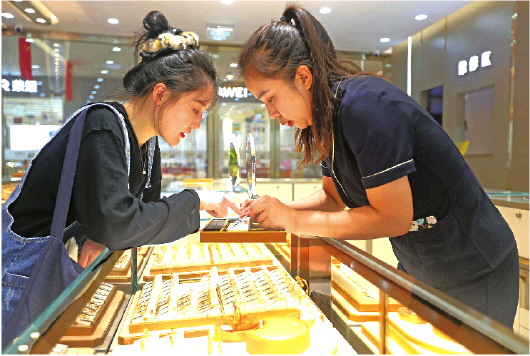
一口价黄金

Search documents
金价暴涨,靠着“一口价”这家公司去年盈利翻倍
第一财经· 2026-03-17 10:39
Core Viewpoint - Chow Sang Sang (00116.HK) experienced a significant stock price increase following an unexpected profit forecast, with a projected profit of HKD 1.6 billion to 1.7 billion for the fiscal year 2025, more than doubling the previous year's profit of HKD 772 million, exceeding market expectations [3][4]. Group 1: Company Performance - Chow Sang Sang's profit growth is attributed to improved sales performance in the Chinese market, particularly in the second half of 2025 [3]. - The rise in gold prices and the high proportion of priced gold jewelry sales contributed to an increase in gross profit margins [3]. - Continuous optimization of the retail network has led to a reduction in operating costs [3]. Group 2: Market Trends - The consumption structure in the gold jewelry market is evolving, with priced gold products becoming a core profit driver for leading jewelry companies due to their high gross margins and differentiation [4]. - The demand for gold bars and coins, which have more investment attributes, has significantly increased, surpassing the consumption of gold jewelry [4]. - Companies with refined brand operations and differentiated products are seeing a continuous rise in the sales proportion of priced gold products, enhancing their overall profitability and mitigating the cyclical impacts of gold price fluctuations [4]. Group 3: Consumer Issues - Despite the higher profits from priced gold products, consumer complaints have emerged, with over 7,000 complaints related to gold jewelry received in 2025, 80% of which pertain to gold products, and 62% specifically related to priced gold [5]. - Issues such as weight concealment and difficulties in returns and exchanges have led to disputes regarding priced gold products [5]. - Experts advise consumers to inquire about the weight of the products and make informed choices, and to report any infringement to regulatory authorities [5].


金价大跌后的珠宝发展展望
2026-02-04 02:27
Summary of the Conference Call on the Jewelry Industry Industry Overview - The conference focused on the jewelry industry, particularly the impact of fluctuating gold prices on consumer behavior and sales performance of major brands like Chow Tai Fook and Lao Puh. - Recent volatility in gold prices has led to changes in consumer purchasing patterns, with a tendency for consumers to adopt a wait-and-see approach during price fluctuations [1][2][4]. Key Insights and Arguments - **Consumer Behavior**: When gold prices rise sharply, there is a temporary increase in sales of fixed-price items, but when prices drop, consumers tend to hold back on purchases, leading to lower sales volumes [1][2][4]. - **Price Adjustments**: Some brands, like Lao Puh, proactively adjusted their prices downward in response to falling gold prices, while others, such as Chow Tai Fook, maintained their prices, leading to a competitive pricing environment [2][16]. - **Sales Performance**: Chow Tai Fook reported a significant drop in sales, with January sales at 8.1 billion, down 34% year-on-year. However, during the last week of January, sales rebounded to 1.76 billion, with nearly 40% coming from fixed-price items [36][37]. - **Profit Margins**: The profit margins for jewelers are affected by the timing of their inventory purchases. If inventory was bought at higher prices before a drop, margins will be squeezed when selling at lower prices [6][7][11]. - **Market Dynamics**: The rapid fluctuations in gold prices create challenges for brands, as they must balance pricing strategies with consumer expectations and market conditions [24][26][30]. Additional Important Points - **Brand Strategies**: Different brands have varying strategies in response to market conditions. For instance, Chow Tai Fook focuses on a standardized pricing model across its extensive network of stores, while Lao Puh targets high-end markets with a more flexible pricing strategy [30][32]. - **Impact of External Events**: Events like the recent issues in the Shui Bei market, where some companies faced liquidity problems due to gold price volatility, could lead consumers to prefer established brands over less reputable ones [40][44]. - **Future Outlook**: The upcoming sales period, particularly around the Lunar New Year, is expected to be challenging due to the current gold price trends. Brands will need to adapt their strategies to maintain sales momentum [38][39]. This summary encapsulates the key discussions and insights from the conference call, highlighting the current state and future outlook of the jewelry industry amidst fluctuating gold prices.
六福集团20251203
2025-12-04 02:21
Summary of LUK FOOK Holdings Conference Call Company Overview - **Company**: LUK FOOK Holdings - **Industry**: Jewelry Retail Key Points and Arguments Impact of VAT Reform - The VAT reform in mainland China has benefited LUK FOOK, as small gold shops faced significant challenges, leading consumers to shift towards branded gold shops for weight-based gold purchases, thus boosting sales for LUK FOOK [2][4] - Despite the challenges, the fixed-price gold segment remains the primary growth driver, with expectations of continued popularity [4] Sales Performance - In October and November 2025, LUK FOOK experienced strong performance in the mainland market, with fixed-price gold sales more than doubling in October due to a price increase announcement [3] - November data showed that weight-based gold sales outperformed fixed-price gold, indicating that the price adjustments did not negatively impact sales significantly [10] Pricing Strategy - The company has raised prices by 7%-8% due to the VAT reform, which is expected to reflect positively in gross margins in the second half of the fiscal year [7][15] Market Expansion Plans - LUK FOOK aims to expand its overseas presence, targeting the opening of 50 new stores in three years, with eight new stores already added by mid-2025, including a new store in Vietnam [8] - The overseas market is performing well and is a key focus for future growth [8] Local Market Strategies - To counteract the decline in tourist spending in Hong Kong, LUK FOOK plans to enhance local consumer marketing strategies [6] - The company is focusing on promoting local consumption to mitigate the impact of reduced mainland tourist spending [6] Performance in Duty-Free Shops - The Hainan duty-free shops have shown exceptional performance, with sales in October and November increasing by approximately 70% year-on-year, particularly in weight-based gold products [12] Challenges and Adjustments - The mainland market saw a net reduction of 179 stores in the first half of 2025, with an expected total of over 200 closures for the year, but a return to net growth is anticipated in fiscal year 2026 [4][18] - The company is also addressing the increased costs from the VAT reform by adjusting pricing strategies to maintain competitiveness [9] Product Performance - The ice diamond series currently accounts for about 4% of total revenue, with growth seen in gold-inlaid diamond products, while 18K gold-inlaid diamond products are experiencing a decline [13] Profitability Outlook - Despite a rise in gold prices in 2025, the increase in gross margin is not expected to match that of 2024. However, the company anticipates that gross margins in the second half of the fiscal year may exceed those in the first half [15][23] Consumer Behavior Insights - The company has noted that consumer sensitivity to price increases is manageable, as evidenced by the performance of weight-based gold sales post-price adjustment [10] Regional Market Differences - The Macau market benefits from a price advantage of over 20% compared to mainland China, attracting more tourists, while Hong Kong's performance is more subdued due to a lower proportion of mainland tourist spending [11] Future Expectations - The company expects strong sales performance during the upcoming Chinese New Year, particularly if Valentine's Day coincides with the holiday, which could further boost sales [24]
税收新政后黄金珠宝终端动销展望
2025-12-03 02:12
Summary of Conference Call on Jewelry Industry and Company Performance Industry Overview - From April to November 2025, the national jewelry industry market share was approximately 50.3 billion, representing a year-on-year growth of 6.6% with same-store sales growth of 14% and a total of 5,609 stores nationwide [10][1] - The average sales per store can be roughly estimated based on the total sales and number of stores [11] Company Performance: Chow Tai Fook - Chow Tai Fook's retail sales in November reached 5.16 billion, a year-on-year increase of 8%, with same-store sales growth of 16% [2][1] - The growth was primarily driven by price increases, with a 15% price hike on October 30, and no further price increases post-tax reform [5][1] - In November, same-store sales for one-price gold grew by 8%, while the gold-inlaid diamond category saw a significant increase of 38% [6][1] - The proportion of investment gold bars sold by Chow Tai Fook rose to 12% in November, up from around 7% in previous months, possibly due to competitors like Lao Feng Xiang halting their gold bar business in southern regions [21][1] Company Strategy - Chow Tai Fook plans to reduce the number of stores and transform its market strategy to enhance same-store sales, focusing on new store images in lower-tier cities and deepening its presence in first and second-tier cities [12][1] - The company aims to introduce more refined craft products and a wider variety of decorative items to attract consumers in higher-tier cities [12][1] Pricing and Margins - Post-tax reform, the retail price of gold increased significantly, with the listing price rising from 1.3 times the Shanghai gold price to around 1.4 times [17][1] - The profit margins for franchisees decreased by approximately 4% due to price adjustments, despite a 15% increase in terminal prices on October 30 [18][1] - The gross margin for different product types varies, with one-price gold having a margin of 25-30% and gold-inlaid diamonds around 35% [19][1] Competitor Analysis: Lao Feng Xiang - Lao Feng Xiang's overall net profit margin is about 10%, with higher gross margins compared to Chow Tai Fook due to lower procurement costs [29][1] - The company plans to open new stores in 2026 but will focus on acquiring existing stores rather than investing in new facilities [34][1] - Lao Feng Xiang's pricing strategy includes offering products at lower prices compared to Chow Tai Fook, particularly in the ancient method gold bracelets category, where the price difference can be around 50-70 yuan per gram [30][1] Market Trends and Consumer Behavior - The promotional intensity in the jewelry industry decreased in November, with brands like Lao Feng Xiang reducing discounts during the off-season [16][1] - Franchisees have flexibility in adjusting promotional efforts, which can lead to varying discount levels based on individual store strategies [15][1] Future Outlook - For December, the company anticipates maintaining positive growth, with expectations to exceed 8 billion in sales due to year-end consumer spending [9][1] - The overall performance of the jewelry industry is expected to continue growing, with a focus on adapting to market changes and consumer preferences [12][1]


又计提1.7亿商誉减值!潮宏基赴港上市能否海外破局?
凤凰网财经· 2025-11-16 13:10
Core Viewpoint - The article discusses the financial performance and strategic challenges faced by the jewelry brand Chao Hong Ji, highlighting its revenue growth, profitability issues, and the impact of goodwill impairment on its financial results [3][5][7]. Financial Performance - In the first three quarters of 2023, Chao Hong Ji reported revenue of 6.237 billion yuan, a year-on-year increase of 28.35%, while net profit attributable to shareholders was 317 million yuan, a slight increase of 0.33% [3]. - The third quarter alone saw revenue of 2.135 billion yuan, a significant year-on-year growth of 49.52%, but the company faced a net loss of 14.2795 million yuan due to a 170 million yuan goodwill impairment [3][4]. Goodwill Impairment - The company has experienced unstable profitability, with net profit growth rates of -43.22%, 67.41%, -41.91%, and 0.33% from 2022 to 2024 [5]. - Goodwill impairment has been a key factor affecting profitability, with cumulative impairments reaching 466 million yuan over the past four years, primarily due to the high goodwill from the acquisition of the handbag brand FION [5][7]. Strategic Initiatives - To capture the rising trend of young consumers, Chao Hong Ji has implemented strategies such as "lightweight gold," "fixed-price gold," and "IP collaborations," which have contributed to revenue growth despite market challenges [4][9]. - The company is also focusing on expanding its overseas market presence, with plans to open 20 self-operated stores abroad by the end of 2028, although its current overseas revenue contribution is less than 1% [4][15]. Challenges and Risks - The expansion of the franchise model has led to a significant increase in the number of franchise stores, with a total of 1,412 stores as of the end of the third quarter of 2023, but this has not effectively translated into profitability [10][11]. - The overall gross margin has been declining for seven consecutive quarters, dropping from 22.6% in 2022 to 16.6% in 2024, primarily due to the increased proportion of lower-margin gold products in the franchise model [12][13].

黄金暴跌背后的“猫腻”:普通人冲进去前,必须看清这3个陷阱
Sou Hu Cai Jing· 2025-11-04 01:15
Core Insights - The recent sharp decline in gold prices has led to increased interest in gold investment, but it has also exposed various traps targeting inexperienced investors [1][3][5] Group 1: Market Trends - London gold prices have fallen below $3,900 per ounce, a drop of over 11% from previous highs, while domestic gold prices in Shanghai have plummeted 3% to 905 yuan per gram [1] - The decline in gold prices is attributed to a combination of reduced risk appetite, a stronger US dollar, and profit-taking by investors [10] Group 2: Investment Risks - Leveraged trading in gold has become a dangerous trend, with individuals using high leverage (up to 20 times) leading to significant losses, as seen in a case where a student lost 30,000 yuan overnight [3] - Hidden costs associated with gold trading, such as deferred fees for T+D contracts and high management fees for leveraged ETFs, can erode capital significantly [3][5] - Many gold investment schemes, such as "gold storage" with high promised returns, are identified as Ponzi schemes, with past cases resulting in substantial investor losses [5][6] Group 3: Investment Strategies - Investors are advised to focus on four legitimate gold investment channels: physical gold from banks or gold shops, bank accumulation gold, gold ETFs through securities accounts, and gold futures through futures companies [8] - A recommended strategy is to invest in gold gradually, using a portion of available funds to average down costs during price dips [9] - It is suggested that gold should only constitute 5-10% of a household's total assets, emphasizing that gold is a risk management tool rather than a quick profit vehicle [10]
一口价黄金是“工艺金”还是“智商税”?4个真相帮你避坑
Sou Hu Cai Jing· 2025-10-28 03:52
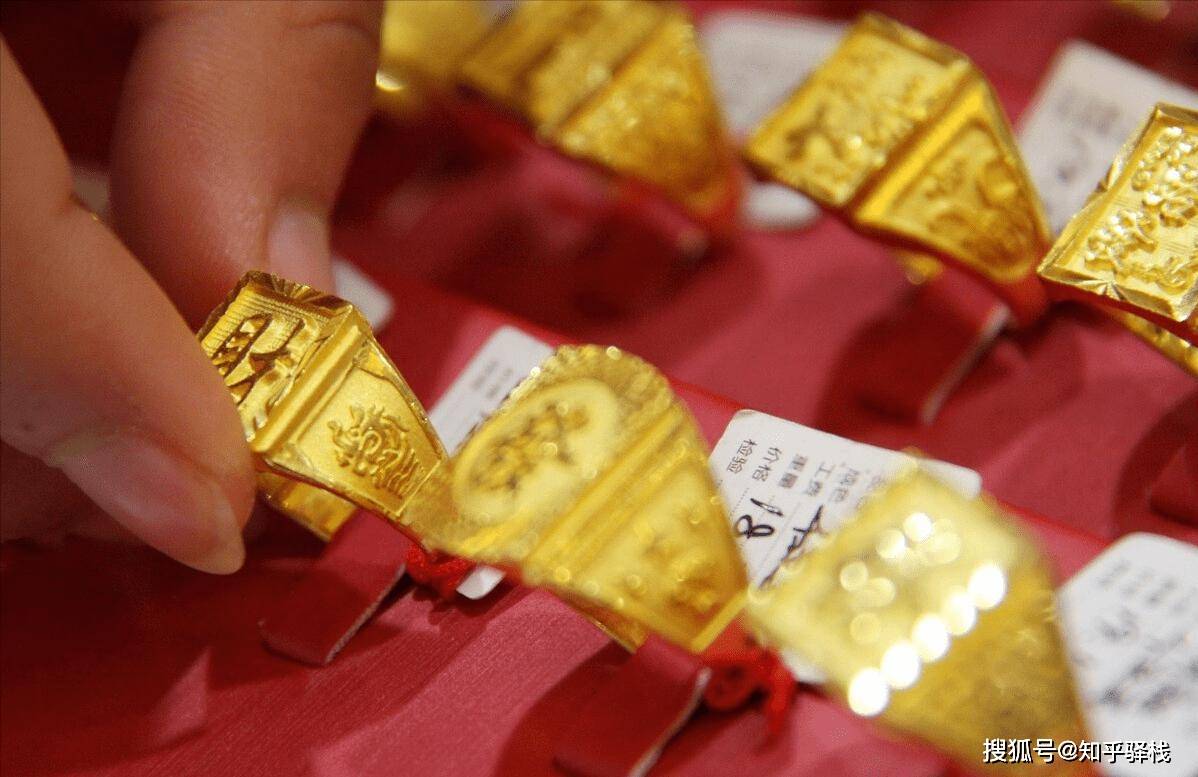
Core Viewpoint - The article highlights the differences between two pricing models for gold jewelry: "one-price" and "per gram" pricing, emphasizing the potential pitfalls consumers face when purchasing gold jewelry under these models. Pricing Logic - The "per gram" pricing model is straightforward, where the total price equals the weight in grams multiplied by the current gold price plus any labor costs. For example, if the gold price is 500 yuan per gram, a 3-gram ring with a 50 yuan labor cost would total 1550 yuan [3] - In contrast, the "one-price" model bundles the gold price, labor costs, design fees, and brand premiums into a single price, making it opaque for consumers. A 3-gram ring could be priced at 2500 yuan, which includes various hidden costs [3] Craftsmanship and Value - Jewelry sold by the "per gram" model typically features simpler designs, with labor costs ranging from 5 to 30 yuan per gram, focusing on the intrinsic value of gold, making it suitable for preservation or investment [5] - "One-price" gold often includes intricate designs and special craftsmanship, which may enhance aesthetic appeal but significantly reduce the gold's ability to be melted down and reformed, thus impacting its resale value [6] Merchant Preferences - Wholesale markets predominantly use the "per gram" model, as knowledgeable consumers prefer this transparent pricing. In contrast, brand stores favor the "one-price" model, which allows for higher profit margins by obscuring costs [7] Consumer Pitfalls - Consumers may face inflated prices when converting "one-price" gold to a per gram basis, often resulting in losses when trying to resell. For instance, a consumer who bought a ring at a price 1.5 times the current gold price could lose nearly 40% when reselling [8] - The "lifetime free exchange" promise often comes with hidden conditions, such as requiring additional purchases or limiting exchanges to similar "one-price" items, leading to further consumer spending [10] - Many complaints indicate that merchants often do not disclose the weight of the gold, violating consumer rights. Legal obligations require merchants to provide this information [11] Recommendations for Consumers - Consumers should inquire about the specific weight of the jewelry and the per gram cost before purchasing. If the salesperson is vague, it may indicate excessive pricing [12][13] - It is advisable to calculate the "craftsmanship premium" by determining the actual cost per gram and comparing it to the current gold price. A premium exceeding 30% should be approached with caution [14] - Consumers should clarify exchange conditions and ensure all verbal promises are documented in the warranty to avoid future disputes [16] - Retaining receipts and warranties is crucial for asserting consumer rights in case of misleading practices [16] Conclusion - The article concludes that while "one-price" gold is not inherently a "tax on intelligence," the lack of transparency and exaggerated craftsmanship claims by merchants can lead to consumer pitfalls. Understanding the core value of gold and being informed about pricing models can help consumers make better purchasing decisions [17]

“一口价”黄金热销,金店老板还发愁
经济观察报· 2025-10-27 12:46
Core Viewpoint - The popularity of "fixed-price" gold is driven by consumers' careful selection, as its price is approaching that of weight-based gold, making it more attractive as the latter's price rises [1][2]. Price Adjustments - On October 26, Laopu Gold completed its third price adjustment of the year, with an increase of approximately 18%-25%, exceeding the previous maximum of 12% [2]. - Other brands like Chow Tai Fook are also raising retail prices for fixed-price gold products by 12%-18% by the end of October [2]. - A surge in consumer purchases occurred before these price hikes, leading to long queues at various stores [2][6]. Consumer Behavior - Consumers are increasingly favoring "fixed-price" gold due to its perceived value compared to weight-based gold, which has seen rising prices [2][8]. - A consumer reported purchasing a "fixed-price" gold bracelet at a lower price per gram than the current weight-based gold price, indicating a trend towards value-seeking behavior [4][5]. Inventory Issues - Many stores are experiencing stock shortages of "fixed-price" gold items due to high demand, with some popular styles requiring several days for restocking [6][10]. - The cash flow pressure on gold retailers is increasing, as rising gold prices lead to higher procurement costs while consumer spending remains cautious [10][14]. Financial Performance - Despite the popularity of fixed-price gold, brands like Chow Tai Fook and Luk Fook have reported overall revenue declines, with Chow Tai Fook's revenue down 17.5% to HKD 896.6 billion, despite a 105.5% increase in fixed-price gold sales [12][13]. - The financial reports indicate that while fixed-price gold has improved gross margins, the overall sales performance remains weak due to high costs and subdued market demand [14][15].

“一口价”黄金热销,金店老板还发愁
Jing Ji Guan Cha Wang· 2025-10-27 12:41
Core Viewpoint - The recent price adjustments in the gold jewelry market, particularly the significant increase in "fixed-price" gold products, reflect a response to the volatility of international gold prices, leading to a surge in consumer demand and purchasing behavior [2][3][12]. Price Adjustments - On October 26, Laopu Gold completed its third price adjustment of the year, with an increase of approximately 18% to 25%, surpassing the previous maximum adjustment of 12% [2]. - Other brands, such as Chow Tai Fook, are also raising retail prices for fixed-price gold products by an estimated 12% to 18% by the end of October [2]. - The price gap between fixed-price gold and weight-based gold has narrowed, making fixed-price gold more appealing to consumers [3][7]. Consumer Behavior - A buying frenzy has emerged in the market as consumers rush to purchase gold before the price hikes take effect, leading to shortages of popular items [2][6]. - Consumers are increasingly opting for fixed-price gold due to its perceived value, as the price per gram is now closer to that of weight-based gold [3][4][7]. - The demand for fixed-price gold is driven by a more cautious consumer approach, with many seeking better value amidst rising gold prices [7][9]. Inventory and Supply Issues - Many stores are experiencing stock shortages of fixed-price gold items due to high consumer demand, with some popular styles requiring several days for restocking [6][8]. - The cash flow pressure on jewelry stores is increasing as the cost of purchasing gold rises in line with international prices, while consumer spending remains cautious [9][12]. Financial Performance - Despite the popularity of fixed-price gold, brands like Chow Tai Fook and Luk Fook have reported overall revenue declines, indicating that increased sales of fixed-price products have not translated into improved financial performance [10][11]. - Chow Tai Fook's revenue for the fiscal year 2025 decreased by 17.5% to HKD 896.6 billion, despite a 105.5% increase in sales of fixed-price gold products [11][12]. - The financial struggles are compounded by high operational costs and a lack of robust market demand, leading to a challenging environment for jewelry brands [12].

“一口价”黄金爆火
Qi Lu Wan Bao· 2025-10-21 02:22
Group 1 - The core viewpoint of the article highlights a significant surge in the gold market, with domestic jewelry gold prices surpassing 1200 yuan per gram, reflecting an increase of nearly 47% since the beginning of the year [2] - In the New York market, gold futures also experienced a daily increase of over 1.5%, indicating a strong global demand for gold [2] - In Jinan, brand retail prices for gold unexpectedly dropped, with some fixed-price gold being priced between 1000 to 1070 yuan per gram, which is notably lower than the current market price of 1200 yuan per gram due to delayed brand price adjustments [2]