
中型和重型卡车

Search documents
帕卡公司近期股价波动,财务数据与业务概况一览
Jing Ji Guan Cha Wang· 2026-02-12 17:56
Stock Performance - On January 6, 2026, Paccar's stock price surged by 5.03%, reaching $118.60, with a trading range of 4.58% for the day [1] - Institutional ratings indicate that 35% of analysts recommend a buy, while 61% suggest holding the stock [1] Financial Performance - For the fiscal period ending January 6, 2026, Paccar reported revenues of $6.671 billion and a net profit of $590 million, resulting in earnings per share of $1.12 and a price-to-earnings ratio of 23.22 [2] - The reported data may correspond to the latter part of the fiscal year 2025, but no specific date for the next earnings report has been disclosed [2] Company Overview - Paccar specializes in the manufacturing of medium and heavy-duty trucks, with brands including Kenworth, Peterbilt, and DAF, holding approximately 30% market share in the North American Class 8 market [3] - Currently, there are no specific event forecasts for Paccar in the upcoming week or month available through public channels [3]

高市早苗“魅力外交”失败,特朗普转头宣布,对日本加税提高至50%
Sou Hu Cai Jing· 2025-11-08 06:43
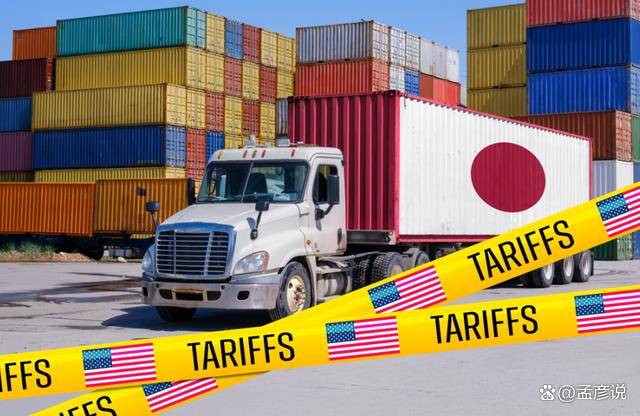
Group 1 - The core issue is the imposition of a 50% tariff on medium and heavy trucks imported from Japan, which significantly impacts Japanese automakers [1][2][3] - Japan is the third-largest exporter of trucks to the U.S., and this tariff is particularly detrimental as it targets Japan specifically, unlike Mexico and Canada, which have trade agreements that provide exemptions [2][5] - The U.S. tariffs come after Japan's commitment to invest $550 billion in various sectors, including energy and semiconductors, which was expected to foster better trade relations [5][7] Group 2 - The automotive industry is crucial to Japan's economy, accounting for 10% of GDP and providing over 5.6 million jobs, making the impact of the tariffs particularly severe [7] - The increase in tariffs is expected to raise costs for Japanese truck manufacturers, leading to decreased sales and further financial strain on an already struggling industry [7][9] - Previous tariffs on passenger vehicles have already caused significant profit declines in the Japanese automotive sector, with a reported 45% drop in profits for the industry following earlier tariff implementations [7]

美正式宣布征收卡车关税,但悄悄免去多项产品对等关税
Shang Wu Bu Wang Zhan· 2025-11-05 16:54
Core Points - The Trump administration has officially announced a 25% tariff on imported medium and heavy trucks and a 10% tariff on buses, effective from November 1 [1] - A tax credit equivalent to 3.75% of the retail price of vehicles will be extended until 2030 for imported auto parts, encouraging manufacturers to produce vehicles in the U.S. [1] - The new truck tariffs will provide exemptions for trucks imported under the USMCA agreement, only taxing non-U.S. produced components [1] Industry Impact - The heavy truck market in the U.S. is significantly reliant on imports, with an estimated 78% of heavy trucks coming from Mexico and 15% from Canada [1] - The administration has quietly excluded dozens of products from reciprocal tariffs, indicating a strategic shift in trade policy [1] - The Trump administration is also moving to implement tariffs under the Trade Expansion Act, Section 232, to expand tariff measures across various industries [1]
关税突发!美国总统签署行政令 11月1日起征收!
Zheng Quan Shi Bao· 2025-10-17 23:38
Group 1: Tariff on Trucks - The U.S. government will impose a 25% tariff on imported medium and heavy trucks and parts starting November 1, 2023, with an additional 10% tariff on imported passenger vehicles [1] - The U.S. imported nearly 245,000 medium and heavy trucks last year, with a trade value exceeding $20 billion [1] - The U.S. Chamber of Commerce has opposed the new tariffs, stating that the top five sources of heavy truck imports are allied countries that do not pose a threat to U.S. national security [1] Group 2: Economic Activity Report - The Federal Reserve's recent economic survey indicates that economic activity has shown little overall change, with some regions reporting slight to moderate growth while others noted stagnation or slight decline [2] - Consumer spending, particularly on retail goods, has seen a slight decrease, and demand for leisure and hotel services from international travelers has further declined [2] - Manufacturing activity is challenged by increased tariffs and weak overall demand, with agricultural, energy, and transportation sectors generally experiencing declines [2]
最新!特朗普签署行政令 对进口中型和重型卡车征收25%关税 还将对这类车征收10%的关税
Mei Ri Jing Ji Xin Wen· 2025-10-17 23:36
Group 1 - The U.S. government will impose a 25% tariff on imported medium and heavy trucks and parts starting November 1, with an additional 10% tariff on imported passenger vehicles [1] - Goldman Sachs reports that by the end of this year, U.S. consumers may bear 55% of the tariff costs, while U.S. businesses could absorb 22% [1][2] - The tariff policy has led to a 0.44% increase in core personal consumption expenditures in the U.S. and is expected to raise the inflation rate to 3% by December [2] Group 2 - Despite claims from President Trump that trade partners bear the tariff costs, U.S. importers are responsible for paying the tariffs, which are then passed on to consumers [2] - The implementation of tariffs has resulted in higher prices for consumers, as businesses take time to adjust pricing strategies [1][2]
特朗普宣布11月起对输美中型和重型卡车征25%关税
Qi Lu Wan Bao· 2025-10-08 21:54
Core Points - President Trump announced a 25% tariff on medium and heavy trucks imported to the U.S. starting November 1 [1] - This tariff follows a previous announcement on September 25 regarding a similar 25% tariff on heavy truck imports, justified by national security concerns [1] - The implementation of this tariff policy was delayed due to opposition from major U.S. automakers [1] - The U.S. Supreme Court is set to hear oral arguments in the first week of November regarding the legality of many tariffs imposed by the Trump administration [1]
特朗普表示,自 11月1日起美国卡车进口将面临25%的关税
Shang Wu Bu Wang Zhan· 2025-10-08 17:28
Core Viewpoint - Starting November 1, imported medium and heavy trucks to the U.S. will face a 25% tariff as part of a new initiative to reform the global automotive supply chain [1] Group 1: Tariff Details - The specifics regarding the truck tariffs, including whether automotive parts will be affected, have not been disclosed by the Trump administration [1] - There is uncertainty about whether trucks imported from Canada and Mexico that meet existing free trade agreement domestic content rules will be exempt from the tariffs [1] Group 2: Reactions and Implications - The announcement may overshadow upcoming talks between Trump and Canadian Prime Minister Mark Carney [1] - The Chairman of the Canadian Business Council expressed hope for progress on tariff exemptions, viewing it as a positive step [1] - The President of the Canadian Automotive Parts Manufacturers Association indicated that further review through registration or executive orders is needed [1]
特朗普宣布11月起对输美中型和重型卡车征收25%关税
Zhong Guo Xin Wen Wang· 2025-10-07 22:36
Core Points - The U.S. President Trump announced a 25% tariff on medium and heavy trucks imported to the U.S. starting November 1 [1] - This tariff follows a previous announcement on September 25 regarding a 25% tariff on imported heavy trucks, which was delayed due to opposition from major U.S. automakers [1] - Additional tariffs were announced on various products, including a 100% tariff on imported brand-name or patented drugs, a 50% tariff on kitchen and bathroom cabinets, and a 30% tariff on upholstered furniture [1] - The U.S. Supreme Court is set to hear oral arguments in the first week of November regarding the legality of many tariffs imposed by the Trump administration [1]
特朗普再挥关税大棒,美国卡车市场或"震",全球贸易格局将变?
Sou Hu Cai Jing· 2025-10-07 18:16
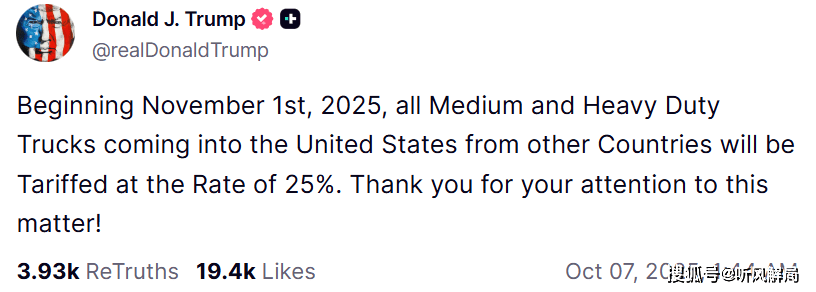
Group 1: Tariff Announcement and Impact - The announcement of a 25% tariff on all imported medium and heavy trucks to the U.S. starting November 1, 2025, has created significant turmoil in the U.S. automotive industry [1] - In 2022, the U.S. imported nearly 245,000 medium and heavy trucks, with a trade value exceeding $20 billion, indicating substantial revenue potential for the U.S. Treasury but also significant disruption for the industry [1] - The implementation of the tariff was initially set for October 1 but was postponed due to lobbying from automotive manufacturers, highlighting the influence of interest groups in U.S. politics [1] Group 2: Differentiated Impact on Companies - The impact of the new tariff will vary significantly among companies; for instance, International Automotive and Daimler have a high percentage of trucks produced in Mexico, making them particularly vulnerable [2] - In contrast, companies like PACCAR and Volvo, which produce nearly all their trucks domestically, are less affected and may benefit from the tariff situation [2] - Stellantis is actively lobbying for exemptions for its Mexican-produced Ram trucks, while competitors General Motors and Ford oppose this, indicating competitive tensions within the industry [2] Group 3: Broader Trade Policy Context - Trump's tariff policies reflect a broader "America First" ideology aimed at protecting U.S. industries and promoting manufacturing return [3] - The ongoing tariff measures are part of a larger trend of increasing protectionism, with potential implications for global trade dynamics and the risk of retaliatory actions from trade partners [3][4] - The evolving trade landscape poses challenges for companies, particularly Chinese firms, which must navigate the complexities of U.S. protectionism and seek diversified markets [4]
美股三大指数冲高回落,热门中概股走低
Feng Huang Wang Cai Jing· 2025-10-07 14:55
Group 1 - US stock indices experienced fluctuations, with the Dow Jones down 0.13%, Nasdaq down 0.01%, and S&P 500 unchanged as of the latest update [1] - Chinese concept stocks saw declines, with Kaixin Auto dropping over 4%, Dingdong Maicai down over 3%, Fangduoduo and NIO down over 2%, and JD.com down over 1% [1] Group 2 - Gold prices surged, with New York futures reaching $4000 per ounce for the first time, marking a year-to-date increase of over 50% [2] - Spot gold also hit a historical high at $3976.94 per ounce, driven by expectations of further interest rate cuts by the Federal Reserve [2] Group 3 - President Trump announced a 25% tariff on imported medium and heavy trucks effective November 1, 2025, following a previous announcement of a similar tariff on heavy trucks starting October 1 [3] Group 4 - The World Trade Organization (WTO) reported that AI-related trade is expected to be a key driver of growth in the first half of 2025, with a projected 20% year-on-year increase in trade volume [4] - Despite AI-related products accounting for less than 10% of global merchandise trade, they are expected to contribute nearly half of the global year-on-year growth [4] Group 5 - The World Health Organization (WHO) released a report indicating a decline in global smoking rates, but highlighted ongoing tobacco addiction issues affecting one-fifth of adults [5] - The report emphasized the need for increased regulation of e-cigarettes, which are contributing to a new wave of addiction [5] Group 6 - China's foreign exchange reserves reached $333.87 billion as of September 2025, marking a $16.5 billion increase from August and the highest level since December 2015 [6] - This is the second consecutive month that reserves have exceeded $3.3 trillion, reflecting a 0.5% increase [6]