
云南米线

Search documents
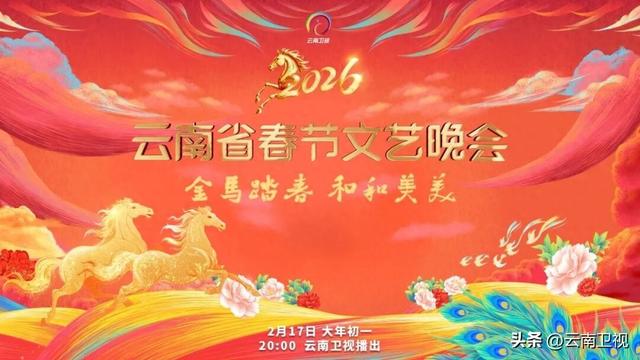
金马踏春等你来
Xin Lang Cai Jing· 2026-02-18 05:56
Core Viewpoint - The Yunnan Spring Festival Gala showcases the rich cultural heritage and natural beauty of Yunnan, emphasizing its unique ethnic diversity and vibrant traditions through various artistic performances [2][7][10]. Group 1: Event Structure and Themes - The gala consists of four chapters: "Spring: Flowers Blooming in the Cloud Mountains," "Summer: Unique Customs," "Autumn: Abundant Harvest," and "Winter: Songs Welcoming Spring," reflecting the seasonal beauty of Yunnan [4]. - The event is characterized by a strong local flavor and ethnic elements, with performances that highlight Yunnan's cultural richness and scenic landscapes [2][4][6]. Group 2: Cultural Highlights - The gala features traditional songs and dances from various ethnic groups, including the Lisu and Naxi, showcasing the integration of traditional and contemporary cultural expressions [15][22]. - A notable performance is the cross-disciplinary stage play "Bronze·Flower Waist," which combines historical artifacts with local cultural narratives, illustrating the deep historical roots of Yunnan's diverse cultures [15]. Group 3: Culinary and Local Products - The event highlights Yunnan's culinary diversity, particularly its famous rice noodles and coffee, emphasizing the region's agricultural products and their significance in local culture [4][20]. - The humorous skit about coffee production reflects the pride of Yunnan coffee growers and the region's growing reputation in the global coffee market [20]. Group 4: Emotional Resonance - The song "Hometown" evokes nostalgia and a longing for simpler times, resonating with many adults who yearn for the warmth and comfort of their childhood homes [17][18]. - The gala's overall message promotes hope and unity, encouraging audiences to cherish their cultural heritage while looking forward to a harmonious future [7].

暖居在大理
Xin Lang Cai Jing· 2025-12-22 23:27
Core Viewpoint - Dali, located in western Yunnan, offers a warm and inviting environment even in winter, characterized by its beautiful landscapes, rich culture, and vibrant local life [3][4][5]. Group 1: Environment and Climate - Dali enjoys a mild climate with abundant sunshine, creating a pleasant atmosphere for both residents and visitors [3]. - The region features fertile land and interconnected villages, contributing to a lush and vibrant living environment [3]. Group 2: Local Attractions and Activities - The ancient city of Dali is known for its well-preserved architecture from the Ming and Qing dynasties, with main streets like Fuxing Road, Huguo Road, and Renmin Road bustling with shops and eateries [4]. - Scenic spots around Erhai Lake, such as the ring road and various islands, provide opportunities for leisure activities like boating and sightseeing [4][5][6]. Group 3: Cultural Experiences - Local cuisine, including specialties like Yunnan rice noodles and Erhai lake fish, is a highlight for visitors, enhancing the cultural experience [6]. - The traditional tea culture is prominent, with local teas like Gantong tea being showcased in tea houses, reflecting the region's rich heritage [6]. Group 4: Community and Lifestyle - Dali's community is characterized by a blend of tranquility and vibrancy, where locals engage in leisurely activities such as tea drinking and socializing in gardens [7]. - The overall lifestyle in Dali promotes a slower pace, allowing for relaxation and appreciation of the natural beauty surrounding the area [7][8].

意大利月光下的中国味道
Ren Min Ri Bao Hai Wai Ban· 2025-10-10 01:21
Core Insights - The article highlights the cultural significance of Chinese cuisine in Italy, particularly during the Mid-Autumn Festival, showcasing how food serves as a bridge between cultures [1][2]. Group 1: Cultural Exchange through Cuisine - Chinese restaurants in Italy, such as a Sichuan hot dish shop, are introducing local customers to traditional Chinese customs, like eating mooncakes during the Mid-Autumn Festival, which symbolizes reunion [1]. - The presence of various Chinese dishes, such as Xi'an meat sandwiches and Chongqing hot pot, reflects the growing integration of Chinese flavors into Italian daily life, fostering curiosity and understanding among locals [1][2]. Group 2: Personal Connections and Understanding - Customers express that dining on Chinese food is not just about the meal but also about gaining insights into Chinese culture, as seen in the experiences shared by patrons of a meat sandwich shop [2]. - The act of sharing food leads to deeper conversations about cultural origins, enhancing the connection between Chinese and Italian communities, as illustrated by the interactions between restaurant owners and their customers [2].
记者手记丨意大利月光下的中国味道
Xin Hua Wang· 2025-10-05 11:49
Core Perspective - The article highlights the cultural significance of Chinese cuisine in Italy, showcasing how food serves as a bridge for understanding and connection between different cultures [1][2]. Group 1: Cultural Exchange through Cuisine - Chinese restaurants in Italy, such as a Sichuan hot dish shop in Milan, are introducing local customers to traditional Chinese customs, like the Mid-Autumn Festival and mooncakes, fostering cultural appreciation [1][2]. - Customers express curiosity about the origins of dishes, leading to deeper conversations about Chinese culture and history, as seen with the meat sandwich shop owner who shares stories related to Xi'an [2]. Group 2: Food as a Medium for Connection - Dining experiences in these restaurants go beyond mere sustenance; they create opportunities for cultural exchange and understanding, as customers feel a sense of familiarity with China through its cuisine [2]. - The article emphasizes that food can serve as a medium for building trust and curiosity between Chinese and Italian communities, illustrating the idea that "food is a bridge for reunion with the world" [2].
从无人问津到货架常客,薇娅凭什么让这些国货爆火?
Sou Hu Cai Jing· 2025-09-04 08:12
Core Insights - The rise of e-commerce live streaming has transformed from an emerging industry to a fundamental part of daily life, changing traditional consumption patterns and creating interactive and entertaining shopping experiences [1][3] - Viya has set professional standards for live commerce and extended the value of traffic to social welfare and international exchange, establishing a diverse value system that bridges commerce and society [1][3] Group 1: Industry Transformation - Live streaming consumption has evolved into a multi-dimensional system of "goods + emotions + culture," with distinct styles from influencers like Li Jiaqi and Dong Yuhui highlighting the value transmission attributes of live streaming [1] - Viya's forward-thinking approach during the industry's early stages emphasized a full-chain team operation and "consumer trust," creating a replicable industrial model for live commerce [1] Group 2: Global Recognition - Viya's recognition as one of TIME magazine's "100 Most Influential People" underscores her impact beyond the industry, positioning her as a cultural symbol of China's digital economy on the global stage [1] - The endorsement from international supermodel Miranda Kerr highlights Viya's ability to reshape consumption models and significantly influence the development paths of small and medium enterprises [1][3] Group 3: Social Contributions - Viya's contributions extend beyond commercial success to social impact, transforming traffic influence into public welfare through a systematic model of "industry empowerment + precise assistance" [3] - By facilitating the sale of local agricultural products and introducing cross-border goods, Viya has created bridges for international cooperation, exemplified by the sale of 3,000 pounds of Rwandan coffee beans in her live stream, which surpassed the product's annual sales [3] Group 4: Future Potential - Viya's practices challenge conventional perceptions of e-commerce influencers, demonstrating that her value lies not only in commercial success but also in exploring a path where commercial and social values coexist [3] - As the digital economy continues to evolve, Viya is expected to contribute further to industrial transformation and social welfare initiatives in the digital age [3]

中国直播带货被世界看见,薇娅做对了这几件事
Sou Hu Cai Jing· 2025-09-01 18:10
Core Insights - The rise of live-streaming e-commerce has transformed shopping habits, making it more engaging and entertaining for consumers [1] - Different hosts provide varied experiences, with some focusing on fast-paced sales and others offering in-depth product education, creating emotional value for viewers [3] - Viya, known as the "Queen of Live-streaming," has set industry standards and gained international recognition, being named one of TIME magazine's "100 Most Influential People" [3][4] Group 1 - Viya's influence extends beyond sales; she has changed shopping methods and positively impacted small businesses [4] - She emphasizes professionalism and trustworthiness in the industry, advocating for quality and integrity in product selection [4] - Viya's success is not solely commercial; she actively engages in philanthropy, helping farmers and promoting products from developing regions [6] Group 2 - The conversion of traffic into resources and then into social value exemplifies Viya's impact on the industry [8] - Her ability to sell large quantities of products, such as 3,000 kilograms of Rwandan coffee beans in seconds, showcases her effectiveness in marketing [6] - Viya's journey reflects continuous self-improvement and overcoming challenges, indicating her commitment to further growth [8]

市场洞察:多元焕新,云贵风味能否走向全国
Tou Bao Yan Jiu Yuan· 2025-08-28 12:48
Investment Rating - The report does not explicitly provide an investment rating for the cloud and Guizhou cuisine restaurant industry Core Insights - The cloud and Guizhou cuisine restaurant industry has seen steady growth, with the total number of restaurants exceeding 40,000 by November 2024, accounting for 3.1% of all Chinese cuisine restaurants [2][4] - The industry is characterized by a low level of scale, with over 99% of brands having five or fewer locations, indicating a long-tail effect and slow national expansion [4][6] - The average consumer spending in the cloud cuisine sector is relatively affordable, with 39.5% of restaurants having an average spend between 50 to 80 yuan, appealing to a broad consumer base [7][11] - More than 50% of cloud cuisine restaurants are concentrated in the Southwest region, particularly in Yunnan and Guizhou, with significant growth in the East China region [12][15] Summary by Sections Current Development Status - The cloud cuisine sector is expanding nationally, with over 40,000 restaurants as of late 2024, ranking 10th among Chinese cuisine types [2][4] - The industry remains fragmented, with most brands operating fewer than five locations, leading to limited national presence [4][6] Market Characteristics - The cloud cuisine industry is experiencing a shift towards higher quality and cultural dining experiences, driven by rising disposable incomes and consumer preferences [28] - The supply chain is evolving, with advancements in central kitchens and cold chain logistics enhancing the distribution of cloud cuisine ingredients [29] Market Size and Trends - The market size of the cloud cuisine restaurant industry is projected to grow from 11.86 billion yuan in 2020 to 17.36 billion yuan in 2024, with a compound annual growth rate of approximately 10.6% [27][31] - Future growth is expected to be driven by the expansion into lower-tier cities and the development of multi-channel consumption models [30] Sub-segments of Yunnan Cuisine - Yunnan cuisine features a diverse product structure, particularly in snacks and beverages, with popular items like Dali milk fan and Yunnan flower cake [37][38] - The Yunnan rice noodle segment is rich in variety, with brands like Mengzi Yuan leading the market with over 1,700 locations [39] Sub-segments of Guizhou Cuisine - Guizhou cuisine is marked by its unique snacks and beverages, emphasizing mountain flavors and traditional cooking techniques [41][42] - The Guizhou sour soup hotpot segment is gaining popularity, with brands like Qian Tan Tan and Liu Er Ma showing strong market penetration [44]