
以旧换新补贴

Search documents
“三重大礼”年味浓 乐购新春惠民生
Jing Ji Wang· 2026-02-13 02:30
Core Viewpoint - The Chinese government is launching the "Happy Shopping Spring Festival" initiative to stimulate consumer spending during the upcoming Lunar New Year, with a focus on enhancing market supply and providing substantial financial incentives to consumers [1][2]. Group 1: Event Overview - The "Happy Shopping Spring Festival" initiative is organized by the Ministry of Commerce in collaboration with nine other departments, aiming to mobilize numerous national trade associations and engage various local markets to meet holiday consumer demands [2][3]. - The initiative will cover the entire consumer experience, including food, accommodation, transportation, tourism, and shopping, to enhance the holiday experience for the public [2]. Group 2: Key Incentives - Three major incentive packages have been prepared for consumers: 1. **Trade-in Subsidies**: A total of 62.5 billion yuan has been allocated for trade-in subsidies, with local authorities encouraged to increase the number of subsidies available during the nine-day holiday period [3]. 2. **Prize Invoices**: A pilot program in 50 cities will distribute 10 billion yuan in prize funds during the holiday, with a total of 100 billion yuan allocated over six months [3]. 3. **Financial Support**: Financial institutions will collaborate with merchants to offer various discounts across multiple sectors, including travel and dining [3]. Group 3: Practical Measures - Various departments will implement practical measures to support the initiative, such as promoting sales in retail and shopping centers, extending operating hours for cultural and sports venues, and increasing transportation capacity [4]. - The Ministry of Culture and Tourism will introduce a series of cultural and tourism activities to enhance the festive atmosphere, including 22 themed events and international promotional activities to attract foreign visitors [5][6]. Group 4: Market Supply Assurance - The Ministry of Commerce has reported a strong supply and demand for essential goods ahead of the holiday, with significant increases in inventory levels for key products such as grains, meat, and vegetables [8]. - Measures have been taken to ensure a stable supply chain, including increased stock levels in major wholesale markets and supermarkets, with over 99% of the top 20 chain stores expected to remain open during the holiday [8]. Group 5: Media Engagement - The broadcasting industry will also participate in the "Happy Shopping Spring Festival" by producing various programs focused on food, travel, and consumer services, enhancing the festive experience for viewers [9].

首批625亿元国补资金已到位
Jing Ji Guan Cha Wang· 2026-02-11 03:06
Core Viewpoint - The Chinese government is launching the "Lego New Spring" special event to boost consumer spending during the upcoming Spring Festival, which will feature a series of high-value policy packages aimed at enhancing market supply and promoting holiday consumption [1] Group 1: Financial Incentives - The event includes three major financial packages for consumers: 1. A trade-in program supported by a national subsidy of 62.5 billion yuan, which will be distributed to local commerce departments to ensure consumers can claim subsidies during the nine-day holiday [2] 2. A prize invoice initiative in 50 cities, with a total of 10 billion yuan in prizes available during the holiday for consumers who obtain invoices over 100 yuan [2] 3. Financial support from the People's Bank of China and financial regulators to encourage various discounts across travel, dining, and entertainment sectors [2] Group 2: Service Enhancements - Various departments are implementing practical measures to ensure a pleasant experience for consumers: 1. The commerce department will guide retail and shopping centers to organize supplies and promotions effectively [3] 2. Thousands of gas stations will provide free hot water, emergency medicines, and discounted car washes to support safe travel [3] 3. Increased transportation capacity and convenient services such as luggage delivery will be offered by civil aviation and railway departments [3] Group 3: International Engagement - The government is promoting the Spring Festival experience for international visitors with several initiatives: 1. Enhanced digital services for foreign visitors entering China, supported by multiple government departments [4] 2. Airlines will increase capacity on popular international routes to facilitate travel [4] 3. A wide range of payment options will be made available to ensure a seamless shopping experience for international tourists [4] 4. 13,000 tax refund stores will offer high-quality products, allowing foreign visitors to enjoy a 10% discount on purchases [4]
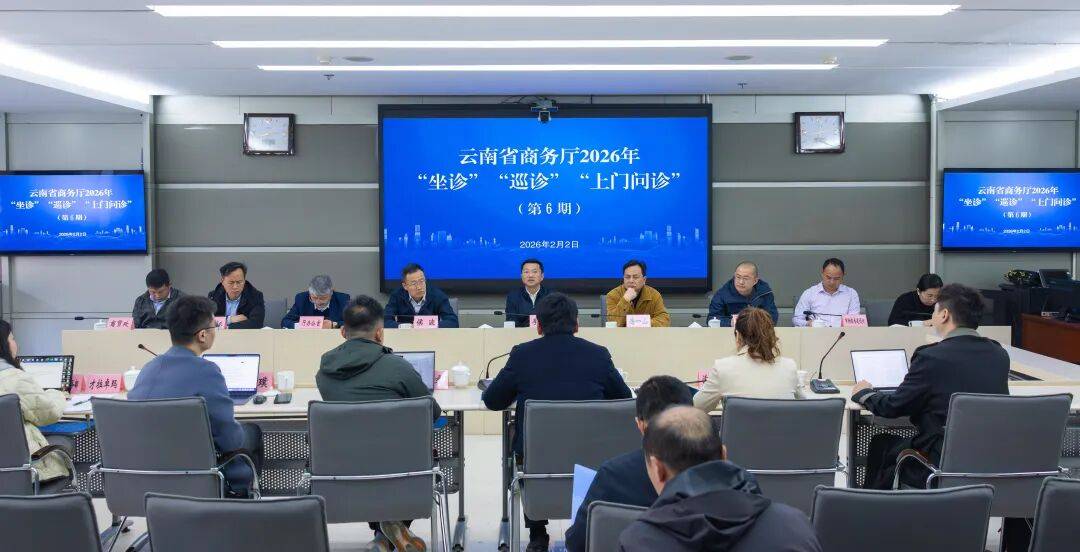
云南省商务厅开展2026年第六期“坐诊”“巡诊”“上门问诊”活动
Sou Hu Cai Jing· 2026-02-10 12:09
Core Viewpoint - The Yunnan Provincial Department of Commerce is actively promoting consumption through various initiatives, including consumer vouchers and trade-in programs, to stimulate market activity and support local businesses in 2026 [1][4][11]. Group 1: Consumption Promotion Initiatives - The 2026 initiatives will build on the success of the 2025 "Yunnan Lifestyle" campaign, continuing to invest in consumer vouchers for dining and accommodation, and creating new consumption scenarios like "Food in Yunnan" and "Travel in Yunnan" [4][11]. - The department plans to enhance cooperation with e-commerce platforms to lower costs and promote collective development, particularly targeting rural markets to unlock their consumption potential [4][6]. Group 2: Financial Support and Policy Implementation - There is a call for increased financial support for small and medium-sized enterprises that are under pressure and not receiving subsidies, focusing on new consumption hotspots [5][6]. - The department will implement a consumption upgrade policy, optimize supply chains, and support the development of new consumption formats and scenarios [6][11]. Group 3: E-commerce Activities and Collaboration - The department aims to create a series of themed e-commerce events throughout the year, including a "Yunnan Gifts" online shopping festival, to enhance consumer engagement [8]. - There will be a focus on strengthening collaboration between platforms and local commerce departments to support instant retail and address consumer voucher accessibility [9]. Group 4: Past Performance and Future Goals - In 2025, over 11 million consumer vouchers were issued, leading to a direct consumption increase of over 14.5 billion yuan, demonstrating a significant leverage effect [11]. - The 2026 initiatives will include a series of promotional activities aimed at enhancing the integration of commerce, tourism, and culture, providing diverse and high-quality consumer experiences [11].




财经观察:为什么要促消费、“反内卷”、“薅羊毛”……专家这样说
Ren Min Wang· 2025-08-18 01:35
Group 1: Economic Indicators and Consumer Behavior - The Consumer Price Index (CPI) has shifted from decline to increase, indicating a need to further stimulate consumer activity in the economy [1] - Consumer spending is a major component of GDP, and its growth is essential for economic development [1] - The government has introduced policies such as "trade-in" and "consumer loan interest subsidies" to boost consumption [1] Group 2: Trends in Consumption - There is a significant trend towards increasing the proportion of consumption in GDP, which is currently lower compared to developed countries [2] - Enhancing consumer income through industrial upgrades is crucial for boosting consumption [2] - The demand for sports events and related products indicates untapped consumer potential [2] Group 3: Competition and Market Dynamics - "Involution" or excessive competition in certain industries is detrimental to consumer welfare and market health [3] - The need to improve industry concentration and profitability is emphasized to combat "involution" [5] - The manufacturing sector's upgrade is essential for increasing residents' income and overcoming the middle-income trap [4][5] Group 4: Policy Utilization and Consumer Opportunities - Consumers are encouraged to take advantage of government subsidies for various sectors, including home appliances and automobiles [6] - The limited nature of subsidies means consumers should act quickly to benefit from available policies [6] - Traditional and new consumption sectors hold significant potential for growth, and consumers should embrace digital economic opportunities [7]
前高后低,伺机而动
Xin Da Qi Huo· 2025-07-04 08:31
1. Report Industry Investment Rating No relevant content provided. 2. Core Views of the Report - The domestic economy is expected to be high in the first half and low in the second half. Policy support is in place, but domestic demand remains weak. The GDP growth target of around 5% for 2025 is expected to be achieved with relative ease [9][10]. - Fiscal policy will mainly rely on existing measures with limited incremental input, while monetary policy will continue with reserve requirement ratio cuts and interest rate cuts. Additional fiscal policies may be launched under special circumstances [2]. - There are three major external disturbances in the second half of the year: tariff negotiations, the OBBB Act, and the timing of the Fed's interest rate cuts [2]. - The outlook for major asset classes varies. Stocks are expected to have a bottom - line support with small - cap stocks outperforming; bond yields are expected to reach new lows; the RMB exchange rate is expected to appreciate following the US dollar index; and commodities' performance will depend on event and policy rhythms [2]. 3. Summary by Directory 3.1 Domestic Economy: Policy Support, Weak Domestic Demand - **Economic Overall Trend**: The economy is expected to be high in the first half and low in the second half. To counter the impact of exports, policies are targeted at consumption, infrastructure, and manufacturing. In the first half, with pre - emptive policy implementation, consumption, infrastructure, and manufacturing showed good growth, and the GDP growth rate in Q1 was 5.4%, with Q2 expected to be above 5%. In the second half, exports are likely to decline, and the probability of additional policies is low [9][10]. - **Consumption**: The increase in social retail sales is mainly supported by policies. After excluding the impact of the "trade - in" policy, the overall consumption has not improved significantly compared to 2024. Income expectations remain poor, and employment expectations are lower than income expectations. The consumption in Q3 is expected to maintain relatively high - speed growth, while there will be significant downward pressure in Q4 [11][16][17]. - **Real Estate**: The real estate market has basically reached the bottom, and the probability of a further sharp decline in the second half is low. However, the driving force for recovery is insufficient, and it is expected to continue to operate at the bottom, with a slight upward trend under optimistic expectations [19][21]. - **Infrastructure**: Infrastructure is expected to remain at a high level. The main sources of funds are two - fold policy funds and local government special bonds. In Q3, infrastructure will still have strong support, and it may decline in Q4 but remain at a high level overall. The new policy - based financial instruments may be introduced in September or October [34][35]. - **Exports**: Exports were high in the first half but are likely to decline in the second half due to factors such as over - drawn demand and the downward risk of the US economy [37][38]. - **Manufacturing**: Manufacturing is highly dependent on policy support. With the implementation of the equipment renewal policy, most of the funds have been allocated, and manufacturing is expected to remain at a high level at least in Q3 [40]. 3.2 Policy: Limited Fiscal Policy, Increased Monetary Policy - **Fiscal Policy**: The fiscal policy will mainly rely on existing measures with limited incremental input. The probability of introducing incremental fiscal policies is low unless there is a significant external shock. Key meetings in the second half of the year need to be monitored [42][43]. - **Monetary Policy**: Monetary policy will continue with reserve requirement ratio cuts and interest rate cuts. Based on historical experience and the current high real - interest - rate level, it is reasonable to expect an interest rate cut of 20bp this year [44][46]. 3.3 Three Major External Disturbances in the Second Half of the Year - **Tariff Negotiation Disturbance**: The outcomes of the US tariff negotiations on July 9 and the China - US tariff negotiations on August 12 will basically determine the export trend in the second half of the year [48]. - **OBBB Act Disturbance**: The OBBB Act will have an impact on the US economy and indirectly affect the domestic economy. The Senate version of the bill will increase the US debt, and if temporary measures are made permanent, the debt increase will be even greater. The bill may lead to a steeper yield curve and higher 10 - year US Treasury yields [49][51]. - **Fed Policy Rate Changes**: The first interest rate cut is expected to occur in September or later. The number of expected interest rate cuts within the year may be slightly overestimated considering the US economic resilience and Powell's style [54]. 3.4 Outlook for Major Asset Classes in the Second Half of the Year - **Stocks**: Stocks have a bottom - line support. Although they will face fundamental pressure, the Fed's interest rate cuts and domestic monetary policy will provide support. Small - cap stocks are expected to outperform [55]. - **Bonds**: Bond yields are expected to reach new lows. The bond market will be supported by the economic trend, and with lower supply pressure and a high probability of interest rate cuts, bond yields are expected to decline [58]. - **RMB Exchange Rate**: The US dollar index is expected to decline, and the RMB will appreciate following the US dollar index, which will help ease the pressure on export enterprises [60]. - **Commodities**: The performance of commodities will depend on event and policy rhythms. External tariff negotiations and domestic policy implementation schedules will affect commodity prices. Gold is expected to strengthen with support from the US debt issue and the approaching Fed interest rate cuts [63][64].
万亿级存量房家装“旧改”成新蓝海 家居卖场、定制品牌甚至物业服务公司等产业链上下游诸多头部企业纷纷入局
Guang Zhou Ri Bao· 2025-06-09 19:01
Core Insights - The transformation of the real estate market from incremental development to stock optimization is creating unprecedented potential in the stock housing renovation market, which has exceeded 2 trillion yuan [1] - The old housing renovation market has reached 40% of the overall home furnishing market, indicating significant growth potential as the real estate sector enters a stock era [3] Market Potential - The current residential stock in China is 420 million units, with over 65% of these properties being over 15 years old, highlighting the aging infrastructure and the need for renovations [4] - Policies such as subsidies for replacing old items and the renovation of old communities are further stimulating market potential [4] Industry Participation - Major players in the home furnishing industry, including home improvement stores and custom furniture brands, are actively entering the old housing renovation market [5] - Companies like Red Star Macalline and Juran Home are leveraging their customer acquisition and brand integration advantages to provide comprehensive renovation services [5][6] Innovative Business Models - Property service companies are utilizing their inherent advantages in customer flow, with models that offer tailored solutions and reliable product delivery [6][7] - The new property renovation model integrates the entire industry chain and takes responsibility for the renovation outcomes, contrasting with traditional models that merely provide a traffic entry point [7] Challenges and Solutions - The home furnishing industry faces challenges such as a lack of standards, insufficient industry collaboration, and inconsistent service quality [8] - New entrants, particularly branded operators, are expected to improve the long renovation cycles and craftsmanship issues currently plaguing the market [8] - Companies must focus on integrating resources across the home appliance, home furnishing, and home decoration sectors to enhance customer experience and address diverse renovation needs [8]