伐谋智能体

Search documents
全球 AI 竞争,为什么越来越多人看好中国?
Ge Long Hui· 2025-12-18 12:48
Core Insights - The article highlights the rapid development and adoption of AI applications in China, marking a shift from mere technological showcases to practical productivity tools across various industries [1][2][3] - Baidu is positioned as a leading player in this AI application landscape, having established a comprehensive system from chips to models to applications, reflecting the broader trajectory of China's AI development [1][2][24] Group 1: AI Application Trends - The global tech community has recognized the innovation in Chinese AI applications, with significant contributions from companies like Baidu and DeepSeek, as evidenced by 22 out of the top 50 AI mobile applications being from China [2] - The differentiation in AI strategies between the US and China is becoming more pronounced, with US companies focusing on model performance while Chinese firms are rapidly deploying diverse applications [2][22] Group 2: Baidu's AI Strategy - Baidu's AI strategy is characterized by a systematic approach, integrating various components of AI technology, which serves as a microcosm of China's overall AI path [1][24] - The launch of the "秒哒" (MiaoDa) no-code application development platform has enabled non-programmers to create AI applications, demonstrating the democratization of AI technology [7][15] Group 3: Economic Impact and Market Response - The economic value generated by AI applications through platforms like 秒哒 has exceeded 5 billion yuan, showcasing the tangible benefits of AI in various sectors [15] - Baidu's stock has seen a positive response in the capital markets, reflecting investor confidence in the company's AI-driven growth potential [3][25] Group 4: Case Studies of AI Applications - The "蜗牛牙牙" (Snail Tooth) application, developed for children's oral health, exemplifies how AI can meet real user needs without requiring complex technical skills [10][11] - The "油气井生产优化设计系统" (Oil and Gas Well Production Optimization System) developed using 秒哒 illustrates how industry professionals can leverage AI tools to address specific operational challenges [11][14] Group 5: Future Prospects and Innovations - Baidu's "伐谋" (FaMou) intelligent agent represents a significant advancement in AI capabilities, enabling self-evolution and optimization in complex industrial scenarios [17][19] - The upcoming launch of new Kunlun chips is expected to enhance Baidu's AI infrastructure, further solidifying its competitive edge in the AI landscape [25][26] Group 6: Global Expansion and Recognition - Baidu's AI applications are not only gaining traction domestically but are also expanding into international markets, with products like 秒哒 and 慧播星 (HuiBoXing) achieving recognition abroad [27] - The comprehensive self-research capabilities across various AI layers position Baidu uniquely in the global tech landscape, allowing it to drive scalable AI applications [24][26]


【李彦宏接受《时代》专访 揭示中国特色的技术落地之路】
Sou Hu Cai Jing· 2025-12-13 14:19
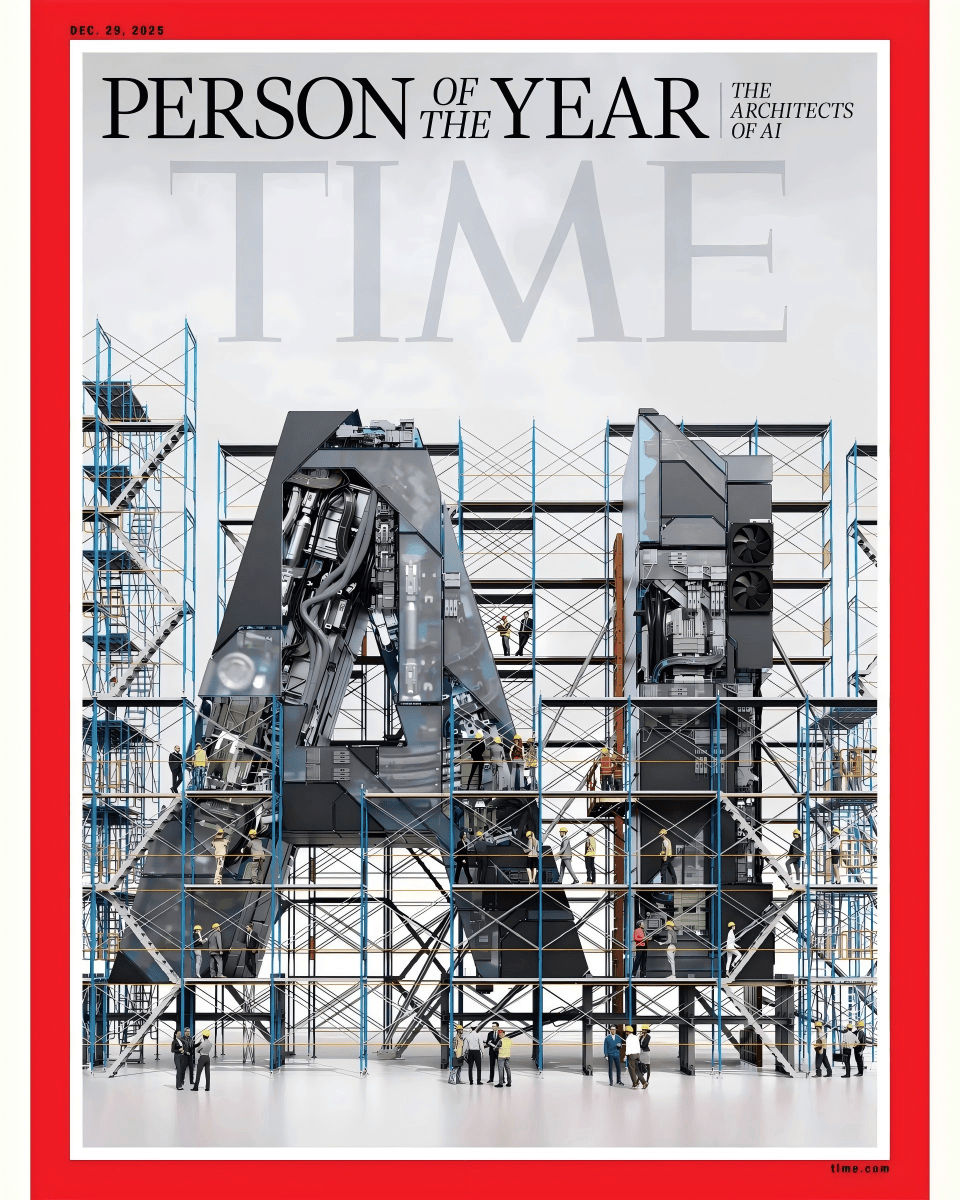
Core Insights - The article highlights the differing paths of AI development between China and the United States, emphasizing that China's approach is driven by practical applications rather than the pursuit of "superintelligence" [1][2] - China's AI growth is rooted in its status as a manufacturing powerhouse, focusing on real-world applications that enhance efficiency and reduce costs in various industries [1][2] Group 1: China's AI Development - China's AI development is characterized by an "application-driven" strategy, where specific needs in industries guide the creation of AI models, such as Baidu's Wenxin model tailored for targeted applications [1] - The core motivation for AI in China stems from tangible demands, such as reducing waste in production lines and optimizing supply chains, which provide clear value creation [1][2] - Baidu's initiatives, like the "Famu Intelligent Body," exemplify the focus on finding optimal solutions in real industrial scenarios, showcasing the practical application of AI technology [1] Group 2: Comparison with U.S. AI Development - In contrast, the U.S. AI development emphasizes foundational scientific exploration and the pursuit of general artificial intelligence (AGI), investing heavily in chip architecture and algorithm breakthroughs [2] - The U.S. approach aims for a "one model fits all" strategy, which, while pushing the boundaries of technology, differs significantly from China's pragmatic focus on industry-specific solutions [2] - The article suggests that the winner in the global AI competition will be determined by who can integrate AI as an "inherent capability" within enterprises to solve real problems [2]
百度越过临界点,开启价值重估
2 1 Shi Ji Jing Ji Bao Dao· 2025-11-13 13:43
Core Viewpoint - The recent surge in Baidu's stock price is interpreted as a delayed value reassessment rather than a simple rebound, indicating a significant transformation within the company [1][5][17]. Group 1: AI Strategy and Internal Transformation - Baidu has completed a core restructuring, integrating its AI strategy into its business framework, showcased during the Baidu World Conference 2025 with various product launches [2][3]. - The company is transitioning from being viewed merely as a search engine to being recognized as a comprehensive AI platform, having made early and substantial investments in AI technology [3][5]. - Baidu's AI capabilities have crossed a critical threshold, enabling it to empower other companies in the industry to effectively utilize AI [3][4]. Group 2: Financial Performance and Market Confidence - Since August, Baidu's stock has seen a notable increase, with a 50.61% rise in Hong Kong shares and a 59.6% increase in U.S. shares this year, prompting several institutions to upgrade their ratings to "buy" based on AI and cloud computing revenue prospects [5][6]. - The market's confidence stems from Baidu's decade-long investment in AI infrastructure, which is difficult to replicate in the short term [6][14]. Group 3: AI Product Development and Ecosystem - Baidu has developed a comprehensive AI technology stack, including the Kunlun chip series and the PaddlePaddle deep learning platform, which supports the entire AI application process [7][8]. - The newly launched Wenxin 5.0 model demonstrates advanced capabilities in multi-modal understanding and has achieved competitive performance in global benchmarks [8][10]. - Baidu's AI applications, such as AI search and the GenFlow 3.0 cloud service, have significantly enhanced user experience and engagement, leading to increased commercial value [10][11]. Group 4: External Empowerment and Market Expansion - Baidu's AI capabilities are being extended to external partners, with Baidu Smart Cloud becoming a preferred choice for numerous major enterprises [11][12]. - The autonomous driving service "Luobo Kuaipao" has achieved significant milestones, with over 250,000 fully autonomous orders weekly and a total of 17 million global ride services, marking Baidu as a leader in the field [15][16]. - The company's international expansion efforts include launching overseas versions of its AI products, indicating a strategic move to tap into global markets [15][16]. Group 5: Long-term Vision and Market Reassessment - The value reassessment of Baidu is not merely a return to form but signifies the emergence of a "new Baidu," characterized by a focus on core technologies and long-term strategies [17][18]. - The company's commitment to long-term investment in AI and its comprehensive technological ecosystem positions it favorably against competitors who may waver between model competition and short-term monetization [16][18].
“内化AI能力”,百度瞄准了什么
Di Yi Cai Jing· 2025-11-13 12:23
Core Insights - The core viewpoint presented by Baidu's founder, Li Yanhong, emphasizes that value in the AI industry is generated through applications rather than chips, advocating for a shift from a "pyramid" structure to an "inverted pyramid" structure in the AI industry [1][3] Group 1: AI Industry Structure - The AI industry is transitioning from a "pyramid" structure, where chips capture most of the value, to an "inverted pyramid" structure, where applications and models generate significantly more value [1] - A sustainable AI industry should see models generating ten times the value of chips and applications creating one hundred times the value [1] Group 2: Baidu's AI Developments - Baidu introduced several innovative AI products, including the Wenxin 5.0 model, Kunlun chips, and the autonomous driving service "LuoBo Kuaipao," showcasing its commitment to AI development [3][4] - The Wenxin 5.0 model integrates multiple modalities from the start, achieving a unified understanding and generation of language, images, video, and audio [4] Group 3: Performance and Capabilities - Wenxin 5.0 has demonstrated strong performance in various areas, matching or exceeding capabilities of leading models like Gemini-2.5-Pro and GPT-5-High in over 40 authoritative benchmarks [5] - The model's capabilities in understanding and generating multimodal content are at a globally leading level, validating the potential of native multimodal models [5] Group 4: Chip Development and Applications - Baidu's self-developed Kunlun chip has been validated internally and is being utilized across various industries, with a customer base exceeding one hundred [7] - Future Kunlun chips, including M100 and M300, are scheduled for release in 2026 and 2027, targeting large-scale inference and multimodal model training [7][8] Group 5: Autonomous Driving and Market Impact - The autonomous driving service "LuoBo Kuaipao" has achieved over 250,000 fully autonomous orders weekly and has completed over 1.4 billion kilometers of autonomous driving [8][9] - The potential for autonomous vehicles to transform urban life and increase demand for ride-hailing services is highlighted, with projections indicating significant cost reductions by 2030 [9] Group 6: AI Integration in Business - Baidu is actively integrating AI into its search engine, with 70% of search results now generated by AI, shifting from text-based to rich media content [9][10] - The company is also expanding its AI capabilities globally, with initiatives in Brazil and Southeast Asia, indicating a strategic push for international growth [10][15] Group 7: Long-term Strategy and Market Response - Baidu's long-term investment in AI has established a strong technological barrier, with its stock price increasing over 40% since 2025 as the market shifts focus from model parameters to application effectiveness [15][16] - The company's AI strategy is not merely an addition but a fundamental transformation, redefining its business model and enhancing productivity across various sectors [16]

“内化AI能力”,百度瞄准了什么
第一财经· 2025-11-13 12:09
Core Viewpoint - The AI industry is transitioning from a "pyramid" structure, where chips capture most value, to an "inverted pyramid" structure, where models and applications generate significantly more value, indicating a healthier and sustainable future for AI [1][3]. Group 1: AI Industry Insights - The internalization of AI capabilities transforms it from a cost to a productivity driver, emphasizing the need for AI to integrate organically with tasks [3]. - Baidu's AI products, including the Wenxin 5.0 model, Kunlun chip, and the autonomous driving service "LuoBo KuaPao," showcase the company's long-term investment in AI [5][9]. - The Wenxin 5.0 model utilizes a unified autoregressive architecture for multimodal modeling, achieving global leading performance in various benchmarks [5][7]. Group 2: Technological Developments - Baidu's Kunlun chip has been validated internally and is being used for most inference tasks, with plans for new chip releases in 2026 and 2027 [7][8]. - The autonomous driving service "LuoBo KuaPao" has achieved over 250,000 fully autonomous orders weekly and has completed over 240 million kilometers of autonomous driving [9]. - Baidu's search engine has been significantly transformed by AI, with 70% of search results now generated by AI, moving from text-based to rich media content [10]. Group 3: Global Expansion and Market Position - Baidu's AI capabilities are being applied globally, with digital human technology launched in Brazil and autonomous driving services expanding in the Middle East [18]. - The company's AI strategy has led to a 40% increase in stock price since 2025, reflecting a market shift from model competition to application effectiveness [17][18]. - Baidu's transformation is not merely an addition of AI but a deep integration of AI capabilities into its business processes, enhancing productivity and efficiency across various sectors [18].