内化AI能力

Search documents
腾讯百度春节撒钱抢AI用户,10亿5亿红包大战打响
Sou Hu Cai Jing· 2026-01-27 07:23
Core Viewpoint - The competition between Tencent and Baidu during the Spring Festival highlights their strategies to leverage cash red envelopes as a means to attract users and enhance their AI applications, with Tencent offering 10 billion yuan and Baidu 5 billion yuan in cash rewards [2][4][12]. Group 1: Tencent's Strategy - Tencent, as the originator of the Spring Festival red envelope concept, aims to utilize its social media platforms, WeChat and QQ, to drive traffic to its AI application, Yuanbao [5][8]. - The company is under pressure to compete with ByteDance and Alibaba in the AI sector, as they have successfully attracted millions of active users [8][10]. - Tencent's approach involves high incentives and social engagement to reshape user habits, with the 10 billion yuan red envelope serving as a strategic investment in user acquisition [9][10]. Group 2: Baidu's Response - Baidu's quick response to Tencent's initiative indicates a renewed confidence in its AI capabilities, having previously faced criticism for its slower reaction in the AI race [12][16]. - The company has established a comprehensive AI ecosystem, integrating its technology from foundational chips to applications, which positions it competitively against global giants like Google and Microsoft [16][17]. - Baidu's recent formation of a personal super-intelligent business group reflects its commitment to scaling AI applications and addressing market skepticism regarding its revenue generation capabilities [17][18]. Group 3: Industry Dynamics - The ongoing "red envelope war" is not limited to Tencent and Baidu, as other players like ByteDance and Alibaba are expected to join the competition, leveraging the Spring Festival as a critical marketing opportunity [19][20]. - The historical context suggests that while cash incentives can drive short-term user engagement, long-term success will depend on product quality and user experience [26]. - This competition is seen as a collective bet by major tech companies on establishing a dominant entry point into the AI era, with the potential to accelerate AI adoption among the general public [26][27].




全球 AI 竞争,为什么越来越多人看好中国?
Ge Long Hui· 2025-12-18 12:48
Core Insights - The article highlights the rapid development and adoption of AI applications in China, marking a shift from mere technological showcases to practical productivity tools across various industries [1][2][3] - Baidu is positioned as a leading player in this AI application landscape, having established a comprehensive system from chips to models to applications, reflecting the broader trajectory of China's AI development [1][2][24] Group 1: AI Application Trends - The global tech community has recognized the innovation in Chinese AI applications, with significant contributions from companies like Baidu and DeepSeek, as evidenced by 22 out of the top 50 AI mobile applications being from China [2] - The differentiation in AI strategies between the US and China is becoming more pronounced, with US companies focusing on model performance while Chinese firms are rapidly deploying diverse applications [2][22] Group 2: Baidu's AI Strategy - Baidu's AI strategy is characterized by a systematic approach, integrating various components of AI technology, which serves as a microcosm of China's overall AI path [1][24] - The launch of the "秒哒" (MiaoDa) no-code application development platform has enabled non-programmers to create AI applications, demonstrating the democratization of AI technology [7][15] Group 3: Economic Impact and Market Response - The economic value generated by AI applications through platforms like 秒哒 has exceeded 5 billion yuan, showcasing the tangible benefits of AI in various sectors [15] - Baidu's stock has seen a positive response in the capital markets, reflecting investor confidence in the company's AI-driven growth potential [3][25] Group 4: Case Studies of AI Applications - The "蜗牛牙牙" (Snail Tooth) application, developed for children's oral health, exemplifies how AI can meet real user needs without requiring complex technical skills [10][11] - The "油气井生产优化设计系统" (Oil and Gas Well Production Optimization System) developed using 秒哒 illustrates how industry professionals can leverage AI tools to address specific operational challenges [11][14] Group 5: Future Prospects and Innovations - Baidu's "伐谋" (FaMou) intelligent agent represents a significant advancement in AI capabilities, enabling self-evolution and optimization in complex industrial scenarios [17][19] - The upcoming launch of new Kunlun chips is expected to enhance Baidu's AI infrastructure, further solidifying its competitive edge in the AI landscape [25][26] Group 6: Global Expansion and Recognition - Baidu's AI applications are not only gaining traction domestically but are also expanding into international markets, with products like 秒哒 and 慧播星 (HuiBoXing) achieving recognition abroad [27] - The comprehensive self-research capabilities across various AI layers position Baidu uniquely in the global tech landscape, allowing it to drive scalable AI applications [24][26]

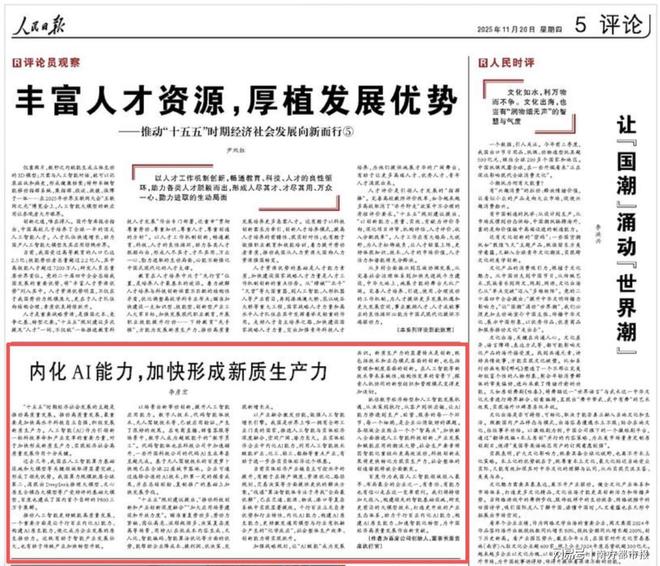
李彦宏《人民日报》撰文,提出内化AI能力“三步走”
Nan Fang Du Shi Bao· 2025-11-20 02:07
Core Viewpoint - The article emphasizes the importance of internalizing AI capabilities across various industries to enhance productivity and drive high-quality development [1][3]. Group 1: Internalizing AI Capabilities - Companies face the challenge of internalizing AI capabilities, which can be addressed by driving innovation through new scenarios and enhancing AI application capabilities [3][4]. - Specific AI technologies such as digital human technology, code intelligence, and autonomous driving have shown effective results in various applications [3][4]. - AI can help companies reduce costs, increase profits, optimize decision-making, and discover new growth points, particularly in scenarios with repetitive labor, labor shortages, high-risk jobs, bottlenecks, and complex decision-making [4][5]. Group 2: Industry Integration and AI Growth Engine - Internalizing AI capabilities in key industries like mining, chemicals, light industry, and shipping can strengthen the foundation of the real economy [5][6]. - The example of Baidu's algorithmic intelligence tool "Famu" demonstrates significant efficiency improvements in complex systems such as traffic and logistics [5]. - The integration of AI capabilities tailored to industry characteristics can enhance overall productivity and innovation capacity across sectors [5][6]. Group 3: Strategic Planning for AI Empowerment - There is an urgent need to explore new organizational and management models that facilitate human-machine collaboration in the context of systemic and structural changes brought by AI [6]. - Companies must ensure that AI capabilities permeate every aspect of production, operation, and service, from decision-making to execution [6]. - Baidu plans to increase investment in building advanced intelligent infrastructure and developing cutting-edge large model technologies to support the internalization of AI capabilities across industries [6].
AI 应用创业两个新趋势:智能体、多模态热门,小而美团队成主流
投资实习所· 2025-11-15 05:19
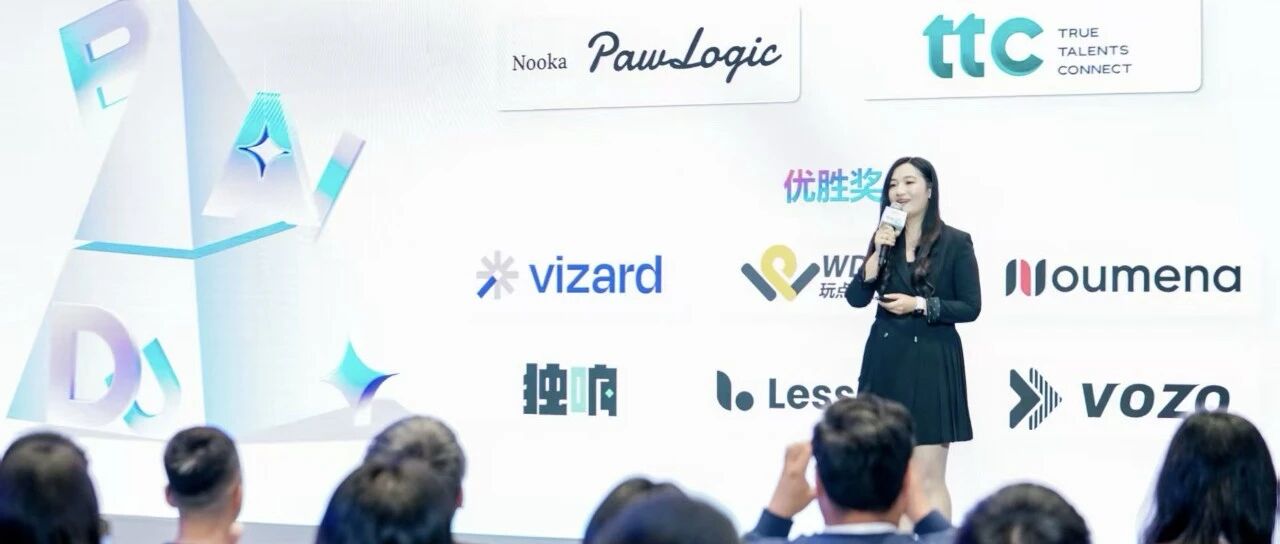
Core Insights - The article discusses the trends in the AI startup ecosystem, particularly focusing on the results of the Baidu Wenxin Cup Entrepreneurship Competition, which attracted nearly 1,000 teams globally and highlighted the evolution of AI applications across various sectors [1][13]. Group 1: Winning Projects - Eight winning projects were selected, showcasing diverse applications of AI, including recruitment, content automation, and video generation [2][5]. - Notable projects include Lessie AI, which focuses on AI-driven recruitment, and Nooka, an innovative platform that transforms books into interactive audio dialogues [4][5]. Group 2: Trends in AI Startups - The competition revealed a shift towards multi-modal AI applications, moving from text-based to image and audio integrations, indicating a broader technological evolution [10][11]. - Teams are becoming more specialized and streamlined, with 50% of founders being post-90s and over 40% having backgrounds in top tech companies, while 71% of teams consist of fewer than 20 members [11][13]. Group 3: Baidu's AI Developments - Baidu has made significant advancements in AI capabilities, launching new products and models, including the Wenxin 5.0 model, which excels in multi-modal understanding and creative writing [15]. - The company introduced a self-evolving AI agent, which optimizes solutions in complex fields like finance and logistics, showcasing its commitment to enhancing AI's practical applications [15]. Group 4: Internalizing AI Capabilities - Baidu's founder emphasized the importance of "internalizing AI capabilities," suggesting that AI should become an integral part of organizational processes rather than just a tool [16][19]. - This approach aims to transform AI from a cost into a productivity enhancer, allowing businesses to leverage AI for greater efficiency and innovation [16][20].
1990-2025中国科技史大盘点,内化AI能力的时代到了
Xin Lang Ke Ji· 2025-11-14 00:57
Core Insights - The article reflects on the evolution of China's AI and technology landscape from the early days of the internet to the present, highlighting significant milestones and trends that have shaped the industry [2] Historical Development - In 1994, China was introduced to the internet through a 64K dedicated line, marking the beginning of a new era in technology [2] - Li Yanhong, while studying at Peking University in 1990, wrote down the term "artificial intelligence," which has since become a pivotal concept in the tech industry [4] - The emergence of major players like Baidu, Tencent, and Alibaba during the portal era in the late 1990s laid the groundwork for the current tech landscape [5][7] Key Milestones - Baidu launched the world's first Chinese search engine, breaking the foreign monopoly in the search engine market [5] - The mobile internet era began with the release of the iPhone in 2007, leading to a surge in mobile applications and services [8] - Baidu introduced the "Apollo" autonomous driving platform in 2017, marking its entry into the self-driving vehicle sector [10] AI Development - The release of the Wenxin large model 1.0 in 2018 signified Baidu's commitment to AI, with subsequent upgrades leading to the 5.0 version featuring hundreds of billions of parameters [10][12] - The rise of ChatGPT in 2022 catalyzed a global AI wave, prompting many domestic companies to accelerate their AI initiatives [14][16] - Baidu's introduction of "Wenxin Yiyan" shortly after ChatGPT's launch demonstrates its proactive approach in the AI space [16] Future Trends - Li Yanhong's concept of "internalizing AI capabilities" is expected to be a core competitive advantage for future enterprises, emphasizing the integration of AI into various industries [19] - The article suggests that the next decade will focus on the proliferation of "super useful" applications rather than a single dominant application, indicating a diverse and competitive landscape [17][19] - The integration of AI into traditional industries is seen as a key focus area in China's 14th Five-Year Plan, highlighting the importance of AI in driving economic growth [19]
AI不是短跑比赛
虎嗅APP· 2025-11-13 09:47
Core Viewpoint - 2023 is recognized as the "year of effectiveness" for AI, with 2024 expected to be the "year of application" [2] - The AI large model industry has not yet entered a true "explosion period," with user scale and app installations increasing but revenue conversion still lagging [2][3] Group 1: AI Development and Market Dynamics - Baidu's AI strategy has transitioned from sowing to nurturing, focusing on small successes rather than immediate harvests [3][4] - Historical evidence suggests that the transition from technology accumulation to explosion cannot be strictly planned, with each harvest being a reward for long-term commitment [7] - The initial hype surrounding ChatGPT is fading, revealing limitations in user engagement and interaction duration, with average user interaction lasting only 6-15 minutes [10] Group 2: Competitive Landscape - OpenAI's challenges highlight the fragility of newly created application scenarios, as seen with Sora 2 facing copyright and harmful content controversies [11] - Gemini's growth has outpaced ChatGPT, with market share increasing from 6.4% to 12.9%, while ChatGPT's share has dropped from 87% to 74% [11][12] - Baidu's AI search has achieved 3.82 billion monthly active users, reflecting an 18.6% quarter-over-quarter growth [12] Group 3: Long-term Value and Strategy - The true value of AI lies in its integration with time, emphasizing the importance of long-term strategies over short-term gains [13][15] - Baidu aims to create a comprehensive AI stack rather than focusing on single-point applications, avoiding the pitfalls of the previous mobile internet era [16][25] - Baidu's autonomous driving service, "萝卜快跑," has accumulated over 240 million kilometers of driving, showcasing significant potential in a validated demand scenario [18] Group 4: Internalization of AI Capabilities - Baidu's concept of "internalizing AI capabilities" emphasizes the need for AI to be integrated as a native ability across industries, driving productivity and economic growth [20] - The AI industry faces challenges with low investment efficiency, as evidenced by the inflated valuations of AI startups and the lack of positive returns for many enterprises adopting AI tools [21][23] - The understanding and effective utilization of AI is a longer process than anticipated, indicating that the "big gathering" of AI is still on the way [24][26]

从自动生成笔记,到视障者的 “眼睛”,百度用 AI 内化重构人与科技的关系
Xi Niu Cai Jing· 2025-11-13 09:27
Core Insights - The article emphasizes the pervasive integration of AI into daily life by 2025, highlighting its applications across various sectors such as education, entertainment, research, and business operations [2][3][4] Market Growth and Application - The global AI agent market is projected to exceed $50 billion by 2025, with a compound annual growth rate (CAGR) of over 40%, potentially reaching $300-500 billion by 2030 [3] - AI applications are expanding in manufacturing, finance, and consumer services, with examples like self-diagnosing equipment in factories and AI credit systems in banks improving efficiency [3][4] Learning and Education - AI tools like Baidu's AI note-taking feature significantly enhance learning efficiency, as demonstrated by users who have successfully utilized these tools for exam preparation and skill acquisition [5][6] - AI is transforming educational experiences by providing personalized learning plans and real-time assistance, making it akin to having a dedicated tutor available 24/7 [6][10] Business Efficiency - AI is being adopted in business operations to reduce costs and improve efficiency, exemplified by the use of AI agents in educational institutions to handle customer inquiries and generate tailored responses [7][8] - The implementation of AI in various sectors is leading to substantial business growth and improved customer service, even in high-demand situations [8][10] Emotional and Social Impact - AI is evolving from a mere tool to a companion, fulfilling emotional and social needs, as evidenced by the rise of AI companions and assistants that provide comfort and support [11][12] - The emotional value of AI applications is becoming increasingly recognized, with users finding solace and companionship through AI interactions [12][15] Internalization of AI Capabilities - The concept of "internalizing AI capabilities" is gaining traction, suggesting that AI should be integrated into personal workflows and cognitive processes, transforming it from a cost into a productivity enhancer [16][18] - This shift towards a collaborative human-AI relationship is expected to democratize access to AI technologies, enabling broader participation in the technological revolution [18]