
充换电服务

Search documents
10.4万亿千瓦时,见证“电力供应超市”托举力
Ren Min Ri Bao· 2026-02-10 01:08
Group 1 - The importance of electricity supply for production and economic development is highlighted, with a specific example showing that a power outage of 180 milliseconds can lead to an 18-month production halt [1] - The World Bank includes "access to electricity" as a core indicator in its business environment assessment, emphasizing the critical role of electricity in economic growth [1] - By 2025, China's total electricity consumption is projected to reach 10.4 trillion kilowatt-hours, marking a first for any single country globally [1] Group 2 - China boasts the world's largest clean power generation system, with extensive renewable energy sources such as wind and solar power, contributing to a robust electricity supply network [2] - The complex electricity transmission network in China, including ultra-high voltage lines, facilitates efficient electricity distribution across the country, supporting the manufacturing sector [2] - Since surpassing 1 trillion kilowatt-hours of electricity consumption in 1996, China's industrialization has accelerated, with the manufacturing value added becoming the highest globally since 2011 [2] Group 3 - The role of the electricity supply system is expanding beyond traditional manufacturing to support new industries and innovative applications, enhancing product quality and consumer experiences [3] - By 2025, electricity consumption in the tertiary sector is expected to reach nearly 2 trillion kilowatt-hours, accounting for approximately 19.2% of total consumption, indicating a shift towards new services and lifestyles [3] - Many industrial parks are upgrading their power supply systems from single to dual circuits to ensure reliability and support digital transformation, which is crucial for building a modern industrial system during the 14th Five-Year Plan [3] - The establishment of a unified national electricity market will further enhance the role of electricity as a resource regulator and price signal, promising a modernized electricity supply system [3]
主播说联播丨10万亿度电的“新”意与“绿”意
Yang Shi Xin Wen Ke Hu Duan· 2026-01-18 08:34
Core Insights - China's total electricity consumption is projected to exceed 10 trillion kilowatt-hours by 2025, maintaining its position as the world's largest electricity consumer [1][3] Group 1: Total Electricity Consumption - China's annual electricity consumption is more than double that of the United States and surpasses the combined total of the EU, Russia, India, and Japan for 2024 [3] - The 10 trillion kilowatt-hours mark represents approximately double the total electricity consumption of China in 2015, indicating a strong economic growth trajectory [3] Group 2: Structural Changes in Consumption - High-end manufacturing, particularly in the electric vehicle sector, is emerging as a significant driver of electricity demand, with a year-on-year growth rate exceeding 20% [3] - The tertiary sector and residential electricity consumption are also rapidly increasing, especially in the internet and related services industries, which have seen a year-on-year growth rate exceeding 30% [3] - The proliferation of electric vehicles is driving a nearly 50% year-on-year increase in electricity consumption in the charging and swapping industry [3] Group 3: Supply and Green Energy - By 2025, over 60% of China's installed power generation capacity will come from non-fossil energy sources, making green energy the dominant force in electricity generation [3] - One-third of the total electricity consumed in China will be green electricity, reflecting a significant shift towards sustainable energy sources [3] - The country is intensifying the construction of ultra-high voltage projects to deliver more clean electricity across regions [3]
10万亿度电“点亮”中国:单年用电首破全球纪录,新质生产力成增长主引擎
Sou Hu Cai Jing· 2026-01-18 00:15
Core Insights - China's total electricity consumption is projected to exceed 10 trillion kilowatt-hours by 2025, reaching 10.4 trillion kilowatt-hours, marking a 5% year-on-year increase, which is unprecedented for a single country globally [1][6] - This milestone reflects China's robust economic resilience and profound transformation, with the total electricity consumption doubling from 5 trillion kilowatt-hours in just over a decade [1][3] Economic and Structural Drivers - The growth in electricity consumption is supported by a stable macroeconomic foundation and increased demand due to high temperatures and the rising electrification of daily life, including household appliances and electric vehicles [1][3] - High-end manufacturing sectors, such as new energy vehicles and wind power equipment manufacturing, are expected to see electricity consumption growth rates exceeding 20% and 30%, respectively, becoming key drivers of this growth [3] Emerging Industries - The rapid development of the digital economy is evident, with the internet services and charging industries experiencing electricity consumption growth rates of over 30% and nearly 50%, respectively, indicating a shift towards high-tech and high-value-added economic activities [3][4] - The contrast between the rising electricity consumption in high-tech industries and the declining growth in high-energy-consuming sectors, such as black metal smelting, highlights China's structural adjustments and transformation efforts [4] Power Supply and Stability - Ensuring the safe and stable supply of 10 trillion kilowatt-hours is a significant achievement, supported by a modern power supply system that coordinates efforts across power generation, grid management, and demand-side management [3][4] - Coal power continues to play a stabilizing role, while renewable energy sources like wind and solar are becoming the main contributors to incremental growth, complemented by energy storage solutions [3] Conclusion - The unprecedented figure of 10.4 trillion kilowatt-hours not only demonstrates China's strength as a global manufacturing powerhouse but also showcases its progress towards high-quality development and the establishment of a new power system [6] - This data reflects the vigorous pace of industrial structure upgrades, the commitment to green and low-carbon transitions, and the strong resilience of the Chinese economy in a complex environment [6]

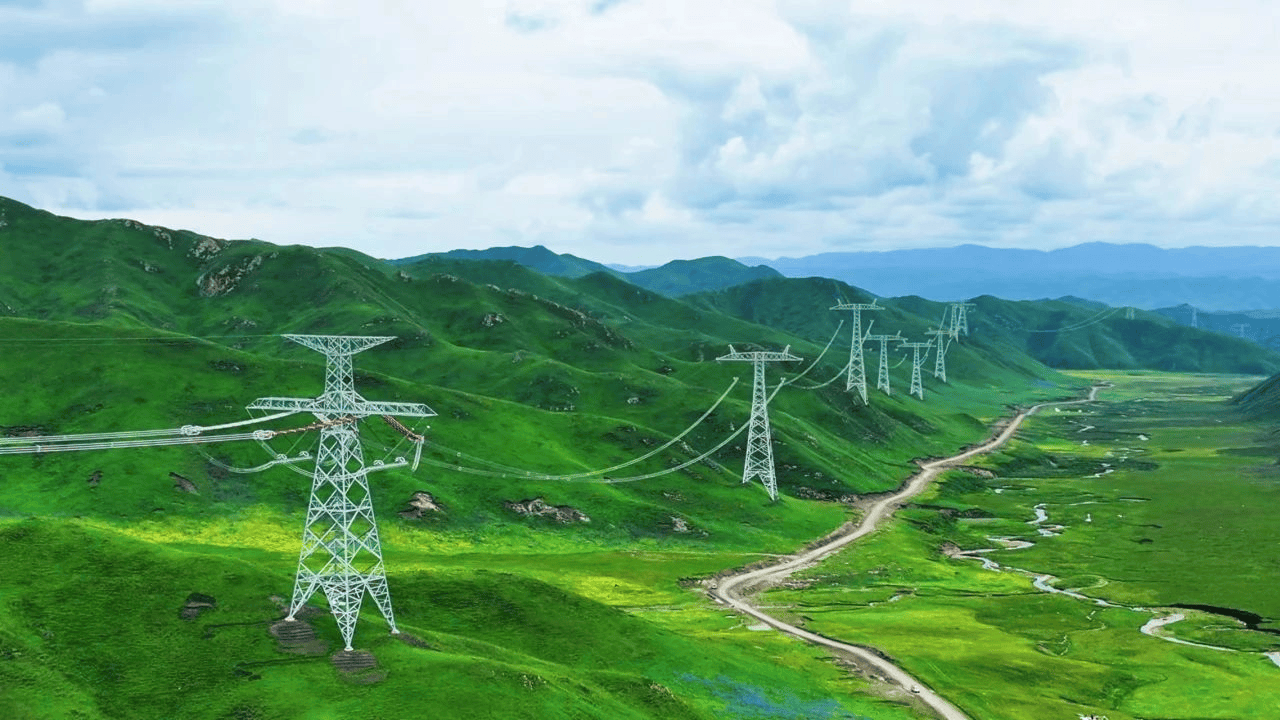
蔚来能源:十一假期为用户提供超192万次充换电服务,充电订单超85%来自其他品牌用户
Xin Lang Ke Ji· 2025-10-10 10:41
Core Insights - NIO released its "2025 National Day User Charging Report," highlighting significant growth in its charging and battery swap services during the holiday period [1] Group 1: Charging and Battery Swap Services - NIO's 8,280 charging and battery swap stations provided over 1.92 million services during the National Day holiday [1] - The 3,520 battery swap stations delivered a record 1.098 million swap services, marking a historical high [1] - The highest single-day service volume at battery swap stations exceeded 145,000, setting a new daily record [1] - The average daily service volume at battery swap stations reached 137,000, a 37% increase compared to the same period in 2024 [1] - The 4,760 charging stations provided 827,000 services, with over 85% of orders coming from users of other electric vehicle brands [1] Group 2: User Driving Data - During the holiday, NIO users collectively drove over 490 million kilometers [1] - 511 users drove more than 5,000 kilometers, while over 74,000 users drove more than 500 kilometers in a single day [1] - More than 207,000 users completed their journeys solely using battery swap services [1] - One user traveled the longest distance, starting from Xuancheng, Anhui, and crossing six provinces to reach Lhasa, Tibet, covering a total distance of 4,000 kilometers [1]

中国石油2025年上半年经营业绩与股东回报保持高位
Jing Ji Wang· 2025-09-08 02:42
Core Viewpoint - China Petroleum & Chemical Corporation (the "Company") reported better-than-expected operating performance in the first half of the year, driven by proactive responses to market changes and advancements in production, technology, and marketing strategies [1] Group 1: Financial Performance - The Company achieved a revenue of 1.5 trillion yuan and a net profit of 84.01 billion yuan in the first half of the year [1] - The board declared an interim dividend of 0.22 yuan per share, totaling 40.26 billion yuan, maintaining a historically high payout level [1] Group 2: Oil and Gas Production - The Company recorded an oil and gas equivalent production of 924 million barrels, a year-on-year increase of 2.0%, with crude oil production at 476 million barrels (up 0.3%) and marketable natural gas production at 2.68 trillion cubic feet (up 3.8%) [2] - The Company made significant breakthroughs in exploration and development, optimizing production capacity and enhancing recovery rates [2] Group 3: Refining and Chemical Business - The Company is advancing its refining and chemical transformation, with significant projects in Jilin and Guangxi achieving mid-stage completion [6] - The production of ethylene and chemical products reached historical highs, with chemical product sales increasing by 4.9% and new materials production up by 54.9% [6] Group 4: Sales and Market Expansion - The Company enhanced its marketing strategies, resulting in a 0.3% increase in domestic refined oil sales and a 1.5 percentage point increase in market share [7] - Sales of natural gas reached 151.5 billion cubic meters, a year-on-year increase of 2.9%, with domestic sales up 4.2% [7] Group 5: Technological Innovation - The Company emphasizes innovation as a primary development strategy, focusing on enhancing core competitiveness in oil and gas exploration, refining, and new energy sectors [8] - The implementation of the "Smart Oil" strategy aims to integrate digital technology with the energy industry, improving efficiency across the entire value chain [8]

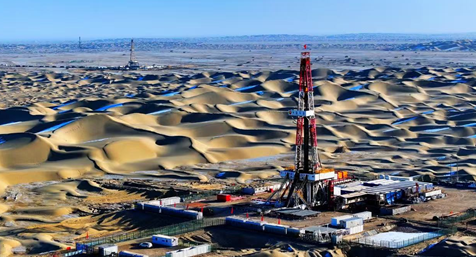
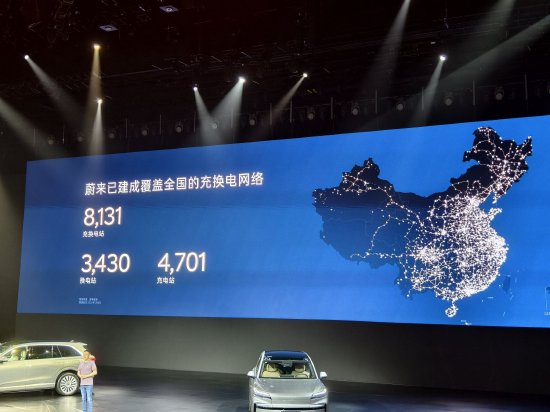
李斌:蔚来已建成8131个充换电站,累计完成1.48亿次充换电服务
Xin Lang Ke Ji· 2025-07-31 12:10
Core Insights - NIO has established a nationwide charging and battery swapping network with a total of 8,131 stations as of July 31, including 3,430 battery swapping stations and 4,701 charging stations [2] - The company has completed a total of 148 million charging and battery swapping services, comprising 81,193,962 battery swaps and 67,161,963 charging services [2] - Over the past decade, NIO has invested more than 18 billion yuan in the charging and battery swapping sector and has accumulated over 60 billion yuan in research and development expenditures [2]
【财经分析】新能源汽车加速替代传统燃油车 国内油企加速转型拓展非油业务
Xin Hua Cai Jing· 2025-06-13 06:45
Group 1 - The core viewpoint of the articles highlights the explosive growth of China's new energy vehicle (NEV) industry driven by the "dual carbon" goals, with NEV sales expected to exceed 10 million units in 2024, achieving a market penetration rate of over 40% [1][2] - The traditional fuel vehicle market is experiencing a significant decline, with retail sales of traditional fuel vehicles expected to drop by 14% in 2024, totaling 11.99 million units [3] - The demand for refined oil products in China is projected to decrease slightly in 2024, with total consumption expected to reach 400 million tons, a year-on-year decline of 1.9% [3] Group 2 - Major oil companies in China are actively expanding their non-oil businesses, transitioning from traditional fuel sales to diversified operations such as convenience store retail and charging services [1][4] - China Petroleum & Chemical Corporation reported a total revenue of 3.07 trillion yuan in 2024, a decrease of 4.29% year-on-year, while also making significant strides in hydrogen energy and charging infrastructure [4][5] - China National Petroleum Corporation achieved a revenue of 2.9 trillion yuan in 2024, with stable growth in its non-oil business despite a 2.5% decline in oil prices [5][6] Group 3 - The transformation of oil sales companies is expected to focus on integrated energy service stations, combining various services such as refueling, charging, and retail to meet the evolving market demands [7] - Digital technology is playing a crucial role in enhancing non-oil business operations, with companies like Sinopec and PetroChina developing apps that integrate multiple services and have gained over 100 million users [7] - Cross-industry collaborations are becoming more prevalent, with oil companies partnering with internet platforms and new energy vehicle manufacturers to expand their service offerings [7][8]
从产业结构调整看用电量与GDP增速差
Tianfeng Securities· 2025-04-26 07:44
Investment Rating - Industry rating is maintained at "Outperform the Market" [5] Core Insights - The gap between electricity consumption growth and GDP growth is expanding, with electricity elasticity coefficients for 2022-2024 projected at 1.16, 1.24, and 1.36 respectively [11][16] - The structural changes in the economy are driving the relationship between electricity consumption and economic growth, with the tertiary industry becoming a significant driver of growth [2][28] - The second industry has a significantly higher unit GDP electricity consumption compared to the tertiary industry, indicating a shift in energy consumption patterns [19][20] Summary by Sections 1. Electricity Consumption and GDP Growth Gap - The analysis of the past decade shows three phases: 2015-2018 (divergent trends), 2018-2020 (convergent trends), and 2020-2024 (growing divergence) [11][16] 2. Structural Adjustments in the Economy - The tertiary industry has consistently supported GDP growth, comprising over 50% of GDP from 2015 to 2024, while the second industry remains dominant in electricity consumption, accounting for 64.83% by 2024 [2][19] - The unit GDP electricity consumption for the second industry is 0.137 KWh/¥, while for the tertiary industry it is only 0.025 KWh/¥ in 2024 [19][20] 3. Future Outlook on Electricity and GDP Growth Gap - The tertiary industry's increasing share in the economy is expected to continue, with significant growth in emerging service sectors like charging services and internet data services, which will drive electricity demand [30][32] - The first quarter of 2025 shows the tertiary industry's GDP share at 61.2%, indicating a sustained trend towards service-oriented economic growth [28][34] 4. Investment Recommendations - The report suggests focusing on companies in the thermal power sector such as Huaneng International, Huadian International, and Zhejiang Energy, as well as hydropower companies like Yangtze Power and Sichuan Investment Energy [32]