
光伏发电板

Search documents
戈壁的光、草原的风、远方的水 这样成为供暖的电
Xin Hua Wang· 2025-11-27 05:34
Core Insights - The article highlights the significant role of green energy in providing warmth during the winter season, emphasizing the integration of renewable energy sources into the power supply system [1] Group 1: Renewable Energy Projects - A 2 million kilowatt coal and 6.1 million kilowatt renewable energy integrated project in Xinjiang will supply green electricity to Anhui, supporting the eastern region's power needs [2] - The Zhangbei flexible DC grid project enhances the capacity for green electricity transmission by over 30%, successfully operating for more than 1940 days and delivering over 48 billion kilowatt-hours of electricity [4] Group 2: Renewable Energy Statistics - In the first three quarters of the year, China's renewable energy generation reached 2.89 trillion kilowatt-hours, accounting for approximately 40% of total electricity generation, with wind and solar power contributing 1.73 trillion kilowatt-hours, representing 22% of total electricity consumption [2] - The share of electricity in China's final energy consumption has reached around 30%, with one-third of the total electricity consumption being green energy [2] Group 3: Local Implementation and Benefits - In Tianjin, the installed capacity of renewable energy has reached 1.533 million kilowatts, providing green electricity to 23,000 electric heating users during peak hours, reducing heating costs through solar panel installations [6] - The intelligent scheduling system for 14 million kilowatts of renewable energy capacity allows for localized consumption and precise allocation, effectively relieving pressure on the power grid [6] Group 4: Energy Supply System Transformation - The energy supply system is undergoing a transformation, integrating green energy deeply into the supply framework, from the northwest to the eastern coastal areas [7] - The ongoing nationwide green energy winter supply action is establishing a new pattern characterized by multi-energy complementarity, intelligent scheduling, and enhanced safety and resilience [9]

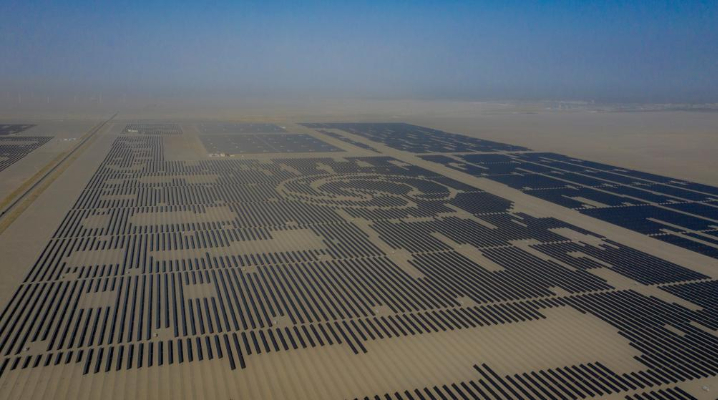
中国诚通发展集团附属就若干光伏发电板订立售后回租协议
Zhi Tong Cai Jing· 2025-11-13 14:30
Core Viewpoint - China Chengtong Development Group (00217) has announced a sale and leaseback agreement with Xinjiang Huadian New Energy, involving the purchase and leasing of photovoltaic panels, expected to generate approximately RMB 730,000 (around HKD 800,000) in income from leasing interest [1] Group 1 - The sale and leaseback agreement is set to be executed on November 13, 2025, with a lease term of 2 years, but can be terminated early based on the agreement's terms [1] - The transaction is part of the general and daily business operations of Chengtong Financing Leasing, a wholly-owned subsidiary of the company [1]
中国诚通发展集团(00217)附属就若干光伏发电板订立售后回租协议
智通财经网· 2025-11-13 14:29
Core Viewpoint - China Chengtong Development Group (00217) has announced a sale and leaseback agreement with Xinjiang Huadian New Energy, involving the purchase and leasing back of photovoltaic panels, expected to generate approximately RMB 730,000 (around HKD 800,000) in income from leasing interest [1] Group 1 - The sale and leaseback agreement is set to take place on November 13, 2025 [1] - The leasing period is for 2 years, with the option for early termination based on the terms of the agreement [1] - The arrangement is part of the general and daily business operations of Chengtong Financing Leasing [1]
探访十五运场馆里的绿色智慧
Ren Min Ri Bao· 2025-11-03 22:20
Core Insights - The Tianhe Sports Center in Guangzhou has undergone significant green renovations, featuring high-efficiency outdoor air conditioning systems, LED lighting, and advanced water-saving technologies, exceeding energy efficiency standards by over 20% [1][2] - The 15th National Games will take place from November 9 to 21, with the Tianhe Sports Center serving as a key venue for multiple sports events, including the opening ceremony for the 12th National Paralympic Games [1][2] - The venue incorporates a photovoltaic power generation system that produces 560,000 kWh annually, equivalent to the annual electricity consumption of 200 households, and saves approximately 1.09 million kWh of electricity each year, reducing carbon emissions by about 811 tons [1][2] Energy and Sustainability Measures - The 15th National Games emphasizes carbon reduction across venue construction, energy supply, and event organization, with the Tianhe Sports Center's "near-zero carbon" renovation being a key initiative [2] - Over 90% of the 89 venues in the Guangdong region for the Games are upgraded from existing facilities, employing strategies that meet zero carbon, near-zero carbon, and green building standards [2] - The Guangdong Provincial Sports Stadium features high-performance insulation, energy-efficient air conditioning, and automated irrigation systems, achieving a two-star green building rating [2] Green Energy Utilization - The electricity for the Games will be sourced from clean energy, including hydropower from the Yunnan-Guizhou Plateau, wind power from the South China Sea, and rooftop solar energy, ensuring 100% green electricity support for the event [2] - The total green electricity usage for the Games is projected to exceed 188 million kWh, resulting in a carbon emission reduction of approximately 160,000 tons, equivalent to planting about 8.88 million trees [3]
辽沈大地“绿”意涌动
中国能源报· 2025-10-19 23:33
Core Viewpoint - The article emphasizes the ongoing development of clean energy in Liaoning, highlighting its role in high-quality economic growth and the integration of traditional and emerging industries [4][5][6]. Group 1: Clean Energy Development - Liaoning is accelerating the development of wind, solar, and nuclear energy, aiming to establish an integrated energy base that includes various energy sources [4][7]. - The province has achieved over 50% in both clean energy installed capacity and generation, surpassing the targets set for the 14th Five-Year Plan [7][12]. - The total installed capacity of wind and solar energy in Liaoning reached 36.5 million kilowatts by September 2023, with a green electricity trading capacity of approximately 22 billion kilowatt-hours [12]. Group 2: Traditional Energy and Infrastructure - The province maintains a strong focus on traditional energy, with coal production at 30 million tons per year and ongoing improvements in coal mine automation [7]. - Significant investments in energy infrastructure have been made, with over 20 billion yuan annually in the power grid, enhancing reliability and capacity [7]. Group 3: Industrial Transformation - Liaoning is committed to upgrading traditional industries while fostering strategic emerging industries, with a focus on technological innovation and sustainable practices [11][17]. - The manufacturing sector is increasingly adopting clean energy solutions, with companies like BMW aiming for 100% non-fossil energy heating in their facilities [10][11]. Group 4: High-End Energy Technology - Liaoning is positioning itself as a leader in high-end energy technology, with significant advancements in energy equipment manufacturing and innovation [14][16]. - The province has developed the world's first 100-megawatt vanadium flow battery energy storage station, enhancing the flexibility of the power system [15]. Group 5: Economic Growth - In 2023, Liaoning's economic growth rate surpassed the national average for the first time in a decade, with a GDP exceeding 3 trillion yuan [17].
中国为什么要疯狂发展绿电?仅仅是因为我们没石油么?
Sou Hu Cai Jing· 2025-10-06 12:57
Core Viewpoint - China is aggressively developing green energy not solely due to oil scarcity but to establish a new commercial logic and lead a global energy revolution [3][9]. Investment in Green Energy - In 2024, China's clean energy investment is projected to reach $675 billion, accounting for 34% of global investment, maintaining its position as the world's largest investor in this sector [1]. - The investment in the energy sector during the "14th Five-Year Plan" period exceeded 15 trillion yuan, with over 60% allocated to green energy [1]. Energy Supply and Strategy - China's oil supply system is mature, with strong ties to major oil-producing countries, reducing the risk of supply disruptions [3]. - The country has become a dominant player in the global oil market, influencing the survival of oil-producing nations [3]. Importance of Electricity in Industry - Electricity costs account for approximately 8% of industrial costs, significantly impacting a country's global competitiveness [5]. - In the aluminum industry, electricity costs can represent up to 40% of total costs, highlighting the critical role of electricity in determining industry viability [5]. Future of Energy and AI - The future of industries such as robotics, electric vehicles, and AI will heavily depend on electricity, with AI training currently consuming 1.5% of global electricity, projected to rise to 3% in five years [5][6]. - Mastery of green electricity will be crucial for future global leadership [5]. Solar Power Production - In 2024, China is expected to export 235.9 GW of solar panels, equivalent to approximately 7.355 million barrels of oil, showcasing its capacity as a new "energy exporter" [6]. - The sustainability of solar power means that one solar panel can provide energy for 25 years, equating to about 184 billion barrels of oil over its lifetime [6]. Global Energy Dynamics - As green energy production scales up, the cost of green electricity may approach zero, diminishing the competitiveness of traditional energy sources like oil and gas [9]. - The shift towards green energy could lead to the collapse of the oil dollar system, ushering in an era dominated by electricity and potentially the "electric yuan" [9]. Technological Advancements - China has developed high-voltage transmission technology that minimizes energy loss, enabling efficient electricity delivery across vast distances [11]. - These technologies are expected to be exported to other countries as part of the Belt and Road Initiative [11].
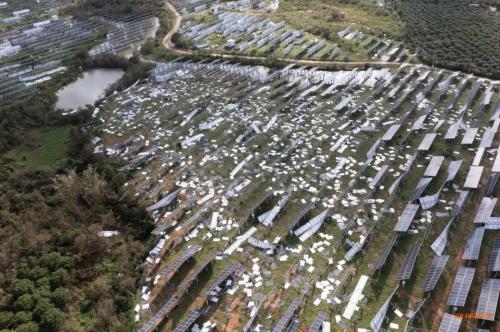
台风桦加沙致阳江5台风电机组折断、千亩光伏板受损
Xin Lang Cai Jing· 2025-09-28 10:46
Core Insights - Typhoon "Haikashan" caused significant damage to renewable energy infrastructure in Yangjiang, Guangdong, with at least five wind turbines reported damaged [1] - The Xinye Photovoltaic Power Station, covering an area of 1,700 acres, also suffered extensive damage, impacting its operational capacity [1] - The power station, which began operations in August 2015, has a designed lifespan of 25 years and an annual generation capacity of 57 million kilowatt-hours [1] - Previous typhoon events in 2023 had also affected the Xinye Photovoltaic Power Station, but the current damage is reported to be more severe [1] - The typhoon has triggered the catastrophe index insurance in Yangjiang, indicating the scale of the impact on the local energy sector [1]
多点发力破解乡村“共富密码”
Xin Hua Ri Bao· 2025-07-24 23:36
Group 1 - The core viewpoint of the articles revolves around the sustainable development of village collective economies in the Houcheng Street area, emphasizing the need for innovation and collaboration among villages to overcome economic challenges [1][5][8] - In the past year, the average operating income of villages in Houcheng Street reached 14.93 million yuan, indicating significant progress, but there remains a gap compared to stronger villages in Zhangjiagang [1] - Villages have developed a "2025 Work Plan" to accelerate the implementation of economic development initiatives, aiming for greater breakthroughs in collective economic growth [1][2] Group 2 - The joint industrial land renewal project in Yuanjiaqiao Village, which includes the construction of a new 7,000 square meter standard factory, marks the first collaboration between village collectives and enterprises for industrial land updates [2][3] - The project aims to upgrade outdated single-story factories to four-story high-standard factories, increasing the land utilization rate and attracting high-quality projects in new materials and high-end equipment manufacturing [2][3] - The establishment of the Zhangjiagang Jinchang Enterprise Management Co., Ltd. by multiple villages aims to develop a new energy industrial park, with the first factory expected to generate an annual income of 4 million yuan for the villages involved [4] Group 3 - The introduction of low-risk, low-cost solar power projects is seen as a viable new path for village economies, with successful implementations already generating significant savings and income for participating villages [5][6] - The collaboration between Chen Yang Village and Zhangjiagang Meite High Polymer Materials Co., Ltd. to install solar panels is projected to save the company over 200,000 yuan annually in electricity costs while generating nearly 500,000 yuan in income for the village [6][7] Group 4 - The transformation of idle land into a popular agritourism destination, such as the Yongzhuang farm in Zhujia Dang Village, demonstrates the potential for enhancing village economies through tourism [7][8] - The farm has attracted significant visitor traffic, generating an annual rental income of 280,000 yuan for the village, highlighting the importance of developing complementary tourism resources to retain visitors [8] - Highqiao Village is also leveraging its cultural resources by renovating idle residential properties into guesthouses, aiming to enhance the overall tourism experience and economic benefits for the community [8]