
光电子信息产品

Search documents
人民日报对话武汉市发改委主任:推动投资止跌回稳
Ren Min Ri Bao· 2026-02-03 09:24
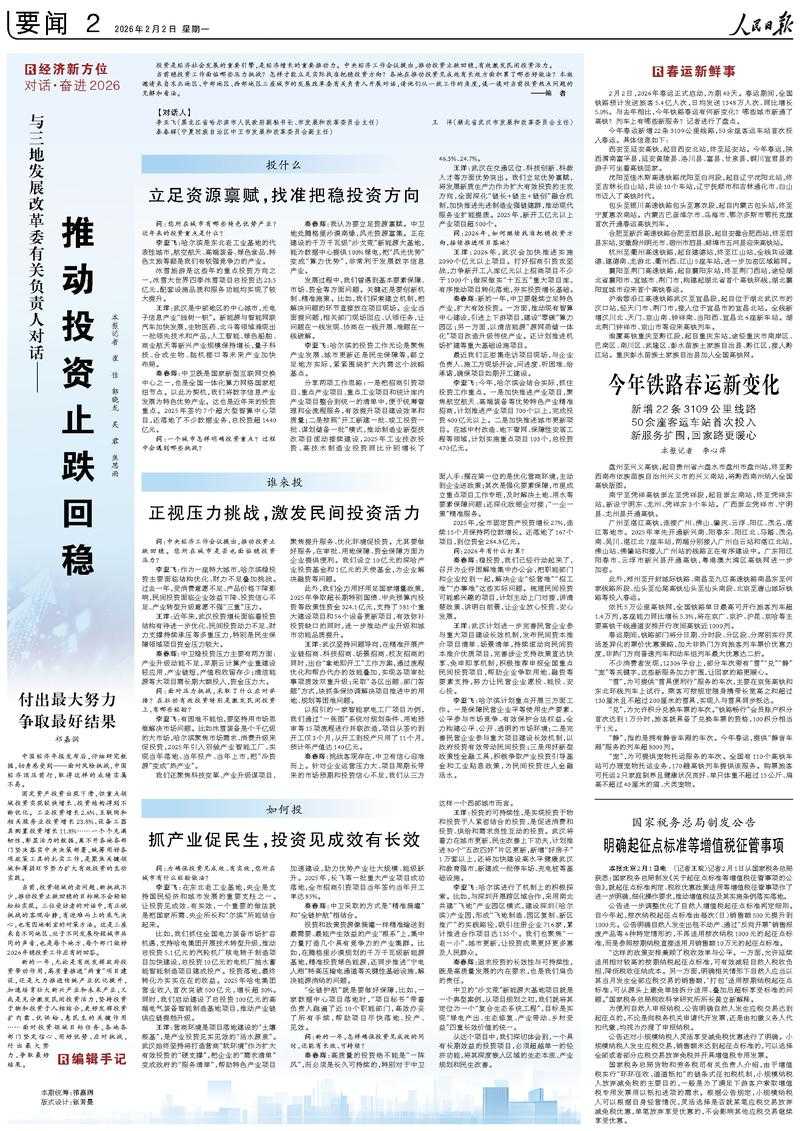
Core Viewpoint - The article emphasizes the need to stabilize investment and stimulate private investment in China, addressing the current challenges and exploring effective strategies for investment growth [17]. Group 1: Investment Direction and Focus - Wuhan is identified as a central city in the midlands, with a focus on the optical electronics industry, new energy vehicles, biomedicine, and emerging technologies like artificial intelligence and quantum technology [18][19]. - The city plans to initiate over 500 industrial projects worth more than 100 million yuan each by 2025, with a target of 2,090 projects in 2026 [19][20]. Group 2: Challenges and Responses - Wuhan faces multiple pressures in investment growth, including the need for structural optimization and insufficient private investment [21]. - The city has implemented a "land immediately under construction" policy to streamline project approvals and enhance efficiency, exemplified by a smart home appliance factory project that went from signing to production in 11 months [22]. Group 3: Long-term Investment Strategies - The city aims to improve mechanisms for private enterprises to participate in major projects, promoting a list of recommended projects to attract private capital [23]. - Emphasis is placed on creating a favorable business environment to support investment, with a focus on transforming the needs of enterprises into government services [25]. - Plans for urban renewal and public welfare improvements include updating 80 areas and constructing over 10,000 new housing units [26].

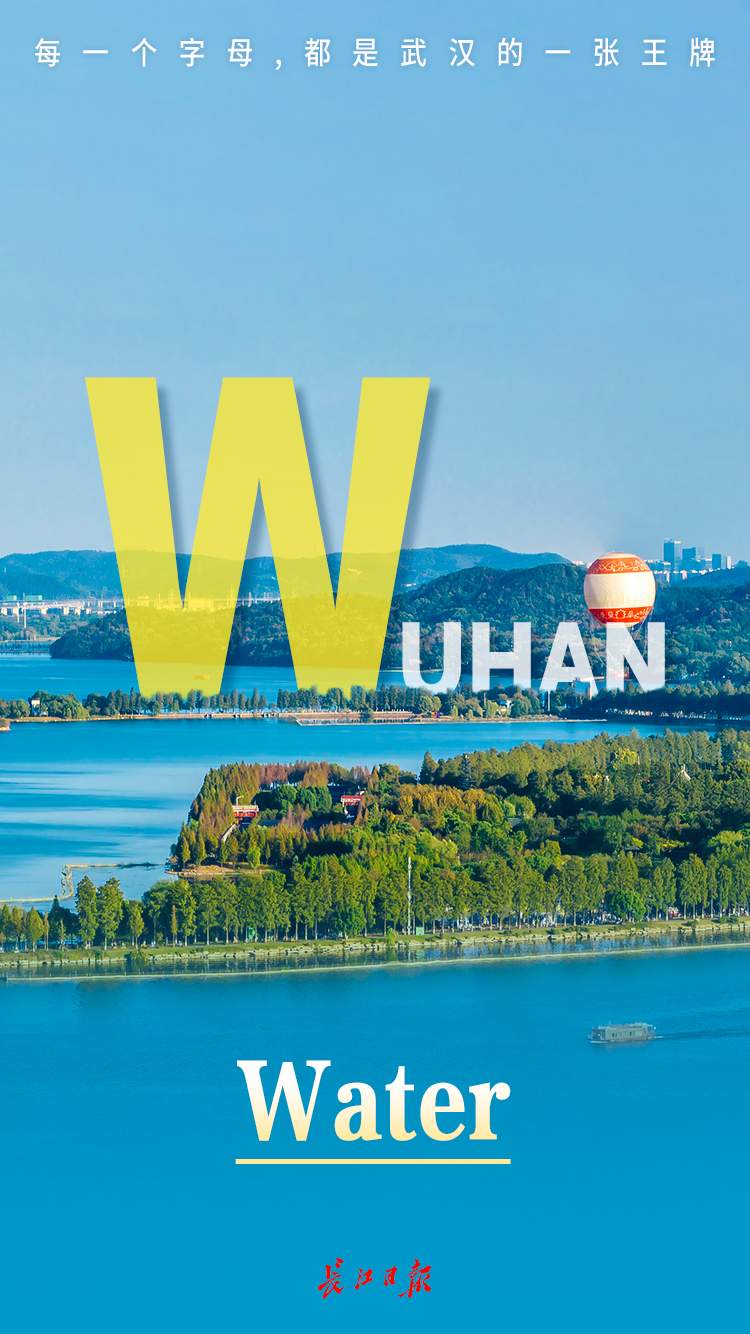
W-U-H-A-N,五个字母大有深意!
Chang Jiang Ri Bao· 2026-01-06 00:59
Group 1 - The first letter "W" stands for "Water," highlighting Wuhan's reputation as the "River City" and "City of Lakes," with a water area accounting for one-fourth of the city's total area, featuring 166 lakes and 165 rivers [3][6] Group 2 - The second letter "U" represents "University," indicating that Wuhan is one of China's three major intellectual hubs, housing 94 universities and over 1.4 million students, with 41 key national laboratories, ranking fourth among Chinese cities [7][9] Group 3 - The third letter "H" signifies "High-tech," showcasing Wuhan's advanced high-tech industry with over 17,000 high-tech enterprises, ranking fifth among Chinese cities, and possessing two national advanced manufacturing clusters [9][10] Group 4 - The fourth letter "A" stands for "Art," emphasizing Wuhan's rich cultural heritage with a history of 3,500 years, recognized by UNESCO as a "City of Design," and consistently listed among China's top ten popular tourist destinations [13][14] Group 5 - The fifth letter "N" represents "Network," illustrating Wuhan's role as an economic geographic center and a logistics hub, with significant connectivity through the Yangtze River and international air routes, including 111 domestic and international cargo flight routes [15]
站在更高起点挺起中部脊梁
Jing Ji Ri Bao· 2025-12-12 22:59
Group 1 - The central region's rise is crucial for national stability and development, showcasing significant progress in various industries such as optoelectronics, engineering machinery, and agriculture [1][2] - The central region is positioned as a strategic support point, linking eastern and western regions, and enhancing the efficiency of the national unified market [2] - The region faces challenges including insufficient innovation capabilities, a lack of integration within the industrial system, and the need for improved regional collaboration [2] Group 2 - The focus is on establishing a nationally influential technology innovation hub, enhancing regional innovation centers, and promoting high-quality industrial clusters in sectors like optoelectronics and new energy vehicles [3] - Key reforms are needed to optimize the business environment and promote rural revitalization, particularly in food security and agricultural technology [3] - Enhancing the hub function and openness of the central region is essential for it to become a vital node in the national unified market, with plans for comprehensive transportation networks and international logistics [4]
湖北发布“十五五”发展新蓝图 12项重点任务推动“基本建成支点”
Chang Jiang Shang Bao· 2025-11-24 00:32
Core Objectives - Hubei has set a strategic goal for the next five years to accelerate the establishment of a significant strategic support point for the rise of the central region [3][4] - The overall target emphasizes the continuity and stability of Hubei's strategic deployment for support point construction [3] Development Strategies - Hubei plans to implement "seven major strategies" and enhance "seven capabilities" to achieve greater results in five key areas [4] - The province aims to solidify its economic foundation, promote technological innovation, and deepen the integration of innovation and industry [7][10] Economic Growth and Achievements - During the "14th Five-Year" period, Hubei's economic total surpassed 5 trillion and 6 trillion yuan, achieving its planning goals a year ahead of schedule [5] - The province has effectively responded to various risks and challenges, making significant progress in support point construction [5][6] Key Tasks and Focus Areas - The provincial government has outlined 12 key tasks, including building a modern industrial system, promoting agricultural modernization, and enhancing infrastructure [7][8] - Specific initiatives include optimizing regional economic layout, expanding high-level openness, and ensuring social welfare improvements [7][9] Regional Collaboration - The plan emphasizes regional collaboration and strategic synergy with other areas to promote balanced and coordinated high-quality development [9] - Hubei will support the development of key cities like Wuhan, Xiangyang, and Yichang as regional centers [9] Agricultural Development - Hubei is hosting the 2025 Agricultural Expo to showcase its advancements in modern agriculture and promote brand awareness [11][12] - The expo will feature a comprehensive display of agricultural innovations and aims to enhance consumer experience and market connections [12][14] Financial Support for Agriculture - Hubei has initiated various financial reforms to activate rural assets and provide diverse financing channels for agricultural entities [15] - The province is focusing on facilitating the listing of agricultural companies to enhance industry upgrades and attract investment [15]

出海的风从中部吹起 华中跨境电商加速跑
2 1 Shi Ji Jing Ji Bao Dao· 2025-09-03 23:12
Core Viewpoint - The central theme of the articles is the emerging opportunities for cross-border e-commerce in Central China, particularly in the Hubei, Henan, Hunan, and Jiangxi provinces, driven by a combination of strong manufacturing capabilities, improved logistics, and returning talent [1][2][6]. Group 1: Industry Trends - The cross-border e-commerce sector is undergoing transformation, with AI tools significantly lowering operational barriers and shifting the focus from "price competitiveness" to "brand empowerment" [2]. - Central China is experiencing a strategic opportunity period for cross-border e-commerce development, supported by government policies and the application of advanced technologies like generative AI [1][6]. Group 2: Manufacturing and Product Characteristics - Central China, known as the "backbone of Chinese manufacturing," has diverse industrial clusters focusing on high-end manufacturing, specialty agriculture, and niche industrial products, which have strong international competitiveness [3]. - The region's manufacturing capabilities are complemented by complete supply chains and cost control advantages, forming a solid foundation for cross-border e-commerce [3][5]. Group 3: Market Dynamics and Growth - As of 2024, Hubei's cross-border e-commerce import and export volume reached 67.97 billion yuan, marking a 124% year-on-year increase, indicating significant growth potential [4]. - The shift from traditional OEM/ODM models to direct sales to overseas consumers is crucial for enhancing product value and achieving industrial upgrades [4][5]. Group 4: Challenges and Opportunities - Despite the rapid growth, Central China still faces challenges such as talent shortages and a lack of a supportive ecosystem compared to coastal regions, which have more established cross-border e-commerce practices [8][9]. - The return of talent and the establishment of supportive policies are essential for overcoming these challenges and fostering a conducive environment for cross-border e-commerce [7][8]. Group 5: Technological Impact - By 2025, AI is expected to become a significant driving force in the cross-border e-commerce sector, enabling manufacturers in Central China to leverage their industrial strengths more effectively [10]. - The transition from traditional distribution models to brand-oriented operations is necessary for businesses to thrive in the evolving market landscape [10][11].
跨境电商只能靠海?风正从华中吹起
2 1 Shi Ji Jing Ji Bao Dao· 2025-09-03 11:44
Core Viewpoint - The central theme of the articles is the emerging opportunity for cross-border e-commerce in Central China, particularly in the Hubei, Henan, Hunan, and Jiangxi provinces, which are leveraging their manufacturing strengths and improving logistics to compete in the global market [1][2][6]. Group 1: Industry Trends - The cross-border e-commerce sector is undergoing transformation, with AI tools significantly lowering operational barriers and shifting the focus from "price competitiveness" to "brand empowerment" [2][11]. - Central China is experiencing a strategic opportunity period for cross-border e-commerce development, driven by the clustering effect of industrial belts, supportive government policies, and the application of advanced technologies like generative AI [1][11]. Group 2: Regional Manufacturing Strengths - Central China, known as the "backbone of Chinese manufacturing," has diverse industrial clusters focusing on high-end manufacturing, specialty agriculture, and niche industrial products, which have strong international competitiveness [3][4]. - The region's manufacturing capabilities, complete supply chains, and cost control advantages provide a solid foundation for the growth of cross-border e-commerce [3][4]. Group 3: Market Dynamics - As of June 2025, the number of active sellers from Central China on Amazon's global platforms has seen double-digit growth compared to the previous year [5]. - In 2024, Hubei's cross-border e-commerce import and export value reached 67.97 billion yuan, marking a 124% year-on-year increase, indicating significant market potential [5]. Group 4: Talent and Infrastructure - The return of talent and the improvement of logistics and environmental conditions are crucial for the growth of cross-border e-commerce in Central China [6][8]. - The region's educational institutions provide a stable talent pool, with local employees showing higher retention rates compared to coastal areas, enhancing competitive advantage [7][8]. Group 5: Challenges and Opportunities - Despite the growth, Central China still faces challenges such as a lack of talent and a supportive ecosystem compared to more established coastal regions [9][10]. - The shift in the external environment and the evolution of business logic in cross-border e-commerce present both challenges and opportunities for Central Chinese enterprises [11][12]. Group 6: Future Outlook - The transition from traditional distribution models to brand-oriented operations is essential for the future success of cross-border e-commerce, with a focus on creating recognizable brand identities [12][13]. - The current moment represents a unique opportunity for Central China to capitalize on the evolving landscape of cross-border e-commerce, as the industry undergoes a significant reshaping [13].
“1小时高铁圈”今年底成型,汉襄宜“金三角”含金量有多高
Di Yi Cai Jing· 2025-08-20 07:47
Core Insights - The formation of a "1-hour high-speed rail circle" among Wuhan, Xiangyang, and Yichang is expected to enhance the integrated benefits of the Han-Xiang-Yi "Golden Triangle" as the Han-Yi and Xiang-Jing high-speed rail lines are set to be completed by the end of this year [1] - Hubei has achieved its economic growth target for the 14th Five-Year Plan a year ahead of schedule, with a total economic output surpassing 6 trillion yuan, increasing its share of the central region's economy from 19.5% at the end of the 13th Five-Year Plan to an expected 20.9% by 2024 [1] Economic Development - The Wuhan metropolitan area has successfully addressed 32 bottleneck roads, establishing a dual hub for air passenger and cargo transport between Ezhou Huahu Airport and Wuhan Tianhe Airport, and is advancing the Optoelectronic Information Industry to a trillion-yuan scale [2] - By 2024, the economic output of the Wuhan metropolitan area is projected to reach 3.6 trillion yuan, increasing its share of the Yangtze River middle reaches urban agglomeration to 29% [2] Regional Collaboration - Wuhan is enhancing cooperation with other central provincial capitals such as Changsha, Hefei, and Nanchang in transportation, technology, industry, and public services [2] - The Xiangyang metropolitan area has seen its economic output jump from 500 billion yuan in 2021 to 600 billion yuan in 2024, ranking among the top non-provincial cities in Central China [3] Industrial Growth - Xiangyang is developing a collaborative automotive industry cluster with Wuhan, Shiyan, and Suizhou, while also establishing a national-level phosphate chemical circular industry cluster with Yichang, Jingmen, and Jingzhou [4] - Yichang is focusing on ecological and green development, with its GDP reaching 619.1 billion yuan, making it the top non-provincial city in Central China [4] County-Level Economic Development - Hubei has increased its number of top 100 counties to 8, ranking 4th nationally, with a breakthrough in the number of counties achieving a GDP of over 100 billion yuan [5] - The urbanization rate of the county's permanent population has reached 56.7%, an increase of 3.44 percentage points from the end of the 13th Five-Year Plan [5]
谱写中部地区加快崛起新篇章
Jing Ji Ri Bao· 2025-07-03 22:05
Core Viewpoint - The central government has prioritized the development of the central region of China, which consists of six provinces, emphasizing its strategic importance in national economic growth and modernization efforts [1][2]. Group 1: Economic Growth and Development - Since the implementation of the strategy to promote the rise of the central region in 2004, the economies of the six provinces (Shanxi, Anhui, Jiangxi, Henan, Hubei, Hunan) have experienced sustained rapid growth, solidifying their roles as key contributors to national economic development [2][3]. - The GDP of the central six provinces is projected to grow from less than 15 trillion yuan in 2015 to approximately 28 trillion yuan by 2024, with a compound annual growth rate of 7.5%, outpacing the Beijing-Tianjin-Hebei region and the Guangdong-Hong Kong-Macau Greater Bay Area [6]. Group 2: Industrial Structure and Modernization - The central region is focusing on building a modern industrial system, with an emphasis on advanced manufacturing and high-tech industries, while also optimizing its industrial structure [3][8]. - The region has established several advanced manufacturing clusters, including rail transit equipment in Zhuzhou, engineering machinery in Changsha, and optoelectronic information in Wuhan, showcasing its competitive edge in various sectors [8][9]. Group 3: Innovation and Technology - The central region aims to enhance its R&D investment to reach the national average by 2025, targeting a ratio of R&D expenditure to GDP of approximately 2.5% [4]. - Cities like Hefei and Wuhan are leveraging their educational and research institutions to foster innovation, particularly in emerging industries such as quantum computing and laser technology [9]. Group 4: Urbanization and Population Dynamics - The urbanization rate in the central six provinces is increasing at a pace faster than the national average, with projections indicating that by 2024, the urbanization rate in Henan will be 59.2% and the other five provinces will exceed 60% [6][7]. - The demographic structure is favorable, with a lower proportion of the population aged 65 and above compared to the national average, indicating a robust labor supply and long-term consumption potential [7]. Group 5: Agricultural and Energy Security - The central region plays a crucial role in ensuring national food security, contributing 28.92% of the total grain production in China in 2024, with a total output of 204.318 million tons [10]. - Shanxi, as a major coal-producing province, is also pivotal in energy security, with a coal output of 1.269 billion tons in 2024, accounting for 26.7% of the national total [10]. Group 6: Policy Support and Future Directions - The implementation of policies aimed at promoting the rise of the central region is expected to provide strong support for future development, with a focus on high-quality growth and sustainable development [7][12]. - The central provinces are encouraged to enhance their advanced manufacturing capabilities, innovate in production processes, and support the transformation of traditional industries through new technologies and business models [11][12].