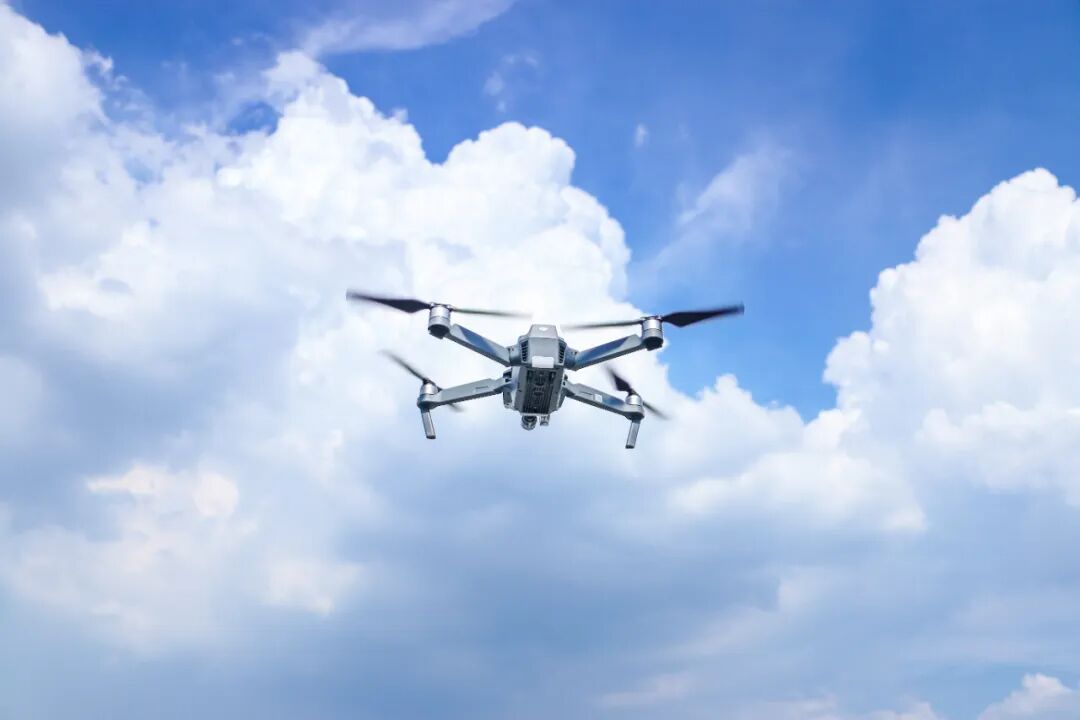
全景相机Osmo 360

Search documents
消费电子跨界,是一片蓝海,还是无效内卷?
Xin Lang Cai Jing· 2026-01-07 10:52
Core Insights - The consumer electronics industry is experiencing a blurred boundary between different sectors, with companies like DJI and Insta360 entering each other's core business areas, indicating a competitive landscape driven by technological integration and market saturation [2][19]. Group 1: Market Developments - DJI launched its first panoramic camera, Osmo 360, in July 2025, priced at 2999 yuan, which is 800 yuan lower than Insta360's flagship product [20]. - Insta360 responded by releasing the Insta360 X4 Air, claiming to be the "world's lightest 8K panoramic camera," and announced plans to enter the drone market with the "Yingling Antigravity" drone, expected to be trialed in late 2025 [3][20]. - On December 5, 2025, Insta360 launched the world's first panoramic drone, the Yingling Antigravity A1, starting at 7999 yuan, or 6799 yuan after subsidies [21]. Group 2: Industry Trends - Experts suggest that the cross-industry competition between DJI and Insta360 is a natural outcome of technological advancement, with the integration of panoramic photography and drones representing a significant market opportunity [23]. - The AI glasses market is also witnessing similar trends, with major players like Xiaomi and Alibaba launching their products, indicating a shift towards AI glasses as a new consumer electronics frontier [5][25]. Group 3: Market Dynamics - The global smart glasses market is projected to see significant growth, with a reported shipment of 406.5 million units in the first half of 2025, marking a 64.2% year-on-year increase [26]. - In the panoramic camera market, Insta360 held a 75% market share in Q3 2025, while DJI had a 17.1% share, reflecting intense competition and rapid market expansion [28]. Group 4: Challenges and Opportunities - The influx of competitors in the same market may lead to "pseudo-innovation," where companies engage in minor improvements and price competition rather than substantial advancements [26][28]. - The rising cost of essential components, such as a high-end 12GB LPDDR5X memory chip reaching 70 USD, could impact the pricing strategies of AI glasses and flagship smartphones [29]. Group 5: Strategic Directions - Companies are urged to shift from being mere product manufacturers to becoming solution providers that integrate their strengths with new technologies to capture future market opportunities [30]. - Focusing on deepening the connection between products and specific use cases is essential for creating sustainable competitive advantages in the evolving landscape [32][34].


汪滔的掌控感正在松动
3 6 Ke· 2025-12-06 04:32
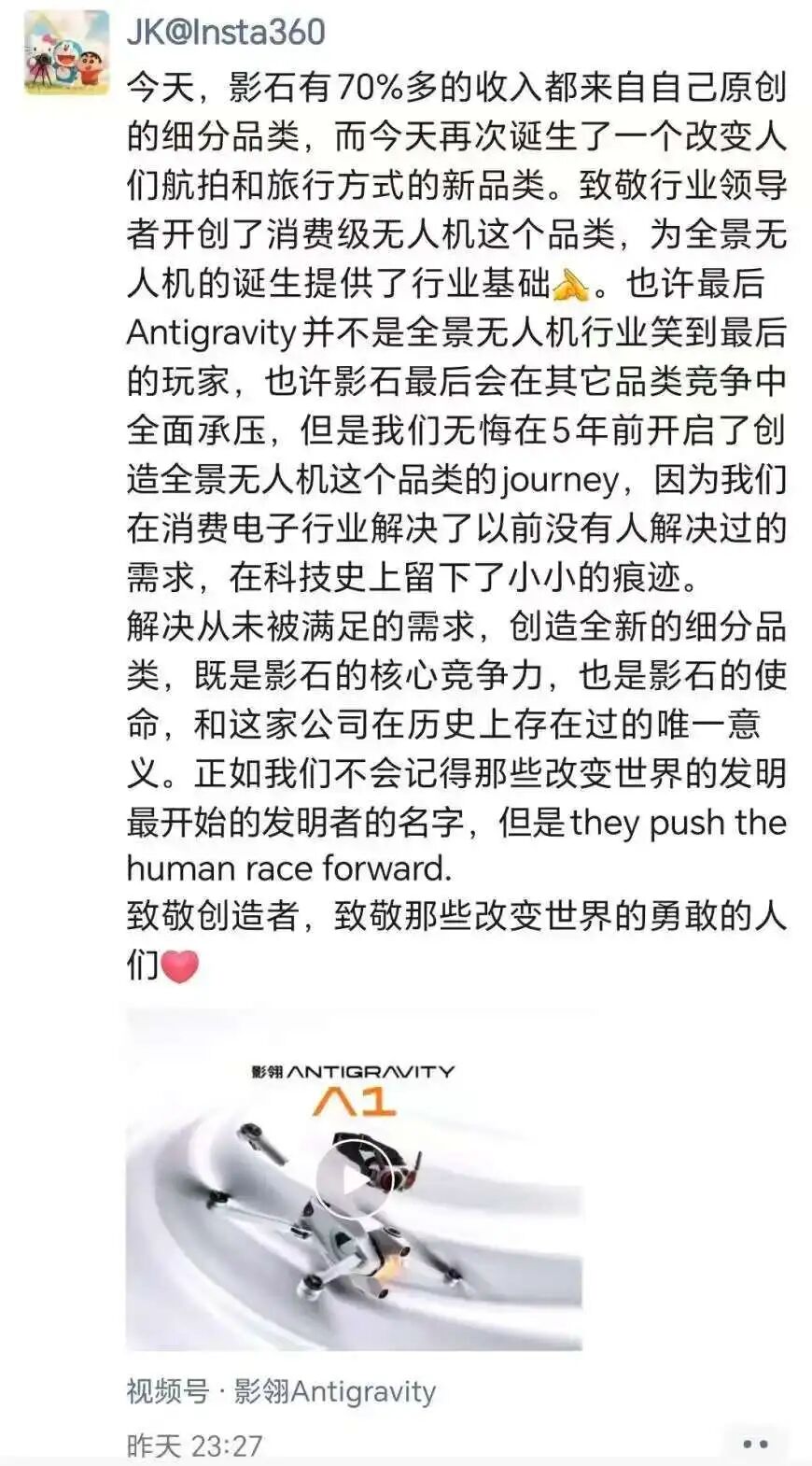
Core Viewpoint - The launch of the Yingshi A1 panoramic drone represents a significant challenge to DJI, which has a revenue ten times greater than Yingshi, indicating a competitive shift in the drone market [1][3][18] Group 1: Product Launch and Market Position - Yingshi officially launched the Yingshi A1 panoramic drone on December 4, 2023, in a unique marketing event using a hot air balloon [1] - The Yingshi A1 is seen as a provocative product aimed at DJI, marking a notable attempt to redefine product categories within DJI's stronghold [3][18] - The competitive landscape is evolving, with Yingshi's new product potentially threatening DJI's market dominance, although the actual impact remains uncertain [3][18] Group 2: Competitive Dynamics - DJI's recent release of the Osmo 360 panoramic camera in July 2023 has intensified competition, as it directly targets Yingshi's market [3][18] - The technology industry often determines success based on product definition rather than just specifications or marketing, highlighting the importance of innovation in shaping consumer perceptions [3][18] - The emergence of new competitors, including smartphone manufacturers, poses additional challenges to DJI, as they seek to leverage high profit margins in the imaging market [18][20] Group 3: Leadership and Control - DJI's founder, Wang Tao, exhibits a strong desire for control, which influences company culture and employee dynamics [6][8][11] - Recent departures of key personnel from DJI to competitors like Yingshi indicate a potential erosion of Wang Tao's control and influence within the industry [13][14] - The competitive landscape is becoming increasingly complex, with both internal and external factors challenging DJI's previously unassailable position [22][23]
大疆市场策略转舵 多线出击打响价格阻击战
Zhong Guo Jing Ying Bao· 2025-12-05 20:20
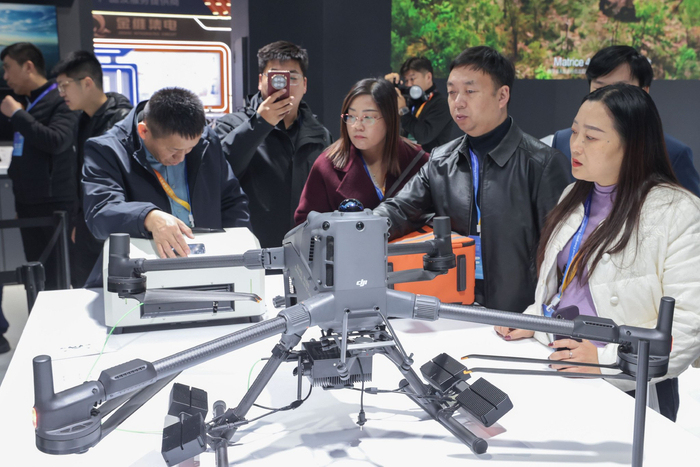
Core Insights - DJI Agriculture has launched three new agricultural drones with improved performance and reduced prices, interpreted as a competitive move against XAG Technology's upcoming IPO [3][4][5] - DJI's aggressive pricing strategy across various sectors, including smart imaging and consumer drones, has raised concerns about a price war in the industry [3][8] - The shift in DJI's strategy reflects a dynamic evolution in its business approach, moving from a focus on technological superiority to a combination of technology innovation and aggressive pricing to expand market share [3][12] Agricultural Drone Pricing Strategy - The new agricultural drones T100S, T70S, and T55 are priced at 48,999 yuan, 43,999 yuan, and 36,999 yuan respectively, with discounts of up to 8,000 yuan for early orders [4][5] - The flagship T100S has a maximum takeoff weight of 149.9 kg and a payload capacity of 95 kg, featuring significant technological upgrades [4] - The market share for agricultural drones is dominated by DJI and XAG, with DJI holding 59% and XAG 17.1% as of 2024 [5] Market Dynamics and Competition - DJI's pricing strategy is seen as a move to solidify its market position ahead of XAG's IPO, indicating a clear intent to maintain dominance in the agricultural sector [5][6] - The trend of decreasing prices has shifted the user demographic from professional agricultural teams to individual farmers, with the ratio of professional users to individual users changing from 9:1 to 5:5 [7] - XAG has also responded with competitive pricing, indicating a mutual recognition of the need to adapt to market pressures [6][7] Broader Price War Context - DJI's price competition extends beyond agricultural drones, impacting the smart imaging market where it faces competition from companies like YI Technology [8][9] - The aggressive pricing tactics have led to significant price reductions across various DJI products, including handheld imaging devices and consumer drones [9][10] - Industry experts suggest that while price competition can expand the market, it may also dilute brand value and innovation potential in the long term [12][14] Strategic Shift and Future Considerations - DJI's historical strategy focused on high margins through technological innovation, but recent actions indicate a shift towards aggressive pricing to capture market share [12][13] - The company aims to balance its pricing strategies with ongoing technological advancements to avoid potential risks associated with over-reliance on price competition [14] - Industry analysts emphasize the importance of maintaining innovation and brand integrity while navigating competitive pricing pressures [14]
大疆密会百家投资机构
2 1 Shi Ji Jing Ji Bao Dao· 2025-11-18 11:53
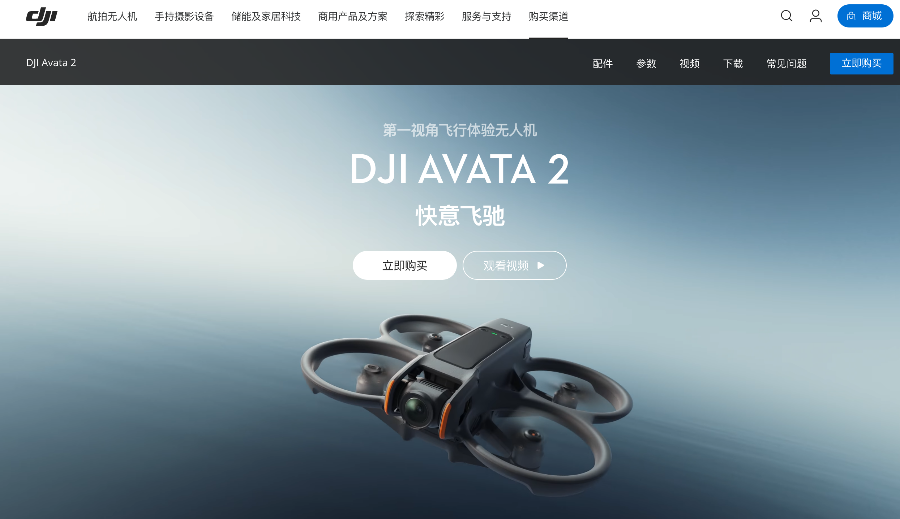
Core Insights - DJI is expanding into multiple consumer electronics and smart hardware sectors, including panoramic cameras, robotic vacuums, and 3D printing, with plans to enter the panoramic drone market [1][12] Group 1: DJI's Recent Activities - DJI recently invited numerous investment institutions to its Shenzhen headquarters for a closed-door research session on its upcoming panoramic drone, the DJI Avata 360 [2][3] - During the event, investors tested the yet-to-be-released DJI Avata 360 and attended a presentation covering product comparisons, industry competition, and market insights [3][4] - Despite the extensive investor engagement, DJI clarified multiple times that it has no financing needs or plans for an IPO, which raised questions among attendees about the purpose of the event [2][8] Group 2: Product Features and Market Position - The DJI Avata 360 is based on the Avata 2 model, designed to simplify operation compared to traditional DIY drones, although it still presents a learning curve for novice users [4][5] - Feedback from investors indicated that while the drone's video transmission is clear and stable, it requires some adaptation due to its fast acceleration [5][6] - DJI's strategy to launch the panoramic drone is seen as a defensive move in response to competitors, with a focus on keeping production costs low [7][10] Group 3: Market Dynamics and Future Outlook - The global consumer drone market is transitioning from an "incremental market" to a "stock market," with growth rates expected to slow down significantly [11] - DJI's recent product strategy reflects a shift from aerial to ground-based technologies, aiming to diversify and find new growth avenues [12][13] - Investors express optimism about the potential of the panoramic drone market, viewing it as a new category that could combine the strengths of both drones and panoramic cameras [14][15]
影石回应市场份额骤降
2 1 Shi Ji Jing Ji Bao Dao· 2025-11-04 10:51
Core Viewpoint - The company YingShi Innovation (688775.SH) addressed market concerns regarding the impact of DJI's price competition and the controversy over market share in the panoramic camera sector during its earnings briefing on November 4. Financial Performance - In the first three quarters of the year, YingShi Innovation achieved revenue of 6.611 billion yuan, a year-on-year increase of 67.18%. However, the net profit attributable to shareholders was 792 million yuan, a decrease of 5.95% year-on-year. The company attributed the revenue growth to market expansion, new product launches, and increased online and offline sales, while the decline in profit was due to higher R&D expenses from increased investment in chip customization and strategic projects [1][2]. Market Competition - DJI launched the Osmo 360 panoramic camera at a price 800 yuan lower than YingShi's X5 model, and the Osmo Nano at a price 900 yuan lower than YingShi's GO Ultra after national subsidies. This significant price difference has led to widespread market discussions about DJI's aggressive pricing strategy [1][2]. - Industry insiders noted that DJI's price cuts are unprecedented, effectively using a price-for-market strategy to gain a foothold in the panoramic camera market, albeit at the cost of profit margins [1]. Market Share Discrepancies - Two recent market share reports have shown conflicting results: one from Jiuqian Zhongtai indicated that YingShi's market share plummeted from 85%-92% to 49%, while DJI captured 43%. Conversely, a report from Sullivan maintained that YingShi still held a 75% global market share, with DJI at 37.1% in China and 17.1% globally [3][4]. - YingShi Innovation expressed skepticism about the accuracy and authority of some third-party data, urging investors to be cautious [3]. Product Development and Future Plans - YingShi Innovation is set to launch its panoramic drones, including its own brand and a co-developed brand called YingLing Antigravity. The public testing phase for the Antigravity drone is nearing completion, with a tentative launch expected in the fourth quarter of 2025, subject to various factors [5][6]. - The company is also working on new products, including a next-generation action camera, an integrated panoramic camera, wearable cameras, and handheld Vlog cameras, with a typical development cycle of six months to a year [6].
大疆、影石对决,全景相机迎来变局
21世纪经济报道· 2025-11-01 23:45
Core Viewpoint - The entry of DJI into the panoramic camera market with its Osmo 360 has significantly altered the competitive landscape, leading to a dramatic shift in market shares between DJI and Insta360 [1][11]. Market Share Dynamics - By Q3 2025, DJI captured approximately 43% of the global panoramic camera market, while Insta360's market share plummeted from 85%-92% to 49% [1][5]. - A contrasting report from another source indicated that Insta360 maintained a 75% global market share, with DJI holding 37.1% of the Chinese market and 17.1% globally, surpassing GoPro [7][11]. Financial Performance - Despite the competitive pressure, Insta360 reported a revenue of 29.40 billion yuan in Q3, marking a 92.64% year-on-year increase, attributed to market expansion and new product launches [5][11]. - In contrast, DJI's revenue for 2024 is projected to be 800 billion yuan, significantly overshadowing Insta360's expected revenue of 55.74 billion yuan [14]. Competitive Strategies - DJI's strategy includes aggressive pricing, launching products like the Osmo 360 at a lower price point than Insta360's offerings, which has intensified competition in the market [12][18]. - Both companies are continuously innovating and releasing new products to maintain their market positions, with Insta360 investing over 10 billion yuan in R&D in the first three quarters of the year [14][12]. Market Growth Projections - The global handheld smart imaging device market is expected to grow at a compound annual growth rate (CAGR) of 15.9% from 2020 to 2030, reaching a market size of 799.3 billion yuan by 2030 [12].

大疆3月“砍半”影石市占率? 两份报告迷雾背后的全景相机变局
2 1 Shi Ji Jing Ji Bao Dao· 2025-11-01 13:51
Core Viewpoint - The entry of DJI into the panoramic camera market with its Osmo 360 has significantly altered the competitive landscape, leading to a sharp decline in the market share of the previous leader, Insta360, while DJI quickly gained a substantial share [1][8]. Market Share Dynamics - According to a report from Jiuxian Zhongtai, by Q3 2025, Insta360's market share plummeted from 85%-92% to 49%, while DJI captured 43% of the market [1]. - Another report from Sullivan indicates that by Q3 2025, Insta360 is projected to hold a 75% global market share, with DJI at 37.1% in China and 17.1% globally, surpassing GoPro [5]. Financial Performance - Despite the competitive pressure, Insta360 reported a revenue of 2.94 billion yuan in Q3, a year-on-year increase of 92.64%, attributed to market expansion and new product launches [4]. - In contrast, DJI's revenue for 2024 is projected to be 80 billion yuan, significantly outpacing Insta360's expected revenue of 5.574 billion yuan [13]. Competitive Strategies - DJI has adopted a price-competitive strategy, launching products like the Osmo 360 at lower prices than Insta360's offerings, which has intensified competition in the market [10]. - Both companies are actively innovating and releasing new products to maintain their market positions, with DJI recently launching the Neo2 drone, which directly competes with HoverAir's offerings [10][16]. Industry Growth Projections - The global handheld smart imaging device market is expected to grow at a compound annual growth rate (CAGR) of 15.9% from 2020 to 2030, reaching a market size of 79.93 billion yuan by 2030 [11]. Research and Development Investments - Insta360 has significantly increased its R&D investment, exceeding 1 billion yuan in the first three quarters of the year, which is more than its total net profit for the previous year [14].
这家深圳公司,前三季度研发投入已超去年净利润
2 1 Shi Ji Jing Ji Bao Dao· 2025-10-28 08:41
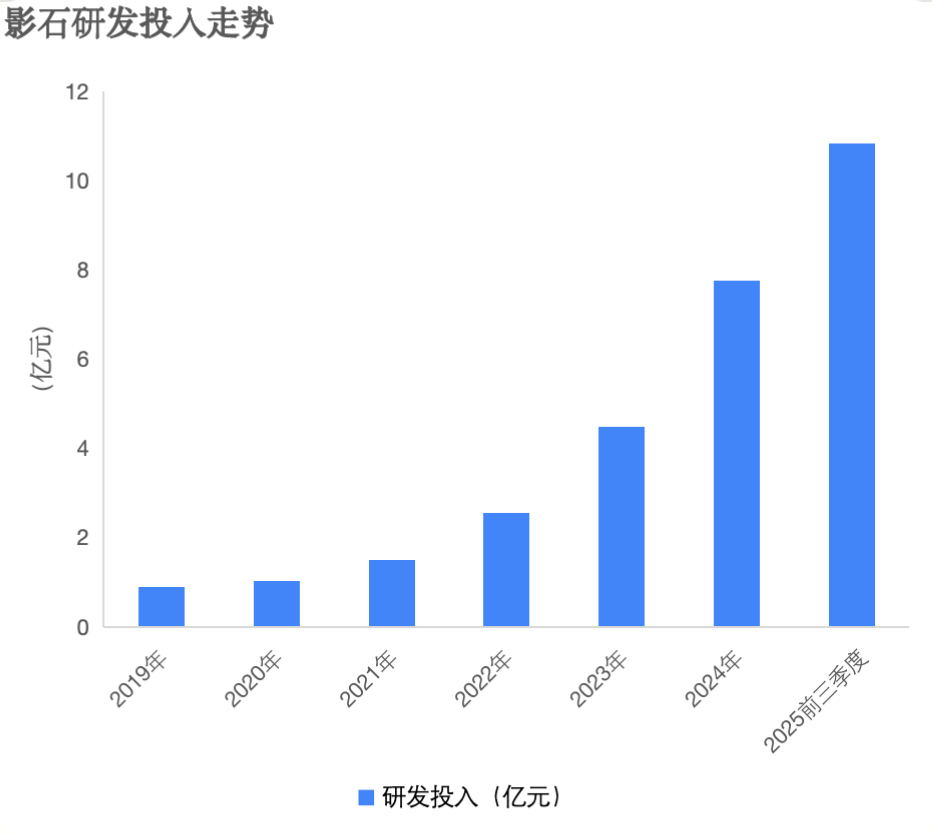
Core Insights - The company reported a significant revenue increase of 92.64% year-on-year for Q3 2025, reaching 2.94 billion yuan, while net profit decreased by 15.90% to 272 million yuan [1] - For the first three quarters of 2025, total revenue was 6.61 billion yuan, up 67.18%, with net profit at 792 million yuan, down 5.95% [1] - The decline in net profit is attributed to increased R&D expenses due to market expansion, new product launches, and higher salaries for R&D personnel [1][4] Revenue and Profit Analysis - The company's revenue growth is driven by market expansion and product innovation, despite a decrease in net profit [1][4] - R&D expenses have significantly increased, with Q3 2025 R&D investment reaching 524 million yuan, a 164.81% increase year-on-year, accounting for 17.81% of revenue [1] - Cumulatively, R&D investment for the first three quarters exceeded 1 billion yuan, surpassing the previous year's net profit [1] Market Position and Competition - The company is experiencing rapid growth, increasing its market share from 28.4% in 2023 to 35.6% in 2024, making it one of the fastest-growing leaders in the smart imaging device industry [5] - In comparison, the competitor DJI reported revenues of 80 billion yuan in 2024, significantly overshadowing the company's figures [5] - The competitive landscape is intensifying, with DJI launching products that directly compete with the company's offerings at lower prices [5][6] Product Development and Innovation - The company is focused on innovation over price competition, as indicated by the founder's statement on social media [6] - The upcoming launch of the Antigravity drone is anticipated for Q4 2025, following successful public testing [1][6] - The company plans to release a new panoramic camera model, X4 Air, on October 28 [6] Supply Chain and Production Challenges - The company follows a "self-research + outsourcing" production model, relying on international suppliers for critical components like chips [7] - Increased outsourcing costs and rising raw material prices have impacted production expenses, necessitating a stronger supply chain resilience [7] - The company is investing in custom chip development and other strategic projects to mitigate supply chain risks [7]
一场“道歉式”营销,炸出无人机赛道的残酷真相
3 6 Ke· 2025-10-22 00:56
Core Insights - DJI unexpectedly launched a significant price reduction campaign, leading to public backlash from customers who recently purchased products at full price [1][3] - Insta360's founder, Liu Jingkang, humorously acknowledged the situation and offered compensation to DJI customers, effectively leveraging the moment for marketing [3][4] - The price war reflects underlying growth anxieties for both companies, as they face market saturation and seek new growth avenues [5][6] Company Strategies - DJI, characterized as a "steady giant," relies on its strong technological foundation, extensive patent portfolio, and supply chain advantages to maintain market leadership [10] - Insta360, representing a "bold newcomer," focuses on innovative user experiences and clever marketing strategies to differentiate itself in the competitive landscape [10] - Both companies are engaged in direct competition, with DJI entering the action and panoramic camera markets to challenge Insta360's core offerings [7][10] Market Dynamics - The global market for panoramic cameras is projected to reach 7.85 billion yuan by 2027, which poses a challenge for Insta360 as it seeks to justify its high valuation [6] - DJI's recent price cuts and product innovations are responses to geopolitical challenges and customer dissatisfaction with perceived product stagnation [7][10] - The competition between DJI and Insta360 highlights a broader issue within the smart hardware industry, where innovation is stalling and companies are increasingly competing on price [11] Industry Implications - The ongoing conflict between DJI and Insta360 may lead to a reshaping of the industry, with smaller companies lacking core technologies and brand identity potentially being pushed out [11] - The price war serves as a precursor to deeper competition in areas such as ecosystem development, AI integration, and user experience enhancement [11]

大疆降价,惹怒了谁?
3 6 Ke· 2025-10-10 12:35
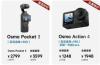
Core Insights - DJI has maintained over 70% market share in the global consumer drone market for a decade, with its latest product, the Pocket 3, becoming a trendsetter among young consumers [1][10][12] - The company is facing increasing market competition and has recently announced significant price reductions on multiple products, indicating a sense of urgency to maintain growth [3][4][9] Pricing Strategy - On October 9, DJI initiated a promotional campaign, reducing prices on key products, with the Pocket 3 dropping from 3499 yuan to 2799 yuan, and the Action 4 seeing a maximum reduction of 1129 yuan [4][9] - The price cuts have led to consumer dissatisfaction, particularly among those who purchased products shortly before the announcement, highlighting inconsistencies in DJI's return and price protection policies [5][6][9] Market Competition - DJI's market share is projected to decline from 19.1% in 2023 to 13.2% in 2024, while competitors like Insta360 are gaining ground, increasing their share from 28.4% to 35.6% [13][14] - The entry of smartphone manufacturers into the drone market adds further pressure on DJI, necessitating strategic responses to maintain its competitive edge [14][19] New Product Development - DJI has expanded into new categories, launching the ROMO robot vacuum and the Osmo 360 panoramic camera, aiming to diversify its product offerings [16][21] - The ROMO vacuum has faced criticism for performance issues, indicating challenges in establishing a foothold in the competitive smart home market [19][21] Company Philosophy and Future Outlook - DJI's founder, Frank Wang, emphasizes a non-profit-driven approach to innovation, focusing on passion and interest in technology [10][12] - The company is at a crossroads, needing to balance maintaining its core drone business while successfully venturing into new markets to sustain growth [15][23]