
冰刀

Search documents
滑冰:人民公园里的冬日絮语
Xin Lang Cai Jing· 2026-01-31 18:30
Group 1 - The article highlights the popularity of ice skating in Xining, where the cold winter has transformed into a vibrant community activity, showcasing a lively winter scene [3] - Various ice activities are described, including colorful ice carts that enhance the winter experience, emphasizing the joy and excitement shared among participants [3] - The ice rink in Xining serves as a platform for childhood memories, family bonding, and athletic passion, allowing everyone to enjoy the purest winter fun through speed and laughter [3]


关键词读懂“十五五”丨从冰雪经济热,解码供需新循环
Yang Guang Wang· 2025-12-02 12:31
Core Insights - The rise of the ice and snow economy is driven by a dual interaction between new supply and new demand, leading to a dynamic balance that promotes high-quality economic development in China [1][4] Group 1: Market Trends - The ice and snow economy is becoming a new consumption hotspot, with activities like skiing, ice sculpture, and snow fishing gaining popularity [1] - In Harbin, the average daily search volume for the Ice and Snow World increased by nearly 163% since mid-October, indicating a surge in consumer interest [2] - The number of ice and snow-related enterprises in Harbin exceeded 2,300, with a compound annual growth rate of 23.6% over the past three years [2] Group 2: Economic Growth - China's ice and snow industry is projected to grow from 270 billion yuan in 2015 to 980 billion yuan in 2024, with expectations to surpass 1 trillion yuan by 2025 [4] - The participation in ice and snow sports and related consumption is expected to exceed 187.5 billion yuan during the 2024-2025 winter season, reflecting a year-on-year growth of over 25% [4] Group 3: Industry Integration - The "ice and snow +" model is expanding the economic landscape, integrating various sectors such as education, tourism, culture, and agriculture [5][6] - The integration of multiple business formats is enriching the service offerings of the ice and snow economy, transitioning from single sports consumption to a comprehensive experience [6] Group 4: Policy Support - The Chinese government has introduced a series of supportive policies to enhance the development of the ice and snow economy, including a recent directive with 24 measures to stimulate growth across the entire industry chain [7] - The application of new technologies like 5G and AI is driving high-quality development in ice and snow equipment manufacturing, enhancing user experience [7] Group 5: Future Outlook - The ongoing development of various new economic forms, such as the "first release economy" and "silver economy," is expected to further stimulate consumer demand and support the growth of the ice and snow economy [8] - The strategic focus on enhancing supply-demand compatibility aims to unlock the potential of China's vast market, contributing to sustainable economic growth [8]
《全国产业集群大全》揭秘“尔滨”冰雪“家底”:2300家企业撑起1600亿冰雪经济
Yang Zi Wan Bao Wang· 2025-11-27 03:15
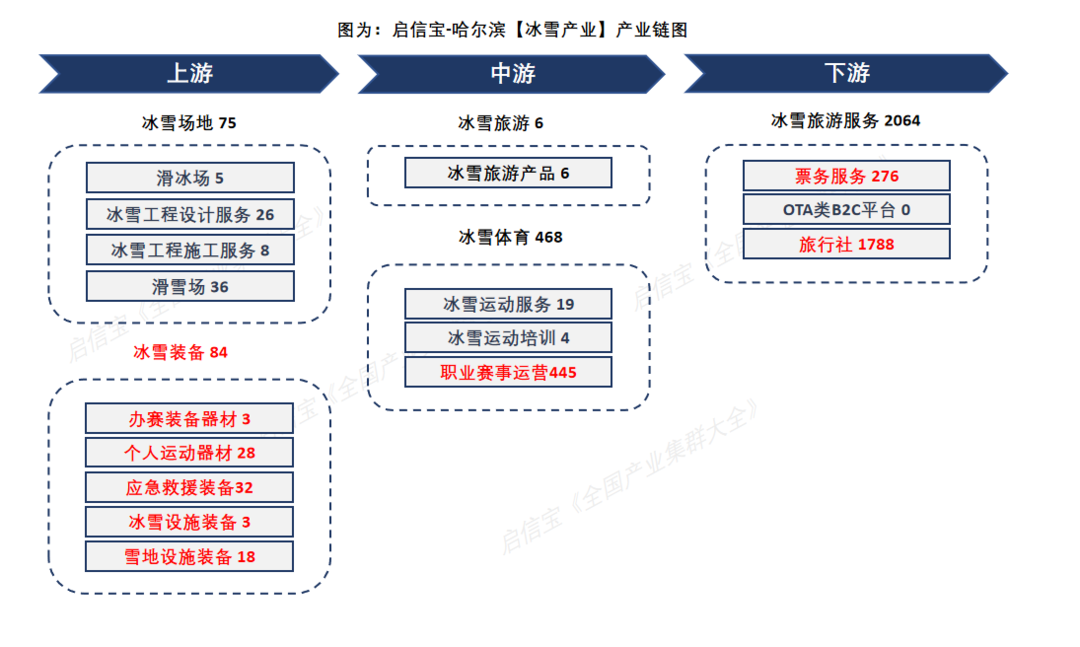
Group 1 - The core viewpoint of the article highlights the rapid growth of the ice and snow tourism market in Harbin, with "Northward Snow Chase" becoming a new consumption trend as the 27th Harbin Ice and Snow World begins its ice construction work [1] - As of November 2025, Harbin has over 2,300 enterprises in the ice and snow industry, with a compound annual growth rate of 23.6% over the past three years, and a peak growth rate of 29% in 2024, indicating effective attraction of diverse market participants [2] - The ice and snow economy in Harbin has attracted 150 external investments in the past four years, with 47% occurring in 2024, while local enterprises have made 114 external investments, showing a proactive approach to expanding development space [2] Group 2 - The ice and snow industry in Harbin has established a complete and collaborative industrial chain, with over 70% of enterprises in the downstream sector, including more than 1,700 travel agencies and over 270 ticketing service companies, supporting a mature service network for millions of visitors [3] - The midstream sector, represented by six major ice and snow tourism product companies, collaborates with over 400 event operation companies, transitioning the industry from seasonal peaks to year-round sustainability [3] - The upstream sector, while fewer in number, focuses on core areas such as ice and snow venue and equipment manufacturing, with over 80 companies producing essential sports and venue equipment, driving the industry towards specialization and high-end development [3] Group 3 - Harbin has cultivated 112 industrial clusters across various key sectors, including aviation, equipment manufacturing, satellite, biomedicine, and food, with aviation and biomanufacturing clusters recognized as national advanced manufacturing clusters [6] - The "Ice and Snow +" strategy serves as a key to unlocking new collaborative dynamics in Harbin's old industrial base, enhancing overall industrial strength [9]
今年产业规模将突破万亿元 冰雪经济迈入黄金发展期
Jing Ji Ri Bao· 2025-11-24 05:22
Core Insights - The scale of China's ice and snow industry is projected to exceed 1 trillion yuan, reaching 100.53 billion yuan in 2023, marking it as a significant emerging force in the economy [1] - The industry aims to transition from rapid growth to high-quality development, focusing on meeting diverse consumer needs and enhancing product and service offerings [1] Industry Development - The goal of engaging 300 million people in ice and snow sports has been achieved, providing a strong internal driving force for industry growth [1] - The consumer base has expanded from professional enthusiasts and youth training groups to include families and seniors, prompting market innovation [1] - New offerings include dedicated children's ski areas, night skiing, electronic music parties, and snow camping to cater to various demographics [1] Supply Chain and Infrastructure - The supply side needs to focus on improving the quality and quantity of ice and snow venue facilities and products [1] - Key recommendations include upgrading venue facilities with smart technology, establishing regulatory frameworks, and innovating product matrices using digital technology [1] Technological Advancements - New technologies such as 5G, AI, and VR are driving high-quality development in ice and snow equipment, enhancing user experience [2] - Smart snowfield management systems improve operational safety and efficiency through real-time monitoring and intelligent scheduling [2] - The application of new materials and processes in equipment manufacturing optimizes the performance of products like skis and ice skates [2] Emerging Trends - The ice and snow industry is evolving towards a "snow + " multi-dimensional experience, integrating tourism, culture, and wellness [2] - The "snow + tourism" model is maturing with improved facilities in ski resorts, while "snow + culture" is gaining traction through ice sculptures and themed museums [2] - The "snow + wellness" trend combines snow sports with health tourism, creating winter wellness products [2] Regional Development - Traditional regions like Northeast and North China leverage natural snow resources and rich ice and snow culture to develop world-class ski destinations [3] - Xinjiang is rapidly developing as China's "third polar" region for ice and snow, while southern regions are expanding through indoor ski facilities [3] - Addressing regional development imbalances is crucial, with recommendations for coordinated policies and leveraging local competitive advantages [3]
今年产业规模将破万亿元 冰雪经济迈入黄金发展期
Jing Ji Ri Bao· 2025-11-24 00:35
Core Insights - The ice and snow industry in China is entering a golden development period, with the market size expected to exceed 1 trillion yuan, reaching 1005.3 billion yuan in 2023, marking it as a significant emerging force in the economy [1] - The industry has achieved the goal of engaging 300 million people in ice and snow sports, providing continuous internal momentum for development [1] - The industry is transitioning from rapid growth to high-quality development, necessitating discussions on how to achieve this shift [1] Industry Development - The ice and snow industry has established a complete industrial chain covering upstream equipment manufacturing, midstream event operation and skill training, and downstream tourism and leisure [1] - New technologies such as 5G, artificial intelligence, and virtual reality are driving high-quality development in ice and snow equipment, enhancing user experience [2] - The market for ice and snow equipment is vast, with a focus on cultivating internationally competitive domestic brands and increasing R&D investment [2] Market Trends - The industry is evolving from pure ice and snow sports to a "snow + " multi-composite experience, integrating tourism, culture, and wellness [2] - The "snow + tourism" model is maturing, with ski resorts enhancing their offerings with hotels, dining, and commercial streets [2] - The "snow + culture" trend is emerging, with ice sculptures, performances, and themed museums enriching the industry [2] Regional Development - Traditional regions like Northeast and North China leverage natural snow resources and deep ice and snow culture to create world-class ski resort destinations [3] - Southern regions are effectively expanding the ice and snow market through indoor ski facilities [3] - Addressing regional development imbalances is crucial, with recommendations for coordinated policy efforts and leveraging local competitive advantages [3]
今年产业规模将突破万亿元,冰雪经济迈入黄金发展期
Jing Ji Ri Bao· 2025-11-24 00:27
Core Insights - The report indicates that China's ice and snow industry is projected to exceed 1 trillion yuan, reaching 1005.3 billion yuan in 2023, marking it as a significant emerging force in the economy [1] - The industry aims to transition from rapid growth to high-quality development, focusing on meeting diverse consumer needs and enhancing product offerings [1] Industry Development - The goal of engaging 300 million people in ice and snow sports has been achieved, providing a strong internal driving force for industry growth [1] - The consumer base has expanded from professional enthusiasts and youth training groups to include families and seniors, prompting market innovation in products and services [1] - New offerings include dedicated children's skiing areas, night skiing, electronic music parties, and snow camping to cater to various demographics [1] Supply Chain and Infrastructure - Experts emphasize the need for improvements in the quality and quantity of ice and snow venue facilities and product supply systems [1] - Recommendations include upgrading venue facilities with smart technology, establishing regulatory frameworks for a well-ordered market, and innovating product matrices using digital technology [1] Industry Chain Structure - Since the 14th Five-Year Plan, the ice and snow industry has developed a comprehensive value chain encompassing upstream equipment manufacturing, midstream event operations and training, and downstream tourism and leisure [1] Technological Advancements - New technologies such as 5G, AI, and VR are driving high-quality development in ice and snow equipment, enhancing user experiences [2] - Smart snowfield management systems improve operational safety and efficiency through real-time monitoring and intelligent scheduling [2] - The application of new materials and processes in equipment manufacturing optimizes the performance of products like skis and ice skates [2] Emerging Trends - The industry is evolving from traditional ice and snow sports to a "snow+" multi-dimensional experience, integrating tourism, culture, and wellness [2] - The "snow+tourism" model is maturing with improved facilities in ski resorts, while "snow+culture" initiatives are enriching the industry with ice sculptures, performances, and themed museums [2] - The "snow+wellness" concept combines ice sports with health tourism, creating winter wellness products [2] Regional Development - Traditional regions like Northeast and North China leverage natural snow resources and rich ice and snow culture to develop world-class ski destinations [3] - Southern regions are expanding the ice and snow market through indoor ski facilities [3] - Addressing regional development imbalances is crucial, with recommendations for coordinated policies and leveraging local competitive advantages [3]
今年产业规模将突破万亿元——冰雪经济迈入黄金发展期
Xin Hua Wang· 2025-11-23 23:30
Core Insights - The report indicates that China's ice and snow industry is projected to exceed 1 trillion yuan, reaching 1005.3 billion yuan in 2025, highlighting its significance as a new economic force [1] - The industry aims to transition from rapid growth to high-quality development, focusing on meeting diverse consumer needs and enhancing product offerings [1] Industry Development - The goal of engaging 300 million people in ice and snow sports has been achieved, providing a strong internal driving force for industry growth [1] - The consumer base has expanded from professional enthusiasts and youth training groups to include families and seniors, prompting market innovation [1] - New offerings include dedicated children's skiing areas, night skiing, electronic music parties, and snow camping to cater to various demographics [1] Supply Chain and Infrastructure - Experts emphasize the need for improvements in the quality and quantity of ice and snow venue facilities and products [1] - Recommendations include upgrading venue infrastructure, enhancing regulatory frameworks, and innovating product matrices using digital technology [1] Technological Advancements - New technologies such as 5G, AI, and VR are driving high-quality development in ice and snow equipment, leading to new products and enhanced user experiences [2] - Smart snowfield management systems improve operational safety and efficiency through real-time monitoring and intelligent scheduling [2] - The application of new materials and processes in equipment manufacturing optimizes the performance of products like skis and ice skates [2] Emerging Trends - The ice and snow industry is evolving towards a "snow+" model, integrating various experiences such as tourism, culture, and wellness [2] - The "snow+ tourism" model is maturing with improved amenities in ski resorts, while "snow+ culture" is gaining traction through ice sculptures and themed museums [2] - The combination of ice and snow sports with wellness tourism is creating new winter health tourism products [2] Regional Development - Traditional regions like Northeast and North China leverage natural snow resources and cultural heritage to develop world-class ski destinations [3] - Xinjiang is emerging as China's "third polar region" for ice and snow, while southern regions are expanding through indoor ski facilities [3] - Addressing regional development imbalances and avoiding homogenized competition are key focus areas for future growth [3] - Recommendations include coordinated policy efforts and leveraging regional strengths to ensure comprehensive development of the ice and snow industry [3]
今年产业规模将突破万亿元—— 冰雪经济迈入黄金发展期
Jing Ji Ri Bao· 2025-11-23 23:12
Core Insights - The report indicates that China's ice and snow industry is projected to exceed 1 trillion yuan, reaching 1005.3 billion yuan in 2023, marking it as a significant emerging force in the economy [1] - The industry has successfully engaged 300 million people in ice and snow sports, providing a continuous internal driving force for development [1] - The focus is shifting from rapid growth to high-quality development, necessitating discussions on how to achieve this transition [1] Industry Development - The ice and snow industry has established a comprehensive value chain covering upstream equipment manufacturing, midstream event operation and skills training, and downstream tourism and leisure [1] - New technologies such as 5G, AI, and VR are driving high-quality development in ice and snow equipment, enhancing user experience and operational efficiency [2] - The market is innovating to meet diverse consumer needs, with offerings like children's ski areas, night skiing, and snow-themed events [1][2] Market Trends - The industry is evolving towards a "snow + " multi-dimensional experience, integrating tourism, culture, and wellness into ice and snow activities [2] - The "snow + tourism" model is maturing, with improved facilities in ski resorts, while "snow + culture" is gaining traction through ice sculptures and themed museums [2] - The "snow + wellness" trend combines ice and snow sports with health tourism, creating winter wellness products [2] Regional Development - Traditional regions like Northeast and North China leverage natural snow resources and cultural heritage to develop world-class ski destinations [3] - Southern regions are expanding the ice and snow market through indoor ski facilities [3] - Addressing regional development imbalances is crucial, with recommendations for coordinated policy efforts and leveraging local competitive advantages [3]
冰雪经济迈入黄金发展期
Jing Ji Ri Bao· 2025-11-23 21:53
Core Insights - The report indicates that China's ice and snow industry is projected to exceed 1 trillion yuan, reaching 1005.3 billion yuan in 2023, highlighting its emergence as a significant force in the economy [1] - The industry aims to transition from rapid growth to high-quality development, focusing on meeting diverse consumer needs and enhancing product offerings [1] Industry Development - The goal of engaging 300 million people in ice and snow sports has been achieved, providing a strong internal driving force for industry growth [1] - The consumer base has expanded from professional enthusiasts and youth training groups to include families and seniors, prompting market innovation in products and services [1] - New offerings include dedicated children's skiing areas, night skiing, electronic music parties, and snow camping to cater to various demographics [1] Supply Chain and Infrastructure - Experts emphasize the need for improvements in the quality and quantity of ice and snow venue facilities and product supply systems [1] - Recommendations include upgrading venue facilities with smart technology, establishing regulatory frameworks for a well-ordered market, and innovating product matrices using digital technology [1] Industry Chain Structure - Since the 14th Five-Year Plan, the ice and snow industry has developed a comprehensive value chain encompassing upstream equipment manufacturing, midstream event operations and skills training, and downstream tourism and leisure [1] Technological Advancements - New technologies such as 5G, AI, and VR are driving high-quality development in ice and snow equipment, leading to new products and enhanced user experiences [2] - Smart snowfield management systems have improved operational safety and efficiency through real-time monitoring and intelligent scheduling [2] - The application of new materials and processes in equipment manufacturing has optimized the performance of products like skis and ice skates [2] Emerging Trends - The industry is evolving from a focus solely on ice and snow sports to a "snow + " multi-dimensional experience, integrating tourism, culture, and wellness [2] - The "snow + tourism" model is maturing, with ski resorts enhancing their offerings with hotels, dining, and commercial areas [2] - Cultural aspects such as ice sculptures, performances, and themed museums are enriching the industry, with notable cultural IPs like Harbin Ice and Snow World gaining international recognition [2] Regional Development - Traditional regions like Northeast and North China leverage natural snow resources and rich ice and snow culture to create world-class ski destinations [3] - Xinjiang is rapidly developing as China's "third pole" for ice and snow, capitalizing on its unique powder snow resources [3] - Southern regions are expanding the market through indoor ski facilities, addressing regional disparities in development [3] - Recommendations for balanced regional development include coordinated policy efforts and leveraging local competitive advantages, such as promoting the "Beijing-Zhangjiakou" winter sports model [3]
黑龙江:从一季“火”到四季“热” 冰雪装备产业搭乘科技“快车”跑出“加速度”
Zhong Guo Chan Ye Jing Ji Xin Xi Wang· 2025-04-21 07:12
Group 1: Exhibition Highlights - The current Consumer Expo features 8 main exhibition halls showcasing over 4,100 brands, with a focus on local products and traditional Chinese brands [1] - The Heilongjiang exhibition area highlights local specialties such as Harbin sausage, Matier ice pops, Wuchang rice, and various unique products from the region [1] - Innovations in traditional products have emerged, such as reduced-salt Harbin sausage and ready-to-eat black fungus, attracting a younger consumer demographic [1] Group 2: Ice and Snow Equipment Industry - The Heilongjiang ice blade factory is fulfilling an order of 2,000 pairs of new titanium alloy speed skating blades, indicating a shift towards high-end market segments [2] - The production of down jackets in Heilongjiang has accelerated, with a notable example being a factory that completed its setup in just 65 days, showcasing the region's manufacturing efficiency [3] - The ice and snow equipment industry in Heilongjiang is projected to exceed 10 billion yuan in output value by 2024, driven by local resources and recent events like the Winter Olympics [3]