北斗短信服务

Search documents
平安证券(香港)港股晨报-20260206
Ping An Securities Hongkong· 2026-02-06 03:58
Market Overview - The Hong Kong stock market experienced fluctuations, with the Hang Seng Index closing at 23,831 points, down 145 points or 0.61% [1] - The market turnover decreased to 82.799 billion HKD, with net inflows of 484 million HKD recorded in the Stock Connect [1] - The US stock market saw significant declines, with the Nasdaq dropping 1.59%, marking the worst three-day sell-off since April of the previous year [2] Key Insights - The report highlights that the Hong Kong and A-share markets achieved a strong start in 2026, with net inflows of 69 billion HKD in January [3] - The report emphasizes the importance of technology self-reliance and AI applications as core themes for future performance in the Hong Kong stock market, suggesting that leading companies in these sectors may see long-term growth opportunities [3] - The report recommends focusing on sectors supported by policies for "technology self-reliance," including AI, semiconductors, and industrial software, as well as sectors benefiting from "expanding domestic demand" policies, such as sports apparel and non-essential services [3] IPO Activity - As of the end of January 2026, the total market capitalization of the Hong Kong securities market reached 50.8 trillion HKD, a 44% increase from the previous year [8] - In January, 13 new companies were listed on the Hong Kong Stock Exchange, a 63% increase compared to the same period last year, with total fundraising amounting to 531 billion HKD, up 318% year-on-year [8] Company Performance - Notable stock performances included Haidilao, which rose by 4.0% due to improved operations, and Lenovo, which increased by 3.7% [1] - Semiconductor stocks in Hong Kong faced collective declines, influenced by a significant drop in AMD's stock price, with SMIC falling by 1.9% [1]
三大运营商发力新场景卫星通信业务商业化提速
Zheng Quan Shi Bao· 2025-10-22 17:26
Core Viewpoint - The recent issuance of satellite mobile communication business licenses to China Unicom and China Mobile, following China Telecom, marks a significant step in the development of the satellite communication industry in China, enabling all three major telecom operators to engage in satellite communication services, enhancing emergency communication, maritime communication, and connectivity in remote areas [1][2][6]. Industry Developments - The Ministry of Industry and Information Technology (MIIT) has accelerated the commercialization process of the satellite mobile communication industry, aiming to create a competitive market environment and promote collaboration between telecom operators and the satellite communication industry [2][3]. - The MIIT's guidelines set a target of over 10 million satellite communication users by 2030, with a focus on new applications such as direct satellite connections via mobile phones [2][3]. Technological Innovations - China Mobile has launched the "Beidou + Tiantong" dual-satellite communication service, marking a new phase in commercial operations and contributing to the establishment of an integrated "Heaven and Earth" intelligent communication network [2][3]. - The development of new technologies and products, such as the Macro WiFi product by Tongyu Communication, aims to connect satellite networks with terrestrial communication, enhancing coverage and user capacity [3][4]. Market Applications - Satellite communication is primarily focused on emergency communication and supplementary coverage in areas lacking terrestrial network access, with services already being offered for short messages and voice communications [6][7]. - China Telecom has achieved significant milestones, including the global launch of direct satellite communication services for smartphones, enabling users to make calls and send messages without changing their SIM cards [4][6]. User Adoption and Growth - The user base for Tiantong satellites has exceeded 3 million, with major smartphone manufacturers launching devices capable of direct satellite connections, leading to substantial sales figures [7][8]. - The industry anticipates that satellite communication will become as ubiquitous as 4G/5G, providing seamless connectivity for users in various environments, including remote and extreme locations [8][9].



中国移动获颁卫星通信经营许可
Zheng Quan Shi Bao· 2025-09-29 18:15
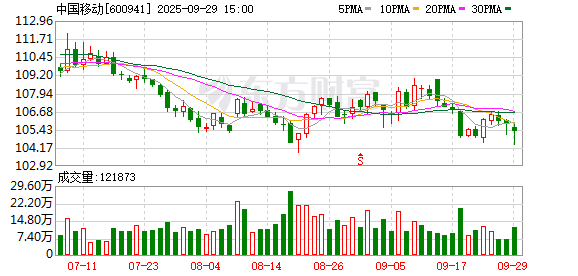
Core Viewpoint - The Ministry of Industry and Information Technology (MIIT) has granted China Mobile a satellite mobile communication business license, allowing it to legally conduct satellite direct connection services, enhancing emergency communication, maritime communication, and services in remote areas [2][3]. Group 1: Regulatory Developments - MIIT has issued satellite mobile communication business licenses to China Mobile and China Unicom, following China Telecom's earlier approval, enabling these companies to expand their service offerings [2]. - The MIIT aims to optimize market access for satellite communication and strengthen regulatory oversight to promote high-quality development in China's satellite communication industry [2]. Group 2: Technological Advancements - China Mobile is actively involved in the development of integrated communication technologies, leading national projects and standard-setting initiatives, including the creation of the Star-Ground Deep Integration Network (STCN) technology system [3]. - The company has successfully launched the world's first 6G architecture verification satellite and the first 5G-ANTN regeneration technology verification satellite, laying the groundwork for future technological advancements [3]. Group 3: Business Applications - China Mobile is expanding its satellite services, including fixed broadband, satellite IoT, and mobile direct connection, to serve markets such as maritime broadband and emergency rescue [4]. - The company plans to leverage its strengths in terrestrial communication to enhance the "integrated space-ground" digital information infrastructure, contributing to the high-quality development of the satellite communication industry [4].

决胜“十四五” 打好收官战丨让“信号满格” 我国通信保障持续提速
Xin Hua Wang· 2025-08-10 10:12
Core Viewpoint - The article emphasizes the rapid development and enhancement of China's information and communication industry, highlighting its role as a strategic and foundational sector for economic and social development, particularly during the "14th Five-Year Plan" period [1]. Group 1: Communication Infrastructure Improvement - The construction of communication infrastructure has accelerated, achieving significant breakthroughs in technology, with a solid "digital foundation" established [3]. - As of June 2023, China has completed its goals for 5G and gigabit optical network construction, with 4.55 million 5G base stations and 226 million gigabit broadband users [3]. - The total length of optical cable lines reached 73,770 kilometers, and the deployment of 400G backbone networks has begun, significantly enhancing transmission bandwidth and network capacity [3]. Group 2: Industry Integration and Application - The integration of 5G and AI technologies has improved production efficiency, as seen in the automotive industry, where a smart detection system has increased production line efficiency by 20% [5]. - 5G applications have penetrated 86 out of 97 major categories of the national economy, with over 18,500 "5G + Industrial Internet" projects established [7]. Group 3: Service Quality Enhancement - The information and communication industry has improved service quality by addressing consumer concerns, such as implementing measures to reduce misleading marketing practices [8]. - The industry has also focused on enhancing accessibility for special groups, with over 3000 websites and apps modified for older adults and disabled individuals [8][9]. - A total of 1.046 billion instances of "Do Not Disturb" services have been provided to 1.08 billion users, reflecting the industry's commitment to consumer protection [9].
阶跃深研开启邀测;黑石集团女高管遭枪击身亡;小米世界500强排名大幅提高
Guan Cha Zhe Wang· 2025-07-30 01:11
Group 1 - The Deep Research product "Jieyue Shenyan" has launched an invitation for testing, capable of completing complex research tasks in about 10 minutes, achieving a 70% pass rate in evaluations [1] - Microsoft has introduced a new Copilot mode in its Edge browser, which actively assists users by predicting their next actions and organizing information flow [1] - The MiniMax large model successfully passed the Turing test during a debate, with over 30% of the audience unable to distinguish between the AI and a human [2] Group 2 - Standard Chartered Group has signed a strategic cooperation memorandum with Alibaba Group to leverage Alibaba Cloud's AI technology for enhancing financial services [2] - A seminar on the performance standards framework for large model integrated machines is scheduled for August 1, aiming to establish unified evaluation benchmarks for the industry [3] - Major Chinese airlines, including Air China, China Southern Airlines, and China Eastern Airlines, support ticket purchases through the "Civil Aviation Version 12306" direct sales platform to ensure passenger rights [4] Group 3 - Apple announced the closure of its first direct store in China, located in Dalian, due to multiple retailers leaving the shopping center, while planning to open a new store in Shenzhen [5] - A shooting incident in New York resulted in the death of Blackstone executive Wesley LePatner, highlighting security concerns in corporate environments [6][8] - Xiaomi Group ranked 297th in the 2025 Fortune Global 500, marking a significant increase of 100 places from the previous year, with total revenue reaching 365.9 billion yuan [9] Group 4 - China Mobile is offering a month-long free Beidou satellite messaging service for users in Beijing to ensure communication during emergencies [10][11] - The establishment of China Chang'an Automobile Group in Chongqing marks the formation of a new central enterprise in the automotive sector, joining other major state-owned automotive groups [12] - The price increase effect of DDR4 DRAM is expected to last until the end of 2025, driven by strong demand and supply constraints [13]

数智科技助力中国防汛救灾通信保障
Zhong Guo Xin Wen Wang· 2025-07-29 17:11
Group 1 - The core viewpoint of the articles highlights the critical role of telecommunications operators in disaster response and communication assurance during severe flooding in China, utilizing advanced technologies such as drones, portable satellite stations, and AI models [1][2] - Hebei province has experienced significant rainfall since July 24, leading to power outages and communication line damages, with drones being used to transport cables across rivers for repairs [1] - China Unicom has implemented AI, 5G, and digital twin technologies to shift from passive emergency responses to proactive disaster prevention, enhancing their data analysis capabilities [1] Group 2 - China Mobile announced a one-month free Beidou messaging service for Beijing users, allowing them to send emergency messages without network signals, thereby improving communication during emergencies [2]
中国移动:为北京用户免费提供北斗卫星短信服务
Xin Lang Cai Jing· 2025-07-29 09:12
Core Points - China Mobile has launched a one-month free Beidou messaging service for users in Beijing to ensure communication during recent heavy rainfall and flooding [1] - The service allows users to send up to 30 messages and receive unlimited messages without network coverage by sending "KTBD" to 10086 [1] - In emergency situations where mobile communication is unavailable, this service can be used to send distress or safety messages [1] - China Mobile has deployed multiple teams to flood-affected areas for rescue operations and has set up drone-based aerial base stations to provide emergency communication services [1]