
匹康奇拜单抗注射液

Search documents
信达生物:从“全球首个”到填补70年空白,以原始创新抢占生物医药科技制高点
Yang Zi Wan Bao Wang· 2026-03-16 10:36
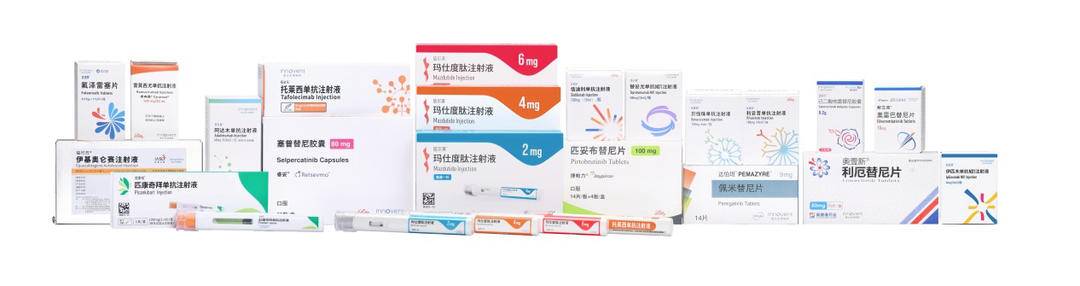
Group 1 - The core viewpoint emphasizes that technological innovation is the driving force for high-quality development, with a focus on original innovation and breakthroughs in key core technologies in the biopharmaceutical sector [1] - The approval of the world's first GCG/GLP-1 dual-target weight loss and blood sugar-lowering drug, developed by Innovent Biologics, marks a significant achievement in original drug development [1] - Innovent Biologics has successfully developed 18 innovative drugs since its establishment in 2011, with 12 included in the national medical insurance directory, benefiting over 6 million patients [2][3] Group 2 - The approval of the first new drug for thyroid eye disease in 70 years fills a significant gap in domestic treatment options, providing new choices for patients [2] - The launch of the first domestically developed IL-23p19 monoclonal antibody by a local company demonstrates ongoing efforts in niche therapeutic areas [2] - Innovent Biologics has invested a total of 30 billion yuan in research and development, establishing three major R&D centers in Shanghai, Suzhou, and the United States, with over 2,000 researchers [3]

科技金融激活长三角地区创新动能
Zhong Guo Jin Rong Xin Xi Wang· 2025-12-03 05:53
Core Insights - The Yangtze River Delta is one of the most dynamic and innovative regions in China, with 48% of companies listed on the Sci-Tech Innovation Board coming from this area [1] - Technology companies have diverse financing needs at different stages of their lifecycle, which challenges banks to enhance their service capabilities and support for business growth [1] Group 1: Financial Support for Technology Companies - Agricultural Bank of China (ABC) Shanghai Branch approved a comprehensive credit of 100 million yuan for Zhefu Intelligent Systems to alleviate funding pressure as the company experiences rapid growth in orders [1] - ABC Suzhou Branch established a green channel for a biotech company, providing an additional credit of 200 million yuan to accelerate new drug development, which led to the successful approval of a new drug [2] - ABC Zhejiang Branch utilized an innovative dual pledge model of patent and trademark rights to provide a loan of nearly 20 million yuan to a high-tech company facing funding challenges due to continuous R&D investments [3] Group 2: Innovative Financing Models - ABC's approach has evolved from traditional asset evaluation to recognizing intellectual property, allowing for more flexible financing solutions [3] - The bank's smart evaluation model assesses a company's technological capabilities, enabling differentiated credit limits based on technology rather than just asset flow [3] - As of now, ABC's technology loan balance in the Yangtze River Delta exceeds 1.5 trillion yuan, with an increase of over 250 billion yuan this year, indicating a solid path for financial support of technological innovation [3]

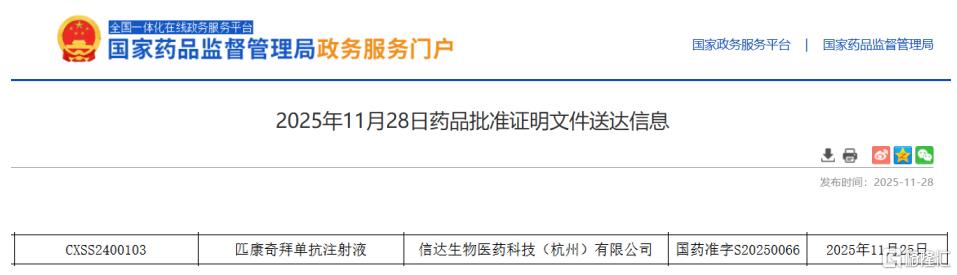
生物药国产替代再进一步!信达生物「匹康奇拜单抗」获批,银屑病市场格局生变
Ge Long Hui· 2025-12-02 20:27
Core Insights - The article reports that Innovent Biologics has received approval for its first domestically developed IL-23 p19 targeted drug, Pikanqi Baiduan (匹康奇拜单抗), for the treatment of moderate to severe plaque psoriasis, marking a significant milestone in the Chinese pharmaceutical industry [1][3]. Drug Approval and Development - Pikanqi Baiduan is a recombinant anti-IL-23p19 antibody that specifically binds to the IL-23p19 subunit, blocking the IL-23 receptor-mediated signaling pathway to exert anti-inflammatory effects [1][3]. - The approval is based on the positive results from the Phase III CLEAR-1 clinical trial, which met all primary and key secondary endpoints [3]. Company Portfolio - As of now, Innovent Biologics has a total of 16 new drugs approved for market, including 12 innovative drugs and 2 improved biological products, with a focus on oncology, metabolism, and autoimmune diseases [6].
医药生物行业跟踪周报:海外小核酸进入收获期,关注国内悦康、前沿、福元等-20251130
Soochow Securities· 2025-11-30 14:15
Investment Rating - The report maintains a rating of "Buy" for the pharmaceutical and biotechnology industry [1]. Core Insights - The overseas small nucleic acid market is entering a harvest period, with a focus on domestic companies such as Yuyuan, Frontier, and Fuyuan [1][16]. - The A-share pharmaceutical index has increased by 2.67% this week and 16.72% year-to-date, outperforming the CSI 300 by 1.03% and 1.68% respectively [4][9]. - The report highlights significant advancements in small nucleic acid drug technologies, expanding their application beyond rare diseases to chronic conditions such as cardiovascular diseases and metabolic disorders [16][18]. Summary by Sections Industry Trends - The report notes that various pharmaceutical sectors, including raw materials (+4.27%), chemical pharmaceuticals (+4.19%), and medical devices (+2.30%), have seen stock price increases [4][9]. - Key companies with notable stock performance include Haiwang Biological (+38.2%) and Guangdong Wannianqing (+36.2%) [4][9]. Research and Development Progress - Significant drug approvals include the self-immune new drug "Pikangqibai" by Innovent Biologics and the BCL2 inhibitor "Sotokura" by BeiGene, both of which have received regulatory approval [4]. - The report emphasizes the importance of delivery systems in the development of small nucleic acid drugs, with a focus on companies like Yuyuan Pharmaceutical and Frontier Biotech [16][18]. Market Insights and Regulatory Dynamics - The report ranks promising sub-industries as follows: innovative drugs > research services > CXO > traditional Chinese medicine > medical devices > pharmacies [10][12]. - Specific stock recommendations include Yuyuan Pharmaceutical, Frontier Biotech, and Heng Rui Medicine among others, based on their innovative drug pipelines and market potential [12][18].




华创医药周观点:血液净化器械行业专题 2025/11/29
华创医药组公众平台· 2025-11-29 13:04
Core Viewpoint - The article discusses the blood purification device industry, highlighting the increasing prevalence of End-Stage Renal Disease (ESRD) and the growth potential of blood purification technologies in response to this global health challenge [18][21]. Market Overview - The global ESRD patient population is projected to grow from 91.33 million in 2019 to 148.51 million by 2030, with a CAGR of 4.2% [18][19]. - In China, the ESRD patient population is expected to increase from 3.025 million in 2019 to 6.132 million by 2030, with a CAGR of 5.8% [20][18]. Treatment Methods - Blood purification is the most widely used treatment for ESRD, offering higher survival rates compared to kidney transplantation and conservative treatment [21]. - The number of patients receiving blood purification treatment in China rose from 736,000 in 2019 to 1.069 million in 2023, with a CAGR of 9.8%, and is expected to reach 3.791 million by 2030, with a CAGR of 19.8% [21][23]. Blood Purification Technologies - The main blood purification methods include hemodialysis, peritoneal dialysis, blood perfusion, and blood filtration, with hemodialysis being the most mature and widely applied [29]. - Hemodialysis effectively removes harmful substances and excess fluid from the blood, making it suitable for patients at various disease stages [29]. Market Size and Growth - The Chinese blood dialysis device market is projected to grow from CNY 11.63 billion in 2019 to CNY 51.52 billion by 2030, with a CAGR of 19.9% from 2023 to 2030 [30][28]. - The market share of blood dialysis devices in China is expected to see significant growth, with specific segments like blood dialysis machines and consumables also experiencing robust growth rates [30]. Competitive Landscape - Domestic companies are rapidly catching up with international competitors in the blood purification consumables sector, achieving nearly 50% market share in dialysis filters [31]. - The competitive landscape for blood dialysis machines is evolving, with domestic manufacturers improving their technology and performance to match imported products [37][33]. Policy and Market Dynamics - The article notes that the Chinese government has been implementing centralized procurement policies, leading to significant price reductions and accelerating the domestic replacement process in the blood purification market [36][35].


血液净化器械行业专题:华创医药投资观点&研究专题周周谈:第152期-20251129
Huachuang Securities· 2025-11-29 12:44
Investment Rating - The report does not explicitly provide an investment rating for the blood purification device industry Core Insights - The report highlights the increasing prevalence of End-Stage Renal Disease (ESRD) globally and in China, with the number of patients expected to rise significantly by 2030, indicating a growing market for blood purification devices [13][15] - Blood purification is identified as the most widely used treatment method for ESRD, with a higher survival rate compared to other treatments like kidney transplantation and conservative treatment [19] - The Chinese blood purification device market is projected to grow rapidly, driven by an increase in ESRD patients, improved reimbursement policies, and advancements in dialysis infrastructure [26] Market Overview - The global ESRD patient population increased from 9.13 million in 2019 to 11.14 million in 2023, with a CAGR of 5.1%, and is expected to reach 14.85 million by 2030 [13][14] - In China, the ESRD patient population grew from 3.03 million in 2019 to 4.13 million in 2023, with a CAGR of 8.1%, projected to reach 6.13 million by 2030 [15] - The number of patients receiving blood purification treatment in China rose from 736,000 in 2019 to 1.07 million in 2023, with a CAGR of 9.8%, expected to reach 3.79 million by 2030 [19][18] Treatment Methods - Blood purification methods include hemodialysis, peritoneal dialysis, blood perfusion, and blood filtration, with hemodialysis being the most common and effective method for ESRD patients [23] - Hemodialysis is noted for its effectiveness in removing toxins and excess fluid, while peritoneal dialysis is gaining traction due to its home treatment capabilities [21][23] Market Size and Growth - The Chinese blood purification device market size increased from 116.3 billion yuan in 2019 to 145.0 billion yuan in 2023, with a CAGR of 5.7%, and is expected to reach 515.2 billion yuan by 2030, with a projected CAGR of 19.9% from 2023 to 2030 [26] - The market for blood purification devices is segmented into blood purification machines, blood purification consumables, and other related equipment, with significant growth expected across all segments [26] Competitive Landscape - Domestic companies are rapidly catching up to international competitors in the blood purification consumables market, achieving nearly 50% market share in key areas [27] - The report indicates that the domestic market for blood purification machines still has room for growth, as these products have historically relied on imports due to high technical barriers [27][34] - The report emphasizes that domestic manufacturers are improving their technology and performance, positioning themselves to capture a larger market share [29][34]