千问AI眼镜G1

Search documents
华为憨憨、千问G1眼镜、Vbot浮出水面:谁代表AI硬件的下一站?
虎嗅APP· 2026-03-26 09:44
Core Viewpoint - The AI hardware industry is transitioning from a "technology-driven" approach to a "scenario-driven" model, with a focus on practical applications and real-world problem-solving [5][6]. Group 1: Validated Judgments - Functional robots are outperforming general humanoid robots, with practical products like delivery and cleaning robots achieving mass production in specific scenarios [8]. - The industry consensus is that the viable path for edge AI by 2026 involves a hybrid architecture of cloud-based complex reasoning and local lightweight interactions, rather than purely offline models [8]. - Competition is shifting towards brand and channel strength, as product differentiation diminishes due to hardware standardization [9]. Group 2: Disproven Misconceptions - The expectation that general humanoid robots would be commercially viable by 2026 has been proven incorrect due to unresolved technical challenges [10]. - The notion that plush AI pets represent a low-barrier entrepreneurial opportunity has been debunked, as the market has become saturated with similar products [10]. - The belief that edge AI would be the definitive trend by 2026 has been challenged, as hardware limitations hinder the deployment of large models on local devices [10]. Group 3: Representative Products in Confirmed Directions - Vbot, a functional robot, exemplifies a successful product by addressing real-world needs in a stable and cost-effective manner, focusing on user experience rather than humanoid aesthetics [13][14]. - The Qianwen AI glasses G1 are significant for their pricing strategy and hybrid technology approach, integrating cloud services with local processing to enhance user experience [15][17]. - TicNote Pods integrate recording, transcription, and translation features into headphones, aligning with the trend of mobile AI centralization and improving office efficiency [18][20]. - Ropet, an AI pet, has succeeded in a competitive market by focusing on emotional value and effective brand management rather than solely on technological innovation [21][24]. Group 4: Products with Diverging Opinions - The plush AI pet market is highly saturated, with products like Fuzozo and Mooni M1 facing significant challenges due to lack of differentiation and high competition [26]. - Independent office AI hardware, such as standalone AI chairs and recording devices, are losing market relevance as their functionalities overlap with mobile devices [26]. - General humanoid robots are overhyped, with significant technical barriers preventing practical applications, relegating them to mere promotional tools [27]. - AR glasses aimed at replacing mobile screens are misaligned with user needs and face significant technical challenges, leading to a consensus that they lack commercial viability [27]. - Pure edge AI hardware claiming to run large models locally are deemed impractical due to hardware constraints, with the industry agreeing on a hybrid approach as the only feasible path forward [27]. Group 5: Special Observations - The "Intelligent Huan Huan" AI pet, developed by Huawei and Lobo Smart, has achieved impressive sales but raises questions about whether its success is due to channel strength or product capability [29][32]. Conclusion - The AI hardware industry is undergoing a necessary culling process, rewarding products that effectively address real-world problems and establish commercial viability, while those relying on mere technological concepts are being phased out [34].


行业周报:OpenClaw催化AI终端热度,英伟达GTC大会召开在即-20260315
KAIYUAN SECURITIES· 2026-03-15 13:46
Investment Rating - The industry investment rating is "Overweight" (maintained) [1] Core Insights - The electronic industry index experienced a decline of 1.29% during the week of March 9-13, 2026, with notable structural characteristics within the sector. Consumer electronics and optical optoelectronics saw increases of 1.53% and 1.00% respectively, driven by the demand for AI terminals and inventory cycles, while semiconductors fell by 2.79% due to valuation adjustments influenced by geopolitical factors [3][4] - The OpenClaw trend is significantly impacting the industry chain, with AI hardware markets heating up. The Apple Mac Mini M4 has sold out across various channels, with price premiums reaching up to 23%. The Qianwen AI glasses G1 also sold out quickly upon release, indicating strong market interest [4] - Major cloud service providers, including Tencent Cloud, Alibaba Cloud, and Huawei Cloud, are fully supporting the deployment of OpenClaw services, which is expected to drive demand for cloud-based tokens. NVIDIA is set to invest $26 billion over the next five years to advance open-source AI model development [5] - The supply landscape for HBM (High Bandwidth Memory) is stabilizing, with Samsung and SK Hynix selected as suppliers for NVIDIA's Vera Rubin platform, expected to start mass production in March. NAND prices are projected to double in Q2 2026, with a cumulative increase exceeding 200% in the first half of the year [6] Summary by Sections Market Review - The electronic industry index declined by 1.29%, with consumer electronics and optical optoelectronics increasing by 1.53% and 1.00% respectively, while semiconductors and other electronic components fell by 2.79% and 2.13% [3] Industry Dynamics - OpenClaw is driving demand in the AI hardware market, with significant sales of products like the Apple Mac Mini M4 and Qianwen AI glasses G1. The global shipment of AI glasses is expected to reach 8.7 million units in 2025, marking a 322% year-on-year increase [4] Cloud Computing - Major cloud providers are adopting OpenClaw, with government support anticipated to boost demand for cloud tokens. NVIDIA's upcoming GTC 2026 conference will focus on infrastructure upgrades and investment opportunities in AI [5] Storage Sector - The HBM supply chain is solidifying, with Samsung and SK Hynix leading production for NVIDIA. NAND prices are expected to see significant increases, and DRAM prices are projected to rise by 150% for 64GB server DDR5 [6] Investment Recommendations - Beneficial stocks include Huazheng New Materials, Jiangfeng Electronics, Tuojing Technology, Jingce Electronics, Weice Technology, and Huafeng Technology [7]
国产AI眼镜:今年全球占比将达45%
财联社· 2026-03-15 05:05
Core Insights - The article highlights the rapid growth of domestic AI glasses in China, with significant sales increases and a projected global market share of 45% by 2026 for Chinese manufacturers [12][2]. - Despite the growth, challenges remain in supply chain capacity and the need for differentiation in user value [13][14]. Market Growth - The global shipment of domestic AI glasses is expected to reach 22.67 million units in 2026, a year-on-year increase of 56.3%, with China's market expected to see 4.51 million units shipped, growing by 77.7% [1]. - The growth is primarily concentrated in audio, audio recording glasses, and AR/ER glasses [1]. Company Developments - Qianwen AI glasses made their domestic debut at AWE, featuring dual-chip dual-system technology and 64GB local storage [2]. - XREAL has shipped over 700,000 units and is focusing on deepening integration of spatial computing and AI [5]. - Thunder Innovation plans to launch a limited edition Batman Air 4 Pro glasses and has partnered with Amap to create local life applications for its X3 Pro AR glasses [7]. International Expansion - Thunder Innovation's sales in the North American market grew by 456.5% in 2025 compared to 2024, with plans to enhance market share in Japan, South Korea, and Northern Europe [9]. - Domestic manufacturers are rapidly expanding in overseas markets, leveraging China's manufacturing advantages [12]. Industry Challenges - The supply chain's capacity ramp-up remains a significant bottleneck, with higher demands for yield control and delivery cycles [13]. - Current AI glasses lack sufficient differentiation in user value, primarily offering functionalities that can be replaced by smartphones [13]. Future Outlook - The industry is compared to the smartphone market in the mid-2000s, with a need for breakthroughs in hardware miniaturization, multi-modal world models, and ecosystem unification to reach a transformative "iPhone moment" [14][15][16]. - Key areas for innovation include lightweight hardware, comprehensive perception through multi-modal inputs, and a unified platform for devices [14][15][16].

2026 AWE观察:机器人公司来了家电展,家电公司都在做机器人
经济观察报· 2026-03-15 04:06
Core Insights - The 2026 AWE showcased a significant shift towards robotics and AI in the home appliance sector, with major brands like Haier, Midea, and TCL prominently featuring these technologies [2][4][10] - A new standard for smart home interoperability was introduced, aiming to unify communication between devices from different brands, addressing a major pain point in the industry [3][14][15] Group 1: Robotics and AI Innovations - The AWE featured over 60 robot models from various companies, indicating a growing trend of traditional appliance manufacturers entering the robotics space [2][5] - Notable products included the "Eight Realms" robot from Ecovacs, which integrates AI capabilities for task planning, and Haier's "Havva" series of household service robots [4][5] - AI is being integrated into traditional appliances, such as TCL's flagship TV that uses AI for automatic picture adjustments and air conditioners that monitor sleep patterns [10][12] Group 2: Industry Standards and Interoperability - The GIIC alliance announced the OneConnect standard, which aims to facilitate device interoperability across different brands, addressing the current lack of cross-brand communication [14][15] - The standard includes specifications for device access, control interfaces, and safety requirements, covering nearly 200 product categories [16][15] - The push for these standards is driven by both government initiatives and the recognition among companies that collaboration is essential for industry growth [18][19] Group 3: Market Trends and Future Directions - The home appliance industry is at a transformative point, with AI becoming a core driver of innovation, as highlighted by industry leaders during the AWE [19] - The focus is shifting from merely adding smart features to creating products that address consumer pain points and enhance value [10][19] - The establishment of the OneConnect standard is expected to lead to a more cohesive smart home ecosystem, enhancing user experience and driving market growth [17][18]





“养虾热”带火Mac mini,华强北多个销售档口已断货;大四学生AI项目登GitHub榜首,获陈天桥3000万投资丨AI周报
创业邦· 2026-03-15 01:32
Core Insights - The article highlights significant developments in the AI industry, focusing on funding rounds, product launches, and strategic shifts among key players in the market. Group 1: Funding and Valuation - Cursor, an AI programming startup, is negotiating a new funding round with a potential valuation of $50 billion, up from $29.3 billion in its last round where it raised $2.3 billion [7][8] - Yann LeCun's new startup raised over $1 billion in the largest seed funding round in Europe, with a valuation of $3.5 billion [12][13] Group 2: Product Launches and Innovations - Baidu launched the world's first mobile lobster application, "Red Hand Operator," which allows users to command their phones to perform tasks [8][21] - Tencent introduced "SkillHub," a localized AI Skills community for Chinese users, enhancing the functionality of AI tools like OpenClaw [10][12] - OpenAI plans to integrate its AI video generator Sora into ChatGPT, expanding its capabilities in multimodal AI technology [12][36] Group 3: Market Trends and User Adoption - The "lobster" AI trend has significantly boosted sales of Mac mini devices, as users prefer to deploy OpenClaw on compatible hardware [20][21] - The popularity of AI tools has led to increased demand for training technical workers, with BlackRock investing $100 million to train electricians and other skilled workers to meet future AI infrastructure needs [22][23] Group 4: Corporate Strategies and Changes - Atlassian announced a 10% workforce reduction to adapt to the rise of AI, emphasizing the need for restructuring to invest in AI and sales [22] - Nvidia plans to invest $26 billion over the next five years to develop open-source AI models, marking a strategic shift from being a chip manufacturer to a full-stack AI laboratory [23][36] Group 5: Regulatory and Security Concerns - The Ministry of Industry and Information Technology in China warned about security risks associated with OpenClaw, advising users to manage permissions and configurations carefully [35][36] - Concerns regarding the ethical implications of AI in military applications have led to the resignation of OpenAI's robotics head, highlighting the need for careful consideration of AI's role in national security [36][37]






“百镜大战”,持续升温
新华网财经· 2026-03-13 03:15
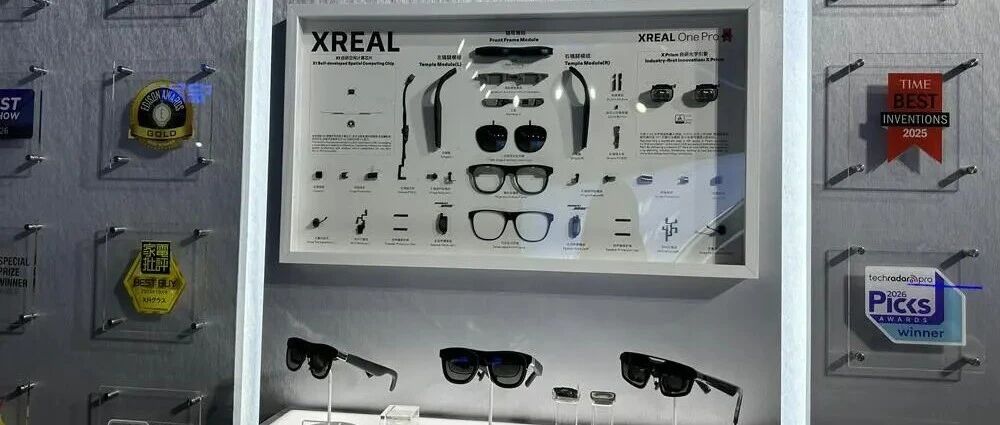
Core Viewpoint - The AWE 2026 showcased significant advancements in AI technology and smart devices, particularly highlighting the growing interest in smart glasses and embodied intelligence products [2][3][4]. Group 1: Event Overview - AWE 2026 was held from March 12 to 15, covering a total exhibition area of 170,000 square meters with 1,200 participating companies, including major players like Haier and Huawei [2]. - The event introduced a new "dual-zone" layout, featuring the Oriental Hub International Business Cooperation Zone and the New International Expo Center [3]. Group 2: Smart Glasses Highlights - Smart glasses emerged as a focal point, with multiple models showcased, including the Qianwen AI Glasses G1, which supports calling, photo/video recording, and translation [4]. - XREAL presented the XREAL 1S, equipped with a self-developed spatial computing chip, enabling stable spatial hovering and real-time 2D to 3D conversion [7]. - TCL launched the Thunder X3 Pro AR glasses, integrating smart living features in collaboration with Amap, while BOE introduced the S7 AI+AR cycling glasses, set to release in June [8]. Group 3: Embodied Intelligence - The event featured various humanoid robots and embodied intelligence products, including caregiving robots and robotic dogs, showcasing advancements in interactive technology [9]. - Shanghai Aoshark Intelligent Technology's FIT-HV PRO exoskeleton robot can reduce physical load by over 60% during heavy lifting tasks [11]. Group 4: Technological Innovations - The AWE 2026 highlighted advancements in optical interconnect technology, with the launch of the Guangyue Super Node 128 card commercial version, significantly improving training performance for large models [14][17]. - The LX series of professional and consumer graphics cards were introduced, targeting various applications from gaming to high-resolution rendering [17].
“百镜大战”,持续升温
财联社· 2026-03-13 02:36
Core Viewpoint - The 2026 China Household Appliances and Consumer Electronics Expo (AWE 2026) showcases significant advancements in AI technology and smart devices, particularly highlighting the growing interest in smart glasses and embodied intelligence products [1][2]. Group 1: Event Overview - AWE 2026 is themed "AI Technology, Enjoying the Future" and spans a total exhibition area of 170,000 square meters, featuring 1,200 participating companies including major players like Haier and Huawei [1]. - The event introduces a new "dual-zone" layout, comprising the Eastern Hub International Business Cooperation Zone and the New International Exhibition Center [2]. Group 2: Smart Glasses Highlights - Smart glasses emerged as a focal point at the expo, with multiple models showcased, including the Qianwen AI Glasses G1, which supports calling, photo/video recording, and translation, powered by the Qianwen large model [3]. - XREAL presented the XREAL 1S, equipped with the self-developed X1 spatial computing chip, enabling a stable spatial hovering experience and real-time 2D to 3D conversion [5]. - TCL's Thunderbird X3 Pro AR glasses were highlighted for their integration with Amap, while BOE unveiled the S7 AI+AR cycling glasses, which project navigation and speed information in real-time [6]. Group 3: Embodied Intelligence - The Eastern Hub showcased various embodied intelligence products, including humanoid robots and caregiving robots, indicating a trend towards more interactive and functional robotic solutions [7]. - Shanghai Aoshark Intelligent Technology introduced the FIT-HV PRO waist exoskeleton robot, which reduces physical load by over 60% during heavy lifting and frequent bending tasks [10]. Group 4: Technological Innovations - The expo featured advancements in optical interconnect technology, with the launch of the Guangyue Supernode 128-card commercial version, which significantly enhances training performance for large models, reducing transmission delays by over 90% compared to traditional methods [12][16]. - Lishan Technology released the LX series of professional and consumer graphics cards, designed for various applications including gaming and digital content creation, with features aimed at preventing performance drops due to memory overflow [16].


资讯日报:中东持久战担忧下油价飙升-20260309
Guoxin Securities Hongkong· 2026-03-09 12:28
Market Overview - The Hang Seng Index closed at 25,757, up 1.72% for the day but down 3.28% year-to-date[3] - The Hang Seng Tech Index rose 3.15%, while the Hang Seng China Enterprises Index increased by 2.09%[9] - The S&P 500 and Nasdaq fell by 1.33% and 1.59% respectively, with year-to-date declines of 1.54% and 3.68%[3] Oil Price Surge - WTI crude oil prices surged approximately 36% and Brent crude by about 27% due to escalating conflicts in the Middle East, disrupting oil transport in the Strait of Hormuz[9] - The VIX index rose by 22%, reaching its highest level since April of the previous year, indicating increased market volatility[9] Employment Data - The U.S. non-farm payroll report for February showed a loss of 92,000 jobs, with the unemployment rate rising to 4.4%[9] - This data has heightened concerns regarding inflation and economic outlook[9] Sector Performance - JD.com reported a revenue of over 1.3 trillion yuan for 2025, a 13% year-on-year increase, with a core retail operating margin of 4.6%[9] - Biopharmaceutical stocks surged, with companies like 3SBio and CanSino rising over 9% following government support for the sector[9] Commodity Trends - Gold stocks faced pressure, with China Gold International and Tongguan Gold dropping by 5.20% and 1.93% respectively, amid rising inflation expectations due to oil price hikes[9] - The copper inventory on the LME increased by over 20,000 tons, marking the largest weekly rise since August 2024, contributing to a 43.69% increase in domestic copper stock[9]

千问AI眼镜G1现货开售;周鸿祎谈AI龙虾爆火丨AIGC日报
创业邦· 2026-03-09 00:06
Group 1 - The Qianwen AI glasses G1 officially went on sale today at 10 AM, featuring dual flagship chips, dual systems, and 64GB of internal storage, with a starting price of 1997 yuan after subsidies [2] - OpenClaw, an AI tool referred to as "lobster," has gained significant popularity, with 360 Group founder Zhou Hongyi highlighting its potential as a personal assistant that simplifies user interaction, although he notes that configuring it remains challenging for the average person [2] - Caitlin Carlinowski, head of OpenAI's robotics division, has resigned due to concerns over military negotiations and the implications of AI in national security, emphasizing the need for careful discussion on issues like surveillance and autonomous weapons [2]

大四学生获陈天桥3000万投资,其AI项目登GitHub榜首;“王兴兴相亲帖”被发现,平台客服回应;小米入局车载光伏丨邦早报
创业邦· 2026-03-09 00:06
Core Insights - Xiaomi is entering the vehicle-mounted photovoltaic market in collaboration with former executive Li Chuangqi's startup, indicating a strategic shift towards renewable energy solutions in the automotive sector [2] - Kimi's subscription user payment orders surged by 80 times, with a remarkable growth of 8280% in January and 123.8% in February, positioning it among the top 10 in Stripe's global payment rankings [6] - OpenAI's robotics department head resigned due to concerns over military negotiations, highlighting ethical dilemmas in AI applications for national security [10] Group 1: Company Developments - Xiaomi's collaboration with Li Chuangqi focuses on vehicle-mounted photovoltaic technology, which is expected to integrate solar energy solutions into automotive engineering, creating a high barrier to entry and significant market potential [2] - Kimi's explosive growth in user subscriptions reflects a strong demand for its AI-driven services, with its revenue surpassing previous records in a short time frame [6] - Tesla's electric truck, Semi, is undergoing winter testing in Alaska, signaling advancements in electric vehicle technology and preparation for large-scale production [8] Group 2: Industry Trends - The rise of AI applications, such as OpenClaw, has prompted government support in Shenzhen, aiming to foster innovation in AI development with zero-cost startup initiatives [18][19] - The global electric vehicle battery installation volume increased by 10.7% in January 2026, with CATL and BYD maintaining their positions as market leaders, while Korean manufacturers faced declines [20] - Sony is facing a collective lawsuit in the UK for allegedly overcharging PlayStation users, which could impact its competitive standing in the gaming market [10]