
半导体代工服务

Search documents
赛微电子:公司是专业的纯代工企业
Zheng Quan Ri Bao Zhi Sheng· 2026-02-25 14:08
Core Viewpoint - The company emphasizes that each business development model is determined by its own circumstances, and it respects the strategic considerations of various manufacturers, including clients [1] Group 1: Business Development Models - The construction of semiconductor manufacturing lines is characterized by long cycles and heavy asset investment, making it challenging for a single design company's self-built line to serve similar competitive design companies [1] - The company operates as a professional pure foundry, accumulating strong process technology in the foundry business through long-term process development and production practice, which provides advantages in product iteration and cost control [1] - The collaboration between Fabless or Fablite design companies and the company allows for the avoidance of significant fixed asset investments, enabling more focus on product design and iteration [1] Group 2: Industry Dynamics - The IDM model and the Fabless or Fablite model (in cooperation with pure foundry manufacturers) each have their own advantages and disadvantages, indicating that these business development models will coexist in the industry for the long term [1]

三星晶圆厂,争取盈利
半导体行业观察· 2025-11-13 01:35
Core Viewpoint - Samsung Electronics aims to achieve profitability in its semiconductor foundry business by 2027, focusing on securing orders from major tech companies like Tesla and Apple, and leveraging its new Taylor wafer fab in the U.S. [2][3] Group 1: Business Goals and Strategies - Samsung has set a management goal to achieve breakeven by 2027 and aims for a 20% market share based on sales in the foundry sector [2][3] - The company is sharing its management goals with partners and discussing future investment plans to ensure stable operations and necessary materials [2][3] - Samsung's foundry business has been characterized as an order-based model, necessitating advance preparation of raw materials and equipment [2] Group 2: Current Performance and Market Position - Since 2022, Samsung's foundry business has been operating at a loss, estimated at 1 trillion to 2 trillion KRW per quarter [3] - Despite significant investments in advanced processes, Samsung has struggled to secure a large number of orders, leading to its foundry being referred to as a "bottomless pit" [3] - In 2023, Samsung has secured contracts from major North American tech giants, indicating a shift in its ability to attract clients due to improved yield rates [3] Group 3: Future Developments - Samsung plans to begin production at its Taylor factory in 2024, with equipment installation expected to be completed by Q2 and full production by Q3 [5] - The company is also preparing a second production line at the Taylor factory, which will be larger than the first [5] - Analysts suggest that Samsung's recovery in the foundry business will depend on its ability to secure next-generation process technologies and maintain stable yields [5]


华虹半导体25Q3业绩会要点
Xin Lang Cai Jing· 2025-11-07 11:00
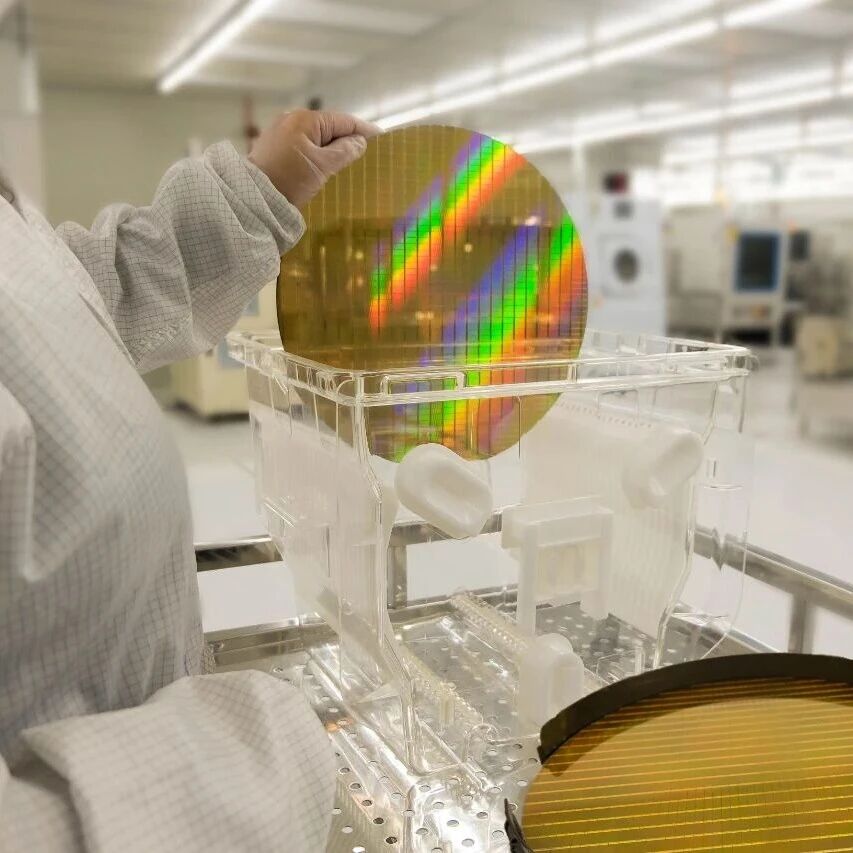
Core Viewpoint - Huahong Semiconductor's Q3 performance exceeded expectations, with revenue growth and improved gross margin, while the outlook for Q4 is slightly conservative due to seasonal factors. Group 1: Q3 Performance - Q3 revenue reached $635 million, a year-on-year increase of 20.7% and a quarter-on-quarter increase of 12.2%, aligning with the previous guidance of $620-640 million [1] - Net profit attributable to shareholders was $25.7 million, down 42.6% year-on-year but up 224% quarter-on-quarter [1] - Gross margin was 13.5%, an increase of 1.3 percentage points year-on-year and 2.6 percentage points quarter-on-quarter, surpassing the prior guidance of 10%-12% [1] Group 2: Q4 Guidance - Q4 revenue is expected to be between $650-660 million, reflecting a quarter-on-quarter increase of 2.4%-3.9%, primarily due to the traditional off-season impact [2] - Gross margin guidance for Q4 is set at 12%-14%, with a midpoint indicating a quarter-on-quarter decrease of 0.5 percentage points [2] Group 3: Pricing and Capacity - ASP for foundry services increased approximately 5% quarter-on-quarter in Q3, with the company actively communicating with clients regarding new order pricing, indicating potential for further price recovery [3] - Q3 utilization rate was 109.5%, up 4 percentage points year-on-year and 1.2 percentage points quarter-on-quarter, with expectations for utilization to remain above 105% as new capacity from the 9th fab is released [4] Group 4: Acquisition and Future Outlook - The integration of the 5th fab is proceeding as planned, with an announcement expected soon, a shareholder meeting scheduled for December, and operations set to begin in early next year, aiming for completion by August [5] - This acquisition is projected to add $600-700 million in revenue, with the target company already profitable and most depreciation accounted for, enhancing Huahong's technology platform and long-term growth potential [5] - The outlook for 2026 is optimistic, with expectations for better performance than in 2025, as supply chain constraints are likely to persist, allowing for product structure optimization and potential price stability or increases [6]
Intel Gets a Much-Needed Win
Yahoo Finance· 2025-10-30 00:45
Group 1 - Intel began 2025 with the goals of finding a leader and securing cash, achieving both with the hiring of CEO Lip-Bu Tan and significant investments [1] - In Q3 2025, Intel secured a total of $12.7 billion in investments, including $2 billion from SoftBank, $5.7 billion from the U.S. government, and $5 billion from Nvidia [1][2] - As of the end of Q3 2025, Intel's cash, cash equivalents, and short-term investments reached nearly $31 billion, up from $22 billion at the start of the year, while also repaying $4.3 billion in debt [3] Group 2 - Intel aims to expand its foundry business, which builds chips for external customers, as highlighted in its 2024 annual report [4] - The U.S. government is interested in Intel's foundry business due to the dominance of Taiwan and China in this sector, leading to significant investments in Intel [5] - Approximately one-third of Intel's Q3 revenue came from its foundry business, which experienced a 2% year-over-year decline, indicating the need for improvement in attracting external customers [6] Group 3 - Intel plans to increase its capital expenditures from about $17 billion in 2024 to $27 billion in 2025, signaling a commitment to enhancing its competitive position, including in the foundry business [7] - The hiring of a new CEO has been pivotal in securing financial victories and is part of the strategy to attract new customers for Intel's foundry operations [8]
台积电:人工智能革命背后低调的巨头
美股研究社· 2025-10-13 12:32
Core Viewpoint - TSMC continues to lead the global semiconductor foundry market, driven by surging demand for artificial intelligence, achieving revenue and EPS growth that exceeds expectations for nine consecutive quarters [1][5][28]. Financial Performance - In Q2 2025, TSMC reported revenue of approximately $31.73 billion, a year-on-year increase of 54%, and EPS of $2.47, up nearly 71% from the previous year [5][11]. - The company maintains a robust financial position with over $90 billion in cash reserves and positive net interest income, allowing for stable growth in both high and low interest rate environments [1][19]. - TSMC's gross margin stands at 58.6%, with an operating margin of 49.6% and a net profit margin of 42.7%, all significantly above industry averages [6][21]. Market Position and Growth - TSMC's market capitalization exceeds $1.15 trillion, reflecting its status as one of the largest semiconductor companies globally [2]. - The company has experienced a revenue growth of approximately 40% over the past 12 months, far surpassing the industry median of about 7% [2][21]. - The high-performance computing (HPC) segment accounts for 60% of TSMC's revenue, indicating strong demand driven by AI [6][7]. Future Outlook - TSMC anticipates Q3 2025 revenue guidance of approximately $32.4 billion, representing a 38% increase year-on-year [11][13]. - Analysts predict TSMC's diluted EPS for FY2026 to reach $11.49, a 16% increase from FY2025, contingent on sustained AI demand [23]. - The high-performance computing market is projected to grow from $112 billion in 2024 to approximately $360 billion by 2029, with a CAGR of 26.3% [10]. Valuation - TSMC's forward P/E ratio is approximately 30.69, reflecting a premium over industry and benchmark indices [2][16]. - Despite a high valuation, analysts believe TSMC's strong performance justifies this premium, with potential for further valuation increases [18][21].

摩根士丹利:中国的新兴前沿-投资于不断变化的趋势
摩根· 2025-05-14 05:24
Investment Rating - The report provides an "In-Line" investment rating for the Chinese industrial sector, indicating a balanced outlook on investment opportunities within the industry [10]. Core Insights - The report emphasizes the importance of investing in emerging industries in China that possess structural competitive advantages, particularly in the context of challenges such as debt, deflation, demographic changes, and global multipolarity [3][8]. - It identifies significant opportunities in advanced supply chains and manufacturing, highlighting the potential for growth in sectors such as machinery, automotive, new energy, semiconductors, aerospace, artificial intelligence, software, pharmaceuticals, humanoid robotics, and eVTOL [4][30]. - The report outlines a framework consisting of six key elements that support industry upgrades, which include R&D investment, talent development, capital influx, government policy support, market demand, and supply chain robustness [31][34]. Summary by Sections Industry Investment Rating - The report rates the Chinese industrial sector as "In-Line," suggesting a cautious but optimistic view on investment prospects [10]. Key Industry Opportunities - The report identifies 28 stocks that are well-positioned to benefit from the ongoing industrial upgrades and emerging trends in China, focusing on companies that are either upstream in the supply chain or are key enablers in sectors like automation and AI [4][42]. Six Key Elements Framework 1. **R&D Investment**: China’s R&D expenditure is primarily concentrated in manufacturing, with a notable increase in investment in technology and emerging industries [15][31]. 2. **Talent Pool**: China produces the largest number of engineering graduates globally, with a focus on strategic emerging fields such as AI and data science [31][32]. 3. **Capital Influx**: Significant capital has flowed into advanced manufacturing sectors, particularly semiconductors and machinery, with a total of approximately RMB 20 trillion from 2021 to 2024 [32][33]. 4. **Government Support**: The Chinese government has implemented various strategic initiatives to support key industries, including AI, semiconductors, and aerospace, enhancing the investment landscape [33][34]. 5. **Market Demand**: The report highlights a positive feedback loop between rising demand and innovation, particularly in consumer electronics, automotive, and electrical machinery [34]. 6. **Supply Chain Development**: The report discusses the importance of moving up the value chain, particularly in sectors with low localization rates and strong downstream demand [34][35]. Emerging Industry Focus - The report underscores the potential of artificial intelligence to drive significant economic value in China, projecting that AI could contribute RMB 11 trillion to the labor value by 2035, representing 5.5% of nominal GDP [37][38]. - It also notes the expected growth in sectors such as autonomous vehicles and industrial AI applications, which are anticipated to enhance productivity and operational efficiency across various industries [39].