
半导体代工

Search documents
英特尔18A代工拟对外开放!
国芯网· 2026-03-05 12:31
Core Viewpoint - Intel's CEO, David Zinsner, has shifted the company's 18A manufacturing technology from being an internal-only product to a potential offering for external customers, indicating a significant change in strategy [2][4]. Group 1 - The transition in strategy marks a major change from last year when the CEO believed that the 18A technology would only yield reasonable returns if used for Intel's own products [4]. - Since taking over as CEO, significant transformations have been made at Intel, including a workforce reduction of approximately 20% to adapt to the demands of AI [4]. - The CEO has committed to continuing the operation of Intel's factories and is seeking new customers for the upcoming 14A manufacturing technology [4].


三星2026年目标:2nm订单增长130%!
国芯网· 2026-02-07 13:10
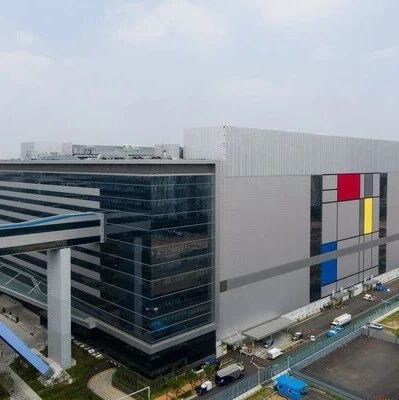
Group 1 - Samsung's foundry division has set an aggressive target to increase its 2nm GAA process order volume by 130% by 2026, indicating a strong confidence in capturing market share during a period of supply constraints faced by TSMC [2][3] - The latest data shows that Samsung's 2nm GAA process yield has reached 50%, demonstrating its capability to compete with TSMC in yield control, although there is still room for improvement [3] - Samsung's factory in Taylor, Texas, which was initially planned for 4nm production, has shifted its strategy to focus entirely on the 2nm GAA process, with testing of EUV equipment set to begin in March [3] Group 2 - Tesla has become a key customer for Samsung's 2nm technology, with a significant order valued at $16.5 billion, although Samsung still faces challenges in securing traditional clients like Qualcomm [3]
港股速报|港股高开 贵金属板块早盘反弹 机构观点:黄金长期行情将延续
Mei Ri Jing Ji Xin Wen· 2026-02-03 03:15
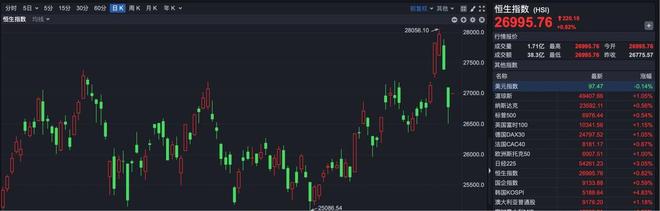
Core Viewpoint - The Hong Kong stock market experienced a rebound with the Hang Seng Index opening at 26,995.76 points, up by 220.19 points, or 0.82% [2]. Market Performance - The Hang Seng Technology Index opened at 5,563.79 points, increasing by 37.48 points, or 0.68% [4]. - Gold stocks showed a rebound, with companies like Lingbao Gold (HK03330), Luoyang Molybdenum (HK03993), and China Gold International (HK02099) rising over 3%, while Zijin Mining, Shandong Gold, Zhaojin Mining, and Jiangxi Copper gained over 2% [6]. Sector Analysis - According to Guotai Junan, the primary reason for the recent decline in precious metals was the previous irrational surge, leading to profit-taking and increased volatility due to retail leverage [7]. - The medium-term outlook suggests that as the deleveraging process concludes, gold prices may stabilize, with a long-term bullish trend expected due to ongoing global monetary system restructuring and central bank gold purchases [7]. Stock Highlights - Tech stocks generally rose, with NetEase increasing over 3%, Bilibili over 2%, and Alibaba and Kuaishou both up over 1% [6]. - Chinese brokerage stocks were active, with China Merchants Securities rising over 1% [6]. - Chip stocks opened higher, with Zhaoyi Innovation increasing over 5% [6]. Future Outlook - Huatai Securities believes that the recent pullback in the Hong Kong market creates an opportunity for entry, with expectations of a recovery trend [8]. - Key areas to focus on include the AI supply chain and semiconductor sectors, which are expected to benefit from clearer market dynamics and stronger performance [8]. - The report suggests maintaining an overweight position in resource stocks, insurance, and local Hong Kong stocks after stabilization [8].
港股复盘 | 港股遭遇“黑色星期一” 恒生科技指数跌超3% 贵金属板块遭遇重挫
Mei Ri Jing Ji Xin Wen· 2026-02-02 08:57
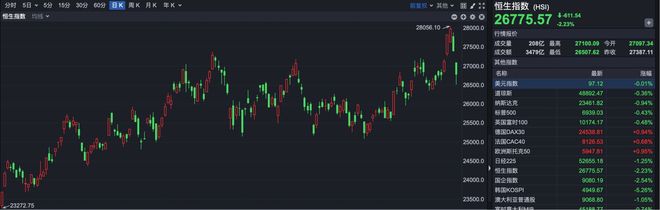
Market Overview - The Hong Kong stock market experienced a significant decline on February 2, with the Hang Seng Index closing at 26,775.57 points, down 611.54 points, representing a drop of 2.23% [1][2] - The Hang Seng Tech Index also fell, closing at 5,526.31 points, down 191.87 points, a decrease of 3.36% [2] Sector Performance - Precious metals stocks were heavily impacted, with Shandong Gold (HK01787) and Chifeng Jilong Gold (HK06693) both dropping over 12%. Other companies like Lingbao Gold and Jiangxi Copper fell more than 9%, while Zijing Mining dropped over 5% [4] - In the automotive sector, shares of Xpeng Motors (HK09868) fell by 6%, and NIO (HK09866) dropped over 4% [5] - Semiconductor stocks also faced declines, with Hua Hong Semiconductor falling over 11% [6] - Technology stocks generally declined, with Bilibili dropping over 4%, and major companies like Baidu, NetEase, Kuaishou, and Alibaba falling over 3% [7] Investment Insights - Citigroup's recent commodity report indicated that current gold prices have significantly priced in future uncertainties, suggesting that while there may be short-term price increases, valuations are at "extreme levels" [5] - Despite the downturn, southbound capital saw a small inflow, with net purchases of Hong Kong stocks exceeding 1.9 billion HKD by the end of the trading day [7] Future Outlook - Huatai Securities believes the current market correction is a technical pullback due to rapid previous gains and hawkish signals from the Federal Reserve. They suggest focusing on sectors with clearer benefits, such as AI and semiconductor manufacturing [10] - Morgan Stanley notes that the recent bull market has led to profit-taking ahead of the Lunar New Year, but geopolitical uncertainties may enhance the attractiveness of Chinese assets, predicting that the Hong Kong market could outperform the A-share market in the short term [10]
三星晶圆代工巨额亏损!
国芯网· 2026-01-27 04:47
Core Viewpoint - Samsung's semiconductor foundry business, which has been in a state of loss since 2022, is expected to turn profitable next year due to increased demand and operational improvements [1][3]. Group 1: Financial Performance and Projections - Samsung's foundry business recorded a loss of approximately 7 trillion Korean won in the previous year, but is projected to achieve profitability in the coming year as production scales up for Tesla's AI chips [1][3]. - The company aims to accelerate order acquisition with a target of achieving profitability next year, as the yield rates for advanced processes below 3nm stabilize and the utilization rates for 4-8nm processes approach full capacity [3]. Group 2: Strategic Developments - Samsung is investing over $37 billion in a new wafer fabrication plant in Taylor, Texas, which is expected to significantly enhance its foundry capabilities and support the production of chips for major tech companies [3]. - The successful ramp-up of production at the Taylor facility is crucial for improving Samsung's profitability, particularly with the anticipated production of Tesla's AI chips [3]. Group 3: Competitive Landscape - TSMC currently holds about 70% of the foundry market share, but its production lines are nearing full capacity, creating opportunities for Samsung to capture additional orders [4]. - As demand for advanced processes concentrates at TSMC, some large clients are considering Samsung as an alternative, especially in light of the "Made in America" policy [4]. - Samsung's improved operational efficiency in the 4-8nm process range is expected to enhance its competitive position against TSMC, as this process offers stable yield rates and competitive pricing [4].
三星代工业务或迎来大单:高通CEO称正磋商2纳米芯片生产
Feng Huang Wang· 2026-01-07 12:45
Group 1 - Qualcomm is in discussions with Samsung Electronics regarding the production of 2-nanometer chips [1] - Qualcomm has completed the design work for its chips and plans to commercialize them in the near future [1] - Samsung's co-CEO Jun Young-hyun indicated that recent supply agreements with major clients could lead to a significant turnaround in its loss-making foundry business [1] Group 2 - Samsung signed a $16.5 billion chip foundry agreement with Tesla in July last year [1]

高通正与三星电子洽谈芯片代工合作
Xin Lang Cai Jing· 2026-01-07 11:48
Group 1 - Qualcomm is in talks with Samsung Electronics regarding 2-nanometer chip foundry services, with discussions focusing on the use of advanced 2nm process technology for manufacturing [1][2] - The design work for the related chips has been completed, and commercial mass production is expected to be realized soon [1][2] - Samsung Electronics has stated that it will not comment on specific customer-related matters, while Qualcomm has not responded to inquiries during non-working hours [3] Group 2 - Samsung's co-CEO and head of chip business, Jun Young-hyun, mentioned that recent supply agreements with several major clients have positioned its previously loss-making foundry business for significant growth [3] - In July, Samsung signed a cooperation agreement worth $16.5 billion with Tesla [3]
为啥大家都信任台积电?
半导体芯闻· 2025-12-25 10:20
Core Viewpoint - TSMC is recognized as the most trusted semiconductor foundry globally, built on decades of technological leadership, a rigorous business model, excellent operations, and reliability [2][5]. Group 1: Business Model and Trust - TSMC's pure foundry model is the foundation of its reputation, as it does not compete with clients and maintains strict confidentiality, ensuring clients' intellectual property is protected [2][3]. - The company has established deep trust within a vast ecosystem, making it the preferred manufacturing partner for leading chip designers like Apple, AMD, and Qualcomm [2]. Group 2: Technological Leadership - TSMC consistently leads in the production of advanced process nodes such as 7nm, 5nm, and 3nm, maintaining high yield rates, which is crucial for reliable and timely delivery of innovative products [3][5]. - The company's focus on process control and defect management has resulted in industry-leading yield rates, allowing clients to reduce costs and accelerate production ramp-up [3]. Group 3: Intellectual Property and Confidentiality - TSMC has a strong reputation for protecting intellectual property, having proven its ability to handle sensitive data securely through long-term collaborations with thousands of clients [4]. - The company's internal culture and strict access controls contribute to its reliability in safeguarding client information [4]. Group 4: Scale and Ecosystem Integration - TSMC's significant investments in fabs, equipment, and talent have created unmatched manufacturing capabilities, earning client trust [4]. - Collaborations with equipment suppliers and EDA vendors form a robust ecosystem that reduces risks and shortens time-to-market for clients [4]. Group 5: Long-term Strategic Vision - TSMC's proactive investment strategy, often initiated before demand arises, ensures sufficient capacity even during industry fluctuations [5]. - The company's capacity planning during recent global chip shortages has reinforced its image as a stable and responsible industry leader [5]. Group 6: Global Reputation and Governance - TSMC demonstrates transparency and compliance, fostering cooperation with governments and clients worldwide, despite geopolitical risks [5]. - The company's expansion into the US, Japan, and Europe reflects its commitment to supply chain resilience and global trust [5].

三星2nm芯片产能明年翻倍!
国芯网· 2025-11-21 12:47
Core Insights - Samsung plans to increase its 2nm process monthly capacity to 21,000 wafers by the end of 2026, representing a 163% growth compared to 2025 [1] - The company aims to improve yield rates and enhance process control systems to overcome current technological bottlenecks [1][3] - TSMC holds a dominant global foundry market share of 70.2%, while Samsung ranks second with only 7.3% [3] Group 1 - Samsung's strategic goal is to achieve profitability in its foundry business within two years and capture 20% of the market share [3] - Key initiatives include continuous improvement of 2nm yield rates, ramping up production at the Taylor, Texas facility, and deepening long-term partnerships with high-value customers [3][4] - Major clients for Samsung's foundry services include Tesla's AI chips, Samsung's own Exynos 2600 processor, MicroBT and Canaan's cryptocurrency mining chips, and Qualcomm's Snapdragon 8s Elite mobile platform [3] Group 2 - If these initiatives are successfully implemented, Samsung is expected to significantly narrow the gap with TSMC in advanced process technology [4]
Intel Gets a Much-Needed Win
Yahoo Finance· 2025-10-30 00:45
Group 1 - Intel began 2025 with the goals of finding a leader and securing cash, achieving both with the hiring of CEO Lip-Bu Tan and significant investments [1] - In Q3 2025, Intel secured a total of $12.7 billion in investments, including $2 billion from SoftBank, $5.7 billion from the U.S. government, and $5 billion from Nvidia [1][2] - As of the end of Q3 2025, Intel's cash, cash equivalents, and short-term investments reached nearly $31 billion, up from $22 billion at the start of the year, while also repaying $4.3 billion in debt [3] Group 2 - Intel aims to expand its foundry business, which builds chips for external customers, as highlighted in its 2024 annual report [4] - The U.S. government is interested in Intel's foundry business due to the dominance of Taiwan and China in this sector, leading to significant investments in Intel [5] - Approximately one-third of Intel's Q3 revenue came from its foundry business, which experienced a 2% year-over-year decline, indicating the need for improvement in attracting external customers [6] Group 3 - Intel plans to increase its capital expenditures from about $17 billion in 2024 to $27 billion in 2025, signaling a commitment to enhancing its competitive position, including in the foundry business [7] - The hiring of a new CEO has been pivotal in securing financial victories and is part of the strategy to attract new customers for Intel's foundry operations [8]