
华为乾崑智能汽车解决方案

Search documents
华为乾崑、小鹏汽车发布春节出行报告;崔东树:1月乘用车总体库存压力相对较大 | 汽车早参
Mei Ri Jing Ji Xin Wen· 2026-02-25 22:36
Group 1 - Huawei QianKun's smart driving assistance recorded over 470 million kilometers during the Spring Festival, a 235% increase compared to last year, with an average of 382 kilometers per user [1] - Xpeng Motors reported that individual electric vehicle users achieved a driving assistance mileage of 11,760 kilometers, with the longest assistance duration reaching 141.7 hours [1] - Both reports highlight the high recognition and practicality of driving assistance technology, showcasing its advantages in long-distance travel and enhancing the focus on the smart driving industry [1] Group 2 - As of the end of January 2026, the national passenger car inventory reached 3.57 million units, a decrease of 80,000 units from the previous month but an increase of 580,000 units year-on-year, indicating high inventory pressure [2] - The inventory supports a sales period of 70 days, which is consistent with January 2024 but higher than January 2023 and significantly higher than January 2025 [2] - The high inventory levels may lead to increased price discounts by car manufacturers to clear stock, indicating a need for careful inventory management and promotional strategies [2] Group 3 - Henan Province released implementation details for the 2026 vehicle trade-in program, offering subsidies of up to 20,000 yuan for purchasing new energy vehicles and 15,000 yuan for fuel vehicles [3] - The policy aims to reduce consumer costs and stimulate the automotive market, supporting the green upgrade and renewal of the automotive industry [3] Group 4 - GAC Group established a wholly-owned flying car manufacturing company, indicating its strategic intent to enter the low-altitude travel sector [4] - The new company will focus on manufacturing automotive parts, smart drones, and other related services, reflecting GAC's ambition to expand its automotive industry boundaries [4]
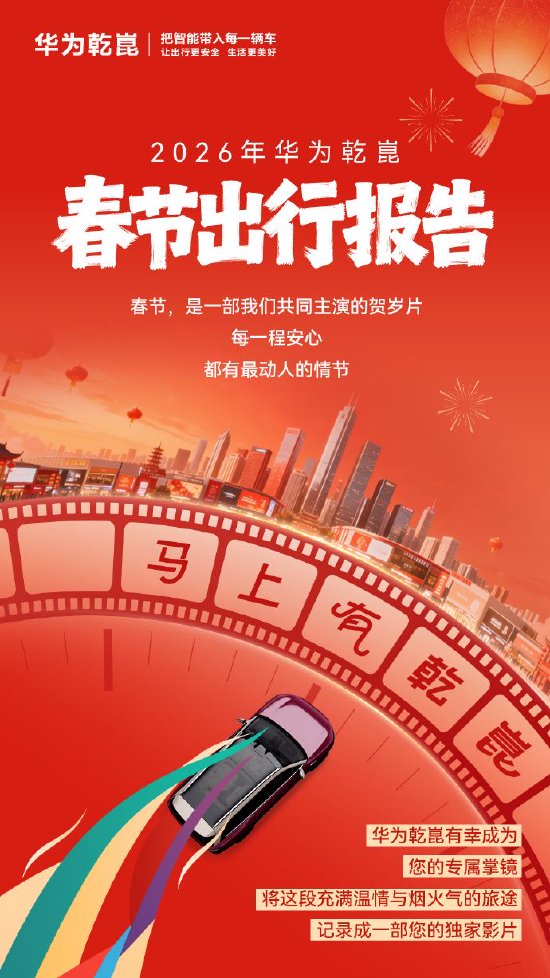
2026华为乾崑春节出行报告:辅助驾驶里程4.7亿公里,单日最长达2266公里
Xin Lang Cai Jing· 2026-02-25 05:54
Core Insights - Huawei QianKun's intelligent driving assistance recorded over 470 million kilometers during the Spring Festival, equivalent to approximately 190,000 round trips between Beijing and Shanghai, marking a 235% increase compared to last year [1][3][13] - The average driving assistance mileage per user was 382 kilometers, with an average usage time of 5.1 hours, and the longest single-day assistance recorded was 2,266 kilometers [1][3][13] - Active users exceeded 1.23 million, representing a 180% year-on-year growth, with 91% of intelligent driving vehicle owners utilizing the assistance during the holiday [1][3][13] Driving Safety and Features - The system actively avoided potential collisions over 100,000 times and activated the anti-skid feature 170,000 times, ensuring safety during adverse weather conditions [5][17] - Fatigue and distraction monitoring was triggered 87.69 million times, providing timely alerts to enhance driver safety [5][17] - The lighting system provided 830,000 hours of illumination, aiding visibility during nighttime travel [5][17] User Engagement and Entertainment - The smart assistant was activated 130 million times, responding to various user commands and enhancing the travel experience [7][19] - Motion sickness relief features were activated 280,000 times, contributing to passenger comfort [7][19] - Entertainment applications were used 370 million times, indicating high engagement during travel [7][19] - The digital key feature was utilized 92.86 million times, facilitating convenient access to vehicles [7][19] Parking and Navigation - Assistance with parking was used 14.05 million times, showcasing the system's capability to simplify parking challenges [10][22] - The "from parking space to parking space" feature was utilized over 2.05 million times, ensuring seamless arrivals at destinations [10][22]

鸿蒙智行回应“重庆一台尊界S800起火”
Zheng Quan Shi Bao· 2026-01-19 11:17
Core Insights - The incident involving the Hongmeng Zhixing vehicle was caused by a lighter being compressed under the rear seat, not due to vehicle malfunction [1] - The company is collaborating with customers to address the aftermath of the incident [1] Company Overview - Huawei has established a brand matrix in the smart automotive sector under the "Jie" series, which includes five brands: Wenjie, Zhijie, Xiangjie, Zunjie, and Shangjie, developed in partnership with various automakers [1] - The brands cover a wide range of market segments, with vehicles priced from hundreds of thousands to over a million yuan, including SUVs, sedans, station wagons, and MPVs [1] Industry Position - The Hongmeng Zhixing has completed the foundational layout and initial exploration phase of its automotive business [1] - Major state-owned automakers and companies like BYD are adopting Huawei's Qiankun smart automotive solutions, indicating a growing acceptance of the Hongmeng ecosystem [1] - Industry analysts believe that Hongmeng Zhixing is poised for a phase of scale expansion in the future [1]
鸿蒙智行回应“重庆一台尊界S800起火”
证券时报· 2026-01-19 10:50
Core Viewpoint - The incident involving the Hongmeng Zhixing vehicle was determined to be caused by a lighter being compressed under the rear seat, not due to vehicle malfunction, indicating a focus on safety and customer support in the automotive sector [1]. Group 1: Incident Details - On January 14, a Hongmeng Zhixing vehicle experienced smoke and flames from the rear armrest, which was quickly extinguished by on-site personnel [1]. - The local fire department confirmed that the cause was a lighter under the rear seat, emphasizing that it was not a vehicle-related issue [1]. Group 2: Company Overview - Huawei has established a brand matrix in the smart automotive sector, including five brands under the "Jie" series, collaborating with various automakers such as Seres, Chery, BAIC, Jianghuai, and SAIC [1]. - The brands cover a wide range of market segments, with models priced from tens of thousands to over a million yuan, including SUVs, sedans, station wagons, and MPVs [1]. Group 3: Future Prospects - The automotive business structure of Hongmeng Zhixing has completed its foundational layout and initial exploration phase, with expectations for future scale expansion [1]. - Major state-owned automakers and BYD are increasingly adopting Huawei's intelligent automotive solutions, indicating a growing ecosystem around the Hongmeng platform [1].

每天车闻:传长安汽车取消年终奖,官方回应,长城汽车全新平台“归元”
Xin Lang Cai Jing· 2026-01-07 10:07
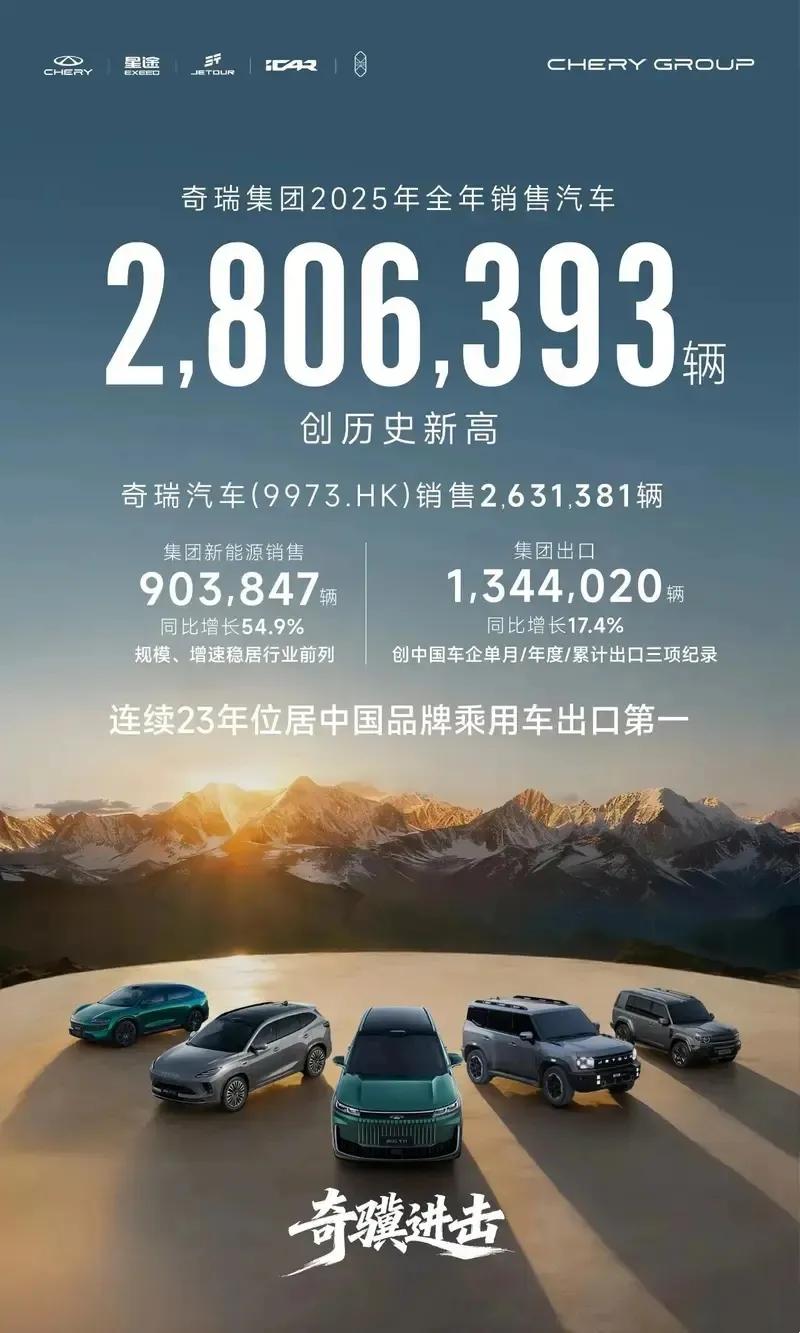
Group 1 - Chery Group has set a sales target of 3.2 million vehicles for 2026, representing a 14.03% increase compared to 2025. Chery Automobile Co., Ltd. aims for 3 million units, a year-on-year growth of 14.01% [3][14] - Great Wall Motors has unveiled a new platform named "Guiyuan," which received 22,000 votes from 96,000 participants. The platform focuses on user needs and aims to simplify vehicle offerings while enhancing value [5][15] - Huawei's QianKun partnership is projected to achieve over 900,000 units in total sales by 2025, continuing its commitment to integrate intelligence into every vehicle. The sales data includes brands such as Avita, Lantu, and others [7][18] Group 2 - Employees of Changan Automobile have expressed dissatisfaction on social media regarding the cancellation of traditional year-end bonuses due to unmet sales and profit targets. An incentive plan is expected in February, but details are currently unavailable [9][20]


华为乾崑启境的商业模式,给中国汽车发展带来了哪些启发?
第一财经· 2025-12-31 12:24

Core Viewpoint - The automotive industry in China is transitioning into the second half of the intelligentization phase, with significant advancements in smart driving technologies and a shift in consumer expectations towards intelligent features in vehicles [1][6]. Group 1: Industry Trends - In November 2025, the penetration rate of new energy vehicles in China reached 59.3%, indicating that nearly 6 out of every 10 new cars sold are electric [1]. - The penetration rate of intelligent driving passenger cars has exceeded 68%, marking a transition from quantity growth to quality breakthroughs in the industry [1]. - Consumers are increasingly prioritizing features such as smart cockpits and advanced driver assistance systems in their purchasing decisions, necessitating collaboration between automakers and leading tech companies [1][2]. Group 2: Innovative Business Models - Huawei's QianKun "First Realm" represents a new collaborative model in the intelligent automotive sector, integrating technology, teams, processes, and concepts to enhance product value [2][4]. - The "First Realm" model emphasizes a comprehensive approach to manufacturing and intelligence, moving away from isolated competition to a more collaborative framework [4][11]. - The new business model proposed by QianKun allows for a shorter return on investment cycle compared to traditional automotive investments, which typically require over 10 years and more than 30 billion yuan [11]. Group 3: Product Development and Market Positioning - The first model from QianKun, positioned as a "Chinese-style shooting brake," is expected to elevate expectations for high-end quality in new energy vehicles [4][19]. - The vehicle will feature a million-level design, control, and intelligence, aiming to provide a luxury experience comparable to high-end imported vehicles [15][16]. - QianKun's collaboration with top suppliers aims to integrate high-end configurations into their vehicles, setting a new standard for luxury electric vehicles [16][19]. Group 4: Market Strategy and Consumer Engagement - QianKun is attracting traditional luxury brand dealers to join its network, indicating strong confidence in the new luxury segment of Chinese brands [19]. - The company is shifting from a "recruitment" model to a "co-construction" model, enhancing its service philosophy to provide a high-end customer experience [20]. - By focusing on a comprehensive service experience, QianKun aims to build consumer loyalty and differentiate itself in a competitive market [19][20]. Group 5: Future Outlook - With the commencement of nationwide road testing and partnerships with leading suppliers, QianKun is poised to redefine the standards for high-end brands in the new energy vehicle market [21]. - The ongoing increase in new energy vehicle penetration in China positions QianKun as a key player in the next wave of transformation in the automotive industry, showcasing the potential for integrated software and hardware solutions [21].

华为乾崑启境的商业模式,给中国汽车发展带来了哪些启发?
Di Yi Cai Jing· 2025-12-31 11:39
Group 1 - The core theme of the automotive industry in 2025 is "intelligentization," marking a shift towards advanced driving technologies and smart features in electric vehicles [1] - In November 2025, the penetration rate of new energy vehicles in China reached 59.3%, indicating a significant market trend towards electric vehicles [1] - The current penetration rate of intelligent driving passenger cars in China has exceeded 68%, reflecting a transition from quantity growth to quality breakthroughs in the industry [1] Group 2 - Huawei's QianKun "First Realm" represents a new collaborative model in the smart automotive sector, integrating technology, teams, processes, and concepts [2] - The innovative business model of QianKun emphasizes a comprehensive approach, combining large-scale manufacturing with advanced intelligence to create a competitive edge [4] - The upcoming launch of QianKun's new vehicle is anticipated to elevate expectations for high-end quality in new energy vehicles [4] Group 3 - The smart driving policy is gradually being relaxed, which is expected to drive further growth in related enterprises [5] - Huawei QianKun is set to have a significant product year in 2026, leveraging its strong technological capabilities and resources [5][6] - QianKun's investment in R&D exceeds 10 billion yuan annually, establishing a technological moat in the industry [6] Group 4 - QianKun's approach includes transforming traditional process management to enhance collaboration and efficiency across companies [9] - The collaboration between Huawei and QianKun aims to create a seamless execution chain, improving decision-making and project advancement [9] - The integration of consumer electronics expertise into the automotive sector is expected to enhance the marketing and operational efficiency of QianKun [9] Group 5 - QianKun's new business model offers a faster return on investment compared to traditional automotive enterprises, which typically require over 300 billion yuan and a decade to see returns [11] - The model emphasizes resource efficiency and collaboration, reducing development and operational costs [11] - QianKun's innovative practices are prompting a reevaluation of development paths in the automotive industry, focusing on high-quality growth [11] Group 6 - QianKun has commenced nationwide road testing, marking a critical phase in validating its product capabilities [12] - The first model is designed as a high-performance vehicle, showcasing advanced design and operational features [13][14] - The vehicle will include Huawei's L3-level architecture and a suite of smart technologies, aiming to deliver a luxury experience comparable to high-end vehicles [14][15] Group 7 - QianKun's partnerships with top suppliers aim to provide high-end configurations and create a quality standard for electric vehicles [15] - The engagement of experienced dealers from luxury brands indicates confidence in QianKun's model and its potential in the high-end market [18] - The shift towards a partner-based service system reflects a commitment to enhancing customer experience and loyalty [19] Group 8 - QianKun is positioned to lead the next transformation in the new energy vehicle sector, showcasing the integration of software and hardware [20] - The company aims to contribute to China's automotive industry goals by promoting advanced manufacturing paradigms and management practices [20]
华为乾崑赋能奕境工装样车下线:全尺寸SUV的家庭出行新答卷
Feng Huang Wang· 2025-12-23 11:50
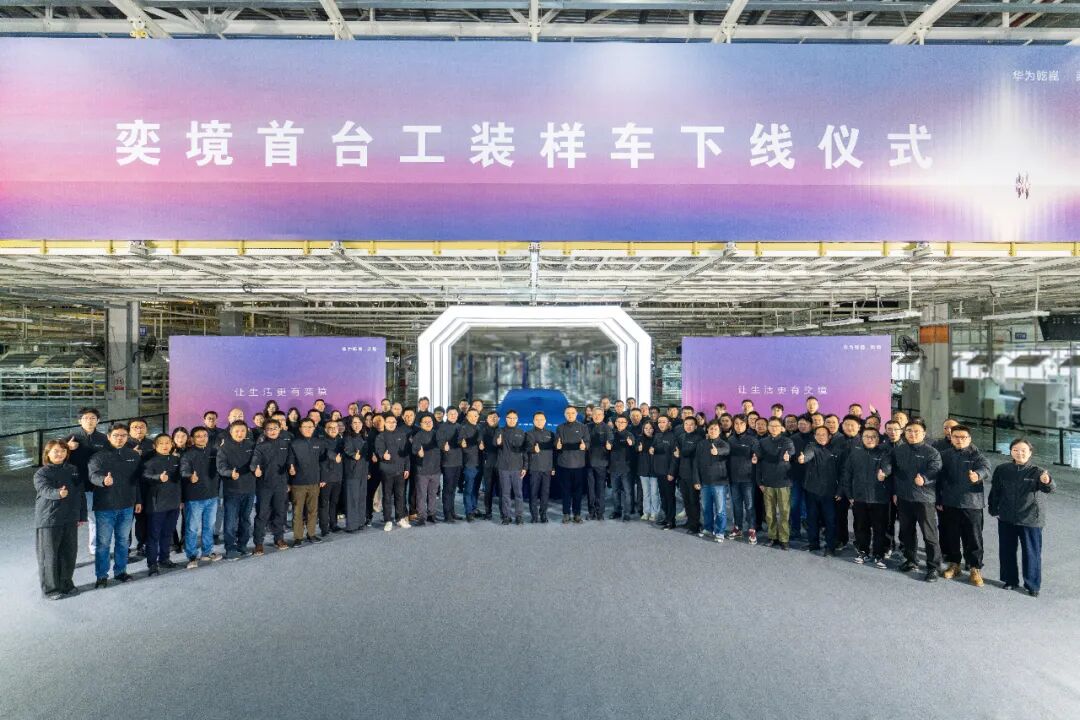
Core Insights - The first prototype of the Huawei-powered Yijing brand full-size SUV has officially rolled off the production line, marking a significant milestone in the vehicle's development and preparation for mass production [3][5] - The Yijing brand aims to redefine family travel by addressing the specific needs of Chinese families through innovative design and user participation [5][15] Group 1: Prototype Development - The prototype's launch signifies a critical transition from design to real-world testing, essential for validating the vehicle's performance under various conditions [6] - The development process includes five main stages: market research, concept design, engineering design, prototype testing, and mass production, with the prototype being a key step in this journey [6] - The rapid timeline from brand announcement to prototype completion, just one month, showcases the efficiency and maturity of the project [6] Group 2: User Co-Creation - The Yijing brand incorporates a unique user co-creation mechanism, allowing ordinary people to participate in the design process, which shifts the traditional model of "companies create, users buy" [7][9] - Users have contributed to hundreds of design optimizations, demonstrating a commitment to addressing real consumer needs [7] - Potential users are invited to act as "co-creation officers," ensuring that their feedback directly influences the development process [9] Group 3: Strategic Collaboration - The Yijing brand benefits from deep collaboration between a state-owned automotive enterprise and Huawei, leveraging advanced technology and manufacturing expertise [10][12] - Huawei provides comprehensive support, including cutting-edge intelligent automotive solutions and stringent quality standards, enhancing the brand's technological edge [10] - The automotive enterprise contributes decades of manufacturing experience, establishing a solid foundation for the Yijing brand's production capabilities [12] Group 4: Intelligent Technology - Huawei's intelligent automotive solutions are pivotal in transforming user needs into high-quality travel experiences, emphasizing safety and convenience [13][14] - As of November 2025, Huawei's intelligent driving system has accumulated 6.38 billion kilometers of assisted driving, significantly enhancing safety for family users [14] - The design of the Harmony cockpit aligns with family scenarios, facilitating seamless interaction for all passengers [14] Group 5: Market Positioning - The Yijing SUV is designed to cater to various family needs, from small families to multi-generational households, reflecting a comprehensive understanding of consumer requirements [15] - The brand's mission is to enhance family life through technology and user collaboration, aiming to exceed user expectations [15] - The official unveiling of the first model is scheduled for April 2026 at the Beijing Auto Show, where it will showcase its technological capabilities and commitment to understanding family travel needs [15]
奕境登顶华为乾崑最强境,东风与华为百亿投入重构高端家庭出行生态
21世纪经济报道· 2025-11-27 02:34
Core Viewpoint - The collaboration between Dongfeng and Huawei has led to the launch of the new electric vehicle brand "Yijing," which aims to redefine family-oriented smart mobility in the competitive EV market, leveraging both companies' strengths and insights into user needs [3][5][17]. Group 1: New Brand Launch and Market Positioning - The Yijing brand was launched at a招商大会 (investment promotion conference) attended by hundreds of top dealers from across the country, indicating strong interest and commitment from the market [1][3]. - Yijing is positioned as a high-end family-oriented electric vehicle, focusing on "smart mobility for all family scenarios," which reflects a shift in consumer demand from mere functionality to comprehensive value experiences [10][13]. Group 2: Innovative Collaboration Model - The partnership between Dongfeng and Huawei is characterized by a new collaborative model that integrates resources, teams, and processes, marking a significant upgrade in the automotive industry collaboration paradigm [4][8]. - This model is built on over a decade of cooperation, identifying a fundamental shift in user needs towards safety, intelligence, and personalized experiences in family mobility [5][7]. Group 3: Technological and Market Advantages - Yijing leverages Huawei's advanced technology and Dongfeng's deep understanding of over 60 million family users, creating a unique competitive edge in the high-end family EV market [7][13]. - The brand emphasizes safety and smart features, including the latest Huawei technology for active safety and a comprehensive digital experience, aiming to create a "mobile castle" for families [10][11]. Group 4: Long-term Business Model - Yijing's business model is based on long-termism, focusing on channel innovation and partner collaboration to ensure high-value returns for investors [14][17]. - The brand's strategy includes a top-level design for channel development and a commitment to shared growth with partners, which has garnered broad recognition from dealers [15][17]. Group 5: Future Outlook - With the first model set to launch in 2026, Yijing is positioned to become a benchmark in the high-end family EV market, driven by its differentiated positioning and the combined strengths of Dongfeng and Huawei [17].

粤企引领汽车工业跨界变革
2 1 Shi Ji Jing Ji Bao Dao· 2025-11-23 11:19
Core Insights - The 23rd Guangzhou International Auto Show showcases a strong presence of local automotive companies and technology firms, highlighting the integration of traditional automotive manufacturing with advanced technology solutions [1][2] - The event emphasizes the trend of cross-industry collaboration, with companies like Huawei providing smart automotive solutions, indicating a shift towards a more integrated automotive ecosystem [2] Group 1: Local Automotive Companies - GAC Group occupies an entire exhibition hall, showcasing brands such as GAC Toyota, GAC Honda, GAC Trumpchi, Aion, and Haobo, and highlights the achievements of its "Panyu Action" reform initiative [1] - BYD continues to dominate the A Zone 2.1 hall, presenting its own brand along with sub-brands like Yangwang, Fangchengbao, and Tengshi [1] Group 2: Technology Integration - Huawei, despite its stance of "not manufacturing cars," has a significant presence at the auto show, promoting its HarmonyOS and smart automotive solutions, which are being adopted by various manufacturers [2] - The event features innovative products such as Xiaopeng's newly launched X9 super-range extender vehicle, humanoid robots, and flying cars, showcasing the company's commitment to expanding its technological offerings [2] Group 3: Industry Trends - The automotive industry is experiencing rapid integration and extension, driven by Guangdong's robust industrial system, extensive supply chain, and strong R&D capabilities [2] - The Guangzhou Auto Show has evolved into a platform not just for automobiles but also for showcasing cross-industry collaborations and technological advancements [2]


