华为乾崑智驾ADS系统

Search documents
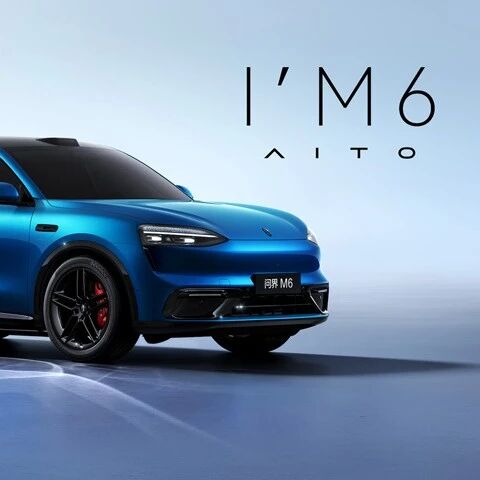
标新立异,问界M6乘胜追击
36氪· 2026-03-26 13:46
Core Viewpoint - The launch of the AITO M6 redefines the benchmark for high-end SUVs in the 250,000 to 300,000 yuan segment, targeting young consumers with a comprehensive offering of features and technology [2][4][6]. Market Context - The 250,000 yuan SUV market is highly competitive and is projected to grow by 18.7% year-on-year in 2024, capturing 32.5% of the overall SUV market share [9]. - Prior to the M6, the company lacked a strong product in the 250,000 to 300,000 yuan segment, which is crucial for volume sales [10]. Product Features - The AITO M6 offers a range of configurations, including pure electric and extended range versions, with prices starting at 269,800 yuan for the extended range model and 289,800 yuan for the pure electric model [4]. - The vehicle boasts a length of nearly 5 meters and a wheelbase of 2,950 mm, providing ample interior space and comfort for passengers [5][24]. - All models come equipped with high-end features such as panoramic sunroofs, Nappa leather seats, and the HarmonyOS vehicle system as standard [4][5]. Target Audience - The M6 is specifically designed for young families, addressing their need for spaciousness, convenience, and advanced technology [15][22]. - Young consumers prioritize smart cockpit experiences, unique design, and transparent ownership costs, with 87.3% focusing on smart features [22]. Competitive Landscape - The M6 faces competition from models like the Li Auto L6, Tesla Model Y, and Xiaomi Yu7, which are also targeting the same demographic [23]. Safety and Technology - The M6 incorporates advanced safety features, including a comprehensive sensor suite with 896-line dual-path laser radar, enhancing its perception capabilities [31][32]. - The vehicle's design emphasizes safety without compromising on style, featuring a "creative co-pilot" design that allows for personal expression while ensuring passenger safety [27][28]. Sales and Distribution - The company has established a robust distribution network with 1,835 sales outlets and plans to expand to over 2,459 by the end of the year, enhancing its market presence [13]. - The M6 received 60,000 pre-orders within 24 hours of its launch, indicating strong market demand [3][10]. Future Outlook - The introduction of the M6 is expected to strengthen the company's position in the luxury SUV market and enhance consumer awareness regarding safety and quality standards [34][45]. - The company aims to leverage the M6 to further enrich its product matrix and explore new market segments [44].

【快讯】每日快讯(2026年3月2日)
乘联分会· 2026-03-02 08:37
Domestic News - The Ministry of Transport is advancing the "Mobile+" card-free convenient highway passage service, emphasizing a pilot-first approach to enhance highway efficiency and optimize travel experiences [5] - Xiaomi Auto has opened 6 new stores in February, bringing the total to 488 across 141 cities, with plans for 2 more stores in March [6] - Geely's "Qianli Haohan" advanced driver assistance system is set to launch internationally this year, becoming the first high-level assistance system from China to be applied on a large scale overseas [7] - Ledo Auto reported that during the 2026 Spring Festival, users drove a total of 132 million kilometers, with over 251,970 battery swaps, saving more than 3 million yuan in service fees [8] - The Tengshi brand has officially entered the Philippine market, launching the Tengshi D9 as its first model [9] - The total orders for the Zhiji L4 Robotaxi have surpassed 420,000, with over 8 million kilometers driven [10] - Didi Autonomous Driving has established the "Deep Sky Voyager Laboratory" to focus on cutting-edge research in multi-modal models and reinforcement learning [11] - Huawei's HarmonyOS driving report indicated that over 90% of users preferred using the assistance driving feature during the Spring Festival, with the system preventing potential collisions 81,000 times [12] International News - Malaysia is projected to surpass Indonesia in automotive sales in 2025, becoming the largest automotive market in Southeast Asia, with new car registrations expected to reach approximately 780,000, a 12% increase year-on-year [14] - Mitsubishi confirmed plans to launch a hybrid vehicle in Indonesia in the second half of 2026, with local production expected [15][16] - Tesla will officially sell its vehicles in Morocco starting mid-2026, marking its first official presence in Africa [17] - VinFast has signed a memorandum of understanding with PlusX Electric to enhance electric vehicle charging infrastructure in the UAE [18][19] Commercial Vehicles - The Chao Long Yiwei 5 new energy heavy truck has been officially launched nationwide [20] - Supao Technology and Chuangcheng Leasing have entered a strategic cooperation to promote the large-scale application of new energy heavy trucks [21] - Jinlong's national standard information security T-BOX has passed three mandatory national certifications, marking a significant advancement in the localization of core components for intelligent connected vehicles [22] - Shaoyang, Hunan, has issued guidelines for the pilot application of unmanned delivery vehicles, aiming to ensure safety and promote industry efficiency [23]





L3级自动驾驶上路,我们离「放手」开车还有多远?
3 6 Ke· 2025-12-30 10:26
Core Insights - The transition from L2 to L3 autonomous driving is not merely a technical upgrade but involves comprehensive challenges related to legal responsibilities, costs, and user trust [1][6][11] Group 1: Policy and Regulation - The Ministry of Industry and Information Technology (MIIT) has approved the first two L3 autonomous driving models in China: Changan Deep Blue SL03 and BAIC Blue Valley Arcfox Alpha S Pioneer Edition, set to be tested under specific conditions by the end of 2025 [2][3] - The L3 level allows for conditional automation where the driver can fully disengage from driving tasks, but responsibility for accidents may be shared between the system and the driver [2][3] - New regulations, such as the Beijing Autonomous Driving Vehicle Regulations, have established accident liability rules, requiring manufacturers to bear product liability and maintain insurance of at least 5 million yuan [3] Group 2: Technical Challenges - Transitioning from L2 to L3 involves a significant shift in responsibility, technology architecture, and business logic, necessitating redundant systems to ensure safety [6][7] - The cost of implementing redundancy in systems, such as steering, can increase significantly, with estimates suggesting costs could rise from 1,500-2,000 yuan to 4,000-6,000 yuan per unit [6][7] - The choice between in-house development and third-party suppliers complicates the responsibility chain in the event of an accident, requiring clearer regulations [7] Group 3: User Experience and Trust - Users have reported issues such as "phantom braking" and hesitation during lane changes, highlighting a gap between marketing promises and actual user experiences [5][8] - Many users express a lack of trust in autonomous systems, often feeling uncertain about when to intervene, which can lead to negative experiences and a reluctance to use the technology [8][11] - Education on the capabilities and limitations of autonomous driving systems is lacking, with few manufacturers incorporating training into the sales process [9][10] Group 4: Recommendations for Improvement - Companies must take responsibility for educating users about autonomous driving, while regulatory bodies should promote clear and understandable guidelines [11] - Enhancing human-vehicle interaction through transparent communication of system intentions can help build trust and improve user experiences [11] - The successful integration of L3 autonomous driving into everyday life requires a collective effort from the industry, regulators, and consumers to foster understanding and trust [11]


出行观|L3级自动驾驶将进入生活,但行业仍需“谨慎乐观”
Guan Cha Zhe Wang· 2025-12-18 23:49
Core Viewpoint - The approval of L3-level conditional autonomous driving vehicles marks a significant milestone in China's autonomous driving technology, transitioning from testing to mass production [2][3] Group 1: Product Approval - The Ministry of Industry and Information Technology approved two models with L3-level conditional autonomous driving capabilities: Changan Automobile's Deep Blue SL03 and BAIC Group's Arcfox Alpha S6 [2] - The Deep Blue SL03 features Changan's self-developed "Tianshu Intelligent" system, while the Arcfox Alpha S6 is equipped with Huawei's QianKun Intelligent Driving ADS system [2] - This approval indicates that L3-level autonomous driving technology is moving from "test tracks" to "mass production" [2] Group 2: Conditional Nature of L3 - L3 is classified as "conditional autonomous driving," meaning the vehicle can perform all driving tasks under specific conditions, but the driver must be ready to take control when requested [4] - The operational limits for these L3 vehicles include specific urban areas, road types, speed limits, and scenarios, as outlined in the Ministry's announcement [4][5] - For instance, the Deep Blue SL03 can operate in congested traffic on highways and urban expressways at a maximum speed of 50 km/h, while the Arcfox Alpha S6 can do so at up to 80 km/h [4] Group 3: Regulatory and Management Framework - The approval of L3 products necessitates the establishment of a management and regulatory framework to address issues such as traffic responsibility, insurance, and policy integration [6] - The process of validating and refining standards, regulations, and policies will be crucial as L3 vehicles are introduced on the roads [6] - This approval is seen as a "constrained advancement," acknowledging technological progress while setting clear operational boundaries for future advancements in autonomous driving [6] Group 4: Future Outlook - A cautious optimism is suggested regarding the impact of L3 product approval on transportation and industry dynamics, emphasizing the importance of not overestimating its current capabilities [7] - The future of autonomous driving in China will depend on both technological capabilities and the patience to progress step by step [7]
自动驾驶“关键一跃”落地,谁将率先跑通商业化?
3 6 Ke· 2025-12-17 04:18
Core Insights - The approval of L3 conditional autonomous driving by the Ministry of Industry and Information Technology marks a significant step towards commercialization, bridging the gap between L2 and L4 levels of driving technology [1][2] - The first two approved models, Changan Deep Blue SL03 and BAIC Arcfox Alpha S (L3 version), will conduct trials in designated areas, indicating a shift from testing to real-world application [1][5] Group 1: Industry Context - The automotive industry has been characterized by a "two extremes" scenario, with companies competing in L2 level assistance and others pursuing L4 level fully autonomous driving [1][2] - L3 conditional autonomous driving is seen as a crucial transitional phase, allowing for a gradual shift from testing personnel to real users, thus accumulating practical experience for a replicable autonomous driving operation system [1][2] Group 2: Technical Developments - The approved vehicles utilize different technological approaches: BAIC's Arcfox Alpha S employs a comprehensive safety architecture with 34 high-performance sensors and a 400 TOPS computing platform, while Changan's SL03 focuses on traffic congestion navigation with a speed limit of 50 km/h [3][4] - Both vehicles are currently limited to specific routes and speeds, with the aim of refining technology and regulatory frameworks through pilot testing [4][5] Group 3: Market Implications - The approval is expected to stimulate the development of new business models, including new mobility and insurance services, contributing to a safer and more efficient industry ecosystem [2][4] - The market response was immediate, with stock prices of related companies rising significantly following the announcement [1] Group 4: Future Outlook - Industry experts express cautious optimism regarding the large-scale commercialization of L3 technology by 2026, with L2 becoming a standard feature in vehicles [6][7] - The transition from L2 to L3 involves significant challenges, particularly in urban environments, and requires clear delineation of legal responsibilities [6][7] - The recent approval is seen as a catalyst for the next phase of competition in the autonomous driving sector, focusing on safety validation, data governance, and user trust [7]
北汽明年一季度启动L3试点,极狐搭载华为智驾系统
Xin Lang Ke Ji· 2025-12-16 02:23
Core Viewpoint - Beijing Automotive Group plans to initiate L3 autonomous driving trials in specific scenarios in Q1 2026, featuring the Arcfox Alpha S model equipped with advanced sensor technology [1] Group 1: Company Plans - The company aims to launch L3 operations with the Arcfox Alpha S (L3 Ministry of Industry and Information Technology version) in early 2026 [1] - The vehicle will be equipped with 34 high-performance sensors, including three LiDAR units [1] Group 2: Technology Overview - Beijing Automotive's intelligent driving technology system includes three versions: Pro, Max, and Ultra [1] - The Max version utilizes computing power between 400-600T and is based on world models and VLA technology, allowing for conditional L3 autonomous driving [1] - The Ultra version employs over 1000T of computing power, targeting L4 level for unmanned taxi services [1]