华为巨鲸电池平台

Search documents
高端汽车市场的价值变革
Xin Hua Wang· 2025-12-31 17:16
Group 1: Core Trends in the Automotive Industry - The global automotive industry is undergoing rapid restructuring driven by electrification and intelligence, with China's smart connected new energy vehicles expected to exceed a penetration rate of 50% by November 2025 [1] - The market share of traditional luxury brands is under pressure as Chinese brands achieve historic breakthroughs in the high-end automotive segment through technological advancements and ecosystem collaboration [1] Group 2: Technological Advancements - The competition in high-end automotive technology has shifted from single-function comparisons to systemic innovations, with Chinese brands making significant breakthroughs in battery safety and intelligent driving [2] - Notable advancements include GAC Group's solid-state battery with an energy density exceeding 400Wh/kg and the mass production of L3-level autonomous driving vehicles by companies like BAIC and Changan [2] Group 3: Industry Collaboration - The competition in the high-end automotive market has expanded to encompass comprehensive capabilities across the entire industry chain, with Chinese brands leveraging technological standards, supply chain collaboration, and global strategies [3] - The Chinese government's policies, such as the "New Energy Vehicle Industry Development Plan (2021-2035)," have significantly enhanced the competitiveness of the domestic market [5] Group 4: Consumer Behavior Changes - The high-end automotive market is witnessing a shift in consumer perception from "brand premium" to "value matching," with Chinese brands gaining an 18 percentage point increase in market share in the 700,000 RMB and above segment [7] - The decision-making factors for consumers have evolved, emphasizing technological advancement, scenario adaptability, and ecosystem integrity over brand history [7] Group 5: Future Market Dynamics - The competition in the Chinese high-end automotive market is now a three-dimensional contest focusing on "technical depth, industrial breadth, and consumer warmth," necessitating traditional luxury brands to accelerate their electrification and intelligence transformation [8] - The sustainability of technological innovation, supply chain resilience, and user ecosystem inclusivity will be key variables defining the market landscape moving forward [8]

一场直播,看见鸿蒙智行「在一起」的力量
3 6 Ke· 2025-12-11 13:48
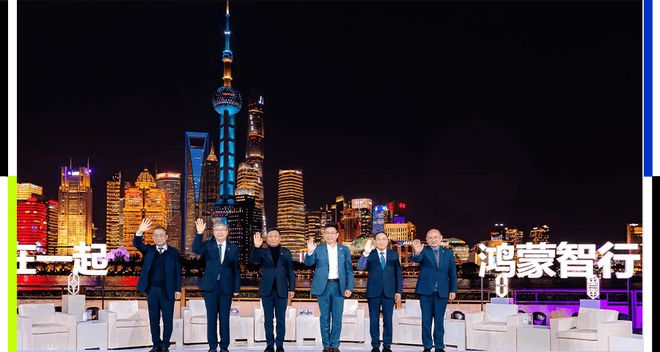
Core Insights - The article highlights the emergence of a new collaborative model in the Chinese automotive industry, driven by the partnership between Huawei and five major car manufacturers, leading to the launch of the "Five Realms" brands under Hongmeng Zhixing [3][5][19] - The success of Hongmeng Zhixing is attributed to its integration of Huawei's technological capabilities with the manufacturing strengths of Chinese auto brands, marking a shift from single-brand competition to a system of collaborative growth [5][19] Product Foundation - Hongmeng Zhixing focuses on calibrating smart experiences to establish high-end benchmarks, leveraging Huawei's expertise in smart technology, chips, software, and algorithms [6] - The safety capabilities of Hongmeng Zhixing are exemplified by a real user experience where a vehicle's satellite communication system enabled a driver to seek help in a remote area, showcasing the robustness of its safety system [6][10] - The battery safety of Huawei's Whale Battery platform is highlighted, with over 150 million battery cells in use and no reported safety incidents, indicating a commitment to exceeding safety standards [6][7] - The advanced driver assistance system (ADAS) developed by Huawei emphasizes real-world understanding and has helped users avoid millions of potential collisions since 2023 [10] Terminal Synergy - The terminal experience is crucial for users, with Hongmeng Zhixing integrating Huawei's consumer technology expertise into the automotive sector, allowing for hands-on experiences with features like assisted driving during the sales process [13][14] - The unified after-sales service system enhances customer experience, offering benefits such as substitute vehicles during maintenance and 24-hour roadside assistance, which traditional automakers struggle to implement [14][15] - The effective terminal strategy has attracted numerous dealers, as they recognize the scientific and efficient operations akin to internet companies, leading to a significant shift in dealership dynamics [15] Systemic Transformation - The article emphasizes that the automotive industry is transitioning from single-point breakthroughs to systemic competition, where technology, products, brands, and operations are being reconfigured into a cohesive capability network [17][19] - The five brands under Hongmeng Zhixing cater to different market segments while maintaining consistent safety standards and service protocols, indicating a strategic approach to market differentiation [19][20] - The overarching theme is that the future of automotive competition will hinge on the ability to build a sustainable and evolving capability network rather than merely competing on performance, materials, and pricing [19][20]
一场直播,看见鸿蒙智行「在一起」的力量
36氪· 2025-12-11 13:37
Core Viewpoint - The article highlights the successful collaboration of Huawei's HarmonyOS Intelligent Driving and five major Chinese automotive companies, marking a shift from single-brand competition to a collaborative ecosystem in the smart vehicle industry [1][3][20]. Group 1: Product Foundation - HarmonyOS Intelligent Driving has achieved significant milestones, delivering 1 million vehicles in 43 months, with a notable 83% year-on-year increase in deliveries in November, totaling approximately 81,864 units [1]. - The brand's models, including the AITO series, have seen impressive sales, with the Wanjie brand alone delivering about 51,000 units in November [1]. - The collaboration among the five brands aims to unify technology standards, service systems, and after-sales networks, indicating a new industrial cooperation model [3][20]. Group 2: Safety and Technology - Huawei's core competencies in smart technology, chips, and algorithms are being leveraged to enhance vehicle safety, as demonstrated by a user experience where satellite communication was used for emergency assistance [6][7]. - The Huawei Whale Battery platform has over 150 million battery cells in use, with no reported safety incidents, showcasing a commitment to high safety standards [7]. - The advanced driving assistance system (ADAS) has been optimized through extensive data training, improving real-world road understanding and safety [9][10]. Group 3: User Experience and Market Strategy - The user experience is enhanced through seamless integration of technology across devices, allowing for natural interactions and continuous connectivity [10][12]. - The launch of the Xiangjie S9T model has redefined market expectations, achieving over 30,000 pre-orders in just 66 days, indicating a successful shift from niche to mainstream [12]. - The sales strategy emphasizes a user-centric approach, with a focus on transparent service processes and high-quality after-sales support, which are critical for brand loyalty [14][16]. Group 4: Industry Transformation - The article emphasizes that the future of automotive competition will focus on building sustainable capability networks rather than just performance and pricing [20][22]. - The five brands under HarmonyOS Intelligent Driving are positioned to cater to different market segments while maintaining consistent safety and service standards [20]. - This collaborative approach represents a significant shift in the Chinese automotive industry, moving towards a model that integrates technology and user experience into the core of vehicle development [22][23].

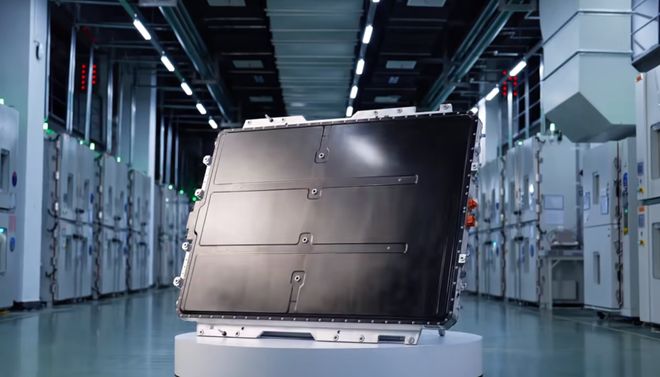
电池安全新范式:华为巨鲸电池平台如何重塑行业信任?
Jing Ji Guan Cha Bao· 2025-12-01 13:09
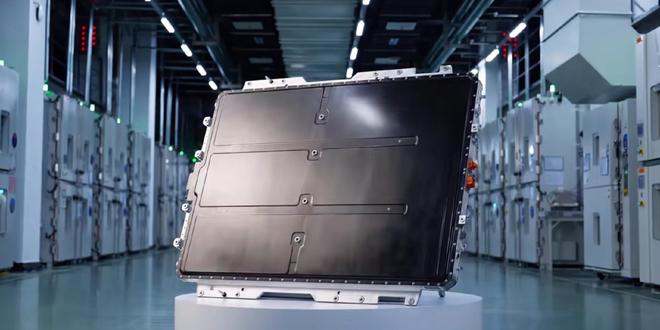
Core Viewpoint - The article emphasizes the importance of battery safety in the rapidly growing electric vehicle (EV) market, highlighting Huawei's Whale Battery Platform as a comprehensive solution to enhance user trust and safety throughout the vehicle's lifecycle [2][21]. Group 1: Battery Safety Concerns - Many EV users harbor concerns about battery safety during common scenarios such as high-speed driving or driving through water [5]. - The upcoming national standard for electric vehicle battery safety, set to be released by the Ministry of Industry and Information Technology in 2025, is expected to reshape the industry [2]. Group 2: Huawei's Whale Battery Platform - Huawei's Whale Battery Platform has undergone over 150 rigorous tests during its development, exceeding current national standards in several key areas, including static waterproofing [6]. - The platform features a comprehensive safety system that includes both active and passive protection layers, with nearly 200 smart sensing nodes for real-time monitoring of battery conditions [9][12]. Group 3: Industry Collaboration and Standards - Huawei's approach differs from the traditional supplier integration model, as it engages deeply in the entire battery development process, from material selection to system design [13][15]. - The platform aims to create a collaborative ecosystem among various automotive manufacturers, enhancing overall safety standards across the industry [16][20]. Group 4: Long-term Value and Cost Efficiency - Huawei's battery longevity technology dynamically adjusts charging speeds to slow down battery aging, ultimately reducing maintenance and replacement costs for users [12][19]. - The company prioritizes safety investments, viewing them as a fundamental value rather than a cost, which is reflected in its adherence to and anticipation of future safety standards [17][20]. Group 5: Conclusion and Industry Impact - The Whale Battery Platform represents not just a technological solution but a new industry paradigm where safety is a foundational aspect of electric vehicle design [21]. - Huawei's commitment to user safety and its proactive approach to setting higher industry standards may influence other companies to elevate their safety measures in response to market pressures [19][21].
以技术构建“防火墙”,华为巨鲸电池平台引领电池安全
Di Yi Cai Jing Zi Xun· 2025-12-01 11:20
Core Viewpoint - The article emphasizes the increasing safety concerns surrounding electric vehicle batteries, particularly in light of recent fire incidents, and highlights Huawei's proactive measures through its Whale Battery Platform to enhance battery safety standards ahead of new national regulations [1][15]. Group 1: Battery Safety Concerns - The frequency of fire incidents in electric vehicles is linked primarily to battery issues, with data indicating that 59% of fire causes are related to the vehicle itself [4]. - The upcoming mandatory national battery standards are considered the most stringent to date, with Huawei's Whale Battery Platform already meeting these standards five years in advance [8][11]. Group 2: Huawei's Technological Innovations - Huawei's Whale Battery Platform incorporates advanced safety features, including a comprehensive safety system that integrates intrinsic safety, structural safety, and cloud-based data monitoring [4][10]. - The platform utilizes high-cost insulation materials and advanced design techniques to prevent thermal runaway and enhance overall battery safety [4][10]. Group 3: Industry Leadership and Standards - Huawei aims to redefine industry standards by adopting a full-process leadership model in battery design, manufacturing, and quality control, ensuring safety at every stage [11][13]. - The company leverages its experience from the consumer electronics sector to implement rigorous quality controls and safety measures in battery production [13][14]. Group 4: User Safety and Experience - The Whale Battery Platform features a dual protection system that includes real-time monitoring and risk assessment, ensuring user safety during emergencies [7][10]. - Huawei's commitment to user experience is reflected in its focus on high-quality standards and innovative technology, which aims to enhance the overall safety of electric vehicles [14][15].
电池安全新范式:华为巨鲸电池平台如何重塑行业信任?
经济观察报· 2025-12-01 11:08
Core Viewpoint - The article emphasizes that battery safety in electric vehicles (EVs) is a critical concern, and Huawei's Whale Battery Platform aims to provide comprehensive safety solutions throughout the vehicle's lifecycle, moving beyond traditional single-point safety measures [2][6][27]. Group 1: Battery Safety Challenges - Battery safety remains a significant concern for EV users, with everyday scenarios like high temperatures and water exposure posing risks [5][2]. - The upcoming 2025 national standards for electric vehicle battery safety are expected to reshape the industry, focusing on technology and user trust [2][27]. Group 2: Huawei's Whale Battery Platform - Huawei's Whale Battery Platform incorporates a multi-dimensional safety system, integrating battery cell materials, vehicle structure, and cloud intelligence [6][19]. - The platform has undergone over 150 rigorous tests, exceeding current national standards in several areas, such as waterproofing [5][9]. Group 3: Proactive and Reactive Safety Measures - The platform features a cloud-based monitoring system with nearly 200 smart sensing nodes to track battery conditions in real-time, significantly reducing false alarms [8][9]. - Huawei's design includes a fifteen-layer protective structure to mitigate risks from short circuits, punctures, and thermal events [9][11]. Group 4: Longevity and Cost Efficiency - The Whale Battery Platform employs intelligent charging strategies to slow battery aging, ultimately reducing maintenance and replacement costs for users [12][24]. - The platform's design ensures that safety does not compromise battery performance, allowing for rapid charging without sacrificing reliability [11][22]. Group 5: Industry Collaboration and Standards - Huawei's approach differs from traditional supplier integration models by deeply involving itself in the entire battery development process, enhancing safety and manufacturing standards across the supply chain [16][18]. - The platform aims to create a collaborative ecosystem where safety standards are elevated across the industry, similar to the Android ecosystem in smartphones [19][20]. Group 6: Safety as a Value Proposition - Huawei views safety as a fundamental value rather than a cost, investing significantly in safety features that exceed industry standards [22][25]. - The company’s commitment to safety is reflected in its proactive measures to meet future regulations ahead of time, demonstrating a long-term responsibility to users [24][26].

以技术构建“防火墙”,华为巨鲸电池平台引领电池安全
第一财经· 2025-12-01 02:07
Core Viewpoint - The article emphasizes the importance of battery safety in the context of increasing penetration of electric vehicles (EVs) and the associated fire incidents, highlighting Huawei's proactive approach in developing the Whale Battery Platform to meet stringent safety standards ahead of the new national regulations [1][20]. Group 1: Battery Safety Challenges - The frequency of fire incidents in electric vehicles is primarily linked to battery thermal runaway, with data indicating that 59% of fire causes are related to the vehicle itself, while collision and external factors account for 25% and 16% respectively [5]. - Concerns regarding battery lifespan, reduced range, and extreme environmental protection contribute to consumer anxiety about electric vehicle usage [5]. Group 2: Huawei's Whale Battery Platform - Huawei's Whale Battery Platform addresses battery safety through a comprehensive safety technology system that includes intrinsic safety, structural safety, and cloud-based big data early warning systems, aiming to prevent incidents before they occur [6][10]. - The platform incorporates advanced materials and designs, such as high-cost aerogel and mica insulation materials, to enhance thermal resistance and prevent heat spread [6][12]. - Huawei's proactive safety measures include a 24/7 intelligent monitoring system that provides dual protection through real-time AI diagnostics and emergency response capabilities [9][10]. Group 3: Industry Leadership and Standards - Huawei's approach to battery safety transcends traditional supplier integration models by taking a full-process leadership role in battery definition, design, and manufacturing, ensuring safety redundancy at every stage [14]. - The Whale Battery Platform has been designed to exceed industry standards, having already met the upcoming stringent national battery standards (GB38031-2025) five years ahead of schedule [10][16]. - Huawei's experience in consumer electronics is leveraged to establish rigorous quality control and safety standards, ensuring a zero-defect lifecycle for batteries [16][18]. Group 4: Future Directions - The article concludes that Huawei's Whale Battery Platform aims to transform battery safety from passive defense to active protection, setting a benchmark for the industry and committing to user safety [20]. - The collaboration between the HarmonyOS ecosystem and Huawei is expected to drive continuous innovation in battery technology, enhancing safety and reliability in the electric vehicle sector [20].
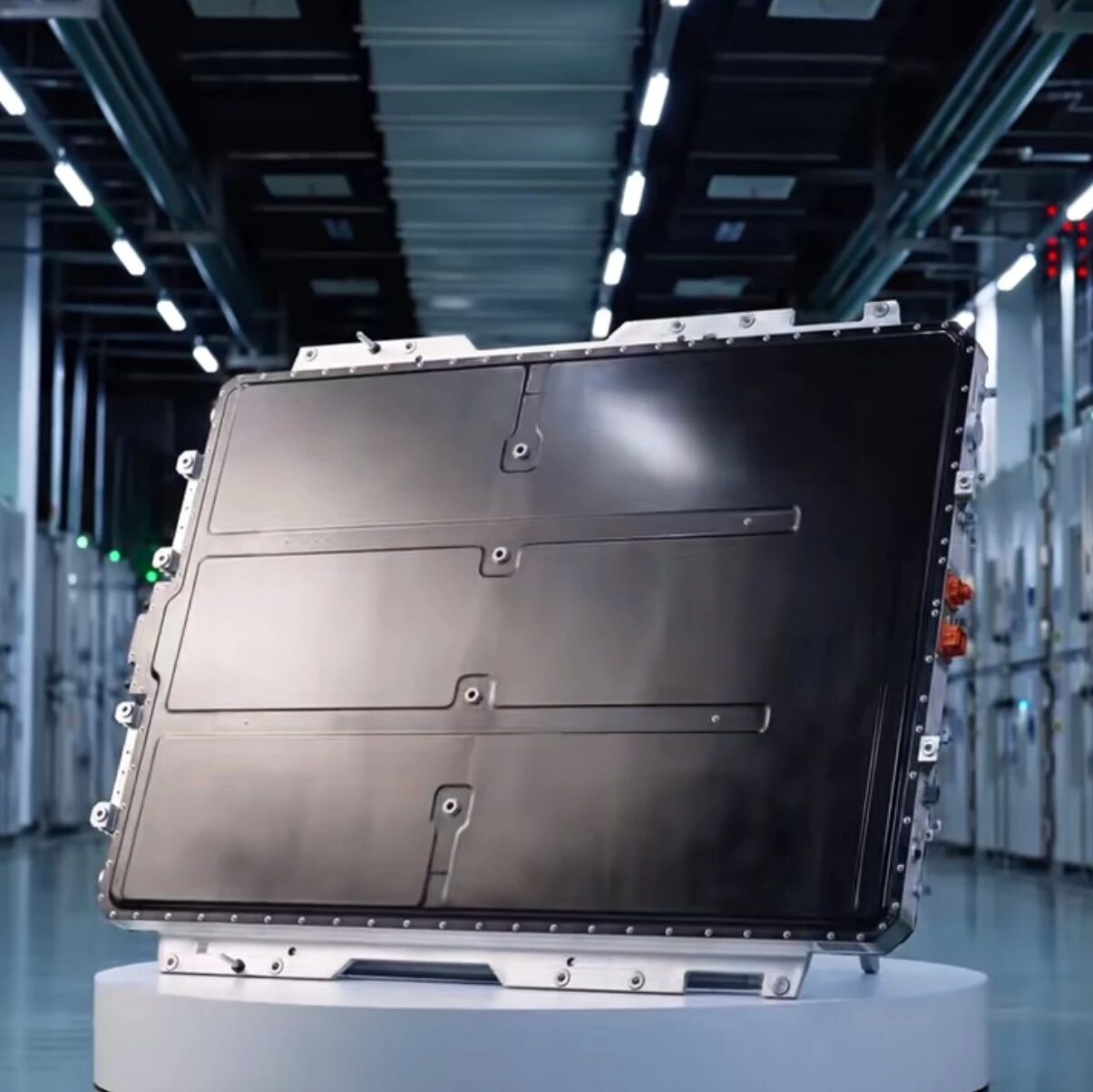
以创新推动升维 业内探索筑牢电池安全基石
Ren Min Wang· 2025-12-01 01:49
Core Viewpoint - The rapid growth of electric vehicle ownership has made battery safety a core decision factor for consumers, prompting the industry to enhance safety technologies in practical applications [1] Group 1: Regulatory Developments - The mandatory national standard "Safety Requirements for Power Batteries for Electric Vehicles" (GB 38031-2025) was officially released on March 28, 2023, and will be implemented on July 1, 2026 [1] - The new standard aims to ensure safety and guide technological advancements in the industry [1] Group 2: Industry Challenges - Current user concerns about battery safety focus on thermal runaway risks, battery lifespan uncertainties, and challenges in all-weather protection [2] - The revised standard includes new tests for thermal diffusion, bottom impact, and safety after fast charging cycles, emphasizing the need for consistent safety across all battery cells [2] Group 3: Technological Innovations - The Huawei Whale Battery Platform is advancing battery safety through a comprehensive protection system that includes five layers of thermal safety [4] - The platform utilizes innovative materials and technologies, such as high-temperature resistant mica boards and liquid cooling systems, to prevent thermal runaway from spreading [4] Group 4: Systematic Changes - The industry is transitioning from being "integrators" to "definers," with a focus on a full-chain approach from battery cell testing to design and manufacturing [3] - The Huawei Whale Battery Platform's deep involvement in the entire process signifies a shift in industry roles [3] Group 5: Safety and Quality Assurance - The battery packs from Hongmeng Zhixing have met the new national standard five years ahead of schedule, demonstrating a commitment to high safety standards [5] - The platform incorporates multiple redundancies to enhance system stability, with at least 200 nodes for risk management [5] Group 6: Collaborative Ecosystem - Hongmeng Zhixing is collaborating with multiple ecosystem partners to create a battery platform that integrates technology, manufacturing, and model adaptation [6] - This collaborative model aims to shift the focus of industry competition from compliance costs to safety value [6] Group 7: Industry Evolution - As the automotive industry evolves, the core competition is returning to safety, reliability, and quality rather than just technological parameters [6] - The practices in battery safety by Hongmeng Zhixing are expanding the concept that "safety is the greatest luxury" into a shared industry standard [6]
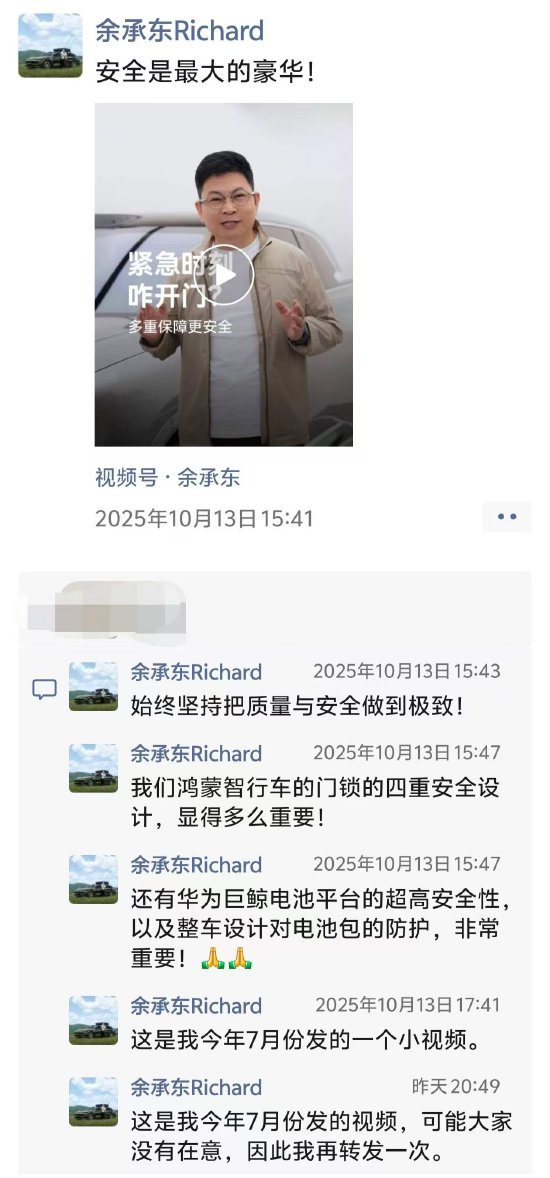
余承东:安全是最大的豪华,鸿蒙智行的门锁四重安全设计非常重要
Xin Lang Ke Ji· 2025-10-15 06:08
Core Viewpoint - Huawei's Executive Director, Yu Chengdong, emphasizes that "safety is the greatest luxury," highlighting the importance of safety features in their HarmonyOS smart vehicles [1] Group 1: Safety Features - Yu Chengdong shared a video demonstrating how to open the car door in emergencies, showcasing the safety design of the HarmonyOS smart vehicle [1] - The vehicle includes a collision unlock redundancy module, underscoring the focus on door lock safety [1] - The four-layer safety design of the HarmonyOS smart vehicle's door lock is deemed crucial by Yu Chengdong [1] Group 2: Battery Safety - The Huawei Whale Battery Platform is noted for its high safety standards, which are critical for overall vehicle safety [1] - The vehicle's design includes protective measures for the battery pack, emphasizing the importance of battery safety in vehicle design [1]
全新问界M7、尚界H5上市,鸿蒙智行实现五界“完全体”
Huan Qiu Wang· 2025-09-24 08:40
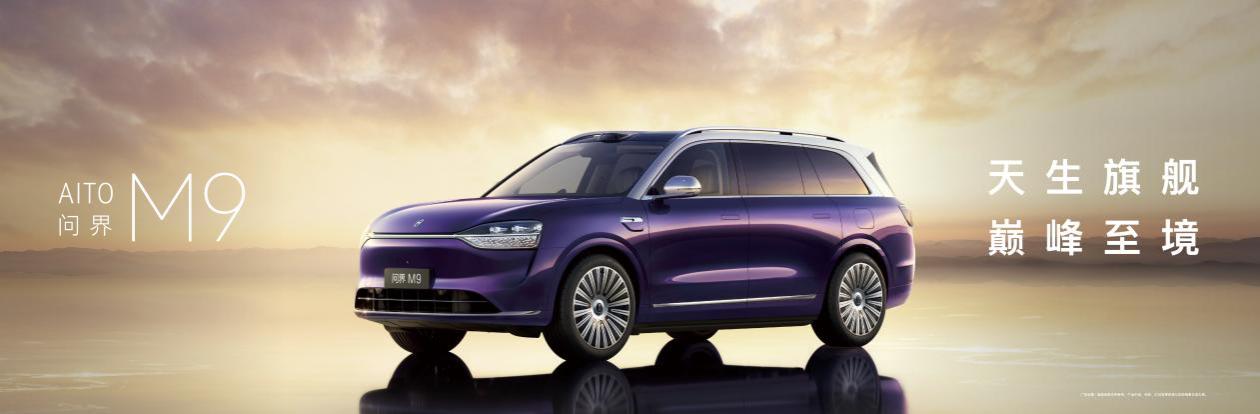
Core Insights - The launch of new models and features by Hongmeng Zhixing aims to enhance its product matrix and meet diverse consumer demands in the electric vehicle market [1][6] Product Launches - The new color "Silver Purple" for the Wanjie M9 SUV was introduced, which has achieved over 240,000 deliveries since its launch and has been the market leader in sales for 18 consecutive months [1][3] - The Wanjie M7 was officially launched with a price range of 279,800 to 379,800 yuan, offering both extended range and pure electric options, and featuring significant upgrades in design and technology [3][5] Technological Advancements - The Wanjie M7 includes over 50 upgraded features such as Huawei's Qian Kun Intelligent Driving ADS 4.0 and gesture control for doors, enhancing the smart travel experience [3][5] - The vehicle is equipped with a high-performance battery platform and advanced driving assistance systems, improving safety and driving efficiency [5][6] Market Positioning - The Shangjie H5, positioned as a "smart boutique SUV," is priced between 159,800 and 199,800 yuan, emphasizing comfort and intelligence over competitors [6][8] - The comprehensive product lineup now includes five brands under Hongmeng Zhixing, targeting various market segments from family to high-end vehicles [8] Future Outlook - Hongmeng Zhixing aims to continue collaborating with partners to drive the upgrade of China's smart electric vehicle industry and is targeting an annual sales goal of one million units [8]