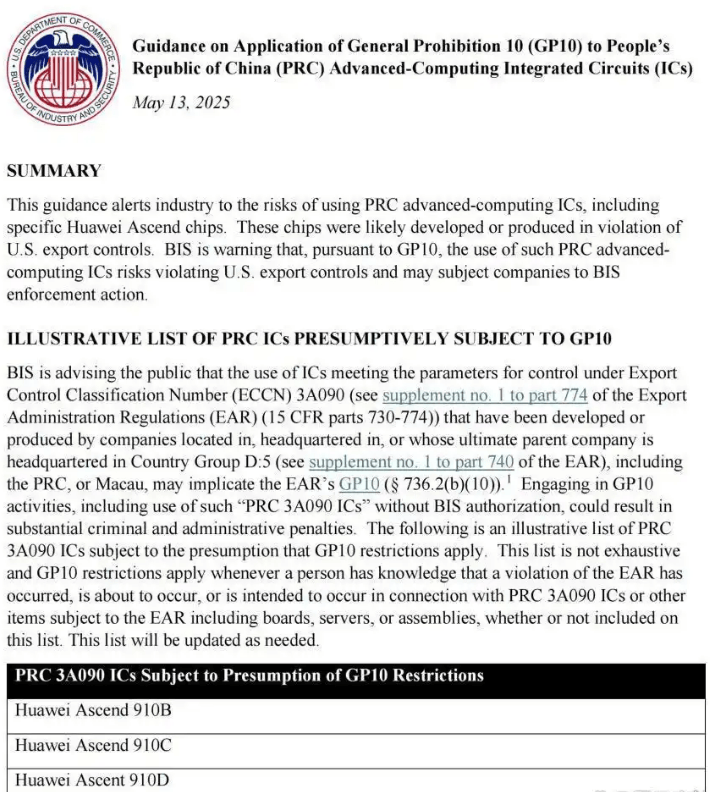
华为昇腾910芯片

Search documents
都在盯着国家队
Xin Lang Cai Jing· 2026-01-21 01:09
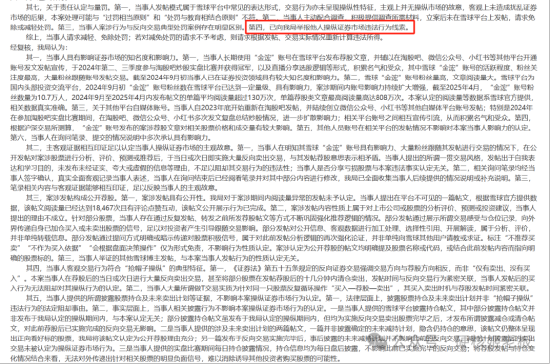
来源:硬核姬老板 周二(1月20日)题材有所熄火,算力硬件、商业航天、可控核聚变等泛科技板块集体下跌。 但非常有意思的点在于,上午冲高回落后大家好像没有特别慌,很多人都是"艾玛,终于跌了"的心态。 真。情绪可控。 不过有几个小发现可以和大家分享一下。 从上周三顶部的4万亿成交到1月19日全场成交2.73万亿,1月20日盘中看着成交额还在缩。 看了下融资余额。 截至1月19日,市场融资余额合计2.71万亿元,较前一交易日减少85.01亿元,为新年以来首次下降。 1月19日也是融资保证金回归到100%的首个交易日。 降温效果立竿见影。 另外上周主流宽基ETF净流出后,大家开始将视为国家队动向,每日盯着申赎情况看。 如果按照这个思路,那么续上周后,本周流出力度相对减弱,前期被砸的老登股,比如银行、券商、长 电等等也开始企稳,目前舆论风向改为处罚网络吹票的大V。 一、都在盯着国家队 周一(1月19日)的量能缩了不少。 如果转成震荡的话,那么依旧是回到了重行业轻指数的行情。 大浪淘沙,AI应用还有戏吗 这点很明显是规范市场行为,也验证了之前大家一致性预期: 这是温柔的点刹,并不代表不让市场涨。 游资非常敏锐的,感受到了 ...

投资者指南:科技自主浪潮下,如何布局通信与硬科技核心赛道?(附111页PPT)
材料汇· 2025-08-25 13:17
Core Viewpoints - The article emphasizes the advancement of China's technology across the entire supply chain, driven by external pressures and domestic policies supporting innovation and self-reliance [1][3]. Group 1: Technology Competition - The U.S. has imposed export controls on Chinese companies, leading to unexpected growth in certain sectors as companies adapt to these challenges [3][8]. - The "Entity List" has expanded, with 586 Chinese companies affected, indicating a long-term strategy by the U.S. to restrict access to advanced technologies [8][9]. - China's semiconductor industry has made significant strides, with domestic production capabilities for lithography machines being announced, suggesting a failure of U.S. containment strategies [8][9]. Group 2: Investment Strategies - The article suggests that investment strategies should focus on domestic technology development, particularly in high-elasticity sectors that can provide significant returns [1][9]. - The communication sector has seen a notable increase in fund holdings, with a 1.09 percentage point year-on-year increase in heavy holdings in the communication industry [5][7]. - The performance of AI-related companies is improving, with the communication sector's revenue and net profit showing positive growth, indicating a favorable investment environment [5][6]. Group 3: Mergers and Acquisitions - The regulatory environment is becoming more favorable for mergers and acquisitions, particularly in the technology sector, with new policies aimed at facilitating these processes [9][13]. - The number of merger events in the communication sector has decreased in recent years, but the expectation is for an increase in 2025 as policies take effect [9][13]. - State-owned enterprises are expected to drive value through mergers and acquisitions, particularly in the context of market management and optimization [9][13]. Group 4: Funding Support - The Chinese government is set to issue long-term bonds to support strategic industries, with an initial issuance of 1 trillion yuan planned for 2024 [19][23]. - A 100 billion yuan fund has been established to support the satellite internet industry, indicating strong governmental backing for technological advancements [23][24]. - The government's focus on "new quality productivity" highlights a commitment to fostering innovation and technological self-sufficiency [19][22]. Group 5: Industry Opportunities - The article identifies significant opportunities in hard technology sectors, particularly in satellite internet and computing power, as domestic capabilities improve [1][30]. - The demand for domestic chips is increasing, with initial orders for Huawei's new AI chips valued at approximately 2 billion USD, reflecting a growing market for local technology [53][54]. - The overall computing power in China is expected to continue its upward trajectory, with projections indicating a substantial increase in capacity by 2024 [54][75].


华为首款鸿蒙折叠屏电脑预约量超12万,高手看好科技自主可控机会!
Mei Ri Jing Ji Xin Wen· 2025-05-25 09:51
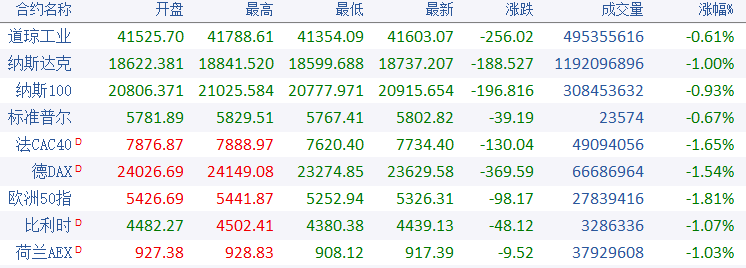
Market Overview - The US stock market experienced a decline this week, with the Dow Jones falling by 0.61%, the S&P 500 down by 0.67%, and the Nasdaq decreasing by 1% [1] - The dollar index dropped by 0.82%, while copper and aluminum prices rose on the London Metal Exchange [1] Economic Events - Trump threatened to impose a 50% tariff on EU goods starting June 1, which negatively impacted European stock markets [1] - Recent bond auctions in Japan and the US were poorly received, raising concerns about global market liquidity [4][5] Investment Insights - Analysts are optimistic about sectors such as technology, high-dividend assets, and non-ferrous metals [8][11] - The potential for a decline in the dollar index is seen as beneficial for international non-ferrous metal prices [11] Upcoming Events - Japan will conduct several important bond auctions on May 28, June 3, and June 5, with the June 3 auction of 10-year bonds being particularly significant [4] - The 61st simulated stock trading competition is set to begin, with participants focusing on opportunities in controllable nuclear fusion and the pet economy [2][3]
美国为什么咬着华为不放?开始全球封杀华为AI芯片,他们怕什么?
Sou Hu Cai Jing· 2025-05-16 15:00
Group 1 - The U.S. government has escalated its technology war against China by banning the use of Huawei's Ascend 910 AI chip globally, with violations potentially leading to a 20-year prison sentence [1] - The U.S. has consistently used "national security" as a justification for sanctions against Huawei, but this time no specific reason has been provided [2] - The ban on Huawei's AI chip may be an attempt by the U.S. to regain face after the failure of the tariff war against China, which has shown resilience and strength [4] Group 2 - The U.S. is reportedly desperate to use the Huawei AI chip ban as leverage to negotiate for China's rare earth exports, which China is currently unwilling to discuss [7] - Despite the ban, the Chinese market for AI chips, particularly for Huawei's Ascend 910, is robust enough to sustain the company for many years, as China is the largest market for AI chips globally [9] - The U.S. is facing a decline in its AI dominance, with companies like NVIDIA experiencing significant sales drops due to export restrictions, while Huawei's AI chip is positioned to fill the gap and potentially surpass NVIDIA [10] Group 3 - The series of actions taken by the U.S. in trade, technology, and tariffs against China indicate a growing sense of desperation, as the U.S. has exhausted most of its leverage [13]