华泰柏瑞新金融地产混合A

Search documents
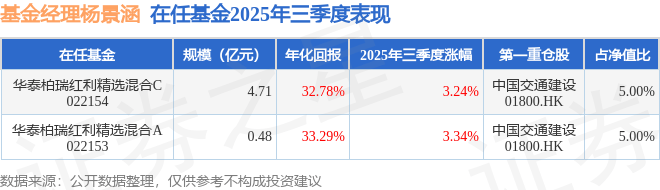
杨景涵2025年三季度表现,华泰柏瑞红利精选混合A基金季度涨幅3.34%
Sou Hu Cai Jing· 2025-10-27 23:31
Core Insights - Fund manager Yang Jinghan oversees two funds, with the best quarterly performance being Huatai Bairui Hongli Selected Mixed A (022153), which achieved a net value increase of 3.34% in the third quarter of 2025 [1] Fund Performance Summary - Huatai Bairui Hongli Selected Mixed C (022154) has a scale of 4.71 billion, with an annualized return of 32.78% and a quarterly increase of 3.24%, holding China Communications Construction (01800.HK) as its top stock at 5.00% [2] - Huatai Bairui Hongli Selected Mixed A (022153) has a scale of 0.48 billion, with an annualized return of 33.29% and a quarterly increase of 3.34%, also holding China Communications Construction at 5.00% [2] - During Yang Jinghan's tenure as manager of Huatai Bairui Multi-Strategy Mixed A (003175), the cumulative return was 27.07%, with an average annualized return of 5.8% and 74 adjustments in heavy stock positions, achieving a win rate of 58.11% [2] Heavy Stock Adjustment Cases - Example of stock adjustment for Jingjiawei (300474): bought in Q1 2016 and sold in Q2 2016, with an estimated return of 438.95% and a company profit growth of 18.36% during the holding period [4] - Example of stock adjustment for China Ping An (601318): bought in Q1 2017 and sold in Q4 2017, with an estimated return of 83.5% and a company profit growth of 42.78% during the holding period [5] - Example of stock adjustment for Sunshine City (000671): bought in Q4 2020 and sold in Q4 2021, with an estimated return of -45.06% and a company revenue decline of 48.25% during the holding period [6]

重磅利好!逼近3500点!A股新高后方向何在?
天天基金网· 2025-07-08 11:32
Core Viewpoint - The A-share market is experiencing a collective rise, with the Shanghai Composite Index approaching 3500 points, driven by sectors such as photovoltaic, energy, and steel, indicating a potential bullish trend in the near future [1][6][12]. Market Performance - Nearly 4300 stocks in the A-share market rose today, with the Shanghai Composite Index reaching a high of 3499.89 points, marking a new yearly peak [2][6]. - The trading volume in the two markets significantly increased, exceeding 1.45 trillion yuan, with leading gains in sectors like photovoltaic, steel, consumer electronics, and software development [4][12]. External Influences - The postponement of tariffs by the U.S. has boosted global market sentiment, contributing to the bullish atmosphere in the A-share market [6][9]. - Analysts suggest that the trade uncertainties are having a diminishing impact on market volatility, as investors become more accustomed to the U.S. pressure tactics [18][21]. Policy and Economic Factors - The upcoming Politburo meeting at the end of July is anticipated to influence market expectations regarding consumption stimulus and real estate support policies [14]. - The performance of technology stocks will depend on the verification of mid-year earnings, particularly in sectors like AI computing, which could alleviate valuation pressures if results exceed expectations [15][24]. Investment Opportunities - Analysts recommend focusing on sectors such as brokerage firms, technology innovation, and Hong Kong stocks, which are expected to present phase-specific opportunities as the market strengthens [25][26][28]. - The overall low valuation of A-shares and the gradual accumulation of favorable external factors are seen as positive indicators for future investment [23][24].

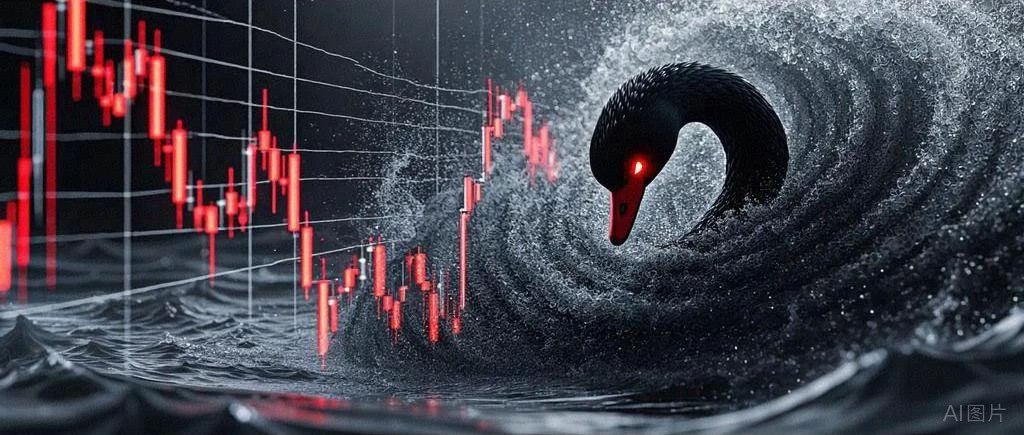
突发黑天鹅!对A股影响几何?
天天基金网· 2025-06-13 11:22
Core Viewpoint - The sudden drop in A-shares is attributed to a black swan event, specifically geopolitical tensions in the Middle East, which has led to widespread market panic and a significant decline in stock prices [1][4]. Market Reaction - A-shares and Hong Kong stocks experienced a collective decline, with the ChiNext Index dropping over 1% and more than 4,400 stocks falling [1][4]. - Defensive sectors such as oil, gas, and precious metals saw gains despite the overall market downturn, indicating a shift towards defensive asset allocation [3][5]. Geopolitical Impact - The escalation of tensions, particularly the news of Israel's attack on Iran, has raised serious concerns about broader regional conflict, triggering a risk-averse sentiment across global markets [4][8]. - Analysts suggest that while the current geopolitical situation is concerning, it is essential not to overreact, as markets tend to stabilize over time [3][9]. Investment Strategy - In light of the current market volatility, maintaining a defensive asset allocation is crucial. Historical data indicates that defensive sectors like gold and oil tend to outperform in the month following a conflict outbreak [11]. - Investors are advised to diversify their portfolios across various asset classes, including stocks, bonds, commodities, and cash, to mitigate the impact of single events on their overall investment [20]. Position Management - It is recommended to maintain a cash position of 10%-15% to provide liquidity and the ability to capitalize on opportunities during market downturns [21]. - Utilizing dollar-cost averaging through systematic investment plans can help smooth out volatility and reduce overall investment costs during market dips [23]. Conclusion - A well-structured investment portfolio should be resilient enough to withstand market turbulence, emphasizing the importance of preparation and strategic asset allocation in navigating through volatile periods [24].
央行、证监会重磅发布!上一次A股涨了8%!
天天基金网· 2025-05-07 11:34
Core Viewpoint - The central theme of the article revolves around the recent monetary policy adjustments by the central bank, including a reduction in the reserve requirement ratio (RRR) and interest rates, aimed at boosting market liquidity and investor confidence in the A-share market [1][5]. Summary by Sections Monetary Policy Changes - The central bank announced a 50 basis point reduction in the RRR effective from May 15, releasing approximately 1 trillion yuan in long-term funds. Additionally, the interest rate for personal housing provident fund loans was lowered by 0.25 percentage points, with the 5-year and above first home loan rate decreasing from 2.85% to 2.6% [5][3]. - The announcement also included the optimization of two monetary policy tools to support the capital market, combining 500 billion yuan for securities fund insurance company swaps and 300 billion yuan for stock repurchase loans, totaling 800 billion yuan [5]. Market Reaction - Following the announcement, A-shares initially surged but later experienced a pullback, attributed to short-term profit-taking and insufficient market momentum despite the positive news [4][1]. - Historical data indicates that the last time a similar RRR cut occurred, the Shanghai Composite Index rose over 8% the following day, raising questions about whether a similar pattern will repeat [6][8]. Sector Impacts - The financial and brokerage sectors are expected to benefit directly from the RRR and interest rate cuts, as increased market activity enhances brokerage revenues and expands bank credit [9]. - The real estate and infrastructure sectors may see relief from financial pressures on property companies, coupled with lower mortgage rates, potentially revitalizing the real estate market and related industries [9]. - The technology and consumer sectors are likely to gain from new financing tools aimed at supporting innovation and stimulating consumer demand, with specific focus on semiconductors, artificial intelligence, and home appliances [9]. Investment Strategy - The article suggests a balanced investment approach to navigate market volatility, emphasizing the importance of diversification across asset classes and sectors, as well as maintaining a long-term perspective through systematic investment [12][14]. - It also highlights the need for flexible adjustments and risk control measures to manage emotional trading and optimize returns in a fluctuating market environment [15].